AI Boom Drives Memory Chip Prices to Record Highs
Micron and Samsung see stock surges, while HP and Nintendo face profit pressures.

AI Boom Drives Memory Chip Prices to Record Highs
The global memory chip market finds itself amidst unprecedented turbulence, largely driven by the accelerating demand from artificial intelligence (AI) technologies. This ongoing upheaval has significant ramifications for both the tech industry and consumers worldwide.
AI's Impact on the Chip Cycle
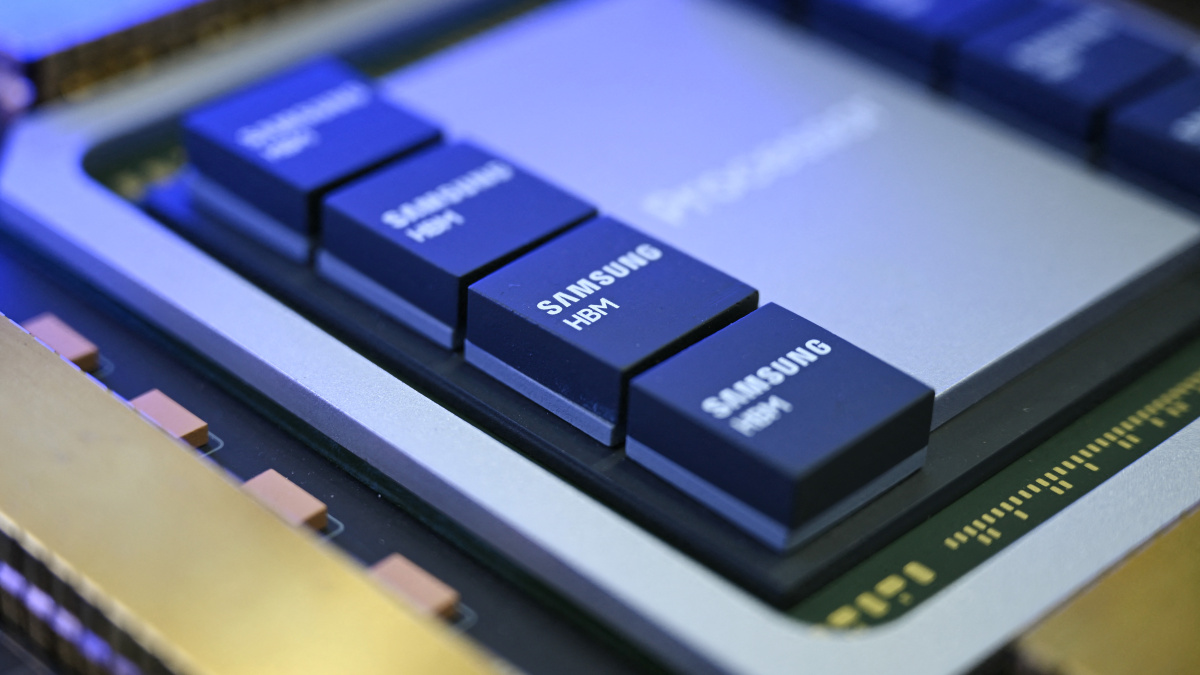
AI's relentless appetite for processing power is transforming the landscape of the memory chip market, altering not only what these chips do but also how they are perceived within the industry. Traditionally viewed as a commodity, memory chips are now pivotal to market dynamics. This shift has allowed suppliers like Micron Technology Inc. and Samsung Electronics Co. to benefit immensely, as their stocks reach new heights due to soaring memory prices.
For consumer electronics companies such as HP Inc. and Nintendo Co., however, the story is quite different. These companies are grappling with increased production costs as memory chips become more expensive. The rising prices of these essential components are squeezing profit margins, creating significant financial pressures. HP and Nintendo exemplify the challenges facing device makers who must navigate this new environment where memory chips have become a critical bottleneck.
The rise of AI applications, from machine learning to data analytics, has intensified the demand for high-performance memory chips. These chips are essential for handling vast amounts of data at high speeds, which is a requirement for many AI-driven processes. This demand is not just about capacity but also about speed and efficiency, factors that contribute to the skyrocketing prices and the ongoing shortages.
Winners and Losers in the Chip Market
In the current market landscape, memory chip producers are clearly the winners. Micron Technology Inc. has seen its stock reach new peaks, driven by the surging prices of memory chips. Similarly, Samsung Electronics Co. is experiencing impressive stock performance, a reflection of its strong position in the market. These companies are capitalizing on the increased demand and limited supply, which has given them substantial pricing power.
Conversely, companies reliant on these components, like HP Inc. and Nintendo Co., are facing a tougher scenario. As component costs rise, their profit margins are being eroded. This situation highlights the growing divide between suppliers, who have the advantage of pricing power, and device makers, who are struggling with escalating costs. The widening gulf between these sectors underscores the shifting power dynamics within the tech industry.
Impact on European Markets
The memory chip crunch is not confined to Asia and the Americas; it is having a pronounced impact across Europe as well. European manufacturers and technology firms, heavily dependent on memory chips, are particularly vulnerable to these disruptions. The EU's reliance on Asian chipmakers like Samsung highlights a critical dependency that has become increasingly problematic.
This dependency has sparked discussions about the need for more local production and the diversification of supply chains within Europe. The current situation serves as a stark reminder of the risks associated with over-reliance on a limited number of suppliers, prompting calls for strategic shifts in supply chain management.
What This Means for You
For consumers, the consequences of the memory chip shortages and resulting price hikes are tangible and immediate. As manufacturers face increased costs, these are often passed down to consumers. This means higher prices for laptops, gaming consoles, smartphones, and other electronic devices.
If you're considering purchasing new electronics, it might be wise to do so sooner rather than later. With no immediate relief in sight for the memory chip supply issue, prices are unlikely to decrease in the near future. Here's what consumers might expect:
- Higher prices: Expect to pay more for most electronic devices that require memory chips.
- Potential shortages: Limited availability of some products as manufacturers struggle to meet demand.
- Extended wait times: Longer lead times for certain products as supply chains adjust.
What's Still Unclear
Despite the current trends, there are several uncertainties about the long-term implications of AI's demand for memory chips on the broader tech industry. One major question is whether prices will eventually stabilize or if the market will remain in a constant state of flux.
Moreover, it remains to be seen how companies will adapt to these changes. Will they find ways to mitigate the impact of rising costs, or will they continue to pass these costs onto consumers? Additionally, the potential for technological innovation in memory chip production could alter the market dynamics, but the timeline for such developments is uncertain.
Editorial Perspective
The AI boom is undeniably reshaping the tech supply chain, elevating memory chips from a mere commodity to a critical asset. As the demand for AI technologies continues to grow, so too does the importance of diversifying supply chains to mitigate risks associated with shortages and price hikes.
The current landscape highlights the volatility and complexity of the tech market, with clear winners and losers emerging. However, as companies navigate these challenges, the market dynamics will likely continue to evolve, influencing both stock markets and consumer experiences in significant ways.
Discuss this story
Got a take, a correction, or a follow-up tip? Reply where you read — we read everything.
Found an error? File a correction at /corrections. Substantive corrections are logged publicly.
One short email. The most important Hardware news, fact-checked, no fluff. Free, unsubscribe anytime.
More from Hardware

Apple's AI Pivot: Vision Pro Content Cut, Siri Rebuilt Amid Layoffs
Apple's latest layoffs signal a strategic pivot, dialing back high-cost Vision Pro content while re-tooling Siri for the AI era. What's next for Apple?

Povasee A30 Jump Starter: A 50-Euro Deal With 5,000A Claims Under Scrutiny
The Povasee A30 jump-start power bank, on offer at Amazon for under 50 Euros, claims 5,000A peak current. We scrutinize this deal against real-world expectations.

Ugreen's 200W Charger: Powerhouse or Marketing Hype?
We analyze the Ugreen 200W charger's technical prowess, real-world utility, and the Amazon deal, highlighting its strengths and limitations

Victorinox Amazon Deals: Tactics or True Value?
Byte-Pulse examines Amazon's Victorinox deals, dissecting the true value of the Swiss Card Lite and Synergy X Alox against market trends.
The Byte-Pulse Newsroom is the editorial system that produces Byte-Pulse's daily tech news coverage. Each story is cross-referenced across 3+ independent outlets, drafted with AI assistance by the newsroom system (Drafter → Editor → Fact-Checker → Polisher), and reviewed by Serhat Er, Editor-in-Chief, before publication. We disclose AI augmentation openly. Editorial accountability stays with the named editor on every article. Tips: editorial@byte-pulse.net.
Don’t miss these
Motorola Edge 60 Ultra vs OnePlus 13: Which Android Flagship Fits Your Priorities?
Motorola Edge 60 Ultra and OnePlus 13 both aim for top-tier Android. We cut through the marketing to reveal the true differences, helping you choose.
Proton VPN vs NordVPN: Which One Earns Your Subscription?
A deep dive into Proton VPN and NordVPN, comparing their privacy, performance, features, and value, helping you make an informed decision.
Perplexity Pro vs ChatGPT Plus: Which AI Assistant Fits Your Workflow?
This guide lays out the strengths and approaches of Perplexity Pro and ChatGPT Plus, helping you identify which AI assistant aligns with your specific needs.

Pokémon TCG Movie Signals Strategic Media Pivot for The Pokémon Company
A new Pokémon movie focused on the TCG is coming in 2027, marking a strategic pivot for the franchise as it navigates massive global fan engagement and logistical challenges.

D23 2026: Disney's Content Deluge Sparks Questions About Strategy
Byte-Pulse cuts through D23 hype: We dissect Disney's ambitious content slate, from Simpsons: Hit & Run to Ahsoka season 2, and question the real-world implications and European market strategy.
Sony Xperia 1 VII vs iPhone 18 Pro: Which Flagship Fits Your Creative Flow?
Deciding between Sony's creator-centric Xperia 1 VII and Apple's powerful iPhone 18 Pro? We break down every spec and feature, neutrally.