Anticipating Major Changes at Apple's WWDC 2026
As Tim Cook prepares to step down, the industry braces for major changes in Apple's AI strategy and user experience.

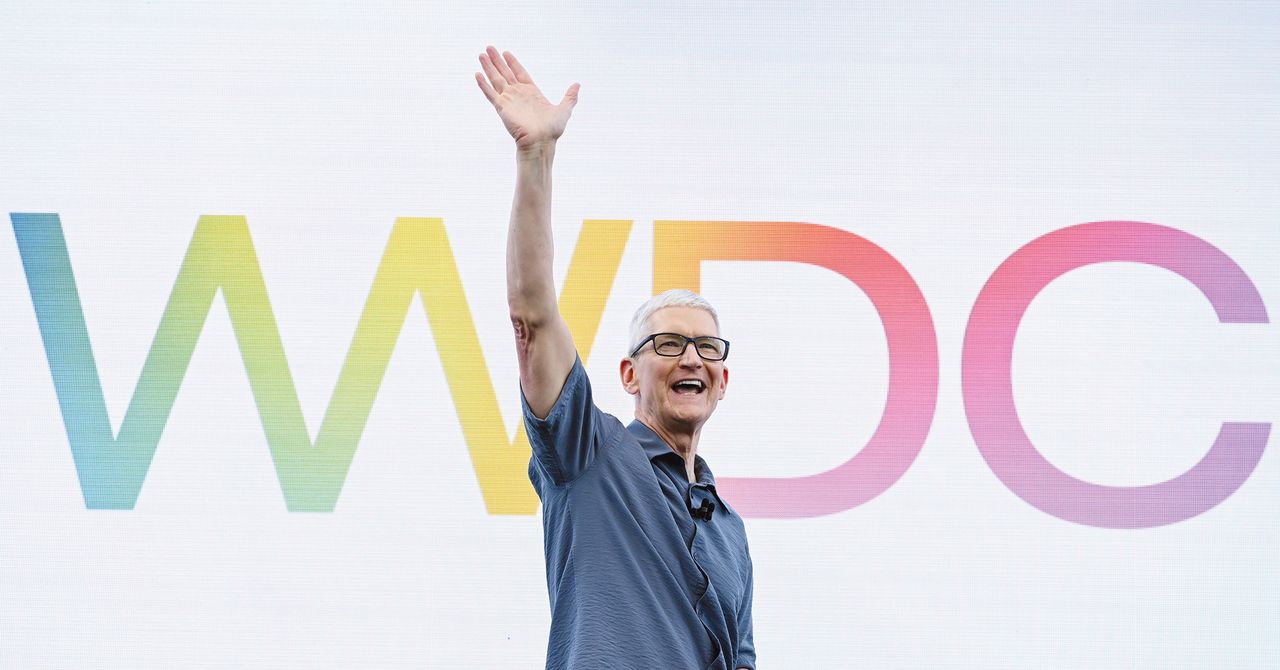
Tim Cook's Legacy: What WWDC Means for Apple's Future
Tim Cook is preparing to pass the leadership torch to John Ternus, marking a pivotal moment for Apple. As he transitions, WWDC 2026 is anticipated as a landmark event that could encapsulate his legacy. Under Cook’s leadership, Apple has shifted its focus from being solely a hardware-centric company to one that thrives on subscriptions and services. This strategic evolution has been a linchpin in maintaining Apple's relevance and profitability in a rapidly changing tech landscape.
Cook's era has been defined by significant shifts, including the expansion of Apple’s ecosystem with services like Apple Music, Apple TV+, and the App Store's exponential growth. The timing of this transition is crucial as the tech industry is in the midst of an AI revolution. Apple’s ability to adapt and maintain its market leadership amidst these changes will be a testament to Cook’s vision.
Siri's Overhaul: A Partnership with Google
One of the most significant announcements expected at WWDC 2026 is the complete overhaul of Siri. For years, Siri has lagged behind competitors like Google Assistant and Amazon Alexa in terms of capabilities and accuracy. This year, Apple is reportedly making a bold move by partnering with Google, leveraging its Gemini AI to enhance Siri's functionalities.
This partnership, which has been in the works since 2024, signals a significant shift in Apple's strategy. Historically resistant to collaborating with rivals, Apple’s decision to team up with Google suggests a recognition that its closed ecosystem approach may not suffice in the current AI-driven market. The collaboration aims to transform Siri from a basic voice assistant into a sophisticated, interactive AI, capable of more natural conversations and complex tasks.
For users, this could mean a more intuitive and responsive Siri experience. Imagine asking Siri to organize your daily schedule, handle smart home devices, or even offer proactive suggestions based on your habits—all with greater accuracy and context than ever before.
AI Features Set to Transform User Experience: What’s Actually Coming
WWDC 2026 is expected to showcase AI features that promise to redefine how users interact with their Apple devices. According to reports, Siri will evolve into a standalone app, much like other AI chatbots. This change will allow for more organic interactions, including the ability to upload photos and files, and engage in more meaningful and context-aware conversations.
This transition to a conversational assistant model aligns with broader industry trends where AI is becoming more integrated into everyday life. However, it's crucial to temper expectations. While these features sound transformative, Apple has a history of uneven rollouts. Some functionalities might initially be available only through a waitlist, reflecting cautious optimism about the technology’s readiness.
The tech community remains skeptical, given Apple’s past of ambitious promises that occasionally fall short. With competitors like ChatGPT and Claude already setting high standards in conversational AI, Apple faces a steep challenge in meeting user expectations. Users may encounter a learning curve as they adapt to a more complex and feature-rich Siri.
Compared to: Apple's Predecessors and Competitors
When comparing this anticipated Siri update to its predecessors and competitors, there are several aspects to consider. Siri, introduced in 2011, was groundbreaking at the time, but over the years, it has been outpaced by rivals like Google Assistant and Amazon Alexa. These competitors have capitalized on open ecosystems and third-party integrations, allowing for more versatile and powerful AI assistants.
For instance, Google Assistant's ability to integrate with a wide range of devices and services has made it a favorite among users seeking a comprehensive smart home experience. Similarly, Amazon Alexa's extensive skills library and seamless integration with Amazon services provide a distinct advantage.
Apple's partnership with Google could potentially bridge this gap, offering a more competitive alternative. However, price and accessibility remain concerns. While Siri is inherently tied to Apple’s premium devices, Google and Amazon offer their assistants across a broader array of price points and platforms.
Anticipation vs. Reality: Rumored Hardware Announcements
In addition to software updates, there is much speculation about potential hardware reveals at WWDC 2026. Traditionally, Apple reserves major hardware announcements for separate events, but rumors suggest we might catch a glimpse of new smart glasses or a foldable device.
The concept of Apple smart glasses has been floating around for years, with expectations of a sleek, augmented reality device that integrates seamlessly with the Apple ecosystem. Similarly, a foldable iPhone could represent Apple's foray into a burgeoning market segment dominated by companies like Samsung.
However, these rumors should be taken with a grain of salt. Shipping hardware, particularly at Apple's scale, involves meticulous planning, extensive testing, and a reliable supply chain. Apple’s history shows that while it often sets high expectations, the actual product rollouts can be delayed or modified.
Real Daily-Use Scenario: How Siri's Overhaul Changes Your Day
Imagine starting your morning with a more intelligent Siri. You wake up and ask Siri to summarize your day's schedule, considering both work commitments and personal errands. As you prepare breakfast, Siri suggests recipes based on your dietary preferences and the contents of your fridge, even coordinating with your smart kitchen gadgets.
On your commute, Siri provides traffic updates and suggests the most efficient route. During the day, Siri proactively reminds you of meetings, suggests when to leave for appointments, and even offers to reschedule based based on real-time traffic conditions and your calendar.
This level of integration and assistance could significantly streamline daily routines, potentially increasing productivity and enhancing the overall user experience. However, the effectiveness of these features will largely depend on the accuracy and contextual understanding of Siri, which remains to be seen post-overhaul.
Why WWDC Could Shape Apple's Position in the AI Landscape
The significance of WWDC 2026 cannot be overstated, particularly in the context of AI. As companies like Google and emerging AI startups rapidly advance their technologies, Apple must strategically position itself to remain competitive. Successfully integrating AI into Siri and other applications could reinforce Apple’s image as a tech innovator.
Apple’s ability to navigate regulatory challenges and meet user expectations will be critical. The company’s approach will be scrutinized not only by consumers but also by industry analysts who are keen to see how Apple adapts to an AI-driven world.
What's Still Unclear: Questions That Remain
While Apple has laid out an ambitious roadmap, several questions remain. The performance of these new AI features in real-world scenarios is yet to be tested. Will Siri’s enhancements truly meet user expectations, or will they fall short compared to the robust offerings from competitors?
Additionally, how will Apple address potential privacy concerns associated with more integrated AI functionalities? Apple has historically prioritized user privacy, but the increased reliance on AI could introduce new challenges.
What This Means For You: The User's Perspective
For Apple users, these announcements could mean a more seamless, integrated experience across devices. The revamped Siri promises to offer more utility and personalization, potentially making Apple devices indispensable in daily life.
However, users should remain cautious. Transitioning to new technologies often involves a learning curve and potential growing pains. It’s important to stay informed about the rollout of these features and manage expectations accordingly.
Closing Take: The Future is Now
WWDC 2026 stands as a critical juncture for Apple, symbolizing both a farewell to Tim Cook’s leadership and a new chapter under John Ternus. As the event approaches, the tech community eagerly anticipates how Apple will continue to innovate and adapt in a rapidly evolving market. The coming months will be telling, not just for Apple’s product lineup but for its strategic direction in an increasingly AI-centric world. Anyone who's shipped hardware knows that while ambitions and announcements are exciting, the real test lies in execution and user adoption.
Sources cross-referenced
This story was synthesised from reporting by 4 outlets:
1. Wired 2. 9to5Mac 3. 9to5Mac 4. TechCrunch
Discuss this story
Got a take, a correction, or a follow-up tip? Reply where you read — we read everything.
Found an error? File a correction at /corrections. Substantive corrections are logged publicly.
One short email. The most important AI news, fact-checked, no fluff. Free, unsubscribe anytime.
More from AI
Perplexity Pro vs ChatGPT Plus: Which AI Assistant Fits Your Workflow?
This guide lays out the strengths and approaches of Perplexity Pro and ChatGPT Plus, helping you identify which AI assistant aligns with your specific needs.
Claude Pro vs Google Gemini Advanced: Which AI Assistant Deserves Your Subscription?
This definitive guide cuts through the marketing to give you a fair, balanced breakdown of Claude Pro and Gemini Advanced, letting you decide which AI best fits your workflow.
Claude Pro vs Google Gemini Advanced: Which AI Actually Earns Your Subscription?
Byte-Pulse lays out the real trade-offs between Claude Pro and Google Gemini Advanced, helping you pick the AI that fits your workflow, without picking for you.
ChatGPT Plus vs Google Gemini Advanced: Which AI Assistant Fits Your Workflow?
Deciding between ChatGPT Plus and Google Gemini Advanced? We break down the models, features, integrations, and pricing to help you align your choice with your specific priorities.
The Byte-Pulse Newsroom is the editorial system that produces Byte-Pulse's daily tech news coverage. Each story is cross-referenced across 3+ independent outlets, drafted with AI assistance by the newsroom system (Drafter → Editor → Fact-Checker → Polisher), and reviewed by Serhat Er, Editor-in-Chief, before publication. We disclose AI augmentation openly. Editorial accountability stays with the named editor on every article. Tips: editorial@byte-pulse.net.
Don’t miss these
AMD Ryzen 7 9800X3D vs Intel Core Ultra 7 265K: Which Chip Drives Your Next Build?
Deciding between AMD's V-Cache prowess and Intel's new Ultra architecture? This guide cuts through the noise to show you what each CPU truly offers for your money.
Asus ROG Phone 9 vs Sony Xperia 1 VII: Which Niche Flagship Earns Your Money?
Deciding between the gaming-focused ROG Phone 9 and the creator-centric Xperia 1 VII? This guide breaks down every spec to help you choose.
Proton VPN vs NordVPN: Which One Earns Your Subscription?
A deep dive into Proton VPN and NordVPN, comparing their privacy, performance, features, and value, helping you make an informed decision.
AMD Ryzen 9 9950X3D vs Intel Core Ultra 9 285K: Next-Gen Desktop Showdown
A deep dive into the expected strengths of AMD's Zen 5 X3D and Intel's next-gen Core Ultra K-series, laying out the trade-offs for serious buyers.
Honor Magic 8 Pro vs Samsung Galaxy S26 Ultra: Which Future Flagship Fits Your Wallet and Workflow?
Deciding between the anticipated Honor Magic 8 Pro and Samsung Galaxy S26 Ultra? Our deep dive into expected specs and features provides the fair comparison you need.
Notion vs Obsidian: Which Knowledge Hub Fits Your Workflow?
Deciding between Notion and Obsidian? We break down the core differences in philosophy, data ownership, collaboration, and extensibility to help you choose.