Google Gemini Brings Voice Control to Gmail, Docs, and Keep
Gemini's voice-powered tools enhance productivity in Gmail, Docs, and Keep.

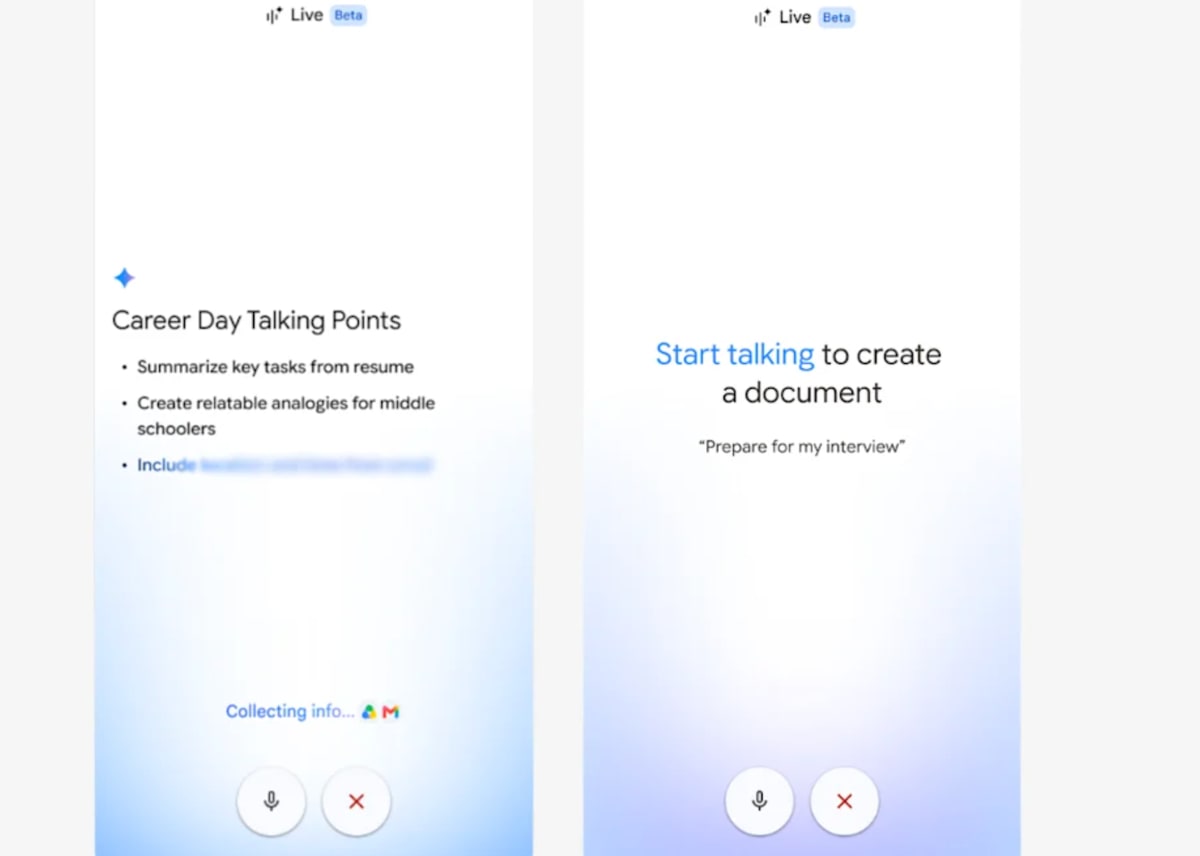
Google's Gemini AI: A New Era of Voice-Enhanced Productivity
Google is poised to transform your interaction with its suite of everyday applications, including Gmail, Google Docs, and Google Keep. The introduction of Gemini AI is set to redefine your experience by emphasizing voice-driven functionality. This innovation aims to streamline tasks and significantly enhance productivity.
Voice Commands in Gmail
A notable update is the integration of a voice assistant within Gmail. This feature allows users to navigate their inbox using natural language queries, eliminating the need for tedious keyword searches. With the "Ask Gemini" feature embedded in Gmail, you can simply articulate a query like, "Show me emails from last week about the project," and effortlessly receive the relevant results.
In practical terms, imagine you're a project manager juggling multiple tasks and communication threads. Instead of sifting through countless emails, you can now rely on voice commands to swiftly locate crucial information. This functionality not only saves time but also reduces the cognitive load associated with managing digital communications.
Structuring Ideas in Google Docs
Google Docs is also getting a voice-enabled makeover. Users can dictate their thoughts, and Gemini will listen attentively, converting spoken words into well-structured documents. Imagine brainstorming ideas for a presentation or drafting a report—Gemini assists by organizing your spoken ideas into a coherent format. Furthermore, it can pull in relevant information from your Google Drive or even scour the web to enrich the content.
Consider a scenario where you're collaborating on a team project. Instead of manually typing notes during brainstorming sessions, you can vocalize your ideas, and Gemini will handle the rest, allowing you to focus on creativity and strategy rather than transcription.
Enhanced Organization in Google Keep
Google Keep benefits from Gemini's AI capabilities by offering advanced organizational features through voice input. Users can dictate reminders, and the tool will categorize and organize them into actionable tasks. Even if the voice notes are initially unstructured, Google claims they will be comprehended accurately and transformed into practical to-do lists.
For instance, if you're managing a busy schedule filled with meetings, deadlines, and personal tasks, you can quickly voice your reminders. Gemini helps you maintain order without the hassle of manual organization, ensuring nothing slips through the cracks.
These updates represent a significant shift towards voice-driven productivity, promising a more seamless [user experience](/article/microsoft-promises-fewer-windows-11-update-headaches-by-2026) across Google's applications.
Rollout and Availability
These innovative AI features are scheduled to roll out this summer for Google One AI Premium subscribers. However, for users in Europe, the timing remains uncertain. This launch is part of Google's broader strategy to integrate advanced AI into its platforms, enhancing both functionality and user engagement.
Context: Google's AI Push
This development is indicative of a larger trend where tech giants are embedding AI into everyday applications, making them more user-friendly and intuitive. However, the landscape in Europe is unique due to stringent data privacy regulations such as the GDPR. Google must navigate these complexities to ensure that its AI integrations comply with regional laws.
What This Means for You
If you're a Google One AI Premium subscriber, these updates could revolutionize your workflow. You'll spend less time on manual searches and note-taking, allowing you to focus on more impactful tasks. As the summer rollout approaches, consider how integrating these tools into your daily routine could maximize your productivity. The potential to transform how you work and interact with digital tools is immense.
What's Still Unclear
Several questions linger as we anticipate these updates. Will European users receive the updates simultaneously with other regions? How effectively will the AI handle non-English languages, given the global diversity of Google’s user base? Additionally, what specific privacy measures will Google implement to safeguard user data during voice processing? These are critical considerations as Google ventures further into AI-driven solutions.
Why This Matters
Google's Gemini AI integration is not just about enhancing efficiency; it's about setting a new standard for voice-driven interactions in technology. As AI continues to evolve, these advancements are pivotal in shaping how tech companies leverage artificial intelligence to transform user experiences. This could potentially redefine productivity standards across industries, illustrating a future where technology seamlessly integrates with our daily lives, driven by the power of voice.
In a world increasingly dominated by digital interactions, Google's move towards voice-integrated AI across its applications signals a future where technology becomes a more intuitive extension of our natural communication habits.
Discuss this story
Got a take, a correction, or a follow-up tip? Reply where you read — we read everything.
Found an error? File a correction at /corrections. Substantive corrections are logged publicly.
One short email. The most important AI news, fact-checked, no fluff. Free, unsubscribe anytime.
More from AI
Perplexity Pro vs ChatGPT Plus: Which AI Assistant Fits Your Workflow?
This guide lays out the strengths and approaches of Perplexity Pro and ChatGPT Plus, helping you identify which AI assistant aligns with your specific needs.
Claude Pro vs Google Gemini Advanced: Which AI Assistant Deserves Your Subscription?
This definitive guide cuts through the marketing to give you a fair, balanced breakdown of Claude Pro and Gemini Advanced, letting you decide which AI best fits your workflow.
Claude Pro vs Google Gemini Advanced: Which AI Actually Earns Your Subscription?
Byte-Pulse lays out the real trade-offs between Claude Pro and Google Gemini Advanced, helping you pick the AI that fits your workflow, without picking for you.
ChatGPT Plus vs Google Gemini Advanced: Which AI Assistant Fits Your Workflow?
Deciding between ChatGPT Plus and Google Gemini Advanced? We break down the models, features, integrations, and pricing to help you align your choice with your specific priorities.
The Byte-Pulse Newsroom is the editorial system that produces Byte-Pulse's daily tech news coverage. Each story is cross-referenced across 3+ independent outlets, drafted with AI assistance by the newsroom system (Drafter → Editor → Fact-Checker → Polisher), and reviewed by Serhat Er, Editor-in-Chief, before publication. We disclose AI augmentation openly. Editorial accountability stays with the named editor on every article. Tips: editorial@byte-pulse.net.
Don’t miss these
Asus ROG Phone 9 vs Sony Xperia 1 VII: Which Niche Flagship Earns Your Money?
Deciding between the gaming-focused ROG Phone 9 and the creator-centric Xperia 1 VII? This guide breaks down every spec to help you choose.
Proton VPN vs NordVPN: Which One Earns Your Subscription?
A deep dive into Proton VPN and NordVPN, comparing their privacy, performance, features, and value, helping you make an informed decision.

Pokémon TCG Movie Signals Strategic Media Pivot for The Pokémon Company
A new Pokémon movie focused on the TCG is coming in 2027, marking a strategic pivot for the franchise as it navigates massive global fan engagement and logistical challenges.

Apple's AI Pivot: Vision Pro Content Cut, Siri Rebuilt Amid Layoffs
Apple's latest layoffs signal a strategic pivot, dialing back high-cost Vision Pro content while re-tooling Siri for the AI era. What's next for Apple?

D23 2026: Disney's Content Deluge Sparks Questions About Strategy
Byte-Pulse cuts through D23 hype: We dissect Disney's ambitious content slate, from Simpsons: Hit & Run to Ahsoka season 2, and question the real-world implications and European market strategy.
Honor Magic 8 Pro vs Samsung Galaxy S26 Ultra: Which Future Flagship Fits Your Wallet and Workflow?
Deciding between the anticipated Honor Magic 8 Pro and Samsung Galaxy S26 Ultra? Our deep dive into expected specs and features provides the fair comparison you need.