Why the Lexar Ares Pro SSD is a Game-Changer for Gamers and Creators
Unpacking the performance, pricing, compatibility, and reception of Lexar's latest M.2 SSD.

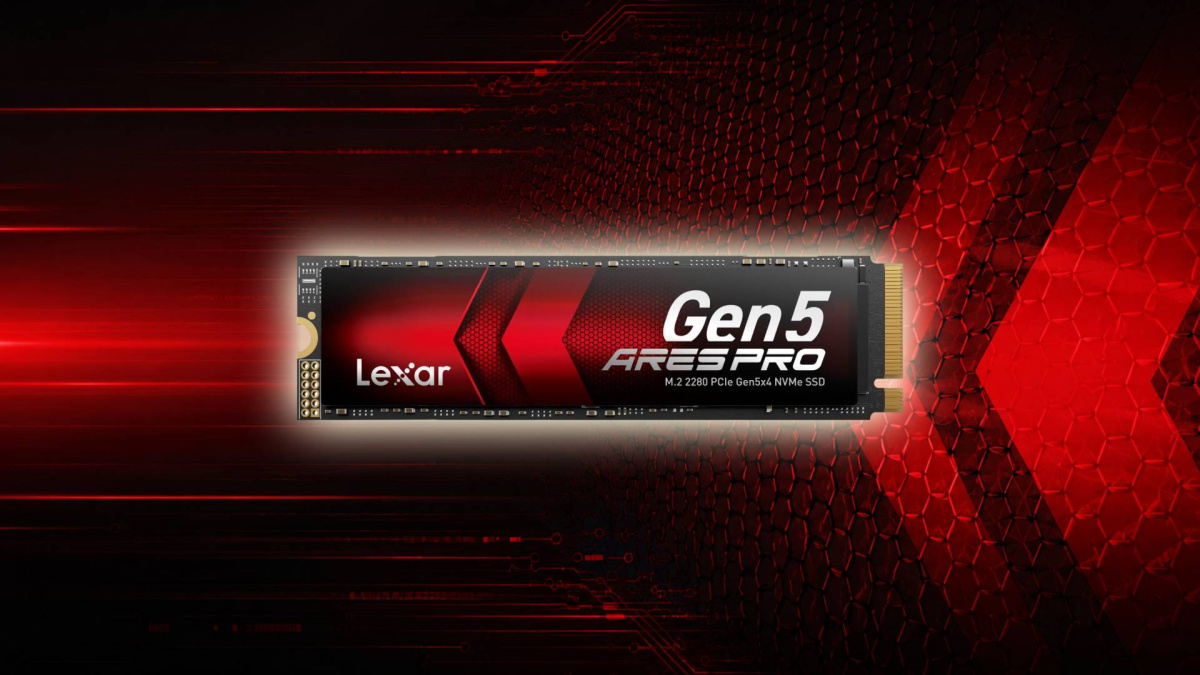
How the Lexar Ares Pro SSD outperforms its predecessors
The Lexar Ares Pro M.2 SSD is creating a buzz, and it’s easy to see why. According to Golem, this SSD uses the PCIe 5.0 interface, hitting read speeds of up to 14,000 MB/s and write speeds of 7,500 MB/s. That’s a huge jump over older models using PCIe 4.0, which is a big deal for gamers and anyone working with 4K video.
To put these numbers in perspective, consider the previous generation of SSDs operating on the PCIe 4.0 interface. Those typically max out at around 7,000 MB/s for read speeds and 5,000 MB/s for write speeds. The leap in performance can be attributed to the increased data lanes and improved bandwidth of the PCIe 5.0 standard. For gamers, this means faster load times, smoother gameplay, and the potential for quicker data transfers, which are crucial when dealing with large game files or high-resolution video content.
But what do these numbers really mean? Sure, they sound impressive, but independent benchmarks will tell the real story. Users need to see if they notice these speed boosts in daily tasks. After all, vendors sometimes stretch the truth about their products. Performance in synthetic benchmarks often doesn't translate directly to real-world usage, where factors like thermal throttling can play a significant role.
Why the current price is a steal for gamers and creators
Pricing is another area where the Lexar Ares Pro shines. Golem reports that the 1TB model is around €145, making it one of the better deals on the market this year. This price point makes it a solid option for gamers and creators who are wary of splurging on pricier SSDs. The 2TB version comes in at €229.49, down from €269.99, which is a great deal for those needing extra storage without breaking the bank.
When you compare these prices to those of competitors, the value becomes clear. For instance, the Samsung 980 Pro, a well-regarded SSD with slightly lower performance metrics, often retails for around €200 for the 1TB version. This difference in pricing can be significant, especially for budget-conscious buyers looking to maximize their investment. Lexar seems to be playing it smart with this pricing strategy to grab a chunk of the market usually dominated by more expensive brands. With high performance and a wallet-friendly price, the Ares Pro could shake things up as consumers look for value in an increasingly pricey tech world.
Exploring the compatibility of the Lexar Ares Pro with various devices
Compatibility is a big issue for many users. The Lexar Ares Pro is designed to fit in with various devices, from computers and laptops to gaming consoles like the PlayStation 5. Golem notes it’s backward compatible with PCIe 4.0 systems, though at lower speeds. This flexibility makes it a smart choice for anyone wanting to upgrade without overhauling their entire setup.
For many users, this backward compatibility is a crucial feature. It allows them to future-proof their purchases, using the Ares Pro in a PCIe 4.0 setup now and upgrading to PCIe 5.0 later without needing to replace their SSD. However, it's essential to note that while the SSD will operate in a PCIe 4.0 system, it won't achieve the same performance levels as it would in a PCIe 5.0 environment. Therefore, potential buyers should evaluate their current system's capabilities and future upgrade plans.
Customer feedback: What buyers are saying about the Lexar Ares Pro
Customer reviews are a key way to gauge how well a product performs in real life. Golem mentions that the Lexar Ares Pro has an average rating of 4.7 out of 5 stars from nearly 300 Amazon reviews. Users often rave about its performance in demanding tasks like gaming and video editing, which fits with the product’s marketing for high-end setups. But buyers should take these reviews with a grain of salt.
Review bias can play a role here. Many users might post reviews right after buying, leaving long-term reliability untested. It’s smart to look for ongoing analysis and discussions about durability and performance under heavy use, since those factors really shape overall satisfaction. For instance, feedback on thermal performance and noise levels during sustained use can be invaluable, particularly for users planning to push the SSD to its limits.
Comparing the Lexar Ares Pro to other SSD options on the market
When sizing up the Lexar Ares Pro, it helps to compare it to other SSDs out there. Its performance metrics seem to stack up against top offerings from brands like Samsung and Western Digital, which have solid reputations in the SSD market. For example, the Samsung 980 Pro has similar specs but usually costs around €200 for the 1TB model.
Western Digital's WD Black SN850, another competitor, offers impressive speeds but typically at a higher price point. The Lexar Ares Pro's pricing strategy, combined with its competitive performance, positions it as a potentially disruptive force in the SSD market. This price difference raises some important questions about brand loyalty versus actual performance. Sure, Samsung has a strong name, but the Lexar Ares Pro offers a value that shouldn’t be ignored. If it can keep its promises of high performance and reliability, it could attract users looking for a budget-friendly choice without sacrificing quality. In tech, brand prestige doesn’t always mean better performance. Consumers should focus on benchmarks, not just brand names.
Real-world scenario: Using the Lexar Ares Pro in daily life
Imagine a typical day for a gamer or content creator using the Lexar Ares Pro SSD. You start your day editing high-resolution video files for a YouTube channel. The fast read and write speeds mean you can scrub through 4K footage effortlessly and render videos in record time. Later, you switch to gaming, where the SSD's high performance translates to faster load times and a more seamless experience in open-world games with massive environments.
As the day progresses, you might download a new game or transfer projects to an external drive. The Ares Pro's impressive data transfer speeds make these tasks quick and painless, allowing you to focus more on productivity and less on waiting for progress bars to fill.
What's still unclear
Even with strong performance claims and positive early reviews, some questions linger about the Lexar Ares Pro’s long-term reliability and real-world performance. How does it cope with high-load scenarios? What are the thermals like during heavy use? Plus, while the compatibility claims sound good, specific device details still seem vague. This could leave some users unsure if it’ll fit into their current setups. Until we see independent testing and user feedback, potential buyers should stay cautiously optimistic.
The issue of thermal management is particularly pressing. High-speed SSDs can generate significant heat, potentially leading to throttling if not adequately cooled. Users considering the Ares Pro should ensure their systems have adequate airflow or cooling solutions in place to maintain optimal performance.
Why this matters
The Lexar Ares Pro SSD stands out in a crowded market. It offers high performance, competitive pricing, and broad compatibility, making it appealing for gamers and creators. Still, as with any tech product, buyers should stay alert and wait for thorough, independent reviews to back up Lexar’s claims. In a space where many brands show off impressive specs, the real differentiator will be the balance of performance, reliability, and price. As consumers look for value, the Lexar Ares Pro might just be a key player in shaping the future of SSD options in Europe and beyond.
For those on the hunt for a new SSD, the Lexar Ares Pro offers a compelling mix of features and value. However, it's essential to remain informed and critical, particularly regarding long-term reliability and compatibility with existing hardware. The tech landscape is ever-evolving, and products like the Ares Pro drive innovation and competition, ultimately benefiting consumers seeking both performance and affordability.
Sources cross-referenced
This story was synthesised from reporting by 4 outlets:
Discuss this story
Got a take, a correction, or a follow-up tip? Reply where you read — we read everything.
Found an error? File a correction at /corrections. Substantive corrections are logged publicly.
One short email. The most important Hardware news, fact-checked, no fluff. Free, unsubscribe anytime.
More from Hardware
Apple M5 Pro vs. Apple M4 Pro: Projecting the Next Generation of Apple Silicon
We project the likely advancements of the unannounced M4 Pro and M5 Pro chips, offering a balanced, speculative look at future performance and efficiency.
AMD Ryzen 7 9800X3D vs Intel Core Ultra 7 265K: Which Chip Drives Your Next Build?
Deciding between AMD's V-Cache prowess and Intel's new Ultra architecture? This guide cuts through the noise to show you what each CPU truly offers for your money.
AMD Ryzen 9 9950X3D vs Intel Core Ultra 9 285K: Next-Gen Desktop Showdown
A deep dive into the expected strengths of AMD's Zen 5 X3D and Intel's next-gen Core Ultra K-series, laying out the trade-offs for serious buyers.
AMD RX 9080 XT vs. NVIDIA RTX 5080: Which High-End GPU Fits Your Build?
Navigating the high-end GPU market means weighing raw rasterization, ray tracing, upscaling tech, and ecosystem against your budget and priorities.
The Byte-Pulse Newsroom is the editorial system that produces Byte-Pulse's daily tech news coverage. Each story is cross-referenced across 3+ independent outlets, drafted with AI assistance by the newsroom system (Drafter → Editor → Fact-Checker → Polisher), and reviewed by Serhat Er, Editor-in-Chief, before publication. We disclose AI augmentation openly. Editorial accountability stays with the named editor on every article. Tips: editorial@byte-pulse.net.
Don’t miss these
PlayStation 5 Pro vs Nintendo Switch 2: Powerhouse or Portable Prowess?
Don't buy until you read this. We cut through the hype to lay out the real trade-offs between Sony's next powerhouse and Nintendo's anticipated hybrid.
Asus ROG Phone 9 vs Sony Xperia 1 VII: Which Niche Flagship Earns Your Money?
Deciding between the gaming-focused ROG Phone 9 and the creator-centric Xperia 1 VII? This guide breaks down every spec to help you choose.
Proton VPN vs NordVPN: Which One Earns Your Subscription?
A deep dive into Proton VPN and NordVPN, comparing their privacy, performance, features, and value, helping you make an informed decision.
Perplexity Pro vs ChatGPT Plus: Which AI Assistant Fits Your Workflow?
This guide lays out the strengths and approaches of Perplexity Pro and ChatGPT Plus, helping you identify which AI assistant aligns with your specific needs.

Pokémon TCG Movie Signals Strategic Media Pivot for The Pokémon Company
A new Pokémon movie focused on the TCG is coming in 2027, marking a strategic pivot for the franchise as it navigates massive global fan engagement and logistical challenges.
Honor Magic 8 Pro vs Samsung Galaxy S26 Ultra: Which Future Flagship Fits Your Wallet and Workflow?
Deciding between the anticipated Honor Magic 8 Pro and Samsung Galaxy S26 Ultra? Our deep dive into expected specs and features provides the fair comparison you need.