Zelnick's Streaming Vision: Hype or Hard Reality for GTA 6?
Take-Two's CEO predicts ubiquitous game streaming within three years, but the path from boardroom ambition to global operational reality for a title like GTA 6 is fraught with technical, logistical, and regulatory challenges that remain unaddressed.


Strauss Zelnick, the chief executive of Take-Two, has recently made a rather audacious claim: he expects the gaming world to be fully immersed in what he terms “commercial streaming” within the next three years. This isn't merely about digital distribution, which is already the industry standard, but about a future where games are streamed with such low latency and ease that virtually any device becomes a viable gaming machine. As he put it during a recent quarterly earnings call, as reported by Eurogamer, he is “happy to put a timeline on it,” asserting that this shift could “multiply the effective install base by ten.” While such a vision paints a compelling picture of market expansion, particularly for titles with broad appeal, I find myself deeply skeptical of the implied ease and speed of this transition, especially considering the concrete, immediate challenges facing a launch as monumental as Grand Theft Auto 6.
Zelnick's three-year streaming bet
Zelnick's forecast, made during Take-Two's latest financial report, posits a future where games are accessed with “minimal barriers, and minimal fuss,” a veritable plug-and-play streaming system for the masses. This vision, which he believes will be a reality within three years, is predicated on the idea that "machines that weren't game machines before will become game machines," according to Eurogamer's initial report. It's a grand statement, especially when Take-Two has just revised its Fiscal 2027 net bookings upwards to a staggering $8.2 billion, a testament to the anticipated success of GTA 6. However, even Zelnick himself tempered expectations, noting that while the install base might multiply, the company would not "10x our revenue" because "your avid consumers already have access to video game machines." This nuance is important: it's about reaching new audiences, not necessarily extracting more from existing hardcore players. Frankly, this is a bold, almost audacious claim, typical of C-suite futurism, but one that glosses over the grinding reality of infrastructure deployment.
The cloud gaming reality check
Zelnick's optimism about "low latency" streaming is not entirely new; the industry has heard such promises before, not least with the ill-fated Google Stadia, which Take-Two itself supported. Golem.de accurately highlights Zelnick's acknowledgment of these past challenges, noting that he explicitly defines "commercial streaming" as a "Lösung mit niedriger Latenz" (a low-latency solution). He attributes the potential for success this time to "enorme Fortschritte bei den Netzwerken der Hyperscaler" (enormous progress in hyperscaler networks) and advancements in "Edge-Netzwerken" (edge networks), even mentioning an unnamed market participant building a large edge network in the USA. However, anyone who has shipped real hardware in Europe for over a decade knows that "low latency" is not a switch you simply flip on. It requires massive, capital-intensive investment in physical infrastructure, not just in the US, but globally, and particularly across the diverse, often fragmented internet landscape of the European Union.
The logistical challenges of deploying and maintaining such extensive edge computing networks across different regulatory and geographical territories are immense. We are talking about data centers pushed closer to the end-user, a complex undertaking involving real estate, power grids, cooling, and constant maintenance. The term "revolutionary" is often thrown around in PR, but the spec sheet for this kind of infrastructure is measured in gigawatts, fiber optic miles, and server racks, not marketing buzzwords. Until we see concrete, independently verifiable roadmaps for this global edge infrastructure – especially for Europe, with its stringent data sovereignty laws and varying internet penetration – Zelnick's vision remains a theoretical aspiration rather than an imminent operational reality. The cost structures for such a build-out are astronomical, and how those costs translate to a sustainable, consumer-friendly pricing model remains entirely opaque.
What GTA 6's launch reveals about the present
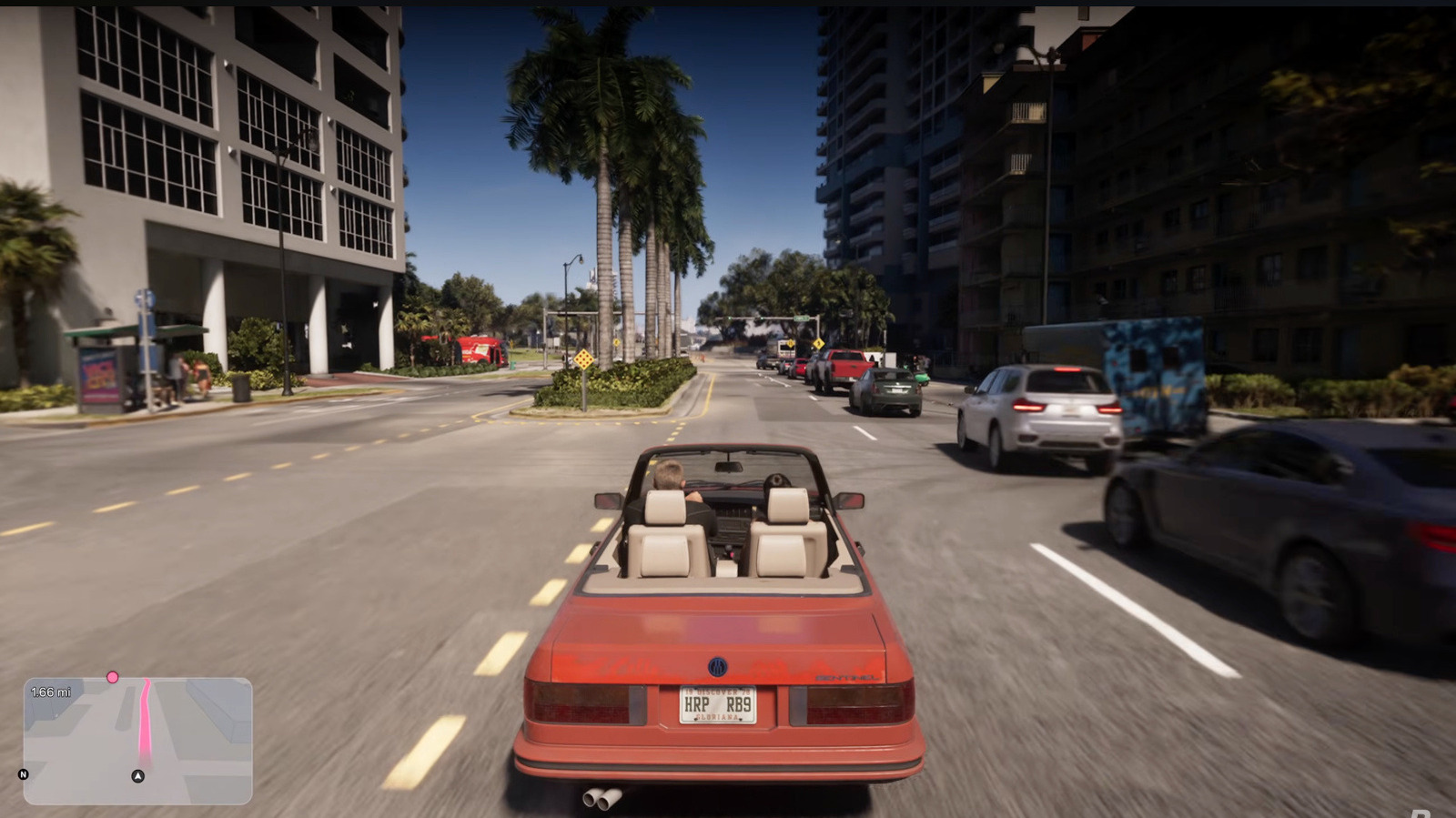
While Zelnick gazes three years into the future, the immediate reality for Take-Two is the behemoth that is Grand Theft Auto 6, slated for release on [PlayStation 5](https://www.amazon.com/s?k=PlayStation%205&tag=bytepulse01-20) and Xbox Series X/S on 19 November 2026. The game currently has no PC release date, a point of much speculation. Eurogamer's Dom Peppiatt directly questions whether GTA 6 might see a streaming platform release before a PC port, given Zelnick's comments. However, Golem.de reports a crucial detail: when directly asked about GTA 6's concrete future regarding streaming, Zelnick refused to comment, deferring to Rockstar Games. This, to me, is incredibly telling. A CEO can wax lyrical about a grand, industry-shifting vision, yet remains cagey about applying it to his company's most anticipated, revenue-driving product. It suggests that while the vision might exist, it is far from being a ready-for-prime-time operational plan for their flagship title.
The shift to digital distribution, however, is an undeniable present reality. Take-Two's business is "well over 90 percent digitally distributed," as Zelnick confirmed, with physical games accounting for a mere "2 percent of their revenue this quarter, and was 3 percent for the last full fiscal year," according to industry analyst Daniel Ahmad, cited by Eurogamer. This aligns with Sony's controversial decision to move away from physical disc-based games and mirrors comments from other publishers like Capcom and Sega. This is not a future projection; it is the current state of affairs, a stark contrast to the nebulous timeline of widespread streaming. Furthermore, we cannot ignore the very real, immediate challenges Rockstar faces, such as the ongoing employment tribunal battle over alleged union-busting, which Eurogamer's Robert Purchese reported Zelnick was "not in the least" concerned about affecting GTA 6's launch. These are the tangible, present-day issues that demand attention, not just theoretical future scenarios.
Why platform strategy matters more than ever
Beyond the streaming debate, Take-Two's platform strategy highlights a significant shift in the market. Golem.de reports that PC sales, which accounted for a mere 1 to 2 percent of comparable console/PC releases two decades ago, now represent a formidable "40 bis 50 Prozent" (40 to 50 percent) of sales, with a continuing upward trend. This makes the absence of an immediate PC release date for GTA 6 all the more puzzling, although Zelnick's comments offer hope for PC players not having to wait "allzu lange." Take-Two is adept at maximizing profit across various platforms, whether through strategic releases on PS Plus and Game Pass or by simply ensuring its software is available as widely as possible – a pragmatic approach that prioritizes reach over ideological purity. The recent, somewhat peculiar, announcement of an exclusive Netflix deal to air the next 'deep dive' into GTA 6 further underscores the publisher's willingness to explore diverse distribution and marketing channels.
This broader trend of platform diversification and content exclusivity fights for market share is crucial. While streaming promises universal access, it could also lead to a new form of platform lock-in if a few hyperscalers dominate the infrastructure. For European consumers and regulators, this raises critical questions about market concentration, data privacy under GDPR, and equitable access to content across different member states, especially concerning varying internet infrastructures. The notion that "all games can become mobile games, if you will," as Zelnick suggested, implies a radical redefinition of game accessibility, but the regulatory and technical frameworks for such a shift are far from mature in our complex European market.
Reading between the lines of Take-Two's future
Strauss Zelnick's vision for ubiquitous game streaming within three years, while presented with conviction, feels like a strategic pronouncement designed to prime the market rather than a concrete, imminent operational rollout. It is a future-oriented statement that, frankly, lacks the granular detail and acknowledgment of the immense practical hurdles that anyone in hardware logistics or network deployment understands intimately. The digital shift is complete, and the revenue projections for GTA 6 are genuinely impressive. However, the leap to pervasive, low-latency streaming for the "vast majority of customers" across global markets – particularly with the diverse infrastructure and regulatory landscape of Europe – is a much more complex, capital-intensive, and time-consuming endeavor than a simple three-year timeline suggests.
What remains unclear from these reports is substantial: there is no mention of the specific investment required for this European edge infrastructure build-out, the regulatory challenges of data sovereignty and GDPR compliance for streamed gaming data across borders, or the actual business models that will sustain a "10x install base" without a proportional revenue increase. Furthermore, the environmental impact of running these massive, always-on server farms and edge networks is a growing concern for European consumers and policymakers, a topic entirely absent from Zelnick's forward-looking statements. While the digital future of gaming is undeniable, the transition to widespread "commercial streaming" within three years, particularly for a global European market with its unique infrastructure and regulatory landscape, strikes me as an optimistic projection rather than a concrete operational plan. It is a vision that, for now, remains suspended between ambitious rhetoric and the hard realities of engineering and logistics.
Sources cross-referenced
This story was synthesised from reporting by 4 outlets:
Best-selling controllers, headsets and storage for your next session.
Shop gaming gear →Discuss this story
Got a take, a correction, or a follow-up tip? Reply where you read — we read everything.
Found an error? File a correction at /corrections. Substantive corrections are logged publicly.
One short email. The most important Gaming news, fact-checked, no fluff. Free, unsubscribe anytime.
More from Gaming

Pokémon TCG Movie Signals Strategic Media Pivot for The Pokémon Company
A new Pokémon movie focused on the TCG is coming in 2027, marking a strategic pivot for the franchise as it navigates massive global fan engagement and logistical challenges.

GTA 6's Realism Gamble: Will Player Patience Pay Off?
Byte-Pulse examines GTA 6's shift to ultra-realism, from complex Wanted systems to car refueling, and questions if 'ambition' justifies potential player friction.

Rockstar's Netflix Gambit: A 'New Thing' or Calculated Content Gate?
Rockstar Games initiated the Netflix exclusive 'extended look' for GTA 6, drawing ire from fans. We dissect the strategy and its implications.
GTA VI: Beyond the Hype - Costs, Console Choices, and Cyber Threats
Byte-Pulse examines GTA VI's colossal scope, the practicalities of console choice, and the digital dangers lurking beneath the launch hype.
The Byte-Pulse Newsroom is the editorial system that produces Byte-Pulse's daily tech news coverage. Each story is cross-referenced across 3+ independent outlets, drafted with AI assistance by the newsroom system (Drafter → Editor → Fact-Checker → Polisher), and reviewed by Serhat Er, Editor-in-Chief, before publication. We disclose AI augmentation openly. Editorial accountability stays with the named editor on every article. Tips: editorial@byte-pulse.net.
Don’t miss these
Proton VPN vs NordVPN: Which One Earns Your Subscription?
A deep dive into Proton VPN and NordVPN, comparing their privacy, performance, features, and value, helping you make an informed decision.
Perplexity Pro vs ChatGPT Plus: Which AI Assistant Fits Your Workflow?
This guide lays out the strengths and approaches of Perplexity Pro and ChatGPT Plus, helping you identify which AI assistant aligns with your specific needs.

Apple's AI Pivot: Vision Pro Content Cut, Siri Rebuilt Amid Layoffs
Apple's latest layoffs signal a strategic pivot, dialing back high-cost Vision Pro content while re-tooling Siri for the AI era. What's next for Apple?

Apple's 'Deep Discounts': US Inventory Flush, Not European Bargains
Byte-Pulse examines Apple's recent US sales, revealing that 'deep discounts' on popular devices like the iPhone 17 Pro and M3 iPad Air are less about consumer savings and more about clearing stock ahead of new launches. We critically assess whether these offers translate to real value for European buyers.

D23 2026: Disney's Content Deluge Sparks Questions About Strategy
Byte-Pulse cuts through D23 hype: We dissect Disney's ambitious content slate, from Simpsons: Hit & Run to Ahsoka season 2, and question the real-world implications and European market strategy.
Notion vs Obsidian: Which Knowledge Hub Fits Your Workflow?
Deciding between Notion and Obsidian? We break down the core differences in philosophy, data ownership, collaboration, and extensibility to help you choose.