Enhancing Your Outdoor Space with Eightree's Smart WLAN Socket
Explore how this outdoor WLAN socket boosts convenience, efficiency, and smart home integration.

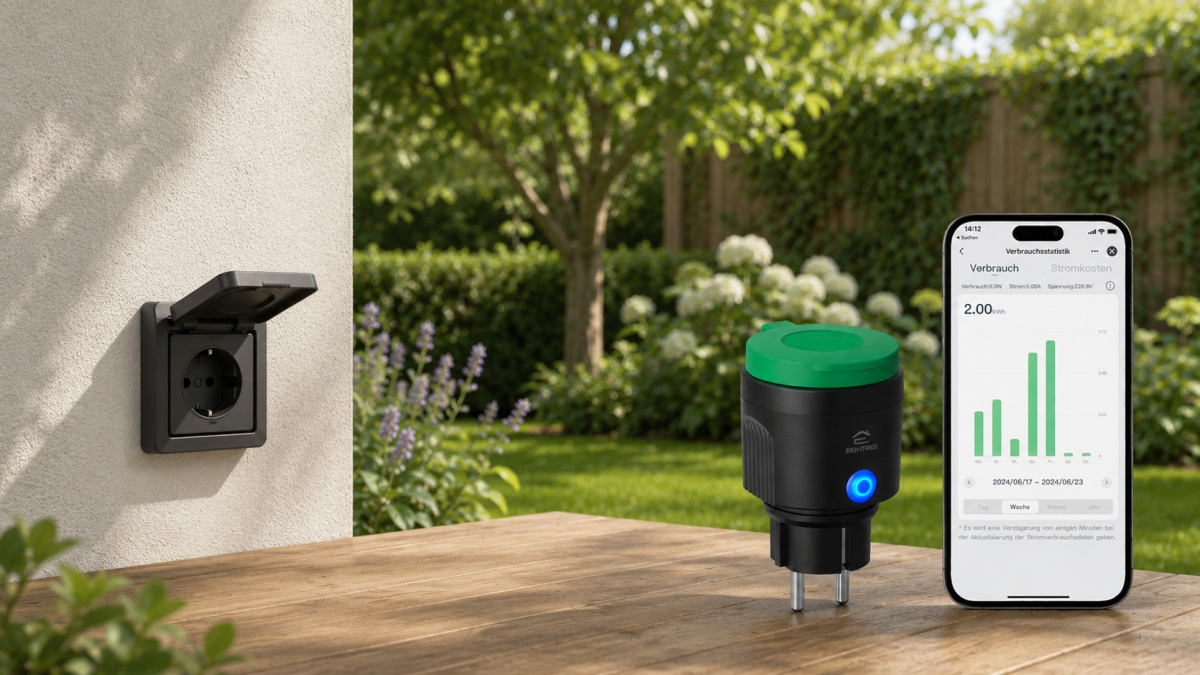
Enhancing Outdoor Living with the Eightree WLAN Socket
In an era where technology seamlessly integrates with everyday life, the Eightree WLAN socket is revolutionizing how we manage outdoor devices. Imagine controlling your garden lights, irrigation systems, and electric grills not through cumbersome manual switches, but directly from your smartphone. This is possible with the Smart-Life app that accompanies the Eightree WLAN socket, providing a level of convenience previously unattainable with traditional outdoor power solutions.
Transforming Outdoor Device Management
The Eightree WLAN socket offers a significant leap forward in the automation and management of outdoor devices. Previously, managing these devices required physical presence and manual operation—whether it was ensuring the garden lights were on at dusk or turning off the electric grill after a barbecue. Now, with the Smart-Life app, you can control these devices from anywhere, as long as you have an internet connection. For frequent travelers or busy individuals, this feature is invaluable.
Automation features such as schedules and timers further enhance the utility of the Eightree WLAN socket. You can set devices to operate on a schedule, ensuring they turn on or off at specific times without requiring manual intervention. For instance, you can schedule your garden lights to turn on at sunset and off at sunrise, or set a timer for your electric grill to prevent accidental overnight power consumption. The countdown timer feature is particularly useful for devices that only need to run for a limited time, helping to cut down on energy waste.
Energy Efficiency: Monitoring Usage to Cut Costs
Energy efficiency is a key selling point for the Eightree WLAN socket. In today's world, where energy costs are a concern for many households across Europe, the ability to monitor and manage energy usage is crucial. The Eightree WLAN socket includes a built-in energy monitoring feature that tracks the power consumption of connected devices. Within the app, users can input their current electricity rates, allowing the app to estimate the cost of usage based on real-time data.
This feature not only aids in identifying energy-intensive devices but also empowers users to make informed choices about their electricity consumption. By visualizing energy usage and associated costs, users can actively work to reduce their bills. This is not just an environmentally conscious choice but a financially prudent one as well, enhancing the overall value proposition of the product.
Weather-Resistant Design: Durability for Outdoor Use
Durability is a critical factor for outdoor technology, and the Eightree WLAN socket excels in this regard. It boasts an IP44 rating, indicating a high level of resistance to both water and dust. This makes it suitable for use in various outdoor settings, including gardens, terraces, and balconies. The device is designed to operate in temperatures ranging from -5 to 40 °C, ensuring reliable performance even in challenging weather conditions.
The importance of a weather-resistant design cannot be overstated. Anyone who's dealt with outdoor electronics knows the value of a sturdy, weather-tight design. The protective cover on the Eightree WLAN socket keeps it safe from moisture and dirt when not in use, which is crucial for longevity and reliability. This design consideration ensures that the socket remains functional and safe to use, regardless of the weather conditions it faces.
Smart Home Integration: Voice Control with Alexa and Google Home
The Eightree WLAN socket isn't just a standalone device; it integrates seamlessly with major smart home systems like Amazon Alexa and Google Home. This compatibility allows users to control connected devices using voice commands, adding another layer of convenience and accessibility.
Golem, a tech review platform, highlights how this integration enhances the user experience by allowing the socket to smoothly fit into existing smart home ecosystems. For users who already have a smart home setup, incorporating the Eightree WLAN socket is straightforward, allowing for unified control of multiple devices through a single interface. This ease of integration is not just a luxury but a necessity as the trend towards smart home technology continues to grow.
Compared to: The Competition and Predecessors
When considering the Eightree WLAN socket, it's important to understand how it stacks up against its closest competitors and predecessors. Traditional outdoor sockets, for instance, lack the smart functionalities and remote control capabilities that the Eightree offers. While they may be robust and durable, they don't provide the energy efficiency monitoring or smart home integration that modern users demand.
In comparison to other smart sockets on the market, the Eightree WLAN socket is competitively priced at €15.99. Similar products often range from €20 to €40, depending on features and brand reputation. The Eightree offers a compelling mix of features at a more accessible price point, making it an attractive option for those entering the smart home market.
Real Daily-Use Scenario
Consider a scenario where you’re hosting a garden party. With the Eightree WLAN socket, you can set your garden lights to create ambiance as the sun sets, control the electric grill’s power from your phone, and ensure all devices are turned off after the party with a simple command or schedule setting. This not only simplifies the management of these tasks but also allows you to enjoy the event without worrying about manual operations.
What This Means for You
For consumers, the Eightree WLAN socket represents a practical solution for enhancing outdoor device management. Its blend of convenience, energy efficiency, and smart home integration make it a noteworthy addition to the expanding smart home market. As energy costs continue to rise, the ability to monitor and control outdoor devices becomes increasingly valuable.
However, potential buyers should weigh the benefits against the unresolved questions about long-term performance and compatibility. While the current promotional pricing adds urgency, it’s essential to consider whether this fits within your smart home ecosystem and meets your needs for outdoor device management.
What's Still Unclear
Despite its many advantages, some aspects of the Eightree WLAN socket remain unclear. For instance, there is limited data on how the device performs over extended periods, especially under varied weather conditions or heavy usage. Additionally, while Golem mentions compatibility with major smart home systems, specific limitations or potential compatibility issues with certain devices or ecosystems are not detailed. These are important considerations that require further investigation to ensure consumers can make informed purchasing decisions.
Closing Take
The Eightree WLAN socket stands out as a practical and affordable entry point into the world of smart outdoor device management. Its features align with current trends in energy efficiency and smart home integration, offering significant benefits to users. However, as with any technology, it’s crucial to stay informed about potential limitations and performance over time. For those ready to embrace smart home technology, the Eightree WLAN socket represents a compelling option that balances functionality with cost-effectiveness, promising to enhance outdoor living in meaningful ways.
Sources cross-referenced
This story was synthesised from reporting by 4 outlets:
Discuss this story
Got a take, a correction, or a follow-up tip? Reply where you read — we read everything.
Found an error? File a correction at /corrections. Substantive corrections are logged publicly.
One short email. The most important Hardware news, fact-checked, no fluff. Free, unsubscribe anytime.
More from Hardware
NVIDIA RTX 4070 Ti Super vs. RTX 5070 (Rumored): The 'Buy Now or Wait' Dilemma
Deciding between a powerful current-gen GPU and the promise of next-gen performance requires a clear-eyed look at immediate needs versus future potential. This guide lays out the trade-offs.
RTX 5060 Ti vs RX 9060 XT: Which Mid-Range Powerhouse Fits Your Rig?
Deciding between the rumored RTX 5060 Ti and RX 9060 XT? This guide cuts through the noise to highlight the real-world trade-offs for gamers and creators.
Lenovo Legion Pro 7i 2026 vs Razer Blade 16 2026: Which Flagship Gaming Laptop Fits Your Future?
Deciding between the next-gen Lenovo Legion Pro 7i and Razer Blade 16 means weighing peak performance against premium design and a more compact footprint. We break down the trade-offs.
Razer Blade 16 (2026) vs ASUS ROG Zephyrus G16 (2026): Which Next-Gen Powerhouse Fits Your Workflow?
Deciding between Razer's premium Blade 16 2026 and ASUS's versatile ROG Zephyrus G16? We cut through the hype to lay out the real trade-offs.
The Byte-Pulse Newsroom is the editorial system that produces Byte-Pulse's daily tech news coverage. Each story is cross-referenced across 3+ independent outlets, drafted with AI assistance by the newsroom system (Drafter → Editor → Fact-Checker → Polisher), and reviewed by Serhat Er, Editor-in-Chief, before publication. We disclose AI augmentation openly. Editorial accountability stays with the named editor on every article. Tips: editorial@byte-pulse.net.
Don’t miss these
Asus ROG Phone 9 vs Sony Xperia 1 VII: Which Niche Flagship Earns Your Money?
Deciding between the gaming-focused ROG Phone 9 and the creator-centric Xperia 1 VII? This guide breaks down every spec to help you choose.
Proton VPN vs NordVPN: Which One Earns Your Subscription?
A deep dive into Proton VPN and NordVPN, comparing their privacy, performance, features, and value, helping you make an informed decision.
Perplexity Pro vs ChatGPT Plus: Which AI Assistant Fits Your Workflow?
This guide lays out the strengths and approaches of Perplexity Pro and ChatGPT Plus, helping you identify which AI assistant aligns with your specific needs.

Pokémon TCG Movie Signals Strategic Media Pivot for The Pokémon Company
A new Pokémon movie focused on the TCG is coming in 2027, marking a strategic pivot for the franchise as it navigates massive global fan engagement and logistical challenges.
Honor Magic 8 Pro vs Samsung Galaxy S26 Ultra: Which Future Flagship Fits Your Wallet and Workflow?
Deciding between the anticipated Honor Magic 8 Pro and Samsung Galaxy S26 Ultra? Our deep dive into expected specs and features provides the fair comparison you need.
Notion vs Obsidian: Which Knowledge Hub Fits Your Workflow?
Deciding between Notion and Obsidian? We break down the core differences in philosophy, data ownership, collaboration, and extensibility to help you choose.