Google-Blackstone Venture Builds TPU Data Centers by 2027
Google and Blackstone team up to launch data centers using Google's TPUs, with a $5 billion investment.

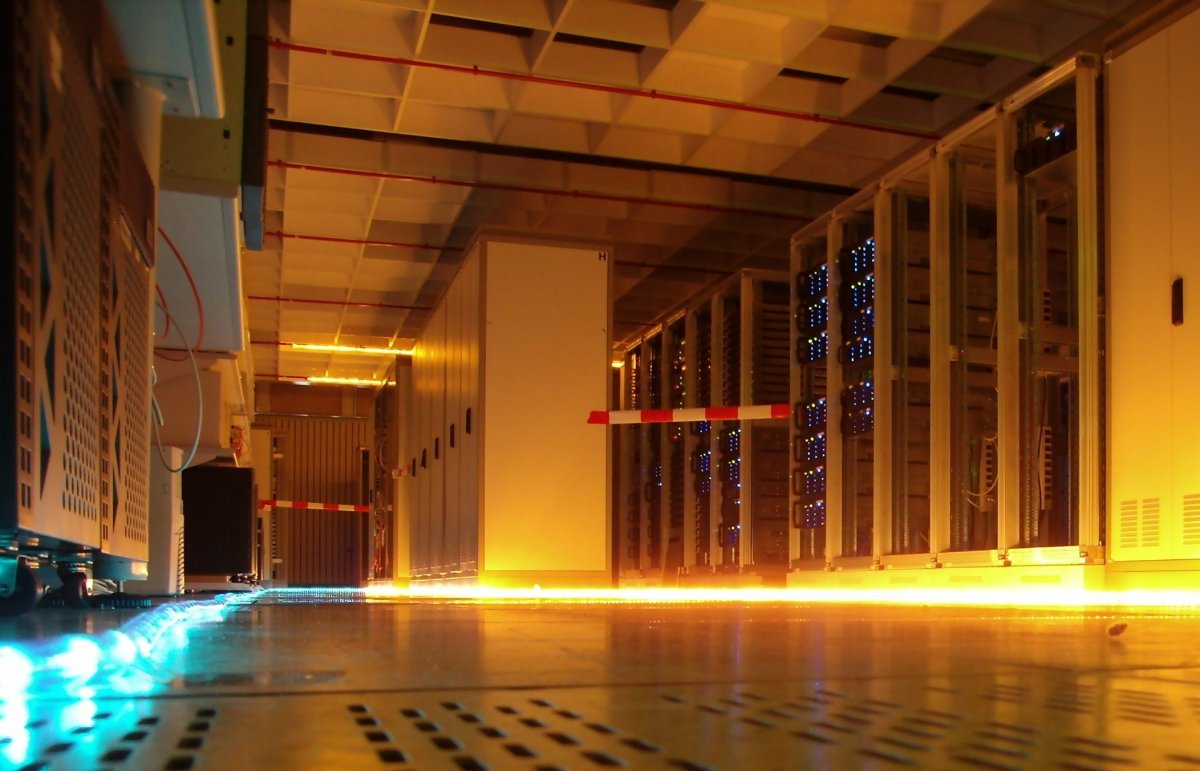
In a significant move for the tech and investment sectors, Google and US investment giant Blackstone have announced a joint venture to develop new data centers based on Google's Tensor Processing Units (TPUs). This collaboration signifies a substantial investment in the future of artificial intelligence (AI) infrastructure, with Blackstone committing a hefty $5 billion to the enterprise. This venture highlights Blackstone's ongoing expansion into data centers and AI, marking a notable chapter in the evolution of computing technologies.
A New Era for Google TPUs
Google's Tensor Processing Units (TPUs) have been pivotal in the company's AI operations, primarily catering to Google Cloud clients. These specialized chips are designed to accelerate machine learning tasks, offering significant performance improvements over traditional processors. With this joint venture, Google is poised to expand its role beyond servicing its own cloud clients, stepping into the broader arena as a hardware supplier for AI data centers. This move follows a previous agreement with Meta Platforms, where Google was tapped to supply TPUs for Meta's own data center needs.
The construction of these new data centers will take place in the United States, with the first facility expected to be operational by 2027, boasting a capacity of 500 megawatts. This substantial capacity will support a wide range of AI applications, from natural language processing to complex data analytics. At the helm of this new endeavor will be Benjamin Treynor Sloss, a seasoned Google executive with two decades of experience managing Google's infrastructure. His leadership is expected to drive innovation and efficiency in the development of these state-of-the-art facilities.
Blackstone's Expanding AI Footprint
Blackstone's involvement in this venture is part of a broader strategy to cement its presence in the AI and data center markets. Earlier this year, Blackstone announced a €4 billion project for a data center in North Rhine-Westphalia, Germany, showing its commitment to expanding its data center footprint globally. Additionally, Blackstone has established a joint venture with AI company Anthropic, valued at $300 million, aimed at distributing AI tools to enterprises. These strategic moves illustrate Blackstone's recognition of the critical role that AI infrastructure will play in the future economy and its desire to be a key player in shaping that future.
Key Highlights of the Joint Venture
- Investment Scale: Blackstone's $5 billion investment is aimed at leveraging Google's TPU technology to build state-of-the-art facilities.
- Initial Focus: The venture will initially concentrate on the US market, laying the groundwork for further expansion.
- Leadership: Benjamin Treynor Sloss from Google will lead the new company, bringing extensive experience and vision.
- Strategic Alignment: This project aligns with Blackstone's ongoing commitments to bolster its AI and data center initiatives.
Context: European Data Center Trends
As the European market experiences a surge in data center investments, this joint venture underscores the increasing importance of AI infrastructure worldwide. Companies across Europe are racing to enhance their computational capabilities, with tech giants like Amazon and Microsoft already making significant strides in the region. The expansion of data centers equipped with advanced AI processing capabilities is critical to meeting the growing demand for data processing and storage, driven by advancements in technologies such as the Internet of Things (IoT), machine learning, and big data analytics.
A Real-World Scenario
Imagine a mid-sized tech company based in Austin, Texas, looking to leverage AI to enhance its business analytics. Currently, it relies on third-party cloud services that can be expensive and sometimes limited in terms of computational power. With the new Google-Blackstone data centers coming online, this company could gain access to more affordable and powerful AI computing resources, enabling it to process large datasets more efficiently and develop advanced machine learning models in-house. This could translate into better decision-making capabilities and a competitive edge in its industry.
What This Means for You
For businesses and tech enthusiasts, this development promises more accessible AI computing power. The collaboration between Google and Blackstone could lower costs for cloud services as increased competition drives prices down. It may also lead to enhanced service offerings, with more advanced AI capabilities becoming available to a broader audience. As TPU resources become more abundant, companies of all sizes could find new opportunities to integrate AI into their operations, driving innovation and efficiency across sectors.
What's Still Unclear
While the partnership holds great promise, several aspects remain uncertain. The specific locations of these new data centers have not been disclosed, which could impact regional job markets and local economies. Additionally, the timeline for bringing additional capacity online remains vague, raising questions about the project's scalability and speed to market. The full extent of Blackstone's and Google's respective roles in the operational aspects of the venture is also yet to be detailed, leaving industry observers speculating about the balance of power and responsibilities.
Why This Matters
Google's partnership with Blackstone to build TPU-based data centers marks a pivotal shift in AI infrastructure development. As demand for AI capabilities grows, this joint venture could significantly influence the landscape of data center services, providing more options and potentially altering market dynamics. The initiative highlights the ongoing global competition to lead in AI technology and infrastructure, with implications for technological advancement and economic growth. For businesses and consumers alike, this could mean greater access to cutting-edge AI tools, fostering innovation and driving new opportunities in the digital age.
Discuss this story
Got a take, a correction, or a follow-up tip? Reply where you read — we read everything.
Found an error? File a correction at /corrections. Substantive corrections are logged publicly.
One short email. The most important AI news, fact-checked, no fluff. Free, unsubscribe anytime.
More from AI
Perplexity Pro vs ChatGPT Plus: Which AI Assistant Fits Your Workflow?
This guide lays out the strengths and approaches of Perplexity Pro and ChatGPT Plus, helping you identify which AI assistant aligns with your specific needs.
Claude Pro vs Google Gemini Advanced: Which AI Assistant Deserves Your Subscription?
This definitive guide cuts through the marketing to give you a fair, balanced breakdown of Claude Pro and Gemini Advanced, letting you decide which AI best fits your workflow.
Claude Pro vs Google Gemini Advanced: Which AI Actually Earns Your Subscription?
Byte-Pulse lays out the real trade-offs between Claude Pro and Google Gemini Advanced, helping you pick the AI that fits your workflow, without picking for you.
ChatGPT Plus vs Google Gemini Advanced: Which AI Assistant Fits Your Workflow?
Deciding between ChatGPT Plus and Google Gemini Advanced? We break down the models, features, integrations, and pricing to help you align your choice with your specific priorities.
The Byte-Pulse Newsroom is the editorial system that produces Byte-Pulse's daily tech news coverage. Each story is cross-referenced across 3+ independent outlets, drafted with AI assistance by the newsroom system (Drafter → Editor → Fact-Checker → Polisher), and reviewed by Serhat Er, Editor-in-Chief, before publication. We disclose AI augmentation openly. Editorial accountability stays with the named editor on every article. Tips: editorial@byte-pulse.net.
Don’t miss these
Asus ROG Phone 9 vs Sony Xperia 1 VII: Which Niche Flagship Earns Your Money?
Deciding between the gaming-focused ROG Phone 9 and the creator-centric Xperia 1 VII? This guide breaks down every spec to help you choose.
Proton VPN vs NordVPN: Which One Earns Your Subscription?
A deep dive into Proton VPN and NordVPN, comparing their privacy, performance, features, and value, helping you make an informed decision.

Pokémon TCG Movie Signals Strategic Media Pivot for The Pokémon Company
A new Pokémon movie focused on the TCG is coming in 2027, marking a strategic pivot for the franchise as it navigates massive global fan engagement and logistical challenges.

Apple's AI Pivot: Vision Pro Content Cut, Siri Rebuilt Amid Layoffs
Apple's latest layoffs signal a strategic pivot, dialing back high-cost Vision Pro content while re-tooling Siri for the AI era. What's next for Apple?

D23 2026: Disney's Content Deluge Sparks Questions About Strategy
Byte-Pulse cuts through D23 hype: We dissect Disney's ambitious content slate, from Simpsons: Hit & Run to Ahsoka season 2, and question the real-world implications and European market strategy.
Honor Magic 8 Pro vs Samsung Galaxy S26 Ultra: Which Future Flagship Fits Your Wallet and Workflow?
Deciding between the anticipated Honor Magic 8 Pro and Samsung Galaxy S26 Ultra? Our deep dive into expected specs and features provides the fair comparison you need.