Google TV Gets Smart: Gemini AI and New Remotes On The Way
Google TV's next big update: Gemini AI for personalized content, plus new pointer remotes for easier navigation. What does it mean for your couch time?

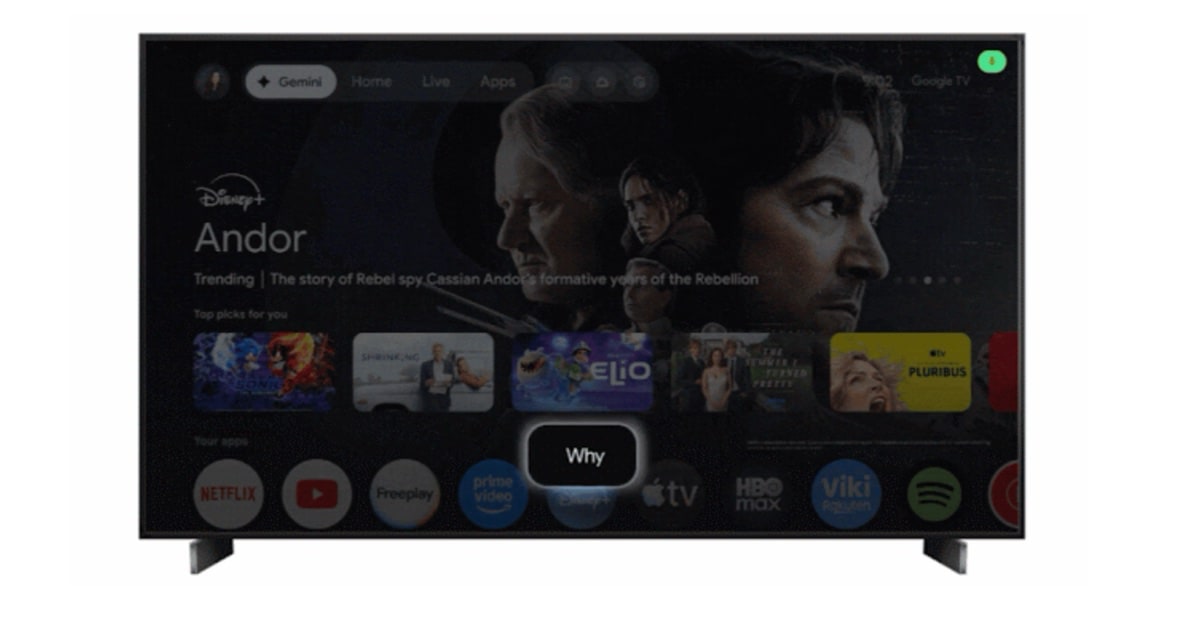
Google TV Gets Smart: Gemini AI and New Remotes On The Way
Google's recent developer conference brought exciting news for fans and users of Google TV and Android TV. These platforms, which are already a staple in more than 300 million active devices each month, are on the verge of receiving significant updates. At the heart of these updates is Gemini AI, a new technology that promises to revolutionize the way we discover and interact with TV content.
Gemini AI: Your New Discovery Engine
So, what's Gemini AI actually going to do? Imagine it as a supercharged discovery engine. It will delve into app metadata to curate and serve up personalized content recommendations, all facilitated through voice commands. Unlike traditional search engines that mainly rely on text, Gemini AI integrates images, videos, and text to deliver comprehensive and engaging responses. This means finding your next binge-worthy show or movie will become a seamless experience tailored to your unique preferences.
To put this into perspective, if you're a fan of sci-fi movies, Gemini AI won't just list a few titles. It might suggest a curated lineup of films, provide snippets or trailers to help you make a decision, and even offer background information on each suggestion. It's like having a knowledgeable friend who knows exactly what you enjoy.
Pointer Remotes: Navigate Like Never Before
Beyond the Gemini AI, Google is introducing pointer remotes, which could redefine how users interact with their TVs. Think of it like using a mouse cursor on your TV screen. This new interaction method will provide a real alternative to the conventional remote control, often seen as clunky and outdated.
Developers have been prompted to prepare their apps for these motion controls, which includes creating hover states for buttons so users can see where the pointer is positioned. They also need to ensure scrollable areas respond to swipes from the small touchpads on these new remotes. To get a taste of this innovative navigation method, users can connect a standard computer mouse to their TV.
In anticipation of this shift, Google has advised developers to increase the size of UI elements. Why? Navigating from the couch is inherently less precise than close-up interactions with a computer screen. By enlarging these elements, users can enjoy a smoother, more intuitive navigation experience.
Engage SDK and API Updates
Google's updates don't stop at AI and remotes. The Engage SDK, previously known as the Video Discovery API, took center stage during the conference. This tool is designed to enhance user interaction by allowing users to resume unfinished movies directly from the home screen, providing personalized recommendations, and managing subscriptions effortlessly.
Developers take note: If you're still using the old Watch Next API, it's time to transition. Support for it will end by the second half of 2027. Google is encouraging the use of Jetpack Compose for these updated interactions, as it supports many of the new features right out of the box, facilitating a smoother transition and implementation process.
Context: European Impact
The implications of these updates could be particularly significant in Europe, where Google TV has already established a strong presence in the smart TV market. The integration of AI and improved navigation tools could significantly alter how content is consumed across the continent. Local streaming services and broadcasters may find themselves adapting to these changes as user expectations evolve.
What this means for you:
For you, the viewer, these updates are all about enhancing the ease of finding and interacting with content. Expect smarter, more personalized content suggestions that are finely tuned to your tastes and preferences. Navigation is set to become more intuitive, making for a more enjoyable viewing experience. So, keep an eye out for these changes, and consider trying out the pointer remote for a more interactive way to enjoy your TV time.
What's still unclear:
While these advancements sound promising, there are still some uncertainties. How quickly will developers embrace the new pointer remote functions? Will Gemini AI integrate seamlessly with existing apps, or will there be a learning curve? And when can we expect these features to be available globally? Google has yet to specify timelines for the rollout in every region.
Why this matters:
Google TV's integration of Gemini AI could fundamentally change how we discover and consume shows and movies. It's not just about the AI; it's about merging advanced technology with highly intuitive navigation. Google is essentially setting a new standard for smart TV experiences. This development underscores the growing importance of AI in enhancing user interaction and personalization in the entertainment industry.
In a world where content options are expanding rapidly, having a refined system to sift through choices and present them in a user-friendly manner is invaluable. As AI continues to evolve, it will likely play an increasingly central role in how we engage with digital media, making updates like these ones to watch closely.
Discuss this story
Got a take, a correction, or a follow-up tip? Reply where you read — we read everything.
Found an error? File a correction at /corrections. Substantive corrections are logged publicly.
One short email. The most important AI news, fact-checked, no fluff. Free, unsubscribe anytime.
More from AI
Perplexity Pro vs ChatGPT Plus: Which AI Assistant Fits Your Workflow?
This guide lays out the strengths and approaches of Perplexity Pro and ChatGPT Plus, helping you identify which AI assistant aligns with your specific needs.
Claude Pro vs Google Gemini Advanced: Which AI Assistant Deserves Your Subscription?
This definitive guide cuts through the marketing to give you a fair, balanced breakdown of Claude Pro and Gemini Advanced, letting you decide which AI best fits your workflow.
Claude Pro vs Google Gemini Advanced: Which AI Actually Earns Your Subscription?
Byte-Pulse lays out the real trade-offs between Claude Pro and Google Gemini Advanced, helping you pick the AI that fits your workflow, without picking for you.
ChatGPT Plus vs Google Gemini Advanced: Which AI Assistant Fits Your Workflow?
Deciding between ChatGPT Plus and Google Gemini Advanced? We break down the models, features, integrations, and pricing to help you align your choice with your specific priorities.
The Byte-Pulse Newsroom is the editorial system that produces Byte-Pulse's daily tech news coverage. Each story is cross-referenced across 3+ independent outlets, drafted with AI assistance by the newsroom system (Drafter → Editor → Fact-Checker → Polisher), and reviewed by Serhat Er, Editor-in-Chief, before publication. We disclose AI augmentation openly. Editorial accountability stays with the named editor on every article. Tips: editorial@byte-pulse.net.
Don’t miss these
Asus ROG Phone 9 vs Sony Xperia 1 VII: Which Niche Flagship Earns Your Money?
Deciding between the gaming-focused ROG Phone 9 and the creator-centric Xperia 1 VII? This guide breaks down every spec to help you choose.
Proton VPN vs NordVPN: Which One Earns Your Subscription?
A deep dive into Proton VPN and NordVPN, comparing their privacy, performance, features, and value, helping you make an informed decision.

Pokémon TCG Movie Signals Strategic Media Pivot for The Pokémon Company
A new Pokémon movie focused on the TCG is coming in 2027, marking a strategic pivot for the franchise as it navigates massive global fan engagement and logistical challenges.

Apple's AI Pivot: Vision Pro Content Cut, Siri Rebuilt Amid Layoffs
Apple's latest layoffs signal a strategic pivot, dialing back high-cost Vision Pro content while re-tooling Siri for the AI era. What's next for Apple?

D23 2026: Disney's Content Deluge Sparks Questions About Strategy
Byte-Pulse cuts through D23 hype: We dissect Disney's ambitious content slate, from Simpsons: Hit & Run to Ahsoka season 2, and question the real-world implications and European market strategy.
Honor Magic 8 Pro vs Samsung Galaxy S26 Ultra: Which Future Flagship Fits Your Wallet and Workflow?
Deciding between the anticipated Honor Magic 8 Pro and Samsung Galaxy S26 Ultra? Our deep dive into expected specs and features provides the fair comparison you need.