James Webb Telescope Reveals New Insights into the Cosmic Web
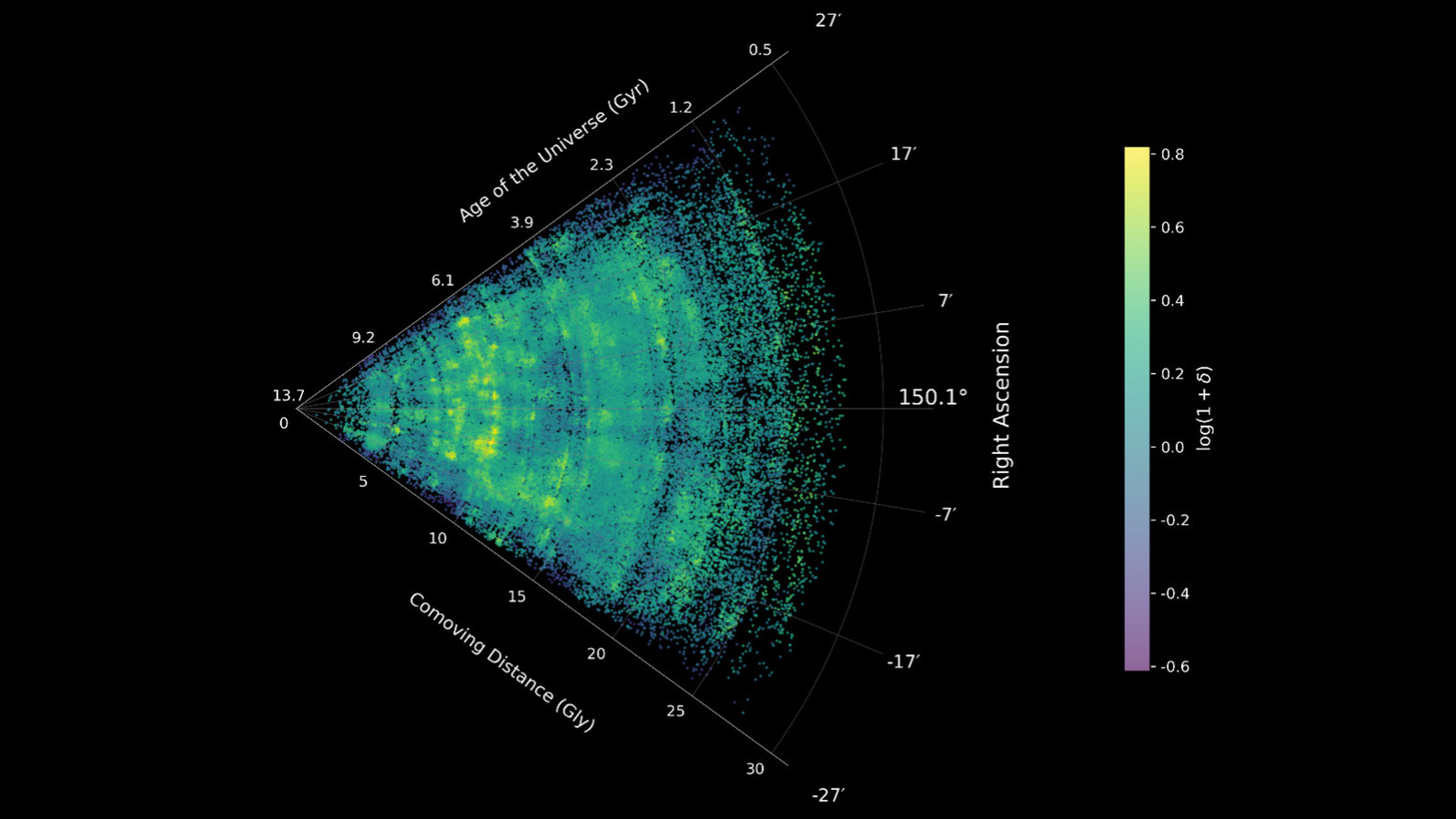
New cosmic web map unveiled by astronomers using Webb Telescope.

James Webb Telescope Reveals New Insights into the Cosmic Web
The universe is a vast and complex tapestry, and with the advent of the James Webb Space Telescope, we are beginning to unravel its intricate patterns. This powerful observatory has enabled researchers to map the cosmic web with unprecedented clarity, offering a detailed glimpse into the skeletal framework of the universe. As the backbone of cosmic structure, the cosmic web intricately weaves together clusters of galaxies and dark matter, forming a vast network that stretches across the cosmos. The insights gained from this research are poised to transform our understanding of the universe and its evolutionary history.
Context: The Cosmic Web and Its Significance
The concept of the cosmic web has been a cornerstone of cosmological theory for decades. It represents the large-scale structure of the universe, composed primarily of dark matter, gas, and galaxies interconnected through gravitational forces. This web-like formation is not just a theoretical construct; it is observed in the distribution of galaxies and galaxy clusters across the cosmos. Before the James Webb Space Telescope, much of this grand structure remained shrouded in mystery, with its finer details obscured by the limitations of existing observational tools.
In an era where European and global scientific communities are working collaboratively, the James Webb Space Telescope stands as a testament to international cooperation and innovation. The European Space Agency, along with NASA and the Canadian Space Agency, has played a pivotal role in its development, underscoring the importance of global partnerships in advancing our understanding of the universe.
A New Cosmic Map: Observing the Universe's Skeleton
The James Webb Space Telescope has taken a significant leap forward in mapping the cosmic web. By peering into the depths of space, it has captured how the cosmic web appeared when the universe was just a few hundred million years old—a time when galaxies were forming and the universe was in its infancy. "The jump in depth and resolution is truly significant," said Bahram Mobasher, a professor at UC Riverside, highlighting the telescope's capability to resolve structures that were previously indistinguishable.
These observations have unveiled the universe's formative years with a clarity that was once unattainable. The intricate network of dark matter and filaments, often compared to the universe's skeleton, is now visible in finer detail, allowing researchers to study the distribution and evolution of these structures over cosmic time. This level of detail enriches our understanding of the universe's architecture, providing a more comprehensive picture of how galaxies and clusters are arranged within the cosmic web.
Studying Galactic Evolution: A Monumental Step
For the first time, researchers can track the evolution of galaxies within the structures of the cosmic web, from the early days of the universe to the present. Hossein Hatamnia, the lead researcher of the study, described this as a "monumental step" in understanding cosmic history. "We can now study the evolution of galaxies in cluster and filamentary structures across cosmic time," Hatamnia said, emphasizing the significance of these findings.
The ability to observe galaxies as they evolve within the cosmic web is crucial for understanding the processes that drive galaxy formation and evolution. By examining these structures, scientists can gain insights into how galaxies interact with their environments and how these interactions influence their growth and development. This research also has implications for our understanding of dark matter, which plays a critical role in shaping the cosmic web.
Key Findings:
- The cosmic web links galaxies and clusters in a vast network.
- The James Webb Telescope reveals unprecedented details of this structure.
- Observations span from the early universe to the present day, offering insights into galactic evolution.
What's Still Unclear: Open Questions and Future Directions
While the James Webb Space Telescope has provided remarkable insights into the cosmic web, several questions remain unanswered. One area of uncertainty is how further observations with Webb will refine our understanding of these structures. As more data is collected, researchers hope to uncover additional details about the formation and evolution of the cosmic web.
Another intriguing question concerns the implications of these findings for dark matter research. Dark matter is a fundamental component of the universe, yet it remains one of the most elusive and least understood. How these observations will impact our understanding of dark matter's role in the cosmic web is an area ripe for exploration.
Moreover, the potential for these observations to offer new insights into the early universe is a topic of ongoing investigation. The James Webb Space Telescope's ability to peer back in time provides a unique opportunity to study the conditions of the early universe and how they led to the formation of the structures we observe today.
What This Means for You: The Broader Impact
For the general public, these discoveries offer a deeper appreciation of the universe's complexity and beauty. The images and data provided by the James Webb Space Telescope not only enrich our scientific knowledge but also inspire wonder and curiosity about our place in the cosmos. Understanding the cosmic web and its intricacies helps us comprehend the vast and interconnected nature of the universe, fostering a greater appreciation for the scientific endeavors that uncover these mysteries.
For those in the scientific community, these findings represent a significant advancement in cosmological research. They provide a foundation for future studies and open new avenues for exploration in the fields of astrophysics and cosmology. As researchers continue to analyze the data from the James Webb Space Telescope, we can expect further breakthroughs that will deepen our understanding of the universe.
Editorial Take: A New Era in Cosmic Exploration
The James Webb Space Telescope's contributions to our understanding of the cosmic web mark the beginning of a new era in cosmic exploration. By unveiling the universe's hidden structures with unprecedented detail, it has set the stage for future discoveries that will continue to reshape our understanding of the cosmos. As we look to the future, the insights gained from this research will serve as a guiding light, illuminating the path toward a deeper comprehension of the universe and its mysteries.
Discuss this story
Got a take, a correction, or a follow-up tip? Reply where you read — we read everything.
Found an error? File a correction at /corrections. Substantive corrections are logged publicly.
One short email. The most important Science news, fact-checked, no fluff. Free, unsubscribe anytime.
More from Science
Quantum Computing Explained for Developers: A 2026 Update
Explore quantum computing fundamentals, hardware, and how it impacts software development in this comprehensive guide for developers.

Quantum Computing Advances: Key Updates from Microsoft, Atom, and EeroQ
Microsoft, Atom Computing, and EeroQ share key updates in their quantum computing efforts, marking steady progress toward practical applications.

Star City Explores the Human Cost Behind the Soviet Space Program
Forget Mars colonies. Star City, the new spin-off from For All Mankind, dives deep into the gritty, dangerous, and often ethically complex world of the Soviet space program in the late 1960s.
A Gritty, High-Stakes Drama: Exploring the Soviet Space Program in Star City
Explore the untold story of the Soviet space program in Star City, a new Apple TV+ series that swaps the familiar American perspective for a gritty, high-stakes drama centered on its visionary, yet constrained, leadership.
The Byte-Pulse Newsroom is the editorial system that produces Byte-Pulse's daily tech news coverage. Each story is cross-referenced across 3+ independent outlets, drafted with AI assistance by the newsroom system (Drafter → Editor → Fact-Checker → Polisher), and reviewed by Serhat Er, Editor-in-Chief, before publication. We disclose AI augmentation openly. Editorial accountability stays with the named editor on every article. Tips: editorial@byte-pulse.net.
Don’t miss these
OnePlus 14 vs Samsung Galaxy S26: Which Flagship Earns Your Hard-Earned Cash?
Deciding between the OnePlus 14 and Samsung Galaxy S26? This guide cuts through the noise, laying out the facts so you can pick the perfect phone for your priorities.
Proton VPN vs NordVPN: Which One Earns Your Subscription?
A deep dive into Proton VPN and NordVPN, comparing their privacy, performance, features, and value, helping you make an informed decision.
Perplexity Pro vs ChatGPT Plus: Which AI Assistant Fits Your Workflow?
This guide lays out the strengths and approaches of Perplexity Pro and ChatGPT Plus, helping you identify which AI assistant aligns with your specific needs.

Pokémon TCG Movie Signals Strategic Media Pivot for The Pokémon Company
A new Pokémon movie focused on the TCG is coming in 2027, marking a strategic pivot for the franchise as it navigates massive global fan engagement and logistical challenges.

Apple's AI Pivot: Vision Pro Content Cut, Siri Rebuilt Amid Layoffs
Apple's latest layoffs signal a strategic pivot, dialing back high-cost Vision Pro content while re-tooling Siri for the AI era. What's next for Apple?

D23 2026: Disney's Content Deluge Sparks Questions About Strategy
Byte-Pulse cuts through D23 hype: We dissect Disney's ambitious content slate, from Simpsons: Hit & Run to Ahsoka season 2, and question the real-world implications and European market strategy.