Quantum Computing Explained for Developers: A 2026 Update
A practical guide for classical software engineers to understand quantum computing concepts and implications.
Quantum Computing Explained for Developers: A 2026 Update
Quantum computing is no longer just a futuristic concept; it’s becoming a tangible reality that holds the potential to reshape how we think about computation. For developers rooted in classical computing, understanding quantum computing is essential, not just for curiosity's sake but for preparing for the transformations coming to our industry. In this guide, we’ll explore the fundamental differences between classical bits and qubits, delve into quantum algorithms, and discuss how you can start coding in this new paradigm. As we stand in 2026, with significant advancements made, it’s time to take a closer look at what quantum computing means for you.
Updated June 2026
What Quantum Computing Actually Is
At its core, quantum computing is a new paradigm of computation that leverages the principles of quantum mechanics. While classical computers use bits as the smallest unit of data, represented as either 0 or 1, quantum computers use qubits. A qubit can exist in a state of 0, 1, or both simultaneously due to a property called superposition. This means a quantum computer can process a vast amount of possibilities at once, which is a significant departure from classical computing's linear processing style.
Another key principle is entanglement, a phenomenon where qubits become interconnected in such a way that the state of one qubit instantly influences the state of another, regardless of the distance between them. This property allows quantum computers to perform complex calculations more efficiently than classical computers, but it also introduces challenges in maintaining coherence and managing errors.
Quantum computing isn't just a more powerful version of classical computing; it’s a different approach altogether. For developers, this means a shift in how we think about algorithms, data structures, and problem-solving. There’s a lot of excitement around quantum supremacy—the point at which quantum computers can solve problems that classical computers practically cannot—though we're still years away from realizing its full potential.
How It Works Under the Hood
Understanding how quantum computing works requires a grasp of its fundamental principles. As mentioned, qubits are the building blocks of quantum computation. They can represent multiple states at once due to superposition. This property is utilized in quantum gates, which manipulate qubits in a manner similar to how classical logic gates manipulate bits. However, quantum gates operate under different principles, such as unitary transformations, which preserve the probability of quantum states.
Quantum computing systems can be broadly categorized into several types based on how they operate: gate-based, adiabatic, and quantum annealing. Gate-based quantum computing is akin to classical computing, where operations are applied to qubits through quantum gates in a controlled sequence. Adiabatic quantum computing, on the other hand, focuses on evolving the system's Hamiltonian gradually to find the ground state of a problem, making it suitable for optimization problems. Quantum annealing is a specific case of adiabatic computing, where the focus is on finding the lowest energy state of a system, commonly used in combinatorial optimization.
The current hardware landscape is dominated by major players like IBM, Google, IonQ, Quantinuum, and PsiQuantum. IBM's Heron architecture emphasizes scalability and integration with classical systems, while Google’s Willow focuses on innovation in quantum circuits. IonQ uses trapped ion technology for qubits, promising high fidelity and coherence times. Quantinuum is working on hybrid quantum-classical systems, while PsiQuantum aims for a photonic-based quantum computer that could eventually outperform classical counterparts.
Where It Sits in the Stack / vs Alternatives
In the technology stack, quantum computing sits at a unique intersection of hardware and software. It complements classical computing rather than replacing it. While quantum computers excel in specific tasks, such as factoring large numbers (e.g., Shor's algorithm) or searching unsorted databases (e.g., Grover's algorithm), they currently do not outperform classical computers for most everyday tasks.
The alternatives to quantum computing primarily include classical computing paradigms, including conventional CPUs, GPUs, and even specialized hardware like TPUs. For most applications, these classical systems are still the go-to solutions. The real magic happens when quantum computing is applied to problems that are inherently quantum in nature—such as simulating quantum systems or solving complex optimization problems. It’s important to note that the hype surrounding quantum supremacy often overshadows the reality that we are still in the early stages of quantum development.
| Feature | IBM Heron | Google Willow | IonQ | Quantinuum | PsiQuantum |
|---|---|---|---|---|---|
| Qubit Type | Superconducting | Superconducting | Trapped Ion | Superconducting | Photonic |
| Current Qubit Count | 127 | 72 | 32 | 20 | 100+ |
| Coherence Time | 100 µs | 20 µs | 100 ms | 50 µs | 200 µs |
| Best For | General Purpose | Quantum Simulation | Optimization | Hybrid Systems | Large Scale Problems |
| Error Correction | Yes (with overhead) | Yes (with overhead) | Limited | Yes (with overhead) | Yes (with overhead) |
Verified as of June 2026
What this table tells you is that while all these quantum computers operate under different principles and technologies, they share common goals of improving coherence, increasing qubit counts, and achieving error correction. Each has unique strengths and weaknesses, making them suitable for various applications in quantum computing.
Real-World Performance / Benchmarks
Currently, quantum computers are not at a stage where they can deliver consistent performance that outstrips classical computers. Most quantum systems struggle with error rates and qubit coherence times, limiting their usability for practical applications. In my experience, the theoretical speedup promised by quantum algorithms hasn’t yet translated into tangible benefits for developers.
For instance, Shor’s algorithm, which could theoretically break widely used encryption schemes by factoring large prime numbers exponentially faster than classical algorithms, remains impractical for all but the smallest cases. Grover’s algorithm offers a quadratic speedup for searching unsorted databases, but again, it’s not a universal solution that outpaces classical search algorithms for all tasks.
The promise of quantum computing lies in its potential for specific applications, such as simulating molecular structures for drug discovery or optimizing logistics and supply chains. However, the current benchmarks indicate that quantum computers are still in the experimental phase, and real-world applications are largely confined to research institutions and specialized industries.
What's Still Unclear
Despite the buzz surrounding quantum computing, it’s crucial to temper expectations. The timeline for widespread adoption remains elusive, with many experts suggesting that we’re still around 5–10 years away from seeing quantum computers that can outperform classical systems in meaningful ways. The challenges surrounding error correction, qubit coherence, and the overall complexity of quantum algorithms pose significant hurdles.
The concept of quantum supremacy has been achieved in controlled environments, but real-world applications are still being explored. It's also unclear how quickly industries will adapt to quantum technologies and what the specific use cases will look like. Many companies are investing in quantum research, but the practical implications of quantum software and how it integrates with existing systems remain largely undefined.
Counterpoints to Conventional Wisdom
While there's a consensus around the notion that quantum computing will revolutionize industries, I’d argue it's important to recognize the limitations and barriers that still exist. For example, the focus on quantum supremacy can overshadow the practical aspects of quantum development. Many believe that achieving quantum supremacy will instantly lead to widespread application, but achieving reliable quantum performance across various tasks is a different challenge altogether.
Moreover, there’s a misconception that quantum computers will replace classical systems entirely. After years in hardware logistics, I can tell you that the integration of quantum systems into existing infrastructures will be a complex process. It’s not simply about swapping out classical machines for quantum ones; it requires a fundamental rethinking of many computing paradigms. This transitional phase could span years, if not decades, emphasizing the importance of maintaining a balanced perspective on both technologies.
Buying / Using Framework
If you're ready to dip your toes into quantum computing, there are several programming frameworks and tools available. Qiskit, developed by IBM, is a popular open-source framework that allows developers to create quantum programs and run them on IBM’s quantum hardware. It’s user-friendly and has a large community for support. Cirq, developed by Google, is another open-source framework that focuses on quantum circuits and is great for experimenting with quantum algorithms.
Microsoft's Q# is a language designed specifically for quantum development, offering a high-level approach that abstracts away many complexities of quantum programming. Learning these frameworks is an excellent way to start integrating quantum concepts into your development skill set.
As you embark on this journey, consider participating in online courses, hackathons, or community events centered around quantum computing. Engaging with the community can provide insights into best practices and emerging trends that are essential for navigating this new landscape. Additionally, many quantum cloud service providers offer remote access to quantum hardware, allowing you to experiment without the need for significant upfront investment.
What This Means for You Specifically
As a classical software engineer, understanding quantum computing is not just a nice-to-have; it's becoming a necessity. The landscape is shifting, and companies are starting to look for engineers who are familiar with quantum principles. By investing time in learning about qubits, quantum algorithms, and the current hardware landscape, you're positioning yourself at the forefront of a technology that will define the future of computing.
I’d push back on the consensus that quantum computing is an immediate replacement for classical computing. Instead, it will likely be a complementary technology that elevates your current skill set. Staying informed and adaptable will be key in the coming years, as the industry continues to explore how these two paradigms can coexist and enhance one another.
Operator's View
In my experience, quantum computing is an exciting field that offers immense potential, but it’s essential to approach it with a realistic mindset. The hype often overshadows the practical challenges we face. While companies like IBM and Google are making strides, the technology is still nascent. I believe that in 5–10 years, we will start to see meaningful applications emerge, but for now, developers should focus on building foundational knowledge and experimenting with available tools.
With the ongoing developments in quantum error correction and hardware improvements, the future looks promising. However, as operators, we must remain grounded and prepared for the long haul. The true breakthroughs will come when we can seamlessly integrate quantum capabilities into existing workflows, and that’s where the real excitement lies.
Frequently Asked Questions
1. What is the difference between a classical bit and a qubit?
A classical bit can represent a 0 or a 1, while a qubit can exist in a superposition of states, meaning it can represent both 0 and 1 simultaneously. This allows quantum computers to process information in fundamentally different ways.
2. What are some practical applications of quantum computing?
Currently, quantum computing is being explored in areas such as drug discovery, optimization problems, and cryptography. However, practical applications are still in the research phase, and widespread use is not expected for several years.
3. How do I start coding for quantum computers?
You can start coding for quantum computers using frameworks like Qiskit, Cirq, or Q#. These open-source tools provide libraries and resources to help you create quantum programs and run them on real quantum hardware.
4. What is quantum supremacy?
Quantum supremacy refers to the point at which a quantum computer can perform a computation that is infeasible for classical computers. While some demonstrations have claimed to achieve this, practical applications are still limited.
5. How long until quantum computing is widely adopted?
Most experts agree that we are still around 5–10 years away from achieving meaningful applications of quantum computing that outperform classical systems in real-world scenarios.
6. Will quantum computers replace classical computers?
Quantum computers are not expected to replace classical computers entirely. Instead, they will likely complement classical systems, excelling in specific applications while classical systems remain the backbone for everyday computing tasks.
7. What are the challenges facing quantum computing?
Challenges include error rates, qubit coherence times, and the complexity of quantum algorithms. Addressing these issues is crucial for transitioning to practical applications.
8. How can I keep up with developments in quantum computing?
Engage with online communities, attend webinars, and take courses focused on quantum programming. Keeping in touch with industry news through tech publications can also help you stay informed.
9. Are there any companies offering quantum cloud services?
Yes, major companies like IBM, Google, and Amazon offer quantum cloud services, allowing developers to access quantum computers remotely for experimentation and learning.
10. What should I focus on when learning quantum computing?
Focus on understanding the principles of quantum mechanics, the differences between quantum and classical algorithms, and how to use popular quantum programming frameworks effectively.
Discuss this story
Got a take, a correction, or a follow-up tip? Reply where you read — we read everything.
Found an error? File a correction at /corrections. Substantive corrections are logged publicly.
One short email. The most important Science news, fact-checked, no fluff. Free, unsubscribe anytime.
More from Science
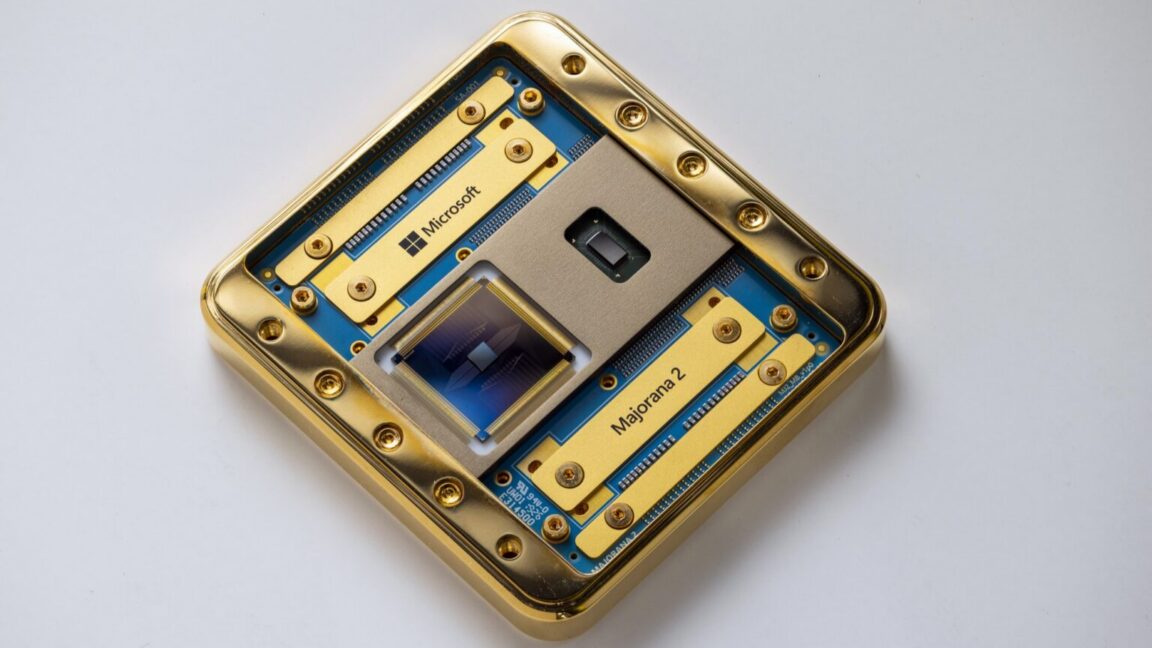
Quantum Computing Advances: Key Updates from Microsoft, Atom, and EeroQ
Microsoft, Atom Computing, and EeroQ share key updates in their quantum computing efforts, marking steady progress toward practical applications.

Star City Explores the Human Cost Behind the Soviet Space Program
Forget Mars colonies. Star City, the new spin-off from For All Mankind, dives deep into the gritty, dangerous, and often ethically complex world of the Soviet space program in the late 1960s.
A Gritty, High-Stakes Drama: Exploring the Soviet Space Program in Star City
Explore the untold story of the Soviet space program in Star City, a new Apple TV+ series that swaps the familiar American perspective for a gritty, high-stakes drama centered on its visionary, yet constrained, leadership.

NASA's Psyche Snaps Stunning Mars Photos During Flyby
NASA's Psyche spacecraft shares striking images of Mars during its flyby, aiding its journey to the asteroid 16 Psyche for core formation insights.

Serhat Er founded Byte-Pulse to cover European tech that US blogs miss. He owns the editorial direction, reviews every AI and security story personally, signs off on each article before publish, and writes the in-depth buying guides and head-to-head comparisons. Based in Leverkusen, Germany. Reach out at editorial@byte-pulse.net.
Don’t miss these
NVIDIA RTX 4070 Ti Super vs. RTX 5070 (Rumored): The 'Buy Now or Wait' Dilemma
Deciding between a powerful current-gen GPU and the promise of next-gen performance requires a clear-eyed look at immediate needs versus future potential. This guide lays out the trade-offs.
Asus ROG Phone 9 vs Sony Xperia 1 VII: Which Niche Flagship Earns Your Money?
Deciding between the gaming-focused ROG Phone 9 and the creator-centric Xperia 1 VII? This guide breaks down every spec to help you choose.
Proton VPN vs NordVPN: Which One Earns Your Subscription?
A deep dive into Proton VPN and NordVPN, comparing their privacy, performance, features, and value, helping you make an informed decision.
Perplexity Pro vs ChatGPT Plus: Which AI Assistant Fits Your Workflow?
This guide lays out the strengths and approaches of Perplexity Pro and ChatGPT Plus, helping you identify which AI assistant aligns with your specific needs.
RTX 5060 Ti vs RX 9060 XT: Which Mid-Range Powerhouse Fits Your Rig?
Deciding between the rumored RTX 5060 Ti and RX 9060 XT? This guide cuts through the noise to highlight the real-world trade-offs for gamers and creators.
Honor Magic 8 Pro vs Samsung Galaxy S26 Ultra: Which Future Flagship Fits Your Wallet and Workflow?
Deciding between the anticipated Honor Magic 8 Pro and Samsung Galaxy S26 Ultra? Our deep dive into expected specs and features provides the fair comparison you need.