Nvidia's Vera CPUs: A Direct Shot at AMD and Intel's Server Empire
Nvidia's new Vera processors are here, and they're not just playing nice. They're aiming straight for the server market's top dogs.

Nvidia's Vera CPUs: A Direct Shot at AMD and Intel's Server Empire
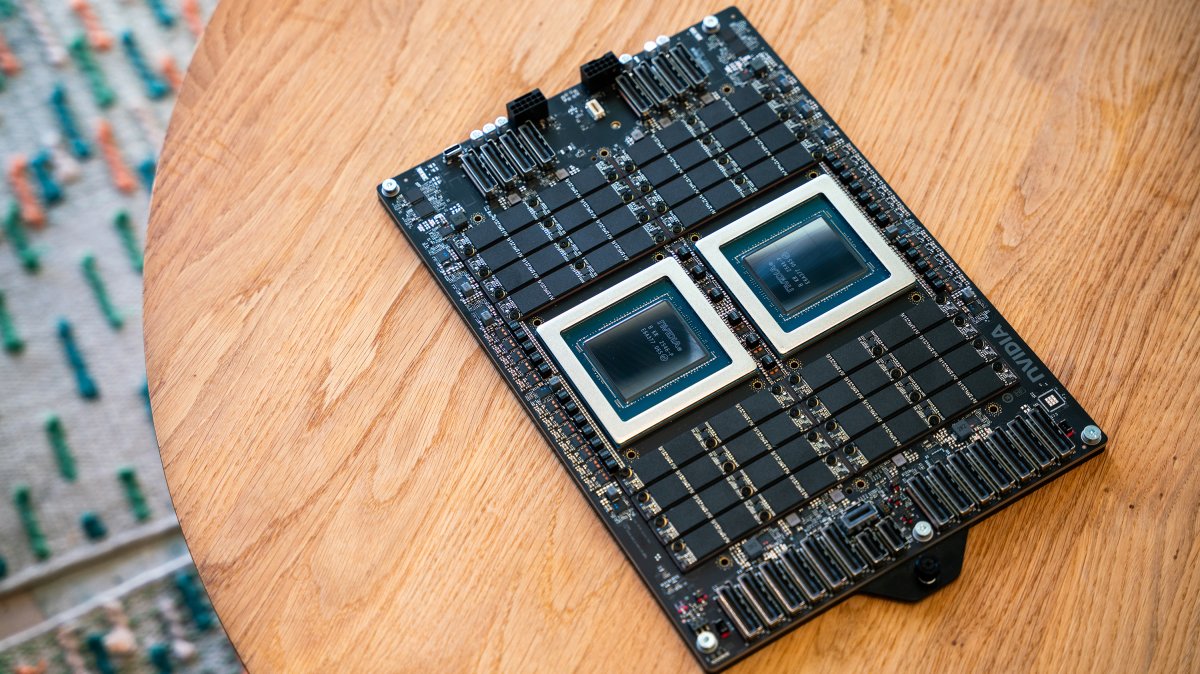
Nvidia just dropped a bombshell on the server market: its new Vera CPUs are here, and they're gunning for AMD and Intel. You heard that right. These aren't just any chips; they're already in the hands of AI heavyweights like Anthropic, OpenAI, SpaceXAI, and Oracle. A big jump from Nvidia's earlier Grace processors, Vera still rocks ARM architecture. But the real story? Custom Olympus cores. Eighty-eight of them per CPU. That's a lot of muscle.
A New Player in the Server Market
So, what's Nvidia's play here? They're pitching Vera as the CPU for AI data centers. No dedicated AI accelerators built right in, sure. But Nvidia says their sheer speed makes them perfect for a world teeming with AI agents. The focus here is on raw processing power, allowing data centers to handle increasingly complex AI models and workloads without bottlenecks.
The server CPU market has been traditionally dominated by x86 architecture from Intel and AMD. Nvidia's use of ARM architecture with custom cores offers a different approach, potentially optimizing power efficiency and performance. The ARM architecture is renowned for its efficiency, which is a critical factor in large-scale data centers where power consumption translates directly into operating costs.
And get this: CFO Colette Kress recently told analysts the addressable market for these chips is a whopping $200 billion annually. Nvidia isn't shy about its ambitions either, hoping to pull in $20 billion from Vera sales in just its first year. Talk about a bold forecast. That puts them squarely in AMD and Intel's backyard, right in the server processor sweet spot.
This aggressive target suggests Nvidia is confident in its product's capabilities and market demand. The server market is ripe for disruption, with AI applications driving a need for more powerful and efficient processing solutions. Nvidia's reputation in graphics processing and AI hardware could lend credibility to their entry into the server CPU market.
Competitive Landscape
Let's talk numbers. In 2025, AMD pulled in $16.6 billion from server hardware. Intel? $16.9 billion. Pretty close, right? But Vera's arrival could really shake that up. Intel's been a bit slow on the AI accelerator front, that's no secret. Nvidia, on the other hand, isn't waiting. They're planning to roll out Vera-Rubin systems later this year, and those will pack extra AI acceleration. See the difference?
Nvidia's strategy here seems to be about offering flexibility. By initially providing high-performance CPUs and following up with AI-accelerated systems, they cater to a broad range of data center needs. This two-pronged approach might appeal to companies looking to future-proof their infrastructure by initially investing in powerful CPUs with the option to upgrade to AI-enhanced systems later.
European Perspective
What about Europe? Nvidia's aggressive CPU play isn't going unnoticed across the pond. European tech relies more and more on solid server solutions to keep up with booming AI applications. So Vera's arrival? Pretty relevant. As those European AI firms grow, they'll need more powerful, more efficient server chips. Nvidia thinks it's got just the thing.
In Europe, there's a strong push for innovation in AI and machine learning, with numerous startups and established firms looking to harness these technologies. The introduction of a new player like Nvidia into the server CPU market could provide these firms with the tools needed to scale efficiently. Moreover, with the European Union focusing on sustainability, Nvidia's ARM-based Vera processors might offer the energy efficiency needed to meet regulatory requirements while keeping operational costs down.
What This Means for You
So, what does all this mean for you, for businesses, for anyone in tech? Nvidia jumping into the CPU market could actually bring us better prices and real innovation in server tech. If these Vera chips live up to the hype, we're talking faster, more efficient servers driving AI. That influences everything, from the cloud services you use to how fast your data gets crunched. Pretty big deal, honestly.
For individual consumers, this might translate into faster, more reliable internet services, as data centers handle more data with greater efficiency. For businesses, especially those in tech, it means potentially lower costs for cloud services, as data centers pass on savings from reduced power consumption and increased processing capabilities.
What's Still Unclear
Promising projections, yes. But let's be real, we don't know everything yet. How will Vera actually stack up against AMD and Intel's established chips? Will those Vera-Rubin systems, with their AI acceleration, really hit the mark for the industry? There's a lot up in the air here. Those answers will pretty much decide if Nvidia's server gamble pays off.
Moreover, the success of Nvidia's Vera CPUs will depend on how well they integrate with existing data center infrastructures. Compatibility with current software ecosystems, ease of adoption, and support services will be crucial factors for companies considering a shift from Intel or AMD.
Why This Matters
Look, this isn't just another chip launch. Nvidia's ambitious push into server CPUs could totally reshape the landscape. It challenges the old guard. It drives tech forward. High-performance computing demands keep climbing. Vera CPUs? They could set a whole new standard. For businesses, for consumers. Everyone.
The potential ripple effects of this launch could extend beyond just AI and data centers. With Nvidia's focus on AI, the innovations spurred by their entry into the CPU market might lead to advancements in other areas, including autonomous vehicles, advanced robotics, and even personal computing. As Nvidia continues to blur the lines between different computing domains, the industry might see a new era of integrated systems where CPUs and GPUs work seamlessly to deliver unprecedented performance.
Discuss this story
Got a take, a correction, or a follow-up tip? Reply where you read — we read everything.
Found an error? File a correction at /corrections. Substantive corrections are logged publicly.
One short email. The most important Hardware news, fact-checked, no fluff. Free, unsubscribe anytime.
More from Hardware

Apple's AI Pivot: Vision Pro Content Cut, Siri Rebuilt Amid Layoffs
Apple's latest layoffs signal a strategic pivot, dialing back high-cost Vision Pro content while re-tooling Siri for the AI era. What's next for Apple?

Povasee A30 Jump Starter: A 50-Euro Deal With 5,000A Claims Under Scrutiny
The Povasee A30 jump-start power bank, on offer at Amazon for under 50 Euros, claims 5,000A peak current. We scrutinize this deal against real-world expectations.

Ugreen's 200W Charger: Powerhouse or Marketing Hype?
We analyze the Ugreen 200W charger's technical prowess, real-world utility, and the Amazon deal, highlighting its strengths and limitations

Victorinox Amazon Deals: Tactics or True Value?
Byte-Pulse examines Amazon's Victorinox deals, dissecting the true value of the Swiss Card Lite and Synergy X Alox against market trends.
The Byte-Pulse Newsroom is the editorial system that produces Byte-Pulse's daily tech news coverage. Each story is cross-referenced across 3+ independent outlets, drafted with AI assistance by the newsroom system (Drafter → Editor → Fact-Checker → Polisher), and reviewed by Serhat Er, Editor-in-Chief, before publication. We disclose AI augmentation openly. Editorial accountability stays with the named editor on every article. Tips: editorial@byte-pulse.net.
Don’t miss these
Asus ROG Phone 9 vs Sony Xperia 1 VII: Which Niche Flagship Earns Your Money?
Deciding between the gaming-focused ROG Phone 9 and the creator-centric Xperia 1 VII? This guide breaks down every spec to help you choose.
Proton VPN vs NordVPN: Which One Earns Your Subscription?
A deep dive into Proton VPN and NordVPN, comparing their privacy, performance, features, and value, helping you make an informed decision.
Perplexity Pro vs ChatGPT Plus: Which AI Assistant Fits Your Workflow?
This guide lays out the strengths and approaches of Perplexity Pro and ChatGPT Plus, helping you identify which AI assistant aligns with your specific needs.

Pokémon TCG Movie Signals Strategic Media Pivot for The Pokémon Company
A new Pokémon movie focused on the TCG is coming in 2027, marking a strategic pivot for the franchise as it navigates massive global fan engagement and logistical challenges.
Honor Magic 8 Pro vs Samsung Galaxy S26 Ultra: Which Future Flagship Fits Your Wallet and Workflow?
Deciding between the anticipated Honor Magic 8 Pro and Samsung Galaxy S26 Ultra? Our deep dive into expected specs and features provides the fair comparison you need.
Notion vs Obsidian: Which Knowledge Hub Fits Your Workflow?
Deciding between Notion and Obsidian? We break down the core differences in philosophy, data ownership, collaboration, and extensibility to help you choose.