Samsung's Galaxy Buds Get FDA Hearing Aid Clearance: A Year Behind Apple
Galaxy Buds gain FDA clearance for mild to moderate hearing loss, but Apple's AirPods Pro set the standard long ago. Byte-Pulse examines the market implications and what's missing from the narrative.

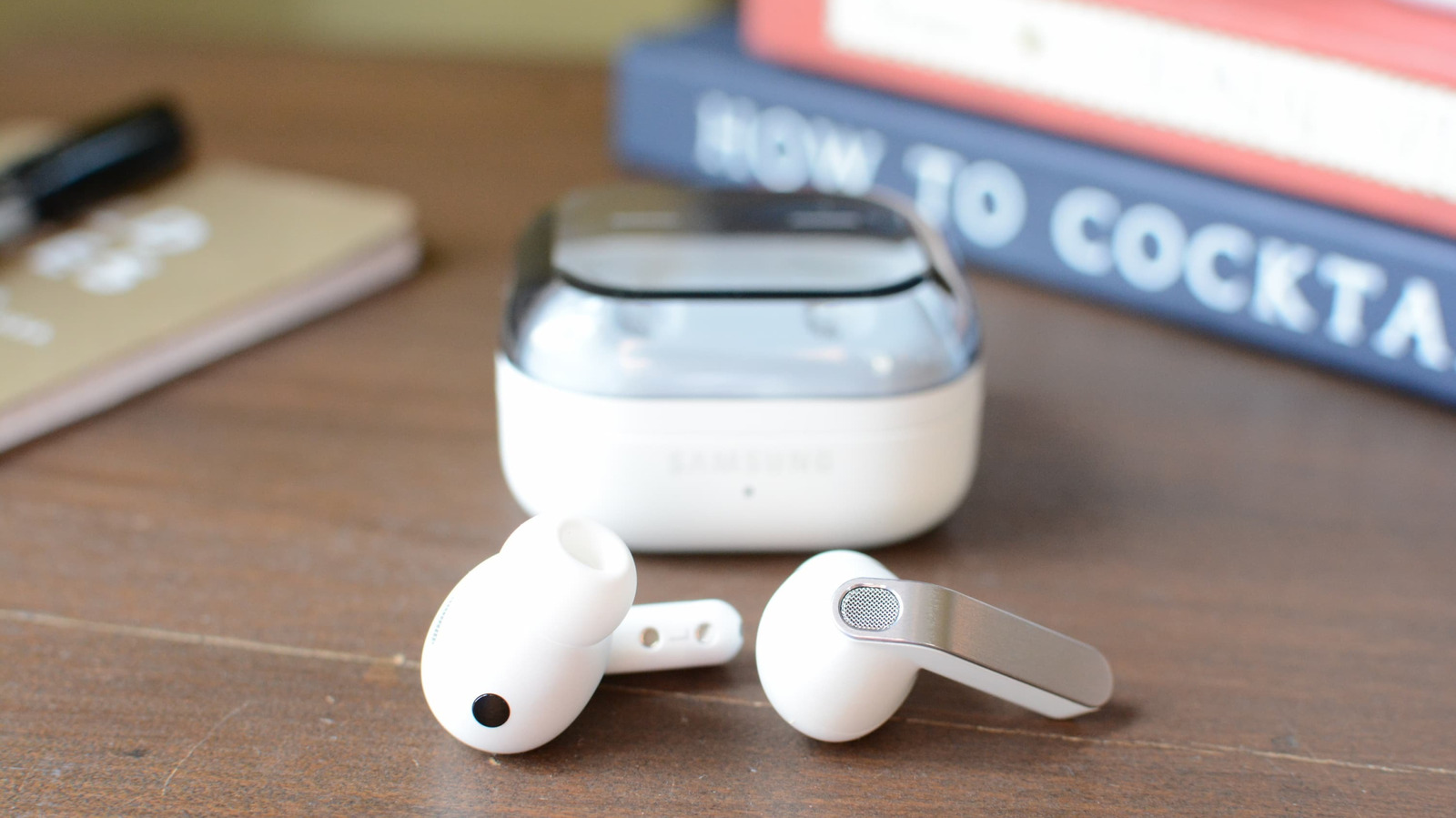
The news that Samsung's Galaxy Buds are receiving U.S. FDA clearance for a new hearing aid feature is, on the surface, a positive development for accessibility in consumer electronics. Engadget reports that this functionality, alongside a self-administered hearing test, will be available on the Galaxy Buds 3 Pro and Galaxy Buds 4 Pro, initially in the U.S. and 'some other markets' later this year. More specifically, 9to5Google and MacRumors pin the rollout to the fourth quarter of 2026, which offers a much clearer timeline than the vague 'later this year' initially floated. This feature aims to provide an over-the-counter solution for individuals aged 18 and over grappling with mild to moderate hearing loss, a demographic that, according to the World Health Organization, contributes to the staggering 1.5 billion people globally affected by some degree of hearing impairment, a number projected to reach 2.5 billion by 2050, as GSMArena highlights.
Samsung's New Hearing Aid Feature Explained
Samsung's approach involves two core components: a 'Hearing Test' and the 'Hearing Aid' feature itself. The test, described as providing 'medical-grade' or 'clinical-grade' results in approximately five minutes, can be initiated directly from the Galaxy Buds settings on a compatible Galaxy phone. Engadget details that for each ear, the test will classify hearing as normal or categorize it into one of four stages of loss: mild, moderate, severe, or profound. The results, accessible via the Samsung Health app, then inform the 'Hearing Aid' feature, which intelligently amplifies specific sounds that the user struggles to perceive, such as high frequencies, whispers, or distant voices.
Beyond basic amplification, Samsung has integrated more advanced capabilities. Both 9to5Google and GSMArena confirm the inclusion of noise elimination, designed to suppress distracting background sounds, and beamforming, which allows the earbuds to focus on audio coming from a particular direction, typically in front of the user. This blend of personalized amplification and environmental sound management aims to mimic functionalities typically found in dedicated premium hearing aids, making the Galaxy Buds a discreet and potentially more affordable alternative. MacRumors adds that Samsung collaborated with the National Acoustic Laboratories and Samsung Medical Center to develop these features, lending a layer of scientific credibility to the implementation.
How Apple's Hearing Health Features Set the Standard
To understand the significance of Samsung's move, one must first acknowledge the established benchmark set by Apple. MacRumors explicitly states that Apple introduced an FDA-cleared hearing health feature to its AirPods Pro back in 2024, specifically with the release of iOS 18.1. This means Apple has had a two-year head start in offering clinical-grade hearing aid functionality through its popular earbuds. Like Samsung's offering, Apple's AirPods Pro can also function as an over-the-counter hearing aid for individuals with mild to moderate hearing loss, featuring similar capabilities such as conversational boost, live listen, and custom audiogram integration.
Apple's early entry into this space allowed it to not only gain regulatory approval but also to refine its user experience and expand its reach significantly. MacRumors notes that after its initial U.S. rollout, Apple swiftly expanded the availability of its hearing health features to over 150 countries and regions. This global deployment demonstrates a robust commitment to the feature, integrating it deeply into the iOS ecosystem and leveraging the widespread adoption of AirPods Pro. From an operator's perspective, this kind of staggered but ultimately global rollout is precisely how you build a credible health platform, especially when dealing with medical-grade clearances across diverse regulatory landscapes. It suggests a long-term strategic vision, rather than a reactive feature add.
The Key Differences in Samsung and Apple's Approaches
While both companies now offer FDA-cleared hearing aid functionality within their premium earbuds, the timing and scope of their rollouts present a stark contrast. The most obvious difference is the aforementioned two-year lead Apple holds. This isn't merely a chronological detail; it signifies Apple's proactive identification of this market need and its execution in bringing a medically-vetted solution to market ahead of its primary competitor. Samsung, by contrast, is now undeniably playing catch-up.
Another key differentiator lies in market penetration and ecosystem requirements. While Samsung's new features will be limited to the Galaxy Buds 3 Pro and Buds 4 Pro and require a newer Samsung Galaxy smartphone running One UI 8 or later, as MacRumors points out, Apple's solution is broadly integrated across the AirPods Pro line and iOS, with a much wider global footprint. This creates a barrier for Samsung users who might have older phones or non-Pro Buds models. Honestly, limiting this to specific Pro models, especially when Apple has been more expansive, feels like a missed opportunity to truly democratize access. If the goal is accessibility, why restrict it to the most premium, latest-generation hardware? This is a defensive move to drive premium sales, not a genuine product strategy for public health.
Furthermore, while both offer 'clinical-grade' self-administered tests, the long-term validation and integration into broader healthcare ecosystems remain open questions for both, but particularly for Samsung as the newcomer. Apple's longer presence might give it an edge in accumulating real-world data and feedback, which is invaluable for a medical-grade feature. The initial limited market rollout for Samsung also implies a more cautious, perhaps less globally coordinated, strategy compared to Apple's rapid expansion.
Why Samsung is Now Playing Catch-Up in Hearing Health
Samsung's belated entry into the FDA-cleared hearing aid space highlights a broader trend in the consumer tech market: the increasing convergence of general-purpose electronics with specialized health functionalities. However, in this specific niche, Samsung appears to have underestimated the strategic importance of being first, or at least early. Apple's 2024 launch demonstrated a clear understanding of the evolving regulatory landscape for over-the-counter hearing aids in the U.S., a development that significantly lowered barriers for tech companies to enter this market.
I'm skeptical that Samsung's delay was purely a matter of technical hurdles; more likely, it reflects a strategic prioritization that simply didn't place hearing health as high on the agenda as Apple did. Anyone who has shipped hardware knows that obtaining medical clearances, especially across multiple jurisdictions, is a long, arduous process. Apple's two-year lead suggests they began this process significantly earlier. For a company of Samsung's scale and engineering prowess, a two-year lag in responding to such a clear market signal, particularly when a direct competitor has already carved out a significant lead, is less about innovation and more about reaction.
This delay could also be attributed to the sheer complexity of integrating medical-grade features into consumer devices while maintaining user experience and navigating strict regulatory frameworks. Samsung's collaboration with the National Acoustic Laboratories and Samsung Medical Center, as noted by MacRumors, indicates a serious effort, but the fact remains that Apple simply did it sooner and, seemingly, on a broader scale from the outset. This isn't 'revolutionary' from Samsung; it's a necessary evolution to remain competitive in a market segment Apple has already defined.
What This Means for the Wearable Tech Market
Samsung's entry, even as a latecomer, solidifies the trend of premium earbuds doubling as legitimate health devices. It signals to the broader wearable tech market that FDA clearance for OTC medical functions is not just a niche aspiration but a strategic imperative for flagship products. For consumers, this means more choices and potentially lower-cost alternatives to traditional hearing aids, addressing issues of affordability, social stigma, and access that GSMArena eloquently outlines.
However, several critical questions remain unanswered by any of the sources:
- European Availability and Regulation: None of the outlets delve into when or how Samsung plans to navigate the EU's medical device regulations (e.g., MDR 2017/745, CE marking) for European market entry. 'Select approved markets' is far too vague for a region with highly specific medical device classifications.
- Battery Life Impact: Integrating advanced signal processing for hearing assistance will inevitably consume more power. What is the expected battery life degradation when these features are actively engaged? This is a practical concern for any user relying on them daily.
- Long-term Support and Calibration: How will Samsung ensure the long-term accuracy and efficacy of a medical-grade feature within a consumer electronics lifecycle? Will there be ongoing calibration requirements, and what is the support model for users with evolving hearing needs?
- Cost Comparison: While positioned as an alternative to 'expensive' hearing aids, no source provides concrete price comparisons. What is the actual cost saving for a user purchasing Galaxy Buds Pro versus an entry-level traditional OTC hearing aid?
Ultimately, Samsung's move confirms that the future of wearables is inextricably linked to health. But this isn't a story of pioneering; it's a story of a major player recognizing a competitor's successful venture and making a necessary, if delayed, strategic adjustment. For Byte-Pulse readers in Europe, the real question is not if this feature is coming, but when it will arrive on our shores, under what regulatory scrutiny, and at what practical cost and benefit compared to established medical solutions.
Sources cross-referenced
This story was synthesised from reporting by 4 outlets:
1. Engadget 2. 9to5Google 3. MacRumors 4. GSMArena
Cases, chargers and AirPods alternatives the editors actually use.
Shop mobile gear →Discuss this story
Got a take, a correction, or a follow-up tip? Reply where you read — we read everything.
Found an error? File a correction at /corrections. Substantive corrections are logged publicly.
One short email. The most important Mobile news, fact-checked, no fluff. Free, unsubscribe anytime.
More from Mobile
Motorola Edge 60 Ultra vs OnePlus 13: Which Android Flagship Fits Your Priorities?
Motorola Edge 60 Ultra and OnePlus 13 both aim for top-tier Android. We cut through the marketing to reveal the true differences, helping you choose.
Sony Xperia 1 VII vs iPhone 18 Pro: Which Flagship Fits Your Creative Flow?
Deciding between Sony's creator-centric Xperia 1 VII and Apple's powerful iPhone 18 Pro? We break down every spec and feature, neutrally.
OnePlus 14 vs Samsung Galaxy S26: Which Flagship Earns Your Hard-Earned Cash?
Deciding between the OnePlus 14 and Samsung Galaxy S26? This guide cuts through the noise, laying out the facts so you can pick the perfect phone for your priorities.
Nothing Phone 4 vs Google Pixel 11: Looking Ahead to the Next Generation
A speculative deep dive into what the Nothing Phone 4 and Google Pixel 11 might bring, offering a balanced look at their likely strengths and trade-offs for future buyers.
The Byte-Pulse Newsroom is the editorial system that produces Byte-Pulse's daily tech news coverage. Each story is cross-referenced across 3+ independent outlets, drafted with AI assistance by the newsroom system (Drafter → Editor → Fact-Checker → Polisher), and reviewed by Serhat Er, Editor-in-Chief, before publication. We disclose AI augmentation openly. Editorial accountability stays with the named editor on every article. Tips: editorial@byte-pulse.net.
Don’t miss these
Proton VPN vs NordVPN: Which One Earns Your Subscription?
A deep dive into Proton VPN and NordVPN, comparing their privacy, performance, features, and value, helping you make an informed decision.
Perplexity Pro vs ChatGPT Plus: Which AI Assistant Fits Your Workflow?
This guide lays out the strengths and approaches of Perplexity Pro and ChatGPT Plus, helping you identify which AI assistant aligns with your specific needs.

Pokémon TCG Movie Signals Strategic Media Pivot for The Pokémon Company
A new Pokémon movie focused on the TCG is coming in 2027, marking a strategic pivot for the franchise as it navigates massive global fan engagement and logistical challenges.

Apple's AI Pivot: Vision Pro Content Cut, Siri Rebuilt Amid Layoffs
Apple's latest layoffs signal a strategic pivot, dialing back high-cost Vision Pro content while re-tooling Siri for the AI era. What's next for Apple?

D23 2026: Disney's Content Deluge Sparks Questions About Strategy
Byte-Pulse cuts through D23 hype: We dissect Disney's ambitious content slate, from Simpsons: Hit & Run to Ahsoka season 2, and question the real-world implications and European market strategy.
Notion vs Obsidian: Which Knowledge Hub Fits Your Workflow?
Deciding between Notion and Obsidian? We break down the core differences in philosophy, data ownership, collaboration, and extensibility to help you choose.