Teclast P33: A Comprehensive Review of the 90-Euro Tablet Bundle
Does the Teclast P33's aggressive pricing and included accessories make for a usable experience?

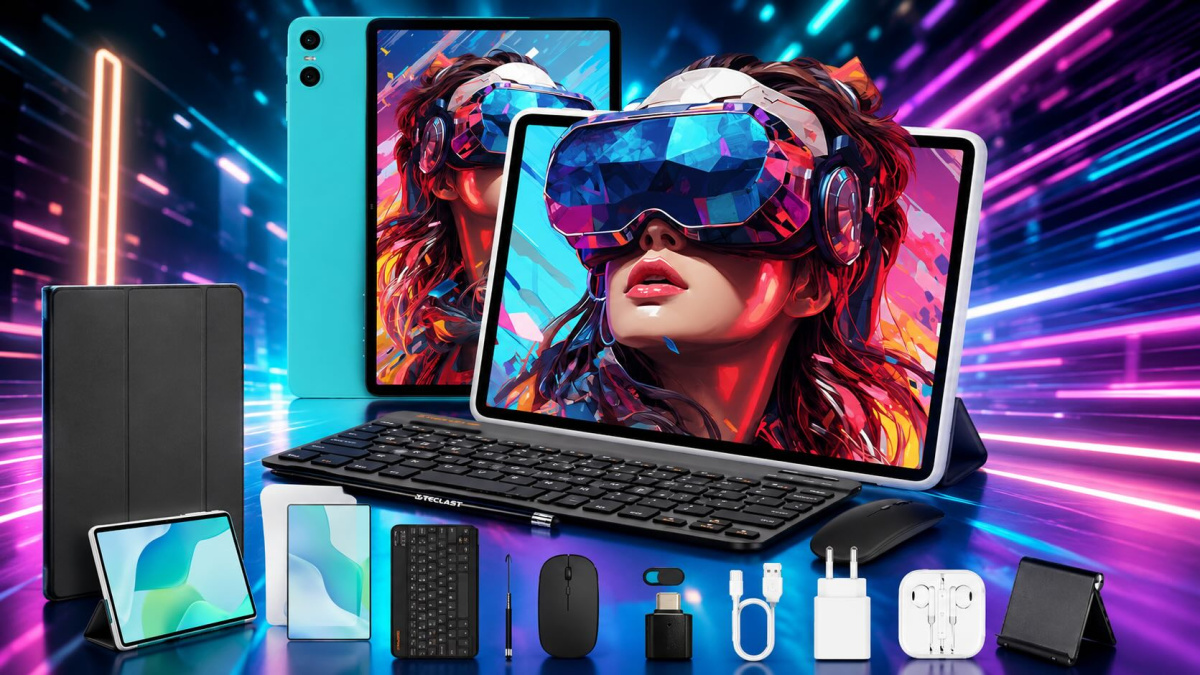
Why a budget tablet with a full accessory kit matters
For many, a tablet isn't about cutting-edge performance; it's about accessibility. The Teclast P33, positioned as an "Einsteigergerät für Kinder, Zweitgerät fürs Sofa oder simples Arbeitstablet," targets this segment. Bundling everything from the start simplifies the supply chain, but doesn't automatically equate to quality.
Decoding the Teclast P33's specs and features
The Teclast P33 features a 10.1-inch IPS display with a 1280 x 800 pixels resolution, which translates to approximately 150 pixels per inch (PPI), distinctly low-resolution by 2026 standards. It's powered by an unspecified "Octa-Core-Prozessor mit einer Mali-G57-GPU" and supported by "9 GB Arbeitsspeicher, davon 6 GB als erweiterbarer Speicher," which is a common way to describe virtual RAM. This means the device likely has 3 GB of physical RAM, with an additional 6 GB carved out of the slower internal storage.
What the 'Gemini AI' integration actually does
The Teclast P33's support for "Googles Gemini AI" is vague, with claims it "beschleunigt etwa Fotobearbeitungen oder Übersetzungen in Echtzeit." This likely refers to a lightweight AI engine on the chip that accelerates specific tasks, rather than a full-fledged, on-device Gemini model. The phrase "beschleunigt etwa" suggests a subtle effect rather than a transformative one.
The value of 10 included accessories
The Teclast P33 includes ten accessories: a protective case, Bluetooth keyboard, wireless mouse, stylus, headphones, screen protector, tablet stand, OTG adapter, and charging kit. While the quantity is impressive, the quality is paramount. Experience shows that budget bundles often mean budget peripherals that quickly frustrate more than they assist.
Is this the new best price for a complete tablet package?
The 89.79 Euro price is a "neuer Bestpreis" for the Teclast P33 tablet set at Amazon, representing an 18 percent discount from its 109.99 Euro UVP. This aggressive pricing strategy positions the P33 as one of the cheapest entry points for a tablet with a full suite of productivity accessories.
What's still unclear:
- Android Version & Update Policy: The specific Android version and Teclast's commitment to future software updates remain unaddressed.
- Specific Processor Model: The lack of a specific Octa-Core chip model makes it difficult to assess true performance.
- Accessory Quality: The actual tactile feel and performance of the keyboard, mouse, and stylus are key to the bundle's real value.
- Gemini AI Depth: The practical benefits of the "Gemini AI" integration need clarification.
- EU Logistics & Warranty: Specifics regarding European stock, shipping timelines, and the practical handling of the three-year warranty could be clearer.
Why this matters:
The Teclast P33 deal represents an interesting inflection point in the budget tablet market. It's a clear attempt to overcome typical friction points by offering a complete solution at an incredibly low price. For Byte-Pulse readers, this isn't just about a cheap gadget; it's about understanding the compromises inherent in such aggressive pricing. The true value lies not in the number of items in the box, but in how well each item actually performs its intended function in the real world.
Sources cross-referenced
This story was synthesised from reporting by 4 outlets:
Cases, chargers and AirPods alternatives the editors actually use.
Shop mobile gear →Discuss this story
Got a take, a correction, or a follow-up tip? Reply where you read — we read everything.
Found an error? File a correction at /corrections. Substantive corrections are logged publicly.
One short email. The most important Mobile news, fact-checked, no fluff. Free, unsubscribe anytime.
More from Mobile

Nothing Ear (3) vs AirPods 4 ANC: The Right Earbuds For Your Ears
We cut through the hype to compare the rumored Nothing Ear (3) and AirPods 4 ANC, laying out the real trade-offs so you can decide for yourself.

Sennheiser Momentum 4 Wireless vs Bose QuietComfort Ultra: Which Flagship Fits Your Daily Rhythm?
We lay out the real trade-offs between Sennheiser's long-distance runner and Bose's silence specialist, so your next premium audio choice is clear.

Sonos Ace vs Sony WH-1000XM6: Which Headphone Fits Your Flow?
Deciding between the Sonos Ace and the rumored Sony WH-1000XM6? We cut through the hype to show you where each excels, letting you pick your perfect sound.

Xiaomi 16 Pro vs iPhone 18 Pro: Which Flagship Fits Your World?
Deciding between the Xiaomi 16 Pro and iPhone 18 Pro? We break down every spec and trade-off, so you can make the choice that's right for you.
The Byte-Pulse Newsroom is the editorial system that produces Byte-Pulse's daily tech news coverage. Each story is cross-referenced across 3+ independent outlets, drafted with AI assistance by the newsroom system (Drafter → Editor → Fact-Checker → Polisher), and reviewed by Serhat Er, Editor-in-Chief, before publication. We disclose AI augmentation openly. Editorial accountability stays with the named editor on every article. Tips: editorial@byte-pulse.net.
Don’t miss these

Notion vs Obsidian: Which Knowledge Hub Fits Your Workflow?
Deciding between Notion and Obsidian? We break down the core differences in philosophy, data ownership, collaboration, and extensibility to help you choose.

Lenovo Legion Go S vs. ASUS ROG Ally X: Which Next-Gen Handheld Earns a Spot in Your Backpack?
Deciding between the Legion Go S and ROG Ally X? We break down every spec, every design choice, and every trade-off without picking a winner. Your perfect gaming handheld is here.

Apple M5 Pro vs. Apple M4 Pro: Projecting the Next Generation of Apple Silicon
We project the likely advancements of the unannounced M4 Pro and M5 Pro chips, offering a balanced, speculative look at future performance and efficiency.

Perplexity Pro vs ChatGPT Plus: Which AI Assistant Fits Your Workflow?
This guide lays out the strengths and approaches of Perplexity Pro and ChatGPT Plus, helping you identify which AI assistant aligns with your specific needs.

Proton VPN vs NordVPN: Which One Earns Your Subscription?
A deep dive into Proton VPN and NordVPN, comparing their privacy, performance, features, and value, helping you make an informed decision.

Steam Deck OLED vs MSI Claw 8 AI+: Which Handheld PC Earns Your Wallet?
Deciding between Valve's acclaimed handheld and MSI's latest Intel-powered challenger? We break down the specs, performance, and experience to help you choose your ideal portable gaming machine.