AMD's $3,999 Ryzen AI Halo PC Challenges Cloud AI
AMD targets on-device AI processing with Ryzen AI Halo and upcoming Max 400 chips.

AMD's Bold Move into Local AI Processing
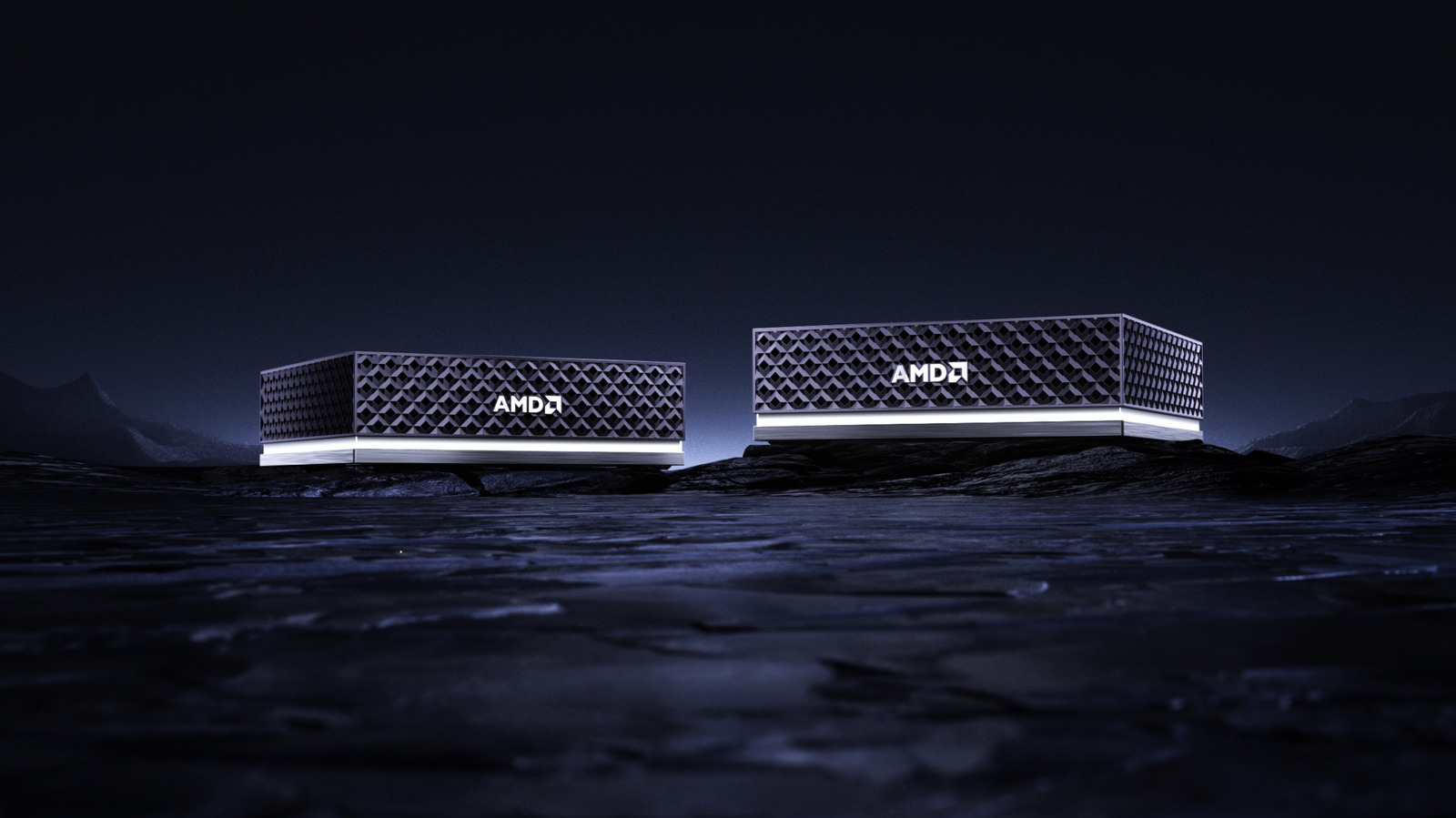
AMD just dropped a bombshell: the Ryzen AI Halo PC. Price tag? A cool $3,999 to start. This isn't just another box; it's a Mac Mini-sized powerhouse built for local AI. Think about it. No more relying on the cloud for every single AI task. That's a direct shot at developers shelling out big bucks each month for cloud compute. Could this save serious cash for those burning through AI tokens? You bet.
Imagine a data scientist or machine learning engineer, working on a complex model that typically requires numerous cloud-based resources. Every training session on a remote server not only costs money but also time, as data transfers back and forth. With the Ryzen AI Halo PC, these professionals could perform the same tasks locally, reducing latency and potentially cutting their cloud-based expenses dramatically. Over time, this could mean thousands of dollars saved annually, not to mention the increased efficiency from having immediate access to data and processing power.
Ryzen AI Max 400 Chips: The Next Generation
But wait, there's more. AMD also teased its next-gen Ryzen AI Max 400 chips, slated for Q3 2026. Leading the pack is the AI Max+ Pro 495. We're talking 16 cores, a boost speed of 5.2GHz. And get this: up to 192GB of unified memory. That's a ton of headroom for serious AI work. This isn't just an upgrade; it's AMD looking to go toe-to-toe with NVIDIA, packing serious versatility and performance.
These specs suggest that AMD is not just aiming to match its competitors but to surpass them in certain aspects. The 192GB of unified memory is particularly noteworthy, as it allows for handling larger datasets or more complex models directly on the machine. For professionals dealing with massive datasets, like those in genomics or large-scale financial simulations, this kind of power could be transformative, allowing for more frequent iterations and experimentation without the bottleneck of limited memory.
The Halo PC can run both Windows and Linux, unlike NVIDIA's Linux-only DGX Spark AI PC. Here's a key difference. Big deal for flexibility, right? All thanks to that x64 chip. With a 50 TOPS NPU and a Radeon GPU sporting 40 compute units, this thing's ready for heavy AI lifting. Could it even outpace NVIDIA in some areas? AMD seems to think so.
Comparing to NVIDIA's Offerings
So, how does this stack up against the competition? NVIDIA's DGX Spark AI PC comes in at $4,699. NVIDIA relies on its Blackwell GPU for AI. AMD's Halo PC? It pairs its own Radeon GPU with a pretty massive memory lead: 128GB of unified system memory. That's a lot.
Key Features of Ryzen AI Halo PC:
- Runs on both Windows and Linux
- Equipped with 50 TOPS NPU and Radeon GPU
- 128GB unified system memory
The flexibility of running both Windows and Linux makes AMD's offering attractive to a broader audience. For instance, a developer who primarily uses Windows for certain applications but needs Linux for specific machine learning frameworks can enjoy the best of both worlds without switching machines or operating systems.
Context: European Implications
For European developers, this is actually a pretty big deal. They often get hit with higher cloud computing costs, thanks to exchange rates and regional pricing. A local processing option like the Halo PC? That could seriously cut their operating expenses. Boost their global competitiveness? Absolutely.
In Europe, where data sovereignty and privacy regulations are stringent, having the ability to perform AI computations locally rather than sending data to the cloud is a significant advantage. This could help European companies adhere to GDPR regulations more effectively, minimizing the risk of data breaches or compliance issues.
What This Means for You
A developer tied to cloud AI? Listen up. The Ryzen AI Halo PC could be a major shift for you. Handle those intensive tasks right on your desk. Think of the monthly savings. Preorders kick off in June. If cutting costs sounds good, you know what to do.
For a small AI startup, investing in a Ryzen AI Halo PC could mean the difference between making a profit or operating at a loss. Instead of perpetually renting cloud resources, they can make a one-time investment in hardware that will serve their needs for years. This also offers a predictable cost structure, which is invaluable for financial planning and stability.
What's Still Unclear
Sure, AMD's specs look good on paper. But we don't have detailed benchmarks yet, especially against NVIDIA's chips. And that "Q3 2026" availability for the new chips? Yeah, the exact date is still pretty fuzzy.
Furthermore, questions remain about the overall ecosystem and software support. Will popular AI frameworks like TensorFlow and PyTorch fully optimize for the new hardware out of the box? How will AMD's support for developers and integration with existing tools compare to NVIDIA's well-established CUDA ecosystem? These are critical factors that could influence the decision-making process for developers and companies alike.
Why This Matters
Why does any of this matter? Simple. AMD is pushing local AI processing hard. This could totally rewrite how much AI development actually costs. They're taking on the cloud-first model, head-on. Developers want to save money, right? And boost efficiency? This competition is heating up, and we're probably looking at some big changes in how AI gets done, everywhere.
The move toward local processing is more than just a cost-saving measure; it's a paradigm shift. As more companies embrace edge computing and local AI processing, we're likely to see a broad transformation in the industry. This could spur innovation, as developers are freed from the constraints of cloud-based computing, leading to faster development cycles and more robust applications. In the end, users benefit from more responsive, capable AI technologies tailored to their specific needs, without the overhead of cloud dependency.
Discuss this story
Got a take, a correction, or a follow-up tip? Reply where you read — we read everything.
Found an error? File a correction at /corrections. Substantive corrections are logged publicly.
One short email. The most important AI news, fact-checked, no fluff. Free, unsubscribe anytime.
More from AI
Perplexity Pro vs ChatGPT Plus: Which AI Assistant Fits Your Workflow?
This guide lays out the strengths and approaches of Perplexity Pro and ChatGPT Plus, helping you identify which AI assistant aligns with your specific needs.
Claude Pro vs Google Gemini Advanced: Which AI Assistant Deserves Your Subscription?
This definitive guide cuts through the marketing to give you a fair, balanced breakdown of Claude Pro and Gemini Advanced, letting you decide which AI best fits your workflow.
Claude Pro vs Google Gemini Advanced: Which AI Actually Earns Your Subscription?
Byte-Pulse lays out the real trade-offs between Claude Pro and Google Gemini Advanced, helping you pick the AI that fits your workflow, without picking for you.
ChatGPT Plus vs Google Gemini Advanced: Which AI Assistant Fits Your Workflow?
Deciding between ChatGPT Plus and Google Gemini Advanced? We break down the models, features, integrations, and pricing to help you align your choice with your specific priorities.
The Byte-Pulse Newsroom is the editorial system that produces Byte-Pulse's daily tech news coverage. Each story is cross-referenced across 3+ independent outlets, drafted with AI assistance by the newsroom system (Drafter → Editor → Fact-Checker → Polisher), and reviewed by Serhat Er, Editor-in-Chief, before publication. We disclose AI augmentation openly. Editorial accountability stays with the named editor on every article. Tips: editorial@byte-pulse.net.
Don’t miss these
Asus ROG Phone 9 vs Sony Xperia 1 VII: Which Niche Flagship Earns Your Money?
Deciding between the gaming-focused ROG Phone 9 and the creator-centric Xperia 1 VII? This guide breaks down every spec to help you choose.
Proton VPN vs NordVPN: Which One Earns Your Subscription?
A deep dive into Proton VPN and NordVPN, comparing their privacy, performance, features, and value, helping you make an informed decision.

Pokémon TCG Movie Signals Strategic Media Pivot for The Pokémon Company
A new Pokémon movie focused on the TCG is coming in 2027, marking a strategic pivot for the franchise as it navigates massive global fan engagement and logistical challenges.

Apple's AI Pivot: Vision Pro Content Cut, Siri Rebuilt Amid Layoffs
Apple's latest layoffs signal a strategic pivot, dialing back high-cost Vision Pro content while re-tooling Siri for the AI era. What's next for Apple?

D23 2026: Disney's Content Deluge Sparks Questions About Strategy
Byte-Pulse cuts through D23 hype: We dissect Disney's ambitious content slate, from Simpsons: Hit & Run to Ahsoka season 2, and question the real-world implications and European market strategy.
Honor Magic 8 Pro vs Samsung Galaxy S26 Ultra: Which Future Flagship Fits Your Wallet and Workflow?
Deciding between the anticipated Honor Magic 8 Pro and Samsung Galaxy S26 Ultra? Our deep dive into expected specs and features provides the fair comparison you need.