Challenges in AI Regulation: Evaluating Trump's Executive Order
Collaboration and transparency are crucial for effective AI safety measures.

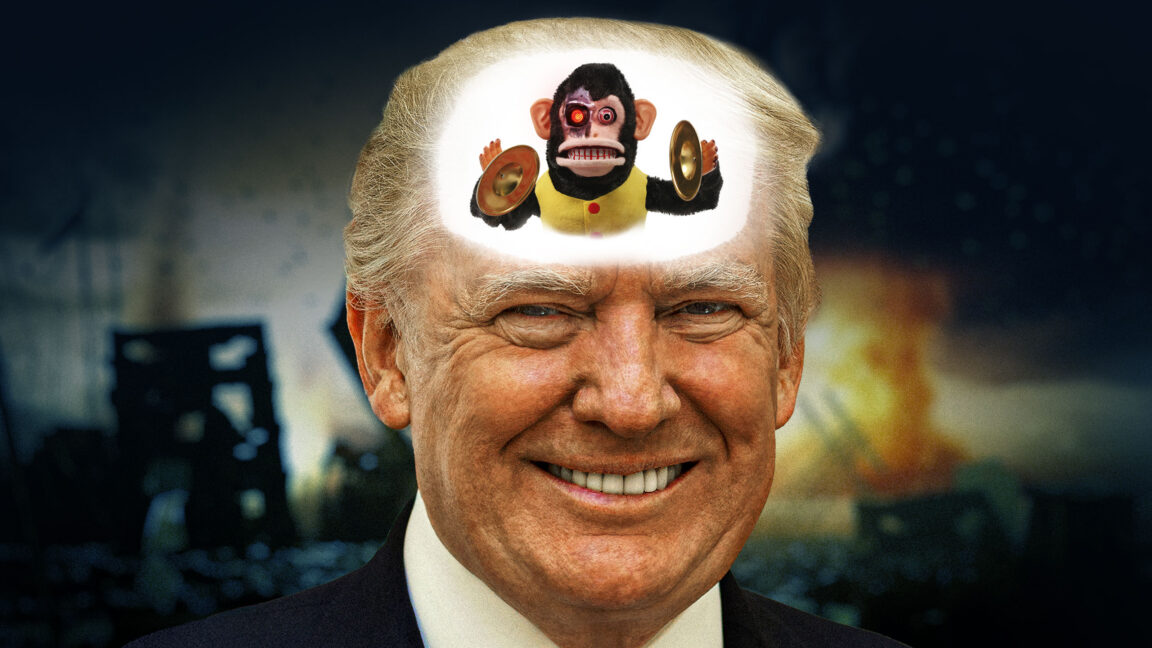
Challenges in AI Regulation: Analyzing Trump's Executive Order
The rapid development of artificial intelligence (AI) technologies is reshaping industries and societal norms. Yet, it presents unique challenges for regulators trying to balance innovation with safety. Former President Donald Trump’s executive order (EO) on AI regulation aims to address some of these challenges by establishing a framework for assessing AI model safety prior to deployment. However, the order faces significant hurdles that could undermine its effectiveness. This article explores these challenges, rooted in issues of collaboration, transparency, cybersecurity, and the delicate balance between short-term and long-term regulatory outcomes.
Collaboration and Transparency are Crucial for Effective AI Safety Measures
The executive order proposes a framework designed to ensure AI safety through pre-deployment assessments. However, its success largely depends on the transparency and cooperation of AI companies. Nguyen, an expert in AI safety, highlights this as a critical concern, stating that the government's ability to assess AI technologies "hinges on how transparent AI companies are." Essentially, if AI companies do not willingly share information, any safety testing initiative is likely to fail. "The government can't assess what it can't see; frontier capabilities are visible only to the labs that build them," Nguyen adds. This statement underscores the necessity of open information sharing between AI developers and regulators.
Transparency is often at odds with the competitive nature of the tech industry. Companies developing advanced AI models are frequently driven by profit motives, which can overshadow the need for thorough regulatory compliance. This competitive drive might lead to safety evaluations that are more about appearances than actual effectiveness. The dilemma of transparency versus competition is a significant challenge facing the implementation of the executive order.
The Transparency Dilemma
The importance of transparency in AI regulation cannot be overstated. Without it, regulators are effectively blind to the potential risks posed by new AI technologies. The stakes are high, as AI systems are increasingly integrated into critical sectors such as healthcare, finance, and national security. When financial gain is at stake, many companies might prefer a quick stamp of approval over comprehensive evaluations. Building trust is crucial in this complex landscape. Yet, competition in tech, especially with AI, often gets in the way.
Cybersecurity Implications
The executive order also addresses cybersecurity concerns associated with AI technologies. Ferren, a cybersecurity expert, warns that establishing effective cybersecurity measures against new AI threats is a pressing issue. Even a well-structured government program might struggle to vet these models quickly enough, given the rapid pace of technological evolution. Pre-deployment testing is crucial but has its limits. There could be significant gaps in defenses against state-backed actors who are increasingly using AI to automate cyberattacks. As AI advances, so do the cyber threats.
This is particularly relevant for European regulators, considering the EU’s General Data Protection Regulation (GDPR), which sets a high bar for data privacy. There's a growing call for similar measures on AI systems to ensure they meet safety and ethical standards. However, if the US cannot implement effective safety measures, it might find itself at a competitive disadvantage. The EU could impose stricter regulations that stifle innovation, potentially affecting global competitiveness.
Short-term vs. Long-term Outcomes
The executive order may bring some short-term cybersecurity benefits, but the long-term effects remain uncertain. AI systems evolve quickly, and any safety measures that are not continuously updated could become obsolete. The real challenge is to create a flexible framework that adapts to rapid technological changes without hindering innovation. Ferren suggests that it will likely be tough to develop models that are both commercially viable and safe from malicious use. This highlights the ongoing tension between innovation and regulation. As seen in other tech sectors, finding a balance between growth and safety is a complex and often contentious process.
Context: The Broader Trend in AI Regulation
The challenges highlighted by Nguyen and Ferren reflect broader trends in AI regulation. Regulatory bodies often find themselves trying to catch up with technological advancements. The tech industry has a history of resisting regulation, and the complexity of AI systems only adds to the challenges. In Europe, there’s been a push for AI regulations focusing on compliance and ethics. The EU's proposed AI Act aims to create a legal framework that categorizes AI systems by risk levels, allowing for tailored regulatory strategies.
Compared to: EU AI Regulations
The EU's approach to AI regulation is more structured compared to the US, with the proposed AI Act setting a precedent for categorizing AI systems by risk. This allows for a more nuanced regulatory approach, targeting high-risk systems with stringent requirements while allowing low-risk innovations more room to grow. The EU's model emphasizes ethical considerations, with a strong focus on compliance and consumer protection.
In contrast, the US has traditionally favored a more laissez-faire approach, prioritizing innovation over regulation. However, Trump's executive order indicates a shift towards more proactive engagement in AI safety. The question remains whether the US can effectively implement a regulatory framework that matches the EU's in terms of comprehensiveness and adaptability.
Real Daily-Use Scenario
Consider a healthcare company developing an AI system for diagnosing diseases. Under the new executive order, this company would be required to undergo pre-deployment assessments to ensure the system's safety. However, without clear guidelines and metrics for evaluation, the company might face challenges in demonstrating compliance. The lack of transparency in the assessment process could also lead to delays in deployment, affecting the company's market competitiveness.
Meanwhile, European counterparts operating under the EU's AI Act might benefit from clearer guidelines and a more predictable regulatory environment. This could give them a competitive edge in international markets where compliance with stringent safety standards is a selling point.
What This Means for You
For businesses in the AI field, Trump's executive order has far-reaching implications. As AI regulation evolves, companies should prepare for more scrutiny and potential compliance requirements. Investing in transparency and ethical practices is not just about meeting regulations; it's about building trust with consumers and stakeholders. Companies that prioritize ethics and transparency may find themselves better positioned in a market that increasingly values corporate responsibility.
For consumers, the executive order could lead to safer, more reliable AI products. However, the effectiveness of these safety measures depends on how well companies engage with regulators and commit to transparency. As AI technologies become more integrated into daily life, consumers should be aware of the potential risks and demand accountability from AI developers.
What's Still Unclear
While the executive order lays out a framework for AI safety testing, many questions remain unanswered. How will the government enforce compliance from AI companies, especially those keen to minimize oversight? What specific metrics will be used to gauge the effectiveness of safety testing? Most importantly, how will regulators keep up with rapidly evolving AI technologies? These lingering questions highlight the uncertainty surrounding the executive order's implementation and its potential impact on the AI landscape.
Why This Matters
The success of Trump's executive order on AI safety hinges on the willingness of companies to engage with regulators. As AI technology progresses, the stakes for national security and industry futures are higher than ever. Without honest exchanges between stakeholders, we risk perpetuating a cycle of performative regulation that fails to protect the public from real AI risks. Regulators face the challenge of crafting a framework that addresses immediate threats while adapting to the shifting landscape of artificial intelligence. The need for robust, adaptable regulations is clear—if we don't act, we could be left vulnerable to unprecedented threats in the AI space.
In summary, while the executive order represents a step toward more structured AI regulation in the US, its success will depend on the willingness of AI companies to engage in transparent practices and the ability of regulators to adapt to rapidly evolving technologies. The stakes are high, and the need for effective, adaptable regulation has never been more pressing.
Discuss this story
Got a take, a correction, or a follow-up tip? Reply where you read — we read everything.
Found an error? File a correction at /corrections. Substantive corrections are logged publicly.
One short email. The most important AI news, fact-checked, no fluff. Free, unsubscribe anytime.
More from AI
Perplexity Pro vs ChatGPT Plus: Which AI Assistant Fits Your Workflow?
This guide lays out the strengths and approaches of Perplexity Pro and ChatGPT Plus, helping you identify which AI assistant aligns with your specific needs.
Claude Pro vs Google Gemini Advanced: Which AI Assistant Deserves Your Subscription?
This definitive guide cuts through the marketing to give you a fair, balanced breakdown of Claude Pro and Gemini Advanced, letting you decide which AI best fits your workflow.
Claude Pro vs Google Gemini Advanced: Which AI Actually Earns Your Subscription?
Byte-Pulse lays out the real trade-offs between Claude Pro and Google Gemini Advanced, helping you pick the AI that fits your workflow, without picking for you.
ChatGPT Plus vs Google Gemini Advanced: Which AI Assistant Fits Your Workflow?
Deciding between ChatGPT Plus and Google Gemini Advanced? We break down the models, features, integrations, and pricing to help you align your choice with your specific priorities.
The Byte-Pulse Newsroom is the editorial system that produces Byte-Pulse's daily tech news coverage. Each story is cross-referenced across 3+ independent outlets, drafted with AI assistance by the newsroom system (Drafter → Editor → Fact-Checker → Polisher), and reviewed by Serhat Er, Editor-in-Chief, before publication. We disclose AI augmentation openly. Editorial accountability stays with the named editor on every article. Tips: editorial@byte-pulse.net.
Don’t miss these
PlayStation 5 Pro vs Nintendo Switch 2: Powerhouse or Portable Prowess?
Don't buy until you read this. We cut through the hype to lay out the real trade-offs between Sony's next powerhouse and Nintendo's anticipated hybrid.
Apple M5 Pro vs. Apple M4 Pro: Projecting the Next Generation of Apple Silicon
We project the likely advancements of the unannounced M4 Pro and M5 Pro chips, offering a balanced, speculative look at future performance and efficiency.
Asus ROG Phone 9 vs Sony Xperia 1 VII: Which Niche Flagship Earns Your Money?
Deciding between the gaming-focused ROG Phone 9 and the creator-centric Xperia 1 VII? This guide breaks down every spec to help you choose.
AMD Ryzen 7 9800X3D vs Intel Core Ultra 7 265K: Which Chip Drives Your Next Build?
Deciding between AMD's V-Cache prowess and Intel's new Ultra architecture? This guide cuts through the noise to show you what each CPU truly offers for your money.
Honor Magic 8 Pro vs Samsung Galaxy S26 Ultra: Which Future Flagship Fits Your Wallet and Workflow?
Deciding between the anticipated Honor Magic 8 Pro and Samsung Galaxy S26 Ultra? Our deep dive into expected specs and features provides the fair comparison you need.
AMD Ryzen 9 9950X3D vs Intel Core Ultra 9 285K: Next-Gen Desktop Showdown
A deep dive into the expected strengths of AMD's Zen 5 X3D and Intel's next-gen Core Ultra K-series, laying out the trade-offs for serious buyers.