Court Strikes Down Trump's 10% Global Tariff
Legal blow to Trump's tariffs as court deems them illegal.

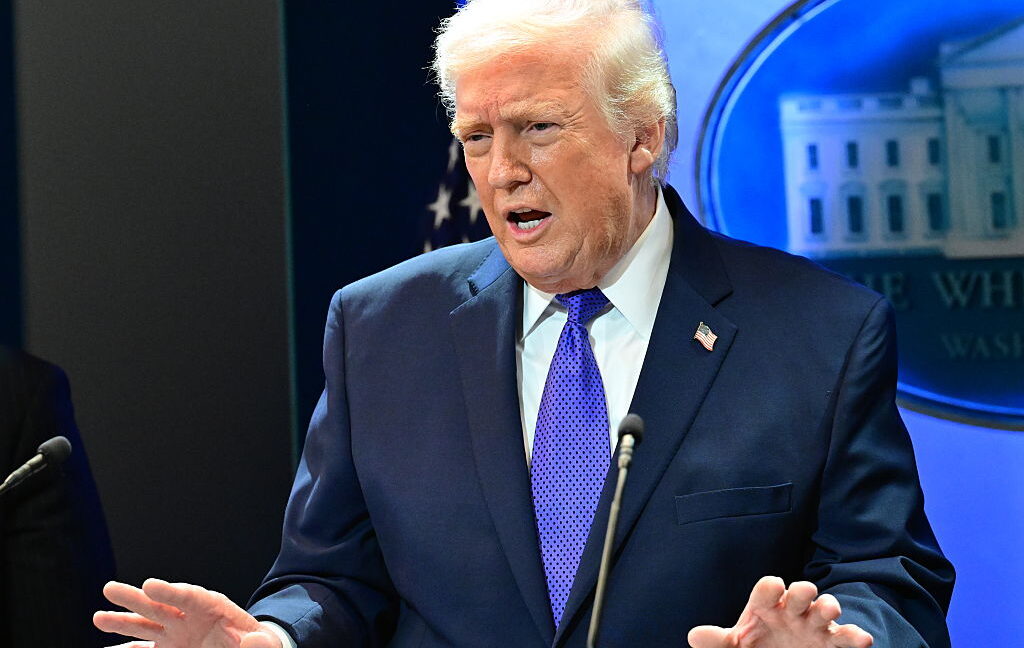
Court Strikes Down Trump's 10% Global Tariff
A significant legal decision recently unfolded as the U.S. Court of International Trade declared former President Donald Trump's 10% global tariff illegal. This ruling is not an isolated incident; in fact, it echoes a previous Supreme Court decision that struck down another set of emergency tariffs. Trump, during his tenure, utilized an antiquated trade law with the intention of bolstering U.S. manufacturing. However, the court's recent ruling dismisses this strategy, indicating that his approach was not in accordance with legal standards.
Context: The Broader Trade Landscape
Trade tariffs have long been a tool in the international economic landscape, often used to protect domestic industries or retaliate against unfair foreign practices. However, Trump's administration took a notably aggressive stance with its trade policies, employing tariffs as a primary instrument to reshape global trade dynamics. The 10% global tariff was one such measure, aimed at addressing trade deficits and reviving U.S. manufacturing. Yet, this strategy has faced considerable legal challenges, highlighting the complexities and constraints of using trade laws in a modern, interconnected world economy. In the European Union, where trade policy is tightly regulated and coordinated among member states, Trump's unilateral approach stood in stark contrast, often leading to tensions and retaliatory measures.
A Hit to Trump's Trade Moves
The ruling deals a considerable blow to a central component of Trump's trade strategy. Tariffs were a key mechanism for him to exert pressure and influence over international trade relations, particularly in negotiations with major economic players like China. With the court's decision, Trump's ability to leverage these tariffs is severely restricted. This legal setback arises at a critical juncture, as a meeting with China's President Xi Jinping looms on the horizon. The shifting legal ground could potentially alter the dynamics of U.S.-China trade talks, possibly giving China a stronger position.
The court specifically ruled that Trump's application of Section 122 of the Trade Act of 1974 was inappropriate. This section allows for temporary tariff increases to address "fundamental international payments problems." However, the court found that Trump's interpretation of "balance-of-payments deficits" was not aligned with Congressional intent, particularly since the U.S. no longer operates under a gold standard.
Legal Fallout and What’s Next
While the ruling is a significant setback, its immediate impact is somewhat limited. Refunds are available only to importers who actively pursued legal action against the tariffs. This targeted relief helps prevent widespread disruption that a blanket injunction might have caused. Nonetheless, the door remains open for other affected parties, such as consumers who faced higher prices due to the tariffs, to initiate their own lawsuits. This could potentially lead to a cascade of litigation, further complicating the legal landscape.
Trump has signaled his intention to appeal the court's decision, indicating that this legal battle is far from over. His legal team is likely to explore alternative legal avenues to implement similar tariff strategies, but these efforts could be protracted, possibly taking months or even years to fully resolve. Analysts suggest that while the appeal is pending, the administration might consider other trade tools or negotiate adjustments with trading partners to mitigate the fallout.
The Trade Act of 1974 and Its Limits
The Trade Act of 1974 was designed to grant the President certain trade authorities, but it also set clear boundaries. The Act allows for temporary tariff increases in response to "fundamental international payments problems," a provision Trump attempted to exploit. However, the court's ruling underscores the limitations of this interpretation in the current economic context, where the U.S. operates on a floating exchange rate. This decision reinforces the necessity for any use of such powers to be firmly grounded in both historical context and current economic realities.
Historically, U.S. Presidents have leveraged tariffs for various strategic purposes, but Trump's sweeping and unilateral approach was unprecedented. Typically, tariffs are employed to protect specific industries or retaliate against unfair foreign trade practices. In contrast, Trump's global tariff strategy aimed to broadly reshape trade relationships, a tactic that has now faced significant legal and practical challenges.
What This Means for You
For businesses and consumers, the court's decision offers a temporary reprieve from the uncertainty and potential cost increases associated with broad tariffs. Companies that import goods can breathe easier knowing that, at least for now, some of the financial pressures might be alleviated. Consumers could also benefit from more stable prices on imported goods that were previously subject to the 10% tariff. However, the situation remains fluid, and ongoing legal and political developments could lead to new trade policies or tariffs.
What's Still Unclear
- What will be Trump's next move in response to the court's ruling?
- Could we see a wave of new lawsuits from others affected by the tariffs?
- What alternative tariff tactics might Trump or future administrations consider?
- How will this ruling influence ongoing and future trade negotiations with China and other key partners?
Editorial Take
This court ruling serves as a critical checkpoint on the extent of executive power in trade matters. It underscores the importance of adhering to legislative intent and economic realities when crafting policy interventions. As global trade continues to evolve, this decision could have lasting implications for how future administrations navigate the complex web of international trade laws and agreements. While the immediate effects may offer some relief to businesses and consumers, the broader legal and political ramifications remain to be seen.
Discuss this story
Got a take, a correction, or a follow-up tip? Reply where you read — we read everything.
Found an error? File a correction at /corrections. Substantive corrections are logged publicly.
One short email. The most important Web & Apps news, fact-checked, no fluff. Free, unsubscribe anytime.
More from Web & Apps

D23 2026: Disney's Content Deluge Sparks Questions About Strategy
Byte-Pulse cuts through D23 hype: We dissect Disney's ambitious content slate, from Simpsons: Hit & Run to Ahsoka season 2, and question the real-world implications and European market strategy.

Spotify Relaunches AI Running Mode for iOS Premium Users
Spotify's new Running Mode for iOS uses AI to sync music with your stride, but its success hinges on AI quality and user input

WhatsApp Web Gets Calls: Meta's Cross-Platform Play Begins
WhatsApp Web now supports encrypted calls, screen sharing, and call transfers. We dissect Meta's strategic shift and its implications for users and enterprise adoption in Europe.

Fox's $22 Billion Acquisition of Roku: A New Era in Streaming
Fox's acquisition of Roku for $22 billion marks a pivotal shift in streaming, merging content strength with platform reach.
The Byte-Pulse Newsroom is the editorial system that produces Byte-Pulse's daily tech news coverage. Each story is cross-referenced across 3+ independent outlets, drafted with AI assistance by the newsroom system (Drafter → Editor → Fact-Checker → Polisher), and reviewed by Serhat Er, Editor-in-Chief, before publication. We disclose AI augmentation openly. Editorial accountability stays with the named editor on every article. Tips: editorial@byte-pulse.net.
Don’t miss these
Asus ROG Phone 9 vs Sony Xperia 1 VII: Which Niche Flagship Earns Your Money?
Deciding between the gaming-focused ROG Phone 9 and the creator-centric Xperia 1 VII? This guide breaks down every spec to help you choose.
Proton VPN vs NordVPN: Which One Earns Your Subscription?
A deep dive into Proton VPN and NordVPN, comparing their privacy, performance, features, and value, helping you make an informed decision.
Perplexity Pro vs ChatGPT Plus: Which AI Assistant Fits Your Workflow?
This guide lays out the strengths and approaches of Perplexity Pro and ChatGPT Plus, helping you identify which AI assistant aligns with your specific needs.

Pokémon TCG Movie Signals Strategic Media Pivot for The Pokémon Company
A new Pokémon movie focused on the TCG is coming in 2027, marking a strategic pivot for the franchise as it navigates massive global fan engagement and logistical challenges.

Apple's AI Pivot: Vision Pro Content Cut, Siri Rebuilt Amid Layoffs
Apple's latest layoffs signal a strategic pivot, dialing back high-cost Vision Pro content while re-tooling Siri for the AI era. What's next for Apple?
Honor Magic 8 Pro vs Samsung Galaxy S26 Ultra: Which Future Flagship Fits Your Wallet and Workflow?
Deciding between the anticipated Honor Magic 8 Pro and Samsung Galaxy S26 Ultra? Our deep dive into expected specs and features provides the fair comparison you need.