Dubai Solar Parks Could Boost Rainfall by 10%, Study Suggests
Stuttgart researchers propose using solar installations to enhance desert rainfall.

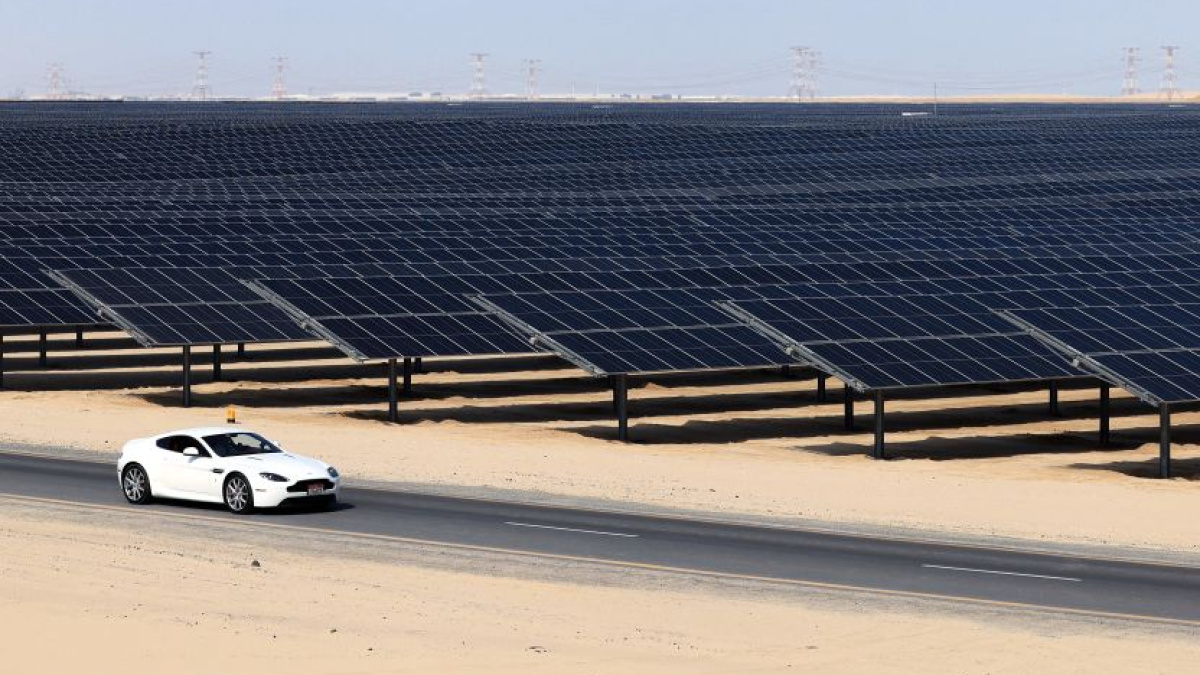
Solar Power with a Rainy Twist
A research team out of the University of Hohenheim in Stuttgart? They're trying something new to fight arid conditions in the desert. It's all about big photovoltaic (PV) arrays. The goal: pump up rainfall in the United Arab Emirates (UAE) deserts. This ambitious project, funded with €1.3 million from the UAE's national meteorology authority, supports atmospheric measurements. With fancy laser systems, naturally.
How Solar Parks Create Rain
So, how does it work? The idea is huge solar parks change how the land looks and how hot it gets. Panels darken the sand, warm it up. That creates thermal updrafts. Warm air rises, cools, condenses. Clouds form. Rain falls. Maybe. It only works if moist air from the sea rolls inland. Then, artificial dunes could lift it into the atmosphere.
*Dual purpose for solar parks: electricity and rain.* That's a pretty big deal. Could change how we think about green energy and water shortages.
Expanding the Potential
A 2024 study actually suggested a solar park could hike rainfall by up to 10% of a region's annual precipitation. Pretty significant. To make it even better, the project plans more land-use tricks. Like planting vegetation. That'd boost soil temperature and help retain moisture.
Potential Global Impact
If it works? This tech could go global. Other dry areas. Solar installations doing double duty: power and rain.
Key Components of the Project:
- Building big solar parks in the desert.
- Lasers for super-precise atmospheric measurements.
- Artificial dunes, pushing moist air.
- Better land use, including planting stuff.
Context: European Innovation in Climate Solutions
The EU, always pushing renewable energy. This project? A prime example of their innovative thinking. Europe's climate is obviously way different from the UAE's. But the core idea — solar tech for climate tweaking — could inspire similar projects. Especially in drought-hit southern European countries.
What This Means for You
Regions hurting for water could see a new lifeline here. Live in a drought zone? This might, eventually, mean more rain. More stable water. Keep an eye on this one. It might just show us how to build better climate resilience in the future.
What's Still Unclear
Still plenty we don't know, of course. Can it scale past the UAE? What about local ecosystems? And will this extra rain last all year, or just certain seasons?
Why This Matters
That headline — 'Solar Parks in Dubai May Boost Rainfall by 10%' — it's not just clickbait. This could be a real breakthrough in how we adapt to climate change. Repurposing solar tech? That means tackling water shortages and pushing green energy goals. A pretty clear example of innovation solving big global problems.
Discuss this story
Got a take, a correction, or a follow-up tip? Reply where you read — we read everything.
Found an error? File a correction at /corrections. Substantive corrections are logged publicly.
One short email. The most important Science news, fact-checked, no fluff. Free, unsubscribe anytime.
More from Science
Quantum Computing Explained for Developers: A 2026 Update
Explore quantum computing fundamentals, hardware, and how it impacts software development in this comprehensive guide for developers.

Quantum Computing Advances: Key Updates from Microsoft, Atom, and EeroQ
Microsoft, Atom Computing, and EeroQ share key updates in their quantum computing efforts, marking steady progress toward practical applications.

Star City Explores the Human Cost Behind the Soviet Space Program
Forget Mars colonies. Star City, the new spin-off from For All Mankind, dives deep into the gritty, dangerous, and often ethically complex world of the Soviet space program in the late 1960s.
A Gritty, High-Stakes Drama: Exploring the Soviet Space Program in Star City
Explore the untold story of the Soviet space program in Star City, a new Apple TV+ series that swaps the familiar American perspective for a gritty, high-stakes drama centered on its visionary, yet constrained, leadership.
The Byte-Pulse Newsroom is the editorial system that produces Byte-Pulse's daily tech news coverage. Each story is cross-referenced across 3+ independent outlets, drafted with AI assistance by the newsroom system (Drafter → Editor → Fact-Checker → Polisher), and reviewed by Serhat Er, Editor-in-Chief, before publication. We disclose AI augmentation openly. Editorial accountability stays with the named editor on every article. Tips: editorial@byte-pulse.net.
Don’t miss these
Honor Magic 8 Pro vs Samsung Galaxy S26 Ultra: Which Future Flagship Fits Your Wallet and Workflow?
Deciding between the anticipated Honor Magic 8 Pro and Samsung Galaxy S26 Ultra? Our deep dive into expected specs and features provides the fair comparison you need.
Proton VPN vs NordVPN: Which One Earns Your Subscription?
A deep dive into Proton VPN and NordVPN, comparing their privacy, performance, features, and value, helping you make an informed decision.
Perplexity Pro vs ChatGPT Plus: Which AI Assistant Fits Your Workflow?
This guide lays out the strengths and approaches of Perplexity Pro and ChatGPT Plus, helping you identify which AI assistant aligns with your specific needs.

Pokémon TCG Movie Signals Strategic Media Pivot for The Pokémon Company
A new Pokémon movie focused on the TCG is coming in 2027, marking a strategic pivot for the franchise as it navigates massive global fan engagement and logistical challenges.

Apple's AI Pivot: Vision Pro Content Cut, Siri Rebuilt Amid Layoffs
Apple's latest layoffs signal a strategic pivot, dialing back high-cost Vision Pro content while re-tooling Siri for the AI era. What's next for Apple?
Xiaomi 16 Pro vs iPhone 18 Pro: Which Flagship Fits Your World?
Deciding between the Xiaomi 16 Pro and iPhone 18 Pro? We break down every spec and trade-off, so you can make the choice that's right for you.