Google Health App Launches with AI Coach for Fitbit Users
Fitbit app rebrands to Google Health, rolls out with Gemini-based AI and new features.

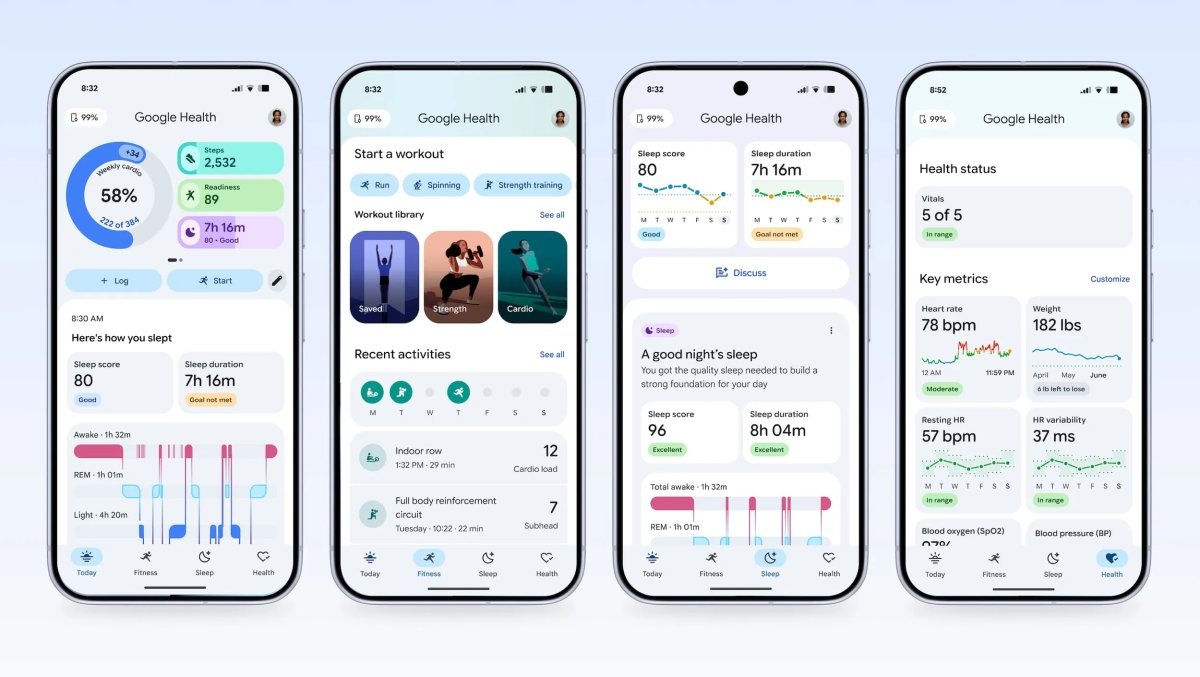
Say goodbye to the Fitbit app as you know it. Version 5.0 just dropped, and it's a big one: rebranding as the Google Health app. We're talking a fresh redesign, plus a bunch of new AI features powered by Gemini. This isn't a surprise for everyone, though. Google's been testing it in Germany since April 2026. Now? It's out for all Fitbit and Pixel Watch users.
From Fitbit to Google Health
So, what's new with Google Health? It's your one-stop shop for tracking sleep, activity, and all sorts of health data. Want more? You can sign up for Google Health Premium. That used to be Fitbit Premium, by the way, and it still runs about €9 a month. The big draw here is a Gemini-powered AI Health Coach. Think 'Ask Coach,' smart notifications, custom workout plans, and logging health stuff just by talking to it. Pretty neat.
This AI coach isn't just about steps. It pulls everything together: your fitness, general health, even critical medical data like cycle tracking. It'll tell you how your workouts and sleep are actually impacting your body. Should you rest up? Or push for another intense session? Sounds a lot like the coach Whoop introduced, doesn't it?
Imagine waking up one morning, and your phone greets you with, "Good morning! Based on your sleep quality last night and yesterday’s workout intensity, today might be a good day for a lighter exercise routine." This kind of personalized feedback could help users make more informed decisions about their day-to-day activities, promoting a more balanced and health-conscious lifestyle.
Free vs. Premium Features
What's free, and what's not? The basic app still tracks your steps, calories burned, distance covered, cardio load, and daily readiness. You'll still get sleep analysis — index, durations, phases. Plus, heart rate, heart rate variability, respiration rate, and blood oxygen levels (SpO2). But here's the catch: no deep-dive data analysis, no AI Health Coach.
- Free Version: Basic activity and sleep tracking. That's it.
- Premium Version: AI Health Coach and serious data insights.
The distinction between the free and premium versions is crucial. While the free version offers fundamental tracking functionalities, it's the premium version that transforms your smartwatch into a true health companion. For instance, the AI Health Coach can provide insights like, "Your heart rate variability suggests you might be stressed. Would you like tips on relaxation techniques?" This kind of proactive health management could be invaluable for those looking to enhance their well-being.
Changes and Omissions
Now, for the stuff that's gone. Yep, some old favorites got axed. Remember those sleep profiles and their cute little sleep animals? Gone. Estimated oxygen variation (EOV)? Poof. You'll just see raw SpO2 data now. And if you liked the social side of things—friends, leaderboards, badges—well, those are history too. Even the endurance fitness score is out, replaced by the more standard VO2max measurement.
On the upside, there's a new home screen widget. It's actually pretty good, showing more than just steps, depending on how big you make it.
These changes highlight a shift towards more serious health data management. While the playful elements like sleep animals and badges disappear, the focus is clearly on delivering more scientifically grounded data and insights. The transition from EOV to raw SpO2 readings, for example, suggests a move towards transparency and accuracy in health metrics.
Context
Why the big shift? It's all part of Google's larger plan to bake AI into everything it does. The Gemini platform is key here, aiming for a better user experience across the board. Google's clearly serious about growing its health and fitness empire. This update sets them up to go head-to-head with rivals like Apple's Health app.
This strategy isn't just about keeping up with the Joneses in the tech world. It's about redefining how we interact with health data. By integrating AI deeply into their health app, Google is positioning itself as a leader in personalized health tech. The potential for AI to predict health issues before they arise, based on patterns and data analysis, could be revolutionary.
What This Means for You
So, what's this mean for you, the user? If you've got a Fitbit or Pixel Watch, you're getting some pretty advanced health tracking features with the new Google Health app. Thinking about the premium subscription? It might just give you those tailored insights and recommendations you've been looking for to hit your fitness and health goals.
The AI Health Coach could become a digital ally in your health journey. For example, if you're training for a marathon, the coach might suggest adjusting your training schedule based on your recovery data, potentially improving performance and reducing injury risk. It’s about making the data work for you, not just collecting it.
What's Still Unclear
But let's be real, some things are still a bit hazy. How will existing Fitbit users really feel about all these changes? And what happens to their old data during this Google Health transition? We just don't know yet. Also, Google hasn't said when this will roll out beyond Germany. Crickets on that front.
The concerns about data migration are valid. Long-time users might be anxious about losing historical fitness data or facing compatibility issues with older Fitbit devices. Google's silence on the global rollout timeline also leaves many potential users in the dark.
Why This Matters
Why should we care? Because Google Health's AI features are a big deal for health tracking tech. By bringing in AI, Google's clearly trying to give us more personalized, actionable health info. It could actually set a new bar for the whole wearable industry. We'll see.
The introduction of AI into health tracking could redefine user expectations. As we lean more on technology to guide our health decisions, the quality and accuracy of these insights become paramount. Google Health's advancements may push competitors to innovate further, potentially leading to more comprehensive health solutions for all users. This could be the beginning of a new era in digital health management, one where our devices do more than just track—they guide and support us in our health journeys.
Cases, chargers and AirPods alternatives the editors actually use.
Shop mobile gear →Discuss this story
Got a take, a correction, or a follow-up tip? Reply where you read — we read everything.
Found an error? File a correction at /corrections. Substantive corrections are logged publicly.
One short email. The most important Mobile news, fact-checked, no fluff. Free, unsubscribe anytime.
More from Mobile
Asus ROG Phone 9 vs Sony Xperia 1 VII: Which Niche Flagship Earns Your Money?
Deciding between the gaming-focused ROG Phone 9 and the creator-centric Xperia 1 VII? This guide breaks down every spec to help you choose.
Honor Magic 8 Pro vs Samsung Galaxy S26 Ultra: Which Future Flagship Fits Your Wallet and Workflow?
Deciding between the anticipated Honor Magic 8 Pro and Samsung Galaxy S26 Ultra? Our deep dive into expected specs and features provides the fair comparison you need.
Xiaomi 16 Pro vs iPhone 18 Pro: Which Flagship Fits Your World?
Deciding between the Xiaomi 16 Pro and iPhone 18 Pro? We break down every spec and trade-off, so you can make the choice that's right for you.
Motorola Edge 60 Ultra vs OnePlus 13: Which Android Flagship Fits Your Priorities?
Motorola Edge 60 Ultra and OnePlus 13 both aim for top-tier Android. We cut through the marketing to reveal the true differences, helping you choose.
The Byte-Pulse Newsroom is the editorial system that produces Byte-Pulse's daily tech news coverage. Each story is cross-referenced across 3+ independent outlets, drafted with AI assistance by the newsroom system (Drafter → Editor → Fact-Checker → Polisher), and reviewed by Serhat Er, Editor-in-Chief, before publication. We disclose AI augmentation openly. Editorial accountability stays with the named editor on every article. Tips: editorial@byte-pulse.net.
Don’t miss these
Proton VPN vs NordVPN: Which One Earns Your Subscription?
A deep dive into Proton VPN and NordVPN, comparing their privacy, performance, features, and value, helping you make an informed decision.
Perplexity Pro vs ChatGPT Plus: Which AI Assistant Fits Your Workflow?
This guide lays out the strengths and approaches of Perplexity Pro and ChatGPT Plus, helping you identify which AI assistant aligns with your specific needs.

Pokémon TCG Movie Signals Strategic Media Pivot for The Pokémon Company
A new Pokémon movie focused on the TCG is coming in 2027, marking a strategic pivot for the franchise as it navigates massive global fan engagement and logistical challenges.

Apple's AI Pivot: Vision Pro Content Cut, Siri Rebuilt Amid Layoffs
Apple's latest layoffs signal a strategic pivot, dialing back high-cost Vision Pro content while re-tooling Siri for the AI era. What's next for Apple?

D23 2026: Disney's Content Deluge Sparks Questions About Strategy
Byte-Pulse cuts through D23 hype: We dissect Disney's ambitious content slate, from Simpsons: Hit & Run to Ahsoka season 2, and question the real-world implications and European market strategy.
Notion vs Obsidian: Which Knowledge Hub Fits Your Workflow?
Deciding between Notion and Obsidian? We break down the core differences in philosophy, data ownership, collaboration, and extensibility to help you choose.