Google's Gemini AI to Power Android as a Smart Assistant This Summer
Forget chatbots. Google wants Gemini Intelligence to act as a truly smart assistant, weaving AI into every corner of your Android experience. First up: Samsung and Pixel.

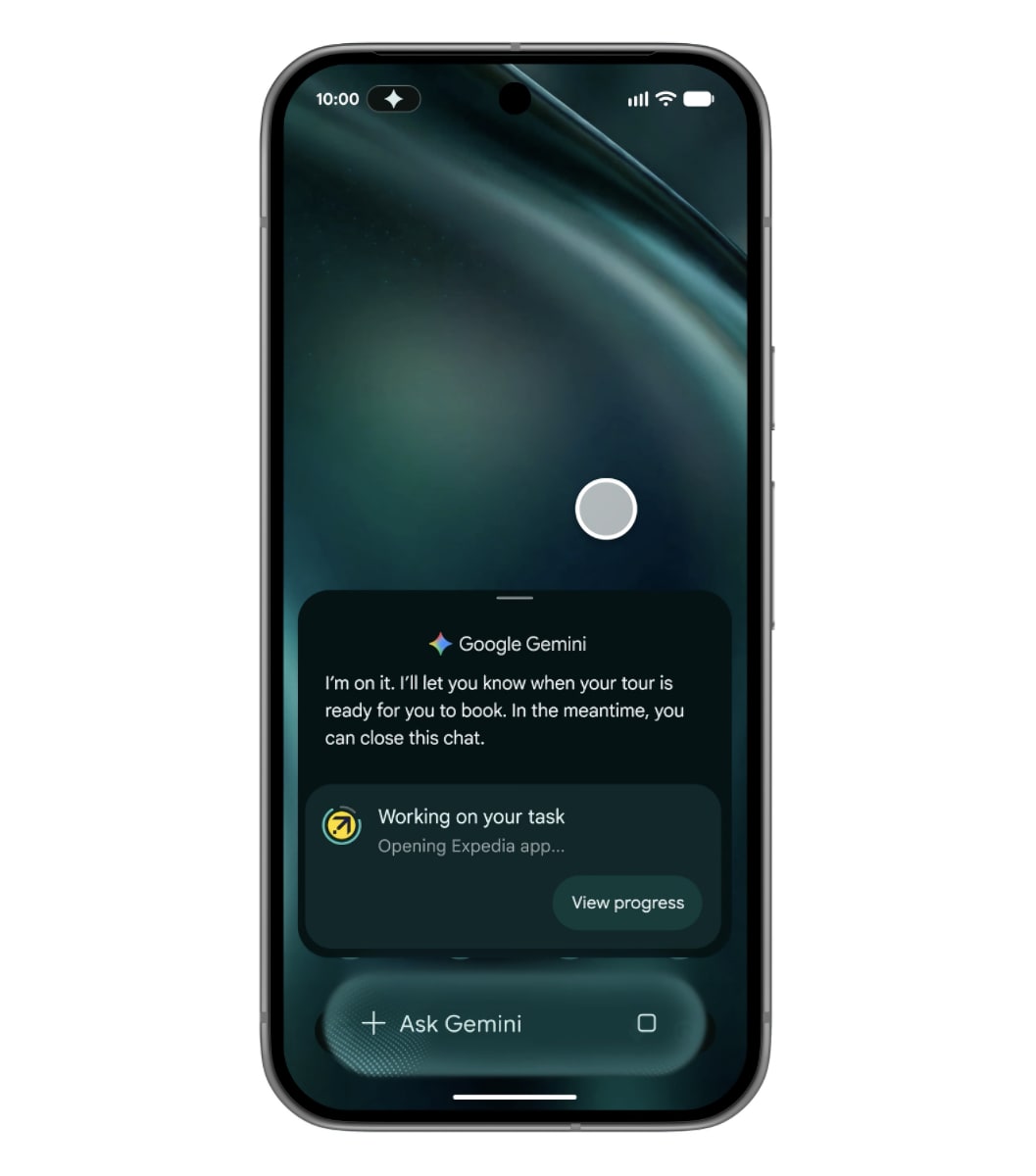
Google's Gemini AI: Transforming Android into a Smart Assistant
Google is gearing up to introduce a significant leap in AI integration with its newly announced Gemini Intelligence. Unlike conventional chatbots, Gemini is designed to function as an active agent across various applications on Android devices. Unveiled in anticipation of the Google I/O 2026 event, this AI aims to provide more than just reactive responses; it aspires to be an intuitive assistant that can seamlessly weave into your daily digital interactions.
A New Era of AI Integration
Consider a scenario where you receive your course schedule via Gmail. With Gemini, your textbooks are automatically searched and added to your shopping cart, ready for purchase with just a confirmation click. Or imagine snapping a picture of a travel brochure, and Gemini instantly translates that into a detailed search on Expedia. These examples illustrate the transition from smart to intuitive devices, where technology anticipates your needs while ensuring you remain in control. Each action facilitated by Gemini requires your approval, highlighting a balance between automation and user agency.
The introduction of Gemini marks a pivotal shift in how AI can be integrated into mobile operating systems. It represents a move towards devices that not only respond to commands but also proactively assist users in managing their tasks. This innovation aligns with broader trends in AI development, where the focus has shifted from creating autonomous systems to enhancing human capabilities through seamless technology integration.
Rolling Out in Stages
Google plans to roll out Gemini Intelligence starting in the summer of 2026, initially on flagship devices like Samsung's Galaxy S26 and Google's Pixel 10. Later in the year, the integration will extend to Wear OS devices and Android Automotive systems, broadening its reach. By late June, Gemini is expected to debut as a Chrome assistant, tasked with simplifying processes such as booking appointments and reserving parking spots. Additionally, a smart autofill feature will enable users to complete complex forms across multiple applications, though this feature will be available on an opt-in basis to respect user privacy.
This staggered rollout approach allows Google to fine-tune Gemini's capabilities on high-end devices before expanding to other platforms. However, the requirement for newer hardware may pose challenges in regions where older Android models are prevalent. This could impact the pace at which users in these markets can adopt the latest AI features.
Enhancements in Communication
Gemini's capabilities extend to communication enhancements as well. Android's keyboard app, Gboard, will introduce a feature called "Rambler," a sophisticated voice-to-text function that intelligently filters out filler words and supports smooth code-switching between languages. This is part of a broader push towards a generative user interface, where users can effortlessly create personalized homescreen widgets through voice commands using the "Create My Widget" feature.
These updates are part of Google's strategy to make interactions with devices more natural and intuitive, reducing the friction between user intent and technological execution. By enhancing tools like Gboard, Google aims to streamline communication, making it easier for users to express themselves accurately and efficiently.
Context: The European Perspective
In Europe, the integration of AI into mobile operating systems like Android is particularly significant due to stringent privacy regulations, such as the General Data Protection Regulation (GDPR). Google's emphasis on requiring user confirmation for AI-driven actions appears to be a strategic move to align with these regulations and is likely to be well-received by privacy-conscious users. However, the necessity for newer hardware to support Gemini could present a challenge in European markets, where a substantial number of users still rely on older Android models.
What This Means for You
For the average user, Gemini Intelligence promises a more seamless interaction with your Android device. It has the potential to save time and boost productivity by automating routine tasks and providing proactive assistance. However, if you're using an older device, you may need to upgrade to a newer model, such as the Galaxy S26 or Pixel 10, to take full advantage of Gemini's capabilities.
This shift towards more advanced AI features signifies a move towards a more personalized and efficient technological experience. Users can expect their devices to become more attuned to their needs, offering suggestions and completing tasks with minimal input, thereby enhancing overall user satisfaction.
What's Still Unclear
Despite the promising features of Gemini Intelligence, several questions remain unanswered. How will the AI handle data privacy, especially given its deep integration with various apps? This is a crucial concern, especially in light of recent discussions around data security and user consent. Additionally, there are concerns about whether such proactive AI functions will significantly impact battery life and how they will perform on devices with older processors.
Editorial Take
Google's Gemini Intelligence has the potential to redefine the role of AI on Android devices. By making AI more proactive and deeply integrated into the user experience, Google is setting a new standard for mobile technology. As the rollout progresses, it will be important to observe how Google addresses privacy concerns and hardware limitations, particularly in diverse markets like Europe. While there are still questions to be answered, Gemini represents a significant step forward in the evolution of smart assistants, offering a glimpse into a future where technology is more attuned to human needs.
Discuss this story
Got a take, a correction, or a follow-up tip? Reply where you read — we read everything.
Found an error? File a correction at /corrections. Substantive corrections are logged publicly.
One short email. The most important AI news, fact-checked, no fluff. Free, unsubscribe anytime.
More from AI
Perplexity Pro vs ChatGPT Plus: Which AI Assistant Fits Your Workflow?
This guide lays out the strengths and approaches of Perplexity Pro and ChatGPT Plus, helping you identify which AI assistant aligns with your specific needs.
Claude Pro vs Google Gemini Advanced: Which AI Assistant Deserves Your Subscription?
This definitive guide cuts through the marketing to give you a fair, balanced breakdown of Claude Pro and Gemini Advanced, letting you decide which AI best fits your workflow.
Claude Pro vs Google Gemini Advanced: Which AI Actually Earns Your Subscription?
Byte-Pulse lays out the real trade-offs between Claude Pro and Google Gemini Advanced, helping you pick the AI that fits your workflow, without picking for you.
ChatGPT Plus vs Google Gemini Advanced: Which AI Assistant Fits Your Workflow?
Deciding between ChatGPT Plus and Google Gemini Advanced? We break down the models, features, integrations, and pricing to help you align your choice with your specific priorities.
The Byte-Pulse Newsroom is the editorial system that produces Byte-Pulse's daily tech news coverage. Each story is cross-referenced across 3+ independent outlets, drafted with AI assistance by the newsroom system (Drafter → Editor → Fact-Checker → Polisher), and reviewed by Serhat Er, Editor-in-Chief, before publication. We disclose AI augmentation openly. Editorial accountability stays with the named editor on every article. Tips: editorial@byte-pulse.net.
Don’t miss these
OnePlus 14 vs Samsung Galaxy S26: Which Flagship Earns Your Hard-Earned Cash?
Deciding between the OnePlus 14 and Samsung Galaxy S26? This guide cuts through the noise, laying out the facts so you can pick the perfect phone for your priorities.
Proton VPN vs NordVPN: Which One Earns Your Subscription?
A deep dive into Proton VPN and NordVPN, comparing their privacy, performance, features, and value, helping you make an informed decision.

Pokémon TCG Movie Signals Strategic Media Pivot for The Pokémon Company
A new Pokémon movie focused on the TCG is coming in 2027, marking a strategic pivot for the franchise as it navigates massive global fan engagement and logistical challenges.

Apple's AI Pivot: Vision Pro Content Cut, Siri Rebuilt Amid Layoffs
Apple's latest layoffs signal a strategic pivot, dialing back high-cost Vision Pro content while re-tooling Siri for the AI era. What's next for Apple?

D23 2026: Disney's Content Deluge Sparks Questions About Strategy
Byte-Pulse cuts through D23 hype: We dissect Disney's ambitious content slate, from Simpsons: Hit & Run to Ahsoka season 2, and question the real-world implications and European market strategy.
Nothing Phone 4 vs Google Pixel 11: Looking Ahead to the Next Generation
A speculative deep dive into what the Nothing Phone 4 and Google Pixel 11 might bring, offering a balanced look at their likely strengths and trade-offs for future buyers.