Huawei's XPixel Headlights Project 100-Inch Movies
New RGB tech enables Huawei headlights to project 100-inch images, merging entertainment and navigation.

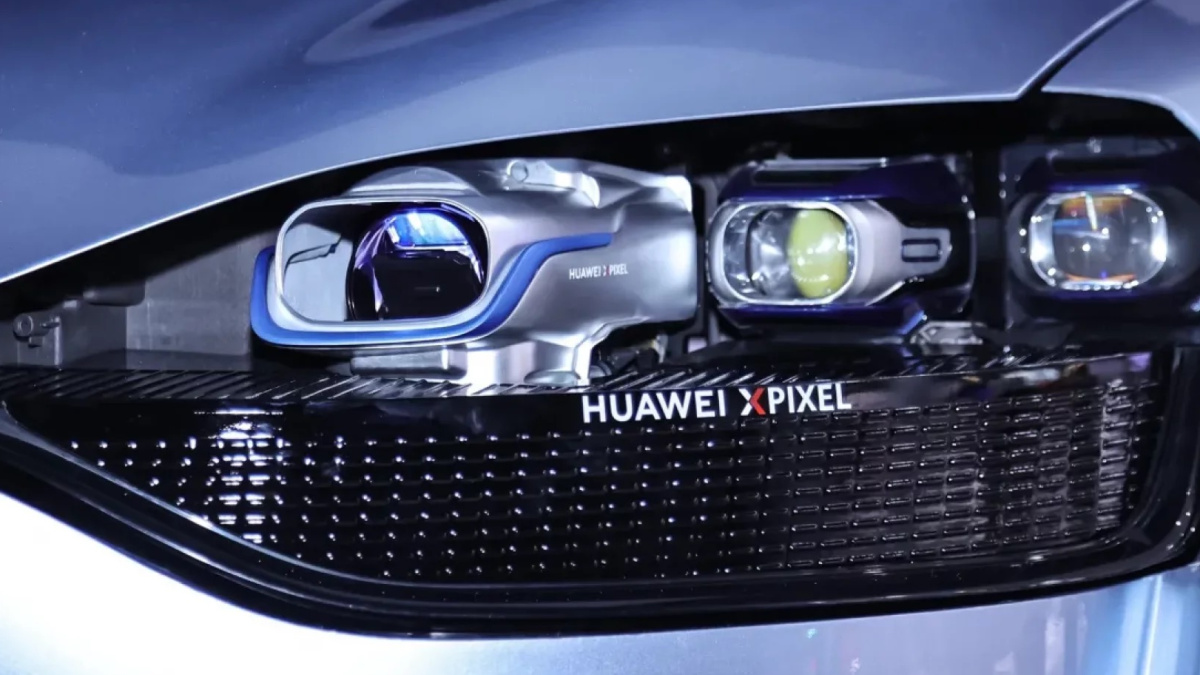
Huawei just pulled back the curtain on something genuinely wild at the Beijing Auto Show: the XPixel platform. This isn't just an incremental upgrade to a headlight system; it's a full-color RGB projection technology designed to totally change how we think about car lights. Imagine your parked car projecting movies or games onto a wall, transforming any flat surface into a temporary cinema screen. That’s precisely what Huawei is proposing, pushing the boundaries of what automotive lighting can achieve, both for entertainment and practical driving assistance.
More Than Just Headlights
Forget adaptive high beams that merely dim or shape light to avoid blinding oncoming traffic. The XPixel platform takes things way further, fundamentally redefining the very concept of a car's 'eyes.' It’s a sophisticated, full-color RGB projection system, packing about a million pixels into each headlight unit. This high pixel density means it can throw a vivid, roughly 100-inch image onto a wall or any suitable surface, offering a level of clarity and dynamic range far beyond anything seen in production vehicles before. Think of the potential for entertainment during long charging stops in an electric vehicle, or for displaying intricate graphics and information when a car is stationary. But it’s not just about turning your vehicle into a portable drive-in; this pixel prowess also unlocks a new realm of practical applications.
On the move, the XPixel system is set to seriously improve driving safety and communication. It can beam dynamic navigation arrows and turn signals directly onto the road ahead, making directions clearer for the driver and signaling intentions more explicitly to other road users. This visual communication could significantly reduce ambiguity in traffic, especially in complex intersections or during lane changes. Furthermore, the system is designed to adapt its color temperature and light patterns for crummy weather conditions – be it rain, fog, or heavy snow – enhancing visibility for the driver and making the vehicle more conspicuous to others. This intelligent adaptation, combined with its core adaptive lighting capabilities, ensures that while the system projects intricate information, it avoids blinding oncoming traffic, a crucial safety feature for any advanced headlight technology.
Context: This innovation from Huawei isn't happening in a vacuum; it’s part of a broader industry shift towards software-defined vehicles and the integration of advanced digital experiences into the automotive sector. As cars evolve from mere transportation devices into connected 'third spaces,' the lines between in-car entertainment, safety features, and external communication tools are blurring. Huawei's XPixel platform fits squarely into this trend, leveraging the company's deep expertise in display and projection technologies. While China has rapidly advanced in adopting these cutting-edge automotive technologies, often driven by domestic tech giants, regulatory bodies in other regions, particularly the European Union, have been slower to update rules around advanced vehicle lighting. This creates a fascinating dynamic where European carmakers, despite their long history of automotive innovation, find themselves playing catch-up in areas like pixelated headlights, trying to integrate these features while navigating stricter, often outdated, regulatory frameworks.
The Regulatory Roadblock
Adaptive pixel headlights, particularly those with such high resolution and projection capabilities, have historically hit significant regulatory walls in markets like the US. Safety concerns regarding potential glare, distraction, or misuse have led to cautious, often delayed, approvals. But in China, manufacturers like Huawei have just rolled out these technologies at home, benefiting from a more permissive or rapidly evolving regulatory landscape. This domestic advantage allows Chinese companies to innovate and deploy faster, putting European carmakers in a tough spot. They're scrambling to develop and integrate similar advanced lighting systems, but often face a longer road to market due to the need for extensive testing and regulatory approval processes in their home markets and other key export regions.
What This Means for You
So, what does this mean for you, whether you’re a gearhead, a tech enthusiast, or just someone looking for their next car? Huawei's XPixel system might kick off a whole new era for in-car entertainment and safety, particularly as electric vehicles become more prevalent and charging times offer opportunities for new forms of interaction. Imagine pulling up to a campsite and projecting a movie onto a tent, or using your car's headlights to display an interactive game during a family road trip stop. These features could become standard faster than many anticipate, especially in new EV models designed with digital integration at their core. This isn't just about a cooler set of headlights; it’s about your vehicle becoming a more versatile, interactive hub, capable of delivering unique experiences and enhancing everyday driving in ways we're only just beginning to explore.
What's Still Unclear
Here's what we still don't know: Can all these features actually run simultaneously, or are there limits when combining projection, navigation, and adaptive lighting? Huawei hasn't yet clarified the system's full operational parameters. Furthermore, the crucial question of when we'll see this outside of China remains unanswered. Beyond availability, there are practical considerations: what about power consumption for such high-resolution projectors? How will the durability and maintenance of these complex units hold up in various climates and road conditions? And, critically, how will regulations outside of China adapt to manage potential issues like driver distraction from external projections or the risk of misuse? These are significant open questions that will shape XPixel's global future.
Huawei's XPixel isn't just another gadget; it's a bold vision for how vehicles can integrate advanced entertainment and crucial communication into a single, highly visible system. This kind of innovation underscores how cars are rapidly evolving beyond simple modes of transport, becoming increasingly sophisticated digital platforms that promise to redefine our relationship with driving.
Discuss this story
Got a take, a correction, or a follow-up tip? Reply where you read — we read everything.
Found an error? File a correction at /corrections. Substantive corrections are logged publicly.
One short email. The most important EV & Auto news, fact-checked, no fluff. Free, unsubscribe anytime.
More from EV & Auto

Tesla Model 3 vs Polestar 2: Choosing Your Next EV Wisely
A balanced breakdown of Tesla Model 3 and Polestar 2. Compare specs, performance, design, and more to find the right EV for you.

Tesla Model Y vs Hyundai Ioniq 5: Which Electric SUV Fits Your Drive?
Tesla Model Y and Hyundai Ioniq 5 go head-to-head in this comprehensive guide. Discover which EV aligns with your priorities.

Tesla Model 3 vs BYD Seal: Which Electric Sedan Suits Your Drive?
Tesla Model 3 and BYD Seal each offer unique strengths in the EV market. Explore specs and decide which aligns with your lifestyle.
Best Aftermarket Displays for Android Auto and Apple CarPlay in 2023
Discover standout aftermarket displays for Android Auto and Apple CarPlay, their unique features, and how they compare.
The Byte-Pulse Newsroom is the editorial system that produces Byte-Pulse's daily tech news coverage. Each story is cross-referenced across 3+ independent outlets, drafted with AI assistance by the newsroom system (Drafter → Editor → Fact-Checker → Polisher), and reviewed by Serhat Er, Editor-in-Chief, before publication. We disclose AI augmentation openly. Editorial accountability stays with the named editor on every article. Tips: editorial@byte-pulse.net.
Don’t miss these

Nothing Ear (3) vs AirPods 4 ANC: The Right Earbuds For Your Ears
We cut through the hype to compare the rumored Nothing Ear (3) and AirPods 4 ANC, laying out the real trade-offs so you can decide for yourself.

Notion vs Obsidian: Which Knowledge Hub Fits Your Workflow?
Deciding between Notion and Obsidian? We break down the core differences in philosophy, data ownership, collaboration, and extensibility to help you choose.

Lenovo Legion Go S vs. ASUS ROG Ally X: Which Next-Gen Handheld Earns a Spot in Your Backpack?
Deciding between the Legion Go S and ROG Ally X? We break down every spec, every design choice, and every trade-off without picking a winner. Your perfect gaming handheld is here.

Apple M5 Pro vs. Apple M4 Pro: Projecting the Next Generation of Apple Silicon
We project the likely advancements of the unannounced M4 Pro and M5 Pro chips, offering a balanced, speculative look at future performance and efficiency.

Sennheiser Momentum 4 Wireless vs Bose QuietComfort Ultra: Which Flagship Fits Your Daily Rhythm?
We lay out the real trade-offs between Sennheiser's long-distance runner and Bose's silence specialist, so your next premium audio choice is clear.

Steam Deck OLED vs MSI Claw 8 AI+: Which Handheld PC Earns Your Wallet?
Deciding between Valve's acclaimed handheld and MSI's latest Intel-powered challenger? We break down the specs, performance, and experience to help you choose your ideal portable gaming machine.