KAIST's Transistor-Based Ising Machine: A Cost-Effective Quantum Alternative?
KAIST's new solution for complex problems doesn't break the bank.

KAIST's Transistor-Based Ising Machine: A Cost-Effective Quantum Alternative?
The Korea Advanced Institute of Science and Technology (KAIST) has made headlines with the development of a novel Ising machine that utilizes transistors. This innovation isn't just an academic exercise; it potentially positions itself as a formidable alternative to quantum computers in solving complex optimization problems. These are the kinds of problems that are notoriously difficult for classical computers to address efficiently.
Context: The Rise of Specialized Computing Solutions
In recent years, the tech industry has witnessed a burgeoning interest in specialized computing solutions. Quantum computers, often heralded as a revolutionary leap forward, promise to solve problems beyond the reach of classical computers. Yet, their practical application remains on the horizon, with significant technical hurdles still to be overcome. In the interim, other technologies, such as Ising machines, have emerged as viable contenders for specific types of computational tasks. Notably, these machines could serve as a bridge technology, offering substantial performance improvements in optimization tasks while quantum computing matures.
What is an Ising Machine?
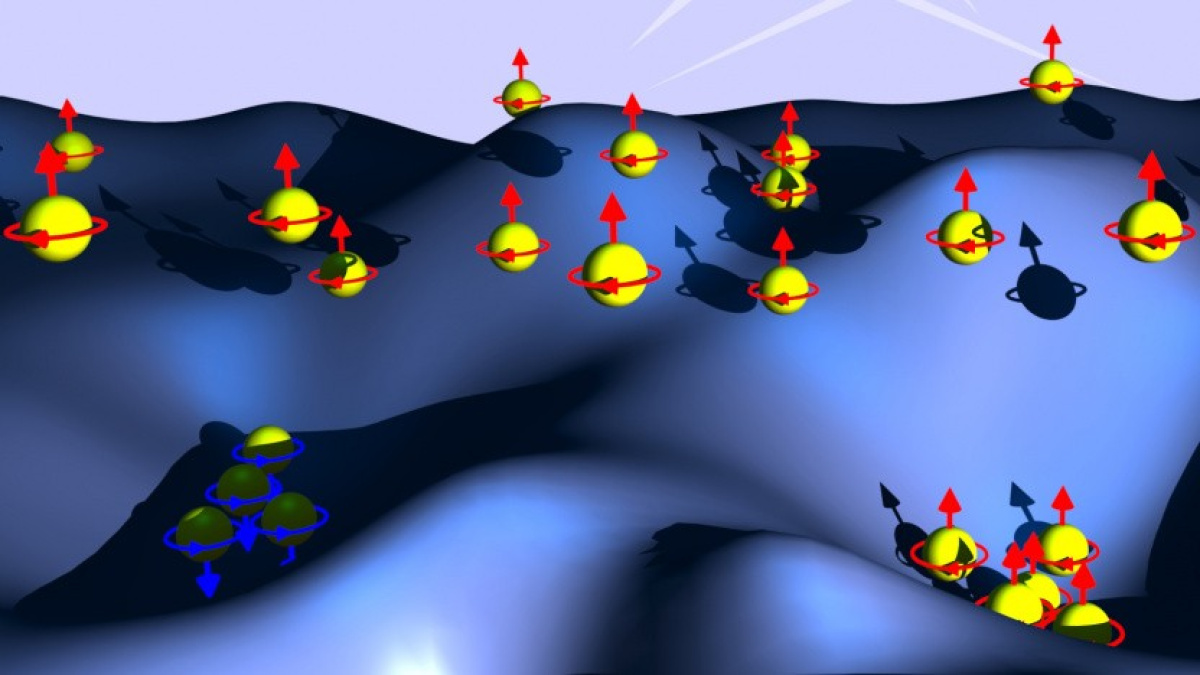
The concept of the Ising machine originates from the Ising model, a mathematical model that describes ferromagnetism in statistical mechanics. Imagine a lattice of atoms, each capable of spinning either up or down. The spin of each atom is influenced by the spins of its neighbors. In computational terms, an optimization problem is mapped onto this grid, where finding the lowest energy state provides the solution. The KAIST team has innovatively utilized transistors as oscillators, employing just one per grid point, which contrasts with older models that required six transistors per SRAM cell. This simplification not only reduces complexity but also makes the system more compact.
Key Innovations
The KAIST team's approach is characterized by several key innovations that make this Ising machine particularly promising:
- Transistors: The use of simple transistors significantly reduces both energy consumption and the physical space required for the machine.
- Oscillator Design: By employing vertical transistors, they simplify the coupling of grid points. This design is inspired by technologies like 4F2-DRAM and multi-layer NAND flash memory, which are well-known for their efficiency.
- Metal-Insulator Transition: This transition allows the tuning of the machine via gate voltages, an approach that facilitates more precise control over the system.
These advancements mean that the Ising machine can be constructed using standard semiconductor processes, which could lead to cost reductions and increased accessibility compared to other methods.
How It Compares: Ising Machines vs. Quantum Computers
Quantum computers and Ising machines tackle problems through fundamentally different philosophies. Quantum computers are designed to exploit quantum mechanics, potentially offering unparalleled precision and speed. However, they are still in the developmental phase, with many technical challenges yet to be resolved before they become mainstream. In contrast, Ising machines, particularly the transistor-based variety developed by KAIST, focus on minimizing a system's energy to address optimization problems. While they may not match the theoretical power of quantum computers, they provide a tangible solution for many current computational needs.
A significant advantage of the KAIST Ising machine over earlier designs is its use of vertical transistors, which contributes to a more streamlined and resource-efficient device. Traditional Ising machines relied heavily on CMOS processes and SRAM cells, which were often bulky and resource-intensive, limiting their practical application.
What's Still Unclear
Despite the promising developments, several questions remain unanswered. Will this transistor-based design hold up in large-scale, real-world scenarios? As with any new technology, scalability is a critical consideration. Additionally, what are the inherent limits of this transistor approach in terms of complexity and problem size? These are essential questions that will dictate the future applicability and success of the technology.
Furthermore, what does this mean for the future of traditional quantum computing? As Ising machines become more capable, will they replace or complement quantum efforts? It's a dynamic landscape, and the answers aren't yet clear.
What This Means for You
For industries and individuals that rely heavily on solving optimization problems, the KAIST Ising machine could represent a significant breakthrough. Fields such as logistics, finance, and telecommunications often require rapid, efficient solutions to complex problems. This new technology could provide a cost-effective alternative to quantum computers, potentially accelerating progress in these areas. Additionally, the use of standard semiconductor processes could lower barriers to entry, making advanced computational solutions more widely available.
Potential Impacts:
- Cost Efficiency: Lower production costs could make advanced computing accessible to more organizations.
- Energy Savings: Reduced energy consumption helps in creating sustainable tech solutions.
- Innovation Acceleration: Faster problem-solving capabilities may spur innovation across various sectors.
Editorial Take
KAIST's transistor-based Ising machine represents a significant stride in the world of specialized computing. While it may not yet possess the theoretical might of quantum computers, its practical advantages in terms of cost, accessibility, and energy efficiency cannot be ignored. As the tech industry continues to explore these innovations, we may well see Ising machines and quantum computers coexisting, each serving distinct roles in the complex landscape of computational challenges. The future is undoubtedly exciting, with these technologies offering a glimpse of the potential that lies ahead for solving the world's most demanding problems.
Discuss this story
Got a take, a correction, or a follow-up tip? Reply where you read — we read everything.
Found an error? File a correction at /corrections. Substantive corrections are logged publicly.
One short email. The most important Science news, fact-checked, no fluff. Free, unsubscribe anytime.
More from Science
Quantum Computing Explained for Developers: A 2026 Update
Explore quantum computing fundamentals, hardware, and how it impacts software development in this comprehensive guide for developers.

Quantum Computing Advances: Key Updates from Microsoft, Atom, and EeroQ
Microsoft, Atom Computing, and EeroQ share key updates in their quantum computing efforts, marking steady progress toward practical applications.

Star City Explores the Human Cost Behind the Soviet Space Program
Forget Mars colonies. Star City, the new spin-off from For All Mankind, dives deep into the gritty, dangerous, and often ethically complex world of the Soviet space program in the late 1960s.
A Gritty, High-Stakes Drama: Exploring the Soviet Space Program in Star City
Explore the untold story of the Soviet space program in Star City, a new Apple TV+ series that swaps the familiar American perspective for a gritty, high-stakes drama centered on its visionary, yet constrained, leadership.
The Byte-Pulse Newsroom is the editorial system that produces Byte-Pulse's daily tech news coverage. Each story is cross-referenced across 3+ independent outlets, drafted with AI assistance by the newsroom system (Drafter → Editor → Fact-Checker → Polisher), and reviewed by Serhat Er, Editor-in-Chief, before publication. We disclose AI augmentation openly. Editorial accountability stays with the named editor on every article. Tips: editorial@byte-pulse.net.
Don’t miss these
Proton VPN vs NordVPN: Which One Earns Your Subscription?
A deep dive into Proton VPN and NordVPN, comparing their privacy, performance, features, and value, helping you make an informed decision.
Perplexity Pro vs ChatGPT Plus: Which AI Assistant Fits Your Workflow?
This guide lays out the strengths and approaches of Perplexity Pro and ChatGPT Plus, helping you identify which AI assistant aligns with your specific needs.

Pokémon TCG Movie Signals Strategic Media Pivot for The Pokémon Company
A new Pokémon movie focused on the TCG is coming in 2027, marking a strategic pivot for the franchise as it navigates massive global fan engagement and logistical challenges.

Apple's AI Pivot: Vision Pro Content Cut, Siri Rebuilt Amid Layoffs
Apple's latest layoffs signal a strategic pivot, dialing back high-cost Vision Pro content while re-tooling Siri for the AI era. What's next for Apple?

Apple's 'Deep Discounts': US Inventory Flush, Not European Bargains
Byte-Pulse examines Apple's recent US sales, revealing that 'deep discounts' on popular devices like the iPhone 17 Pro and M3 iPad Air are less about consumer savings and more about clearing stock ahead of new launches. We critically assess whether these offers translate to real value for European buyers.

D23 2026: Disney's Content Deluge Sparks Questions About Strategy
Byte-Pulse cuts through D23 hype: We dissect Disney's ambitious content slate, from Simpsons: Hit & Run to Ahsoka season 2, and question the real-world implications and European market strategy.