Mercedes Hits the Gas on Level 2++ in Germany by '26
Mercedes-Benz plans to roll out its Drive Pilot Pro in select German cities by late 2026.

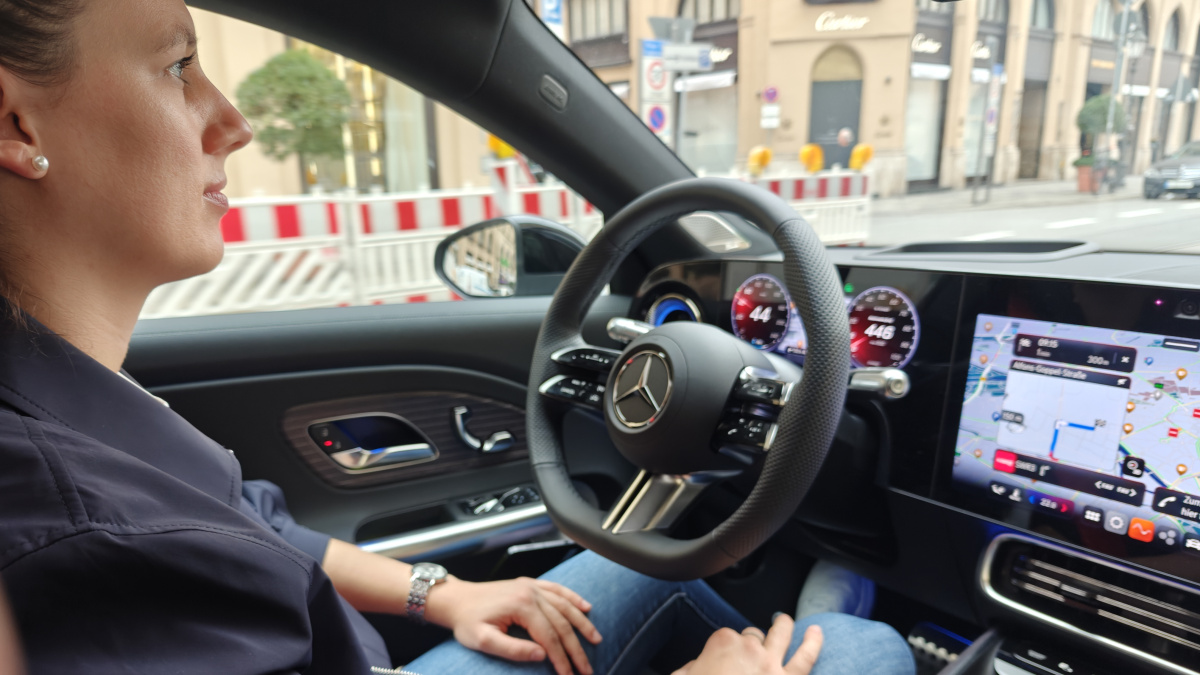
Mercedes-Benz is once again positioning itself at the forefront of automotive innovation, announcing ambitious plans to deploy its Drive Pilot Pro system, a sophisticated Level 2++ autonomous driving technology, across Germany. According to CTO Jörg Burzer, this advanced system is slated to debut in select German cities by late 2026, with a broader nationwide rollout anticipated by early 2027.
The Nuance of "Level 2++": Deciphering the Marketing Lexicon
Before we get carried away by the marketing lexicon, it's crucial to understand what "Level 2++" truly signifies in the complex hierarchy of autonomous driving. While the PR copy might suggest a revolutionary leap, this designation itself is a vendor-specific term, sitting somewhere between SAE Level 2 (driver assistance, hands-on or hands-off but eyes-on) and Level 3 (conditional automation, eyes-off in specific operational design domains). Mercedes-Benz's official Level 3 system, the standard Drive Pilot, already allows for eyes-off driving under specific conditions – primarily on designated highways at speeds up to 60 km/h in Germany. The "++" implies an expansion of this capability, particularly for complex urban scenarios, but crucially, it still requires driver supervision, meaning it remains a Level 2 system in the eyes of regulators, not a true Level 3 or higher.
The Hardware Imperative: A Costly Fork in the Road
One of the most significant and, frankly, most challenging aspects of Drive Pilot Pro, as revealed by Mercedes, is its fundamental reliance on dedicated hardware. Unlike software-centric approaches, where capabilities can be updated over-the-air to existing vehicles, Drive Pilot Pro "demands additional hardware—specifically two extra cameras and other components." This is where the rubber meets the road, or more precisely, where the bill of materials hits the balance sheet. The consequence is stark: "older Mercedes models cannot be retrofitted with the system. Instead, only the newer S-Class, GLE, and GLS series vehicles will come factory-equipped with the necessary sensors and technology."
From an operator's perspective, anyone who has navigated the complexities of automotive supply chains and manufacturing knows the implications of such a hardware-locked strategy. Integrating bespoke sensor arrays, compute platforms, and wiring harnesses directly into the production line for new models is one thing. The notion of retrofitting this into a vehicle already on the road is, for all intents and purposes, a non-starter. This decision means Mercedes is effectively segmenting its customer base, creating a distinct advantage for new car buyers while leaving existing owners without a clear upgrade path. I believe this is a defensive move by Mercedes to drive new car sales and cement premium pricing, rather than a truly customer-centric approach to technology deployment.
Compared to the Competition: Tesla's FSD and Europe's Cautious Stance
Mercedes' approach stands in stark contrast to that of its most vocal, albeit often controversial, competitor in the autonomous driving space: Tesla. Tesla's Full Self-Driving (FSD) system, despite its aspirational name, also remains a Level 2 system, requiring active driver attention. However, Tesla's strategy has been characterized by a software-first, camera-only sensor suite, allowing for over-the-air updates to a vast existing fleet. While Tesla's FSD has faced its share of scrutiny and regulatory pushback, particularly in the US, its deployment model is fundamentally different.
Consider the practical differences for the European consumer:
- Sensor Suite: Mercedes' Level 3 Drive Pilot (and presumably Drive Pilot Pro) relies on a robust sensor array including LiDAR, radar, ultrasonic sensors, and cameras. Tesla's FSD, in contrast, has famously moved to a camera-only (Tesla Vision) approach. While Tesla champions the cost-efficiency and scalability of vision-only, many in the traditional automotive sector, myself included, remain skeptical about its robustness in all weather and lighting conditions without redundant sensor modalities.
- Pricing Model: Tesla's FSD is typically offered as a one-time purchase, currently around €7,500-€10,000 in major European markets, or a monthly subscription of €99-€199, enabling a wider range of owners to access the features. Mercedes' Drive Pilot, for Level 3, is offered as an annual subscription in Germany at €5,000, or a three-year package for €7,500.
What This Means for the European EV Buyer
If you're considering a new Mercedes, particularly the upcoming S-Class, GLE, or GLS equipped with Drive Pilot Pro, you're indeed "in for a transformative driving experience." These enhanced driving assistance features promise to make city commutes less stressful, offering a glimpse into a more relaxed driving future. Imagine navigating through bustling urban environments with reduced driver fatigue and increased safety – that's the promise.
However, the reality is that this will be a premium feature, likely adding a substantial cost to an already expensive vehicle. While the article suggests these "autonomous features could positively impact the resale value of your vehicle," this is a claim that needs careful scrutiny. In the rapidly evolving tech landscape, today's cutting-edge feature can quickly become tomorrow's outdated one.
What's Still Unclear: The Unanswered Questions Ahead
Despite the excitement surrounding Drive Pilot Pro, several critical questions remain unanswered, and these are the points any discerning European buyer or industry observer should track:
1. Exact Pricing in Euros: While we can infer a premium, Mercedes has not disclosed the specific cost of the Drive Pilot Pro option or its potential subscription model. 2. Specific Operational Design Domain (ODD): The article mentions "city streets" and "complex traffic scenarios point-to-point," but the precise limitations are not detailed. 3. Performance Benchmarks: Beyond controlled demonstrations, independent benchmarks comparing Drive Pilot Pro's performance in real-world German urban traffic against human drivers or competitor systems are crucial for validating its safety and efficiency claims. 4. Long-term Regulatory Roadmap: While collaboration with German authorities is positive, the trajectory for full Level 4 autonomous driving approval across the entire EU remains a complex, multi-year endeavor. 5. Customer Transition Strategy for Incompatible Models: Mercedes has explicitly stated older models cannot be retrofitted. Will there be trade-in programs, incentives, or specific upgrade paths for loyal customers who purchased a top-tier Mercedes just a few years ago and now find themselves locked out of this new technology?
Operator's View: A Pragmatic Evolution, Not a Quantum Leap
The headline is clear: "Mercedes Accelerates Autonomous Driving Ambitions." By pushing Level 2++ technology by 2026, Mercedes-Benz is indeed positioning itself as a frontrunner in European autonomous driving, particularly within its premium segment. This move underscores the brand's commitment to innovation and highlights its strategic vision for the future of mobility, deeply rooted in the German engineering ethos of safety and methodical progression.
However, this initiative is best viewed as a pragmatic evolution rather than a quantum leap. The reliance on dedicated hardware, while ensuring robust performance, creates significant barriers to broad adoption and a potentially costly upgrade cycle for consumers. From an operator's standpoint, scaling such a hardware-dependent system across diverse European markets, each with its own regulatory nuances and infrastructure challenges, is a colossal undertaking. This initiative could reshape urban mobility for years to come, offering a blend of convenience, safety, and efficiency, but only within the confines of its specific operational design domain and for a select segment of the market.
Ultimately, Mercedes is playing the long game, carefully navigating the complex interplay of technology, regulation, and consumer expectations. While there are still hurdles to overcome, Mercedes' bold step forward signifies a pivotal moment in the evolution of assisted driving, moving us closer to a future where the car handles more of the mundane, but the driver remains firmly in the loop. The journey towards true, unsupervised autonomy across the continent, however, remains a distant horizon.
Discuss this story
Got a take, a correction, or a follow-up tip? Reply where you read — we read everything.
Found an error? File a correction at /corrections. Substantive corrections are logged publicly.
One short email. The most important EV & Auto news, fact-checked, no fluff. Free, unsubscribe anytime.
More from EV & Auto
Tesla Model 3 vs Polestar 2: Choosing Your Next EV Wisely
A balanced breakdown of Tesla Model 3 and Polestar 2. Compare specs, performance, design, and more to find the right EV for you.
Tesla Model Y vs Hyundai Ioniq 5: Which Electric SUV Fits Your Drive?
Tesla Model Y and Hyundai Ioniq 5 go head-to-head in this comprehensive guide. Discover which EV aligns with your priorities.
Tesla Model 3 vs BYD Seal: Which Electric Sedan Suits Your Drive?
Tesla Model 3 and BYD Seal each offer unique strengths in the EV market. Explore specs and decide which aligns with your lifestyle.
Best Aftermarket Displays for Android Auto and Apple CarPlay in 2023
Discover standout aftermarket displays for Android Auto and Apple CarPlay, their unique features, and how they compare.
The Byte-Pulse Newsroom is the editorial system that produces Byte-Pulse's daily tech news coverage. Each story is cross-referenced across 3+ independent outlets, drafted with AI assistance by the newsroom system (Drafter → Editor → Fact-Checker → Polisher), and reviewed by Serhat Er, Editor-in-Chief, before publication. We disclose AI augmentation openly. Editorial accountability stays with the named editor on every article. Tips: editorial@byte-pulse.net.
Don’t miss these
Asus ROG Phone 9 vs Sony Xperia 1 VII: Which Niche Flagship Earns Your Money?
Deciding between the gaming-focused ROG Phone 9 and the creator-centric Xperia 1 VII? This guide breaks down every spec to help you choose.
Proton VPN vs NordVPN: Which One Earns Your Subscription?
A deep dive into Proton VPN and NordVPN, comparing their privacy, performance, features, and value, helping you make an informed decision.
Perplexity Pro vs ChatGPT Plus: Which AI Assistant Fits Your Workflow?
This guide lays out the strengths and approaches of Perplexity Pro and ChatGPT Plus, helping you identify which AI assistant aligns with your specific needs.

Pokémon TCG Movie Signals Strategic Media Pivot for The Pokémon Company
A new Pokémon movie focused on the TCG is coming in 2027, marking a strategic pivot for the franchise as it navigates massive global fan engagement and logistical challenges.

Apple's AI Pivot: Vision Pro Content Cut, Siri Rebuilt Amid Layoffs
Apple's latest layoffs signal a strategic pivot, dialing back high-cost Vision Pro content while re-tooling Siri for the AI era. What's next for Apple?
Honor Magic 8 Pro vs Samsung Galaxy S26 Ultra: Which Future Flagship Fits Your Wallet and Workflow?
Deciding between the anticipated Honor Magic 8 Pro and Samsung Galaxy S26 Ultra? Our deep dive into expected specs and features provides the fair comparison you need.