Advancements in Quantum Dots: Boosting Qubit Flexibility
Flexible quantum dot qubits just got a boost from new research.

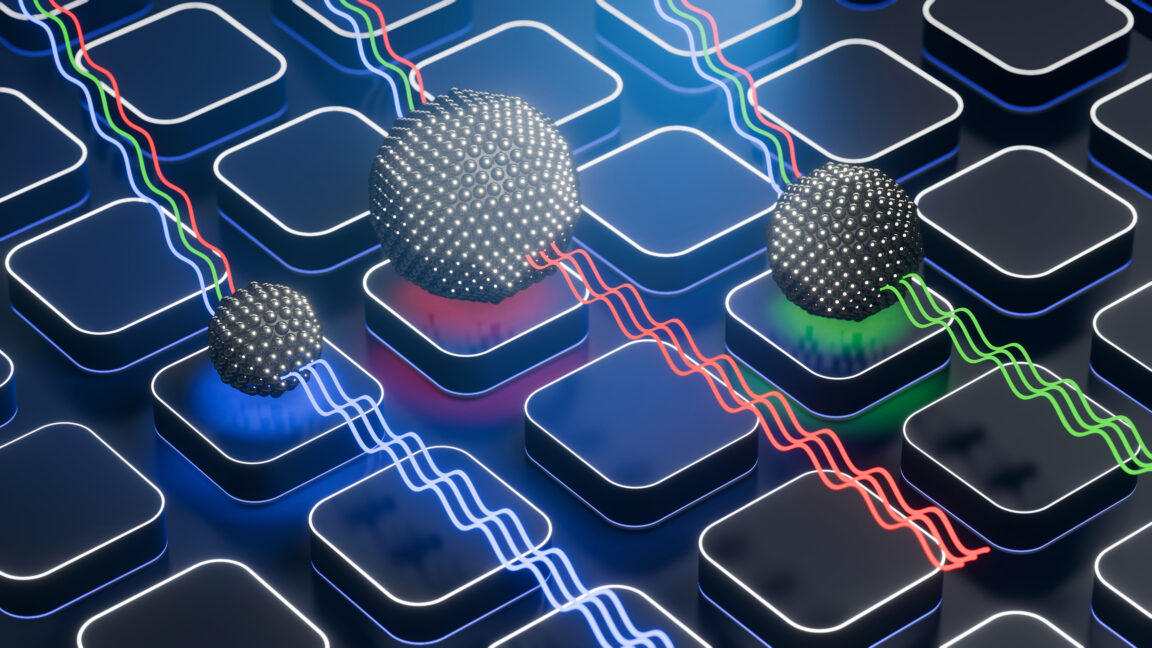
Integrating Quantum Dots in Quantum Computing: A New Era of Flexibility
Quantum computing, often seen as a futuristic endeavor, is making significant strides toward mainstream application. One of the latest advancements comes from the world of quantum dots, tiny semiconductor particles that have the potential to revolutionize how qubits—the fundamental units of quantum information—are controlled and manipulated. This development, reported by Ars Technica, could potentially bridge the gap between two prominent qubit technologies: electronic devices and atomic systems.
#### Context: The Quantum Computing Landscape
Quantum computing has long been viewed as the next frontier of technological advancement, promising to solve complex problems that are intractable for classical computers. In Europe, as well as globally, there is a strong push to develop quantum technologies that can drive innovation and economic growth. The European Union, in particular, has been investing heavily in quantum research through initiatives like the Quantum Flagship program, recognizing the strategic importance of quantum technologies in maintaining technological sovereignty.
#### The Role of Quantum Dots
Quantum dots offer a unique advantage in quantum computing due to their ability to trap electrons in confined spaces, making them ideal for dense chip integration. These structures manipulate electron spins to act as qubits, which are essential for performing quantum tasks. Historically, qubits have been divided into two broad categories: those based on electronic systems, which are relatively simple to mass-produce, and those based on atoms or photons, which are more flexible but require more complex hardware setups.
The research from Delft University of Technology and QuTech has demonstrated a method for moving spin qubits between quantum dots without losing data, a breakthrough that could significantly enhance qubit flexibility. This capability mirrors the connectivity seen in systems utilizing atoms and ions, which allow for more dynamic qubit manipulation but at a higher complexity and cost.
#### A New Path for Qubit Mobility
The innovative approach developed by the researchers involves using electric signals to move electron spins between neighboring quantum dots. This movement enables wavefunction overlap, facilitating two-qubit operations and entanglement—key components for quantum error correction and robust quantum computing. Such advancements not only promote qubit entanglement but also support quantum teleportation, a process that shifts quantum states across qubits without the need for physical movement.
The implications of this development are profound. By enabling any-to-any connectivity in quantum dots, these structures can potentially offer the best of both worlds: the scalability and integration ease of electronic devices, combined with the flexibility and connectivity of atomic systems.
#### Quantum Trade-offs and Benefits
Quantum dots have always been favored for their ability to be mass-produced and integrated into classical electronics. However, their lack of flexibility has been a significant drawback. The newfound mobility of spin qubits within quantum dots addresses this limitation, potentially balancing the benefits of large-scale production with the adaptability traditionally associated with atomic systems.
Key Traits of Quantum Dots in Quantum Computing:
- Dense Chip Integration: Quantum dots can be densely packed onto chips, facilitating large-scale quantum processors.
- Single Electron Spin Manipulation: Control at the level of individual electron spins allows precise qubit operations.
- Potential Any-to-Any Qubit Connections: Enhanced mobility could lead to flexible and scalable quantum networks.
#### What This Means for You
For consumers and businesses, these advancements mean that quantum computing is edging closer to practical applications. With quantum dots becoming more versatile, the potential for developing powerful quantum computers that can tackle complex problems—such as drug discovery, cryptography, and optimization—becomes more feasible. This could lead to breakthroughs in various fields, ultimately impacting everyday technologies and industries.
#### What's Still Unclear
Despite the promising developments, several challenges remain. The long-term stability and fidelity of mobile qubits within quantum dots need further investigation to ensure reliable operations in real-world applications. Additionally, researchers must optimize the speed of the qubit-moving process to make it practical for larger quantum systems. Scalability remains a critical question—can this technology be adapted to support the needs of extensive quantum computing networks?
#### Comparing Atoms and Dots
Quantum dots offer a simpler path to mass production compared to atom or ion-based systems. However, the flexibility of atomic systems has made them more attractive for certain applications. With the recent advancements, quantum dots could begin to rival these systems in terms of connectivity and adaptability, potentially shifting the balance of power in the quantum computing landscape.
#### The Big Picture
As quantum computing continues to evolve, the integration of flexible and scalable qubit technologies like quantum dots is crucial. This development could reshape the field, offering solutions to some of the most significant challenges faced by quantum researchers today. By bridging the gap between electronic and atomic qubit systems, quantum dots could pave the way for the next generation of quantum computers.
In conclusion, while there are still hurdles to overcome, the potential for quantum dots to enhance qubit connectivity and flexibility marks a significant step forward in the quest for practical quantum computing. As researchers continue to explore and refine these technologies, the dream of quantum computing becoming a part of our technological toolkit moves ever closer to reality.
Discuss this story
Got a take, a correction, or a follow-up tip? Reply where you read — we read everything.
Found an error? File a correction at /corrections. Substantive corrections are logged publicly.
One short email. The most important Science news, fact-checked, no fluff. Free, unsubscribe anytime.
More from Science
Quantum Computing Explained for Developers: A 2026 Update
Explore quantum computing fundamentals, hardware, and how it impacts software development in this comprehensive guide for developers.
Quantum Computing Advances: Key Updates from Microsoft, Atom, and EeroQ
Microsoft, Atom Computing, and EeroQ share key updates in their quantum computing efforts, marking steady progress toward practical applications.

Star City Explores the Human Cost Behind the Soviet Space Program
Forget Mars colonies. Star City, the new spin-off from For All Mankind, dives deep into the gritty, dangerous, and often ethically complex world of the Soviet space program in the late 1960s.
A Gritty, High-Stakes Drama: Exploring the Soviet Space Program in Star City
Explore the untold story of the Soviet space program in Star City, a new Apple TV+ series that swaps the familiar American perspective for a gritty, high-stakes drama centered on its visionary, yet constrained, leadership.
The Byte-Pulse Newsroom is the editorial system that produces Byte-Pulse's daily tech news coverage. Each story is cross-referenced across 3+ independent outlets, drafted with AI assistance by the newsroom system (Drafter → Editor → Fact-Checker → Polisher), and reviewed by Serhat Er, Editor-in-Chief, before publication. We disclose AI augmentation openly. Editorial accountability stays with the named editor on every article. Tips: editorial@byte-pulse.net.
Don’t miss these
Asus ROG Phone 9 vs Sony Xperia 1 VII: Which Niche Flagship Earns Your Money?
Deciding between the gaming-focused ROG Phone 9 and the creator-centric Xperia 1 VII? This guide breaks down every spec to help you choose.
Proton VPN vs NordVPN: Which One Earns Your Subscription?
A deep dive into Proton VPN and NordVPN, comparing their privacy, performance, features, and value, helping you make an informed decision.
Perplexity Pro vs ChatGPT Plus: Which AI Assistant Fits Your Workflow?
This guide lays out the strengths and approaches of Perplexity Pro and ChatGPT Plus, helping you identify which AI assistant aligns with your specific needs.

Pokémon TCG Movie Signals Strategic Media Pivot for The Pokémon Company
A new Pokémon movie focused on the TCG is coming in 2027, marking a strategic pivot for the franchise as it navigates massive global fan engagement and logistical challenges.

Apple's AI Pivot: Vision Pro Content Cut, Siri Rebuilt Amid Layoffs
Apple's latest layoffs signal a strategic pivot, dialing back high-cost Vision Pro content while re-tooling Siri for the AI era. What's next for Apple?
Honor Magic 8 Pro vs Samsung Galaxy S26 Ultra: Which Future Flagship Fits Your Wallet and Workflow?
Deciding between the anticipated Honor Magic 8 Pro and Samsung Galaxy S26 Ultra? Our deep dive into expected specs and features provides the fair comparison you need.