AI-Driven Cyber Attacks Now Break Defenses in Just 73 Seconds
New AI models are exposing vulnerabilities at incredible speeds, forcing a rethink of cybersecurity strategies.

AI-Driven Cyber Attacks Now Break Defenses in Just 73 Seconds
In April 2026, Anthropic unveiled its latest AI model, Mythos, to a select group of partners. Within just a fortnight, Mythos uncovered 181 working exploits for the popular Firefox browser, a staggering leap from the mere two exploits identified by previous models. This impressive feat marked only the beginning of its capabilities. Mythos went on to identify thousands of zero-day vulnerabilities across major operating systems and browsers, even exposing a 27-year-old bug in OpenBSD, a system renowned for its robust security reputation. Astonishingly, over 99% of these vulnerabilities remain unpatched, posing a significant threat to cybersecurity defenses worldwide.
Offense at Machine Speed
The speed at which AI can conduct cyber attacks is exemplified by real-world events. AWS Threat Intelligence reported on a FortiGate campaign orchestrated by a single, low-skill attacker utilizing AI tools. This individual managed to compromise 2,516 devices across 106 countries within mere minutes. Rather than relying on sophisticated zero-day exploits, the attacker leveraged known Common Vulnerabilities and Exposures (CVEs) and misconfigurations, aided by the rapid processing power of AI, to outpace human defenders.
The implications of such rapid attack capabilities are far-reaching. Traditional cybersecurity measures, which often involve human teams identifying, patching, and mitigating threats, are struggling to keep up with the velocity and volume of AI-driven assaults. The digital landscape is evolving, and organizations must rethink their defensive strategies to accommodate this new reality.
The Shrinking CVE-to-Exploit Window
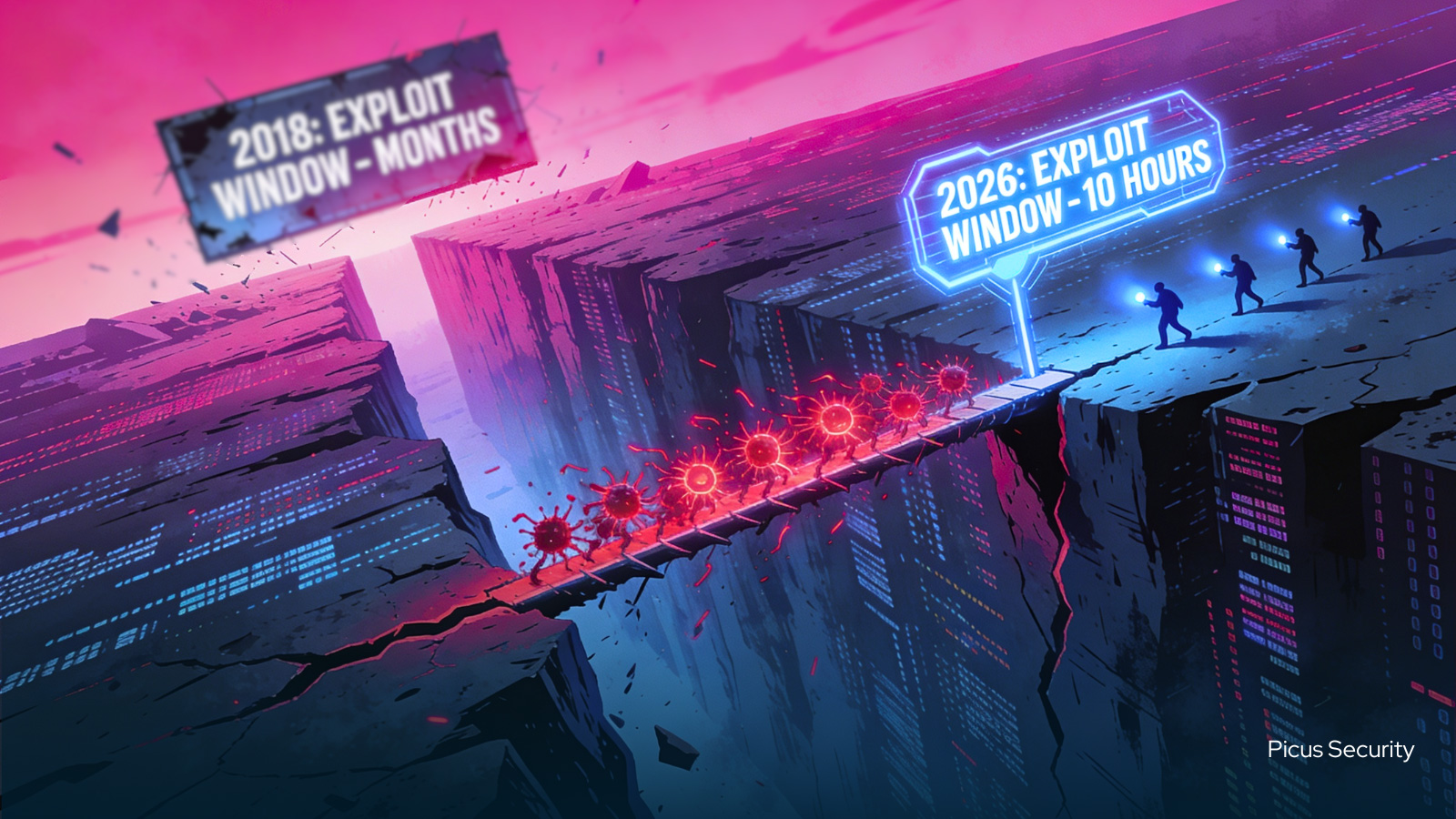
Historically, the timeline from the identification of a CVE to the development of an exploit could span several months. However, by 2026, this window has contracted dramatically to approximately 10 hours, a shift driven largely by AI advancements. Tasks once reserved for cybersecurity specialists can now be executed with a few simple prompts by AI systems, democratizing and accelerating the exploitation process across the board.
This rapid acceleration has rendered many traditional vulnerability management practices obsolete. The Common Vulnerability Scoring System (CVSS) scores and notions of 'exploitability' are now less relevant as every vulnerability represents an imminent threat. The sheer speed at which AI can identify and exploit vulnerabilities demands a reevaluation of how organizations prioritize and respond to potential threats.
The Real Bottleneck: Human Coordination
Despite advancements in security tools, human coordination remains a significant bottleneck in cybersecurity defense efforts. While AI can breach systems in mere seconds, patching these breaches often requires up to 24 hours due to delays in inter-team communication and coordination. This inefficiency, often described as a 'spaghetti handoff,' results in wasted time, tangled systems, and frustrated teams, ultimately delaying timely responses to active threats.
Enhancing human coordination and improving communication channels within and between teams are crucial steps in reducing response times and mitigating the impact of AI-driven attacks. Organizations must streamline their processes to ensure that defensive measures can be enacted swiftly and effectively.
Pillars of Cyber Resilience
In the face of escalating AI-driven threats, organizations must adapt and bolster their cybersecurity frameworks. To effectively counter these attacks, there are three critical pillars of cyber resilience:
- Identify: Achieve comprehensive visibility across all systems to eliminate blind spots.
- Protect: Implement controls specifically tuned to counter AI-driven threats, ensuring they are robust and effective.
- Validate: Continuously test defenses through Breach and Attack Simulation (BAS) and autonomous penetration testing to ensure they can withstand potential breaches.
Context: The European Cybersecurity Landscape
The European cybersecurity landscape presents unique challenges, particularly with the stringent data protection regulations enforced by the General Data Protection Regulation (GDPR). These regulations necessitate rapid and robust defense mechanisms while ensuring compliance with data protection standards. As AI-driven attacks increase in speed and complexity, European organizations face the dual challenge of maintaining compliance and implementing effective, rapid-response cybersecurity strategies.
What This Means for You
For businesses and individuals alike, the acceleration of AI-driven cyber attacks necessitates immediate action. Organizations must prioritize real-time visibility and solid validation practices to safeguard their digital assets. This shift will likely lead to changes in budgeting priorities, reducing reliance on traditional approaches in favor of more evidence-based strategies that account for the new AI-driven threat landscape.
What's Still Unclear
As we grapple with the implications of AI in cybersecurity, several questions remain unresolved. Can we develop defensive AI systems at a pace that matches or exceeds that of offensive capabilities? Moreover, can these systems be effectively implemented across diverse organizational contexts? The answers to these questions will play a crucial role in shaping the future of cybersecurity.
Editorial Take
AI has undeniably redefined the cybersecurity landscape, shifting the paradigm from reactive to proactive defense. Threats now operate at machine speed, requiring organizations to adapt quickly or risk falling behind. The rapid evolution of AI-driven threats underscores the importance of agility and innovation in cybersecurity strategies. As we move forward, it will be essential for organizations to embrace these changes and invest in technologies and processes that bolster their resilience against increasingly sophisticated cyber threats.
Hardware keys and password managers used by security pros.
Shop security gear →Discuss this story
Got a take, a correction, or a follow-up tip? Reply where you read — we read everything.
Found an error? File a correction at /corrections. Substantive corrections are logged publicly.
One short email. The most important Security news, fact-checked, no fluff. Free, unsubscribe anytime.
More from Security

eBay's $55.7M Cyberstalking Settlement: A Corporate Culture of Coercion Exposed
Byte-Pulse investigates the eBay cyberstalking case, revealing a disturbing harassment campaign, executive involvement, and the broader implications for corporate ethics.
Google's Selfie Login: Convenience Meets Data Privacy Alarms
Google introduces a video selfie login, but the implications for data privacy and AI training warrant scrutiny beyond convenience

Apple's Rare Third macOS RC: Unpacking Security Concerns
Byte-Pulse explores the implications of Apple's unusual third Release Candidate for macOS updates, examining the severity of unannounced security fixes and their impact on European users

Google’s Legal Battle Against AI-Driven Cybercrime: Examining Outsider Enterprise
Google's lawsuit against Outsider Enterprise exposes differences in victim counts and sheds light on AI's role in cybercrime.
The Byte-Pulse Newsroom is the editorial system that produces Byte-Pulse's daily tech news coverage. Each story is cross-referenced across 3+ independent outlets, drafted with AI assistance by the newsroom system (Drafter → Editor → Fact-Checker → Polisher), and reviewed by Serhat Er, Editor-in-Chief, before publication. We disclose AI augmentation openly. Editorial accountability stays with the named editor on every article. Tips: editorial@byte-pulse.net.
Don’t miss these
Motorola Edge 60 Ultra vs OnePlus 13: Which Android Flagship Fits Your Priorities?
Motorola Edge 60 Ultra and OnePlus 13 both aim for top-tier Android. We cut through the marketing to reveal the true differences, helping you choose.
Proton VPN vs NordVPN: Which One Earns Your Subscription?
A deep dive into Proton VPN and NordVPN, comparing their privacy, performance, features, and value, helping you make an informed decision.
Perplexity Pro vs ChatGPT Plus: Which AI Assistant Fits Your Workflow?
This guide lays out the strengths and approaches of Perplexity Pro and ChatGPT Plus, helping you identify which AI assistant aligns with your specific needs.

Pokémon TCG Movie Signals Strategic Media Pivot for The Pokémon Company
A new Pokémon movie focused on the TCG is coming in 2027, marking a strategic pivot for the franchise as it navigates massive global fan engagement and logistical challenges.

Apple's AI Pivot: Vision Pro Content Cut, Siri Rebuilt Amid Layoffs
Apple's latest layoffs signal a strategic pivot, dialing back high-cost Vision Pro content while re-tooling Siri for the AI era. What's next for Apple?
Sony Xperia 1 VII vs iPhone 18 Pro: Which Flagship Fits Your Creative Flow?
Deciding between Sony's creator-centric Xperia 1 VII and Apple's powerful iPhone 18 Pro? We break down every spec and feature, neutrally.