Blau's €9.99 Xiaomi Bundle: Strategic Play or Consumer Trap?
A German mobile provider offers a Redmi Note 15 Pro, smartwatch, and 40GB data for €9.99/month. We dissect the implications of this deal.

Blau's Disruptive €9.99 Bundle Offer
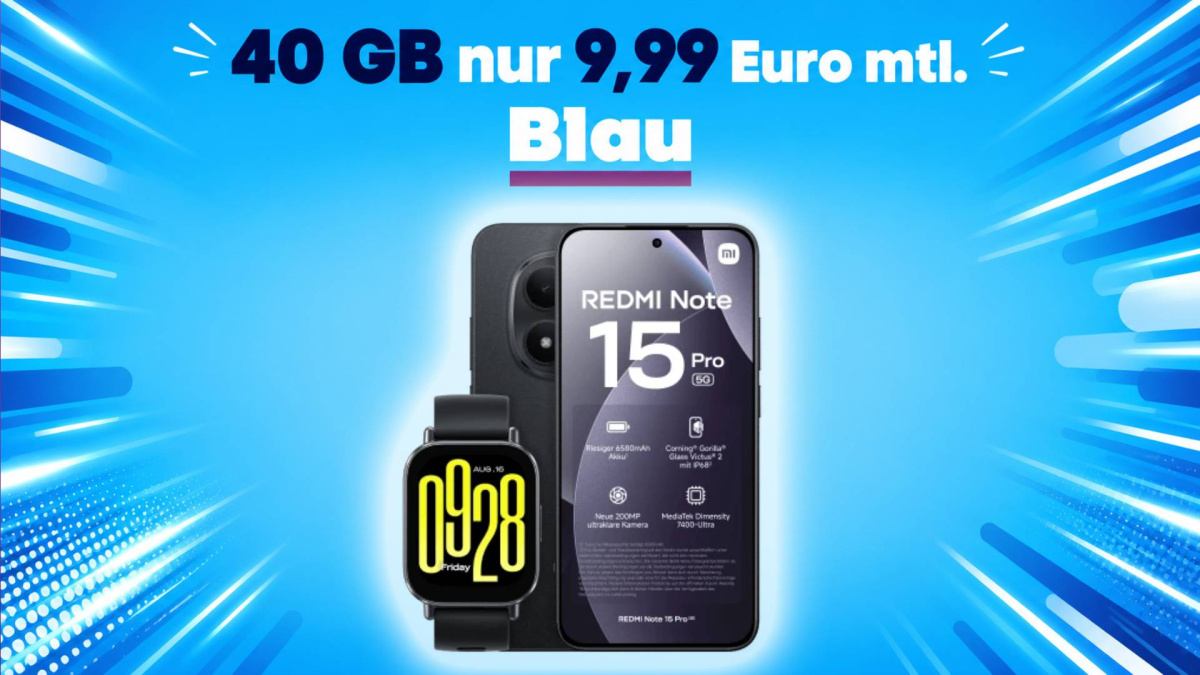
Blau, operating on the Telefónica Deutschland network, has put together an aggressive package. According to Golem.de's report from 10. Juli 2026, the deal includes the Xiaomi Redmi Note 15 Pro, a Redmi Watch 5 Active, and the Blau Allnet M tariff. This tariff provides an Allnet-Flat for calls and SMS within Germany, alongside 40 GByte of data volume, which Golem.de notes has been 'doubled' for this promotion. The connection speed is capped at 'up to 50 MBit/s' over the 5G network.
The Xiaomi Redmi Note 15 Pro features a 6.83-inch AMOLED display with a sharp 2772 x 1280 pixel resolution and a fluid 120 Hz refresh rate. It boasts a peak brightness of up to 3,200 Nits, an Octa-Core Mediatek Dimensity 7400-Ultra processor, 8 GByte of RAM, and 256 GByte of internal storage. The battery, at 6,580 mAh, is described as 'long-lasting.' The camera setup includes a 200 MP main sensor and an 8 MP ultrawide, capable of 4K video, complemented by a 20 MP front camera for Full-HD video calls. The accompanying Redmi Watch 5 Active tracks activities and basic health data like heart rate.
The Usual Compromises: Price vs. Data
The mobile telecommunications landscape in Europe, particularly in Germany, has historically been a balancing act for consumers. Low-cost tariffs often meant severely restricted data volumes, pushing users towards Wi-Fi hotspots or expensive top-ups. Plans offering ample data typically came with a premium price tag, often exceeding €30 or €40 per month, especially when bundled with desirable hardware. This created a dichotomy: either you paid a lot for flexibility and performance, or you scrimped and constantly monitored your data consumption.
Where the Xiaomi-Blau Deal Breaks the Mold
Golem.de positions this Blau bundle as an offer that 'breaks the previous rule' of price versus data compromise. The deal includes a 40 GB data plan with an Allnet-Flat, plus a modern smartphone and a smartwatch, for just €9.99 per month. However, the key differentiator lies in the contract terms: a 36-month commitment. The total cost over the contract duration amounts to €359.64 for the monthly fees (36 months €9.99/month) plus a €37 device payment and €4.99 shipping, bringing the grand total to €401.63*.
This is less about breaking the mold and more about a strategic play to secure long-term customer loyalty. By extending the contract duration to 36 months, Blau guarantees revenue for an extended period, mitigating the risk of churn in a highly competitive market. It allows them to offer a seemingly unbeatable monthly price while ensuring a substantial total revenue per customer.
Is the Hardware as Good as the Price Suggests?
The Redmi Note 15 Pro appears to be a well-equipped mid-range smartphone. However, the perception of 'good' hardware is always relative to its longevity and software support.
- Long-term performance: The Dimensity 7400-Ultra is capable today, but will it maintain its performance over a 36-month contract, especially as operating systems and applications become more demanding?
- [Software updates](/article/fcc-extends-waiver-for-foreign-router-updates-until-2029): Ensuring three full years of major Android updates and security patches for a mid-range device, particularly one bundled at this price point, is not a given.
- Network speed limitations: The 50 MBit/s speed cap is a clear differentiator from premium 5G plans that offer speeds several times higher.
- Smartwatch utility: The Redmi Watch 5 Active is a basic fitness tracker, not a full-featured smartwatch like an Apple Watch or a high-end Garmin.
What This Means for Consumer Expectations
This Blau-Xiaomi bundle is a clear signal of intense competition in the German mobile market, particularly in the value segment. It demonstrates how providers are leveraging strong hardware partnerships to create attractive propositions that anchor customers for longer periods. For consumers, it means that while the upfront cost and monthly fee are appealing, the total cost and the long-term commitment demand careful consideration. This is a deal designed for those who prioritize a low monthly outlay and are comfortable with a three-year contractual obligation for mid-range hardware and a capped 5G experience.
Unclear from the Golem.de report is how Blau plans to manage the customer experience over such a long contract. Will the software updates keep pace? What will customer support look like for hardware that's three years old? And how does this offer compare to similar long-term bundles from competitors, especially when factoring in their respective network quality perceptions in various regions of Germany? These are the practical questions that any discerning consumer would ask. This deal, while undeniably aggressive on price, is not a philanthropic gesture; it's a calculated business move in a fiercely competitive European market.
Sources cross-referenced
This story was synthesised from reporting by 4 outlets:
Cases, chargers and AirPods alternatives the editors actually use.
Shop mobile gear →Discuss this story
Got a take, a correction, or a follow-up tip? Reply where you read — we read everything.
Found an error? File a correction at /corrections. Substantive corrections are logged publicly.
One short email. The most important Mobile news, fact-checked, no fluff. Free, unsubscribe anytime.
More from Mobile
Asus ROG Phone 9 vs Sony Xperia 1 VII: Which Niche Flagship Earns Your Money?
Deciding between the gaming-focused ROG Phone 9 and the creator-centric Xperia 1 VII? This guide breaks down every spec to help you choose.
Honor Magic 8 Pro vs Samsung Galaxy S26 Ultra: Which Future Flagship Fits Your Wallet and Workflow?
Deciding between the anticipated Honor Magic 8 Pro and Samsung Galaxy S26 Ultra? Our deep dive into expected specs and features provides the fair comparison you need.
Xiaomi 16 Pro vs iPhone 18 Pro: Which Flagship Fits Your World?
Deciding between the Xiaomi 16 Pro and iPhone 18 Pro? We break down every spec and trade-off, so you can make the choice that's right for you.
Motorola Edge 60 Ultra vs OnePlus 13: Which Android Flagship Fits Your Priorities?
Motorola Edge 60 Ultra and OnePlus 13 both aim for top-tier Android. We cut through the marketing to reveal the true differences, helping you choose.
The Byte-Pulse Newsroom is the editorial system that produces Byte-Pulse's daily tech news coverage. Each story is cross-referenced across 3+ independent outlets, drafted with AI assistance by the newsroom system (Drafter → Editor → Fact-Checker → Polisher), and reviewed by Serhat Er, Editor-in-Chief, before publication. We disclose AI augmentation openly. Editorial accountability stays with the named editor on every article. Tips: editorial@byte-pulse.net.
Don’t miss these
HP Spectre x360 2026 vs MacBook Air M5: Which Flagship Laptop Fits Your Future?
Deciding between the versatile HP Spectre x360 2026 and the efficient MacBook Air M5 means weighing form factor, operating system, and core priorities.
Proton VPN vs NordVPN: Which One Earns Your Subscription?
A deep dive into Proton VPN and NordVPN, comparing their privacy, performance, features, and value, helping you make an informed decision.
Perplexity Pro vs ChatGPT Plus: Which AI Assistant Fits Your Workflow?
This guide lays out the strengths and approaches of Perplexity Pro and ChatGPT Plus, helping you identify which AI assistant aligns with your specific needs.

Pokémon TCG Movie Signals Strategic Media Pivot for The Pokémon Company
A new Pokémon movie focused on the TCG is coming in 2027, marking a strategic pivot for the franchise as it navigates massive global fan engagement and logistical challenges.

D23 2026: Disney's Content Deluge Sparks Questions About Strategy
Byte-Pulse cuts through D23 hype: We dissect Disney's ambitious content slate, from Simpsons: Hit & Run to Ahsoka season 2, and question the real-world implications and European market strategy.
Framework Laptop 16 vs Lenovo ThinkPad X1 Carbon Gen 13: The Future-Proofed Powerhouse vs. The Enduring Executive
This guide cuts through the marketing to compare the modular Framework 16 and the svelte ThinkPad X1 Carbon Gen 13, helping you choose without bias.