ChatGPT Now Links Bank Accounts for US Pro Users
OpenAI's latest move brings personalized financial advice to ChatGPT, directly linking to your accounts.

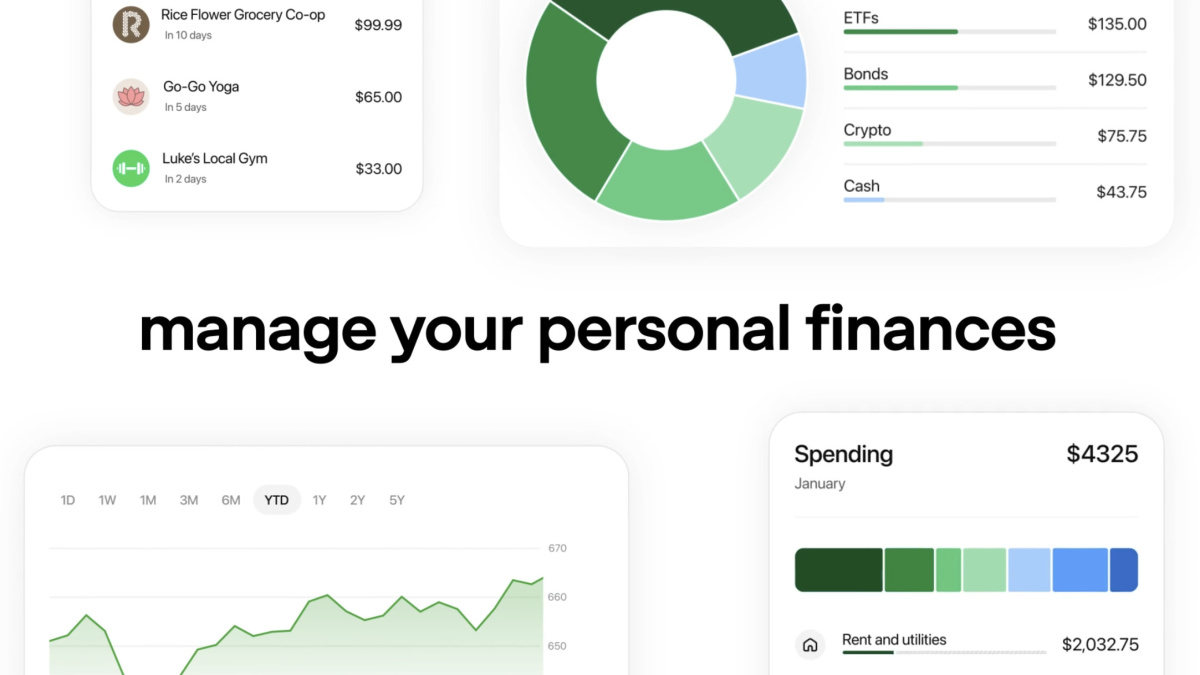
Big news from OpenAI has reverberated through the tech and finance worlds: ChatGPT Pro users in the U.S. can now link their bank accounts. This significant development marks a deeper integration of conversational AI into personal finance, shifting the paradigm from generic advice to highly personalized financial guidance. It's a bold move that positions ChatGPT not just as an information tool, but as a potential digital financial assistant, offering users a more tailored understanding of their economic landscape.
What ChatGPT's New Financial Integration Offers
So, what does this new feature actually entail? It allows users to connect their personal bank accounts directly to ChatGPT, moving beyond broad financial tips to deliver customized insights tailored specifically to an individual's spending habits, investment portfolio, and liabilities. OpenAI achieved this by forging a strategic partnership with Plaid, a prominent financial technology company renowned for its secure data transfer capabilities. This collaboration means ChatGPT can now interface with an impressive network of over 12,000 financial institutions, including major players like American Express, Capital One, and Chase. Plaid acts as the secure intermediary, facilitating the connection between a user's financial accounts and the AI, ensuring that data is handled through established and trusted channels.
Getting started with this feature is straightforward. Users simply navigate to the 'Finances' section located in ChatGPT's sidebar, or they can initiate the process by typing '@Finances, connect my accounts' directly into the chat interface. Once accounts are successfully linked, the AI generates a comprehensive visual dashboard, providing an instant, at-a-glance summary of the user's financial situation. This interactive dashboard isn't static; users can customize it, pose specific questions about their finances, and delve into particular aspects of their money management, from analyzing spending categories to tracking investment performance over time.
Navigating Privacy and Security Concerns
Naturally, the prospect of an AI accessing personal financial data raises immediate and critical questions about privacy and security. OpenAI has addressed these concerns by implementing strict limitations on the type of data ChatGPT can access and the actions it can perform. Via its integration with Plaid, ChatGPT is designed to only read essential financial data: account balances, transaction histories, investment details, and outstanding liabilities. Crucially, it does not gain access to full account numbers or any personally identifiable banking credentials. Furthermore, the system is explicitly designed to be read-only; ChatGPT cannot, under any circumstances, initiate or make changes to a user's financial accounts or transactions. Control remains firmly with the user, who retains the ability to disconnect accounts or delete their financial data from the service at any time. OpenAI also provides an opt-out mechanism for data usage, ensuring that if a user chooses, their financial information will not be utilized to train future AI models, upholding a commitment to user data sovereignty.
Context: This move by OpenAI isn't happening in a vacuum; it reflects a broader industry trend towards 'Open Banking' and the increasing integration of AI within FinTech. Financial institutions and technology companies are continually exploring ways to leverage data, with user consent, to provide more personalized and efficient services. However, this global ambition often clashes with differing regulatory environments. The European Union, for instance, operates under a far more stringent data privacy framework than the U.S., primarily through the General Data Protection Regulation (GDPR). This regulation imposes high standards for data consent, processing, and cross-border transfer, making the rollout of such a feature significantly more complex. Beyond GDPR, Europe's fragmented financial regulatory landscape, with varying national laws across member states, presents additional compliance hurdles that require a sophisticated and localized strategy for any AI financial service provider.
The Road Ahead: US Expansion and European Hurdles
For now, this innovative feature remains exclusive to ChatGPT Pro users in the U.S. However, OpenAI has outlined an ambitious rollout strategy, intending to extend access first to Plus subscribers, and then eventually to its broader user base. The path to global availability, particularly in Europe, appears considerably more challenging. The aforementioned GDPR and the intricate web of European financial regulations pose substantial barriers. These rules mandate specific data handling protocols, require explicit user consent, and often restrict data storage locations, making a direct port of the U.S. model unlikely without significant adaptation. Adding to this complexity, Plaid's existing infrastructure is predominantly focused on the U.S. market, meaning a European expansion would necessitate substantial investment in new partnerships, localized data centers, and compliance teams to navigate the diverse regulatory landscape across the continent.
What this means for you: If you're a U.S.-based ChatGPT Pro user, this feature offers a genuine opportunity to streamline your personal finances. You could gain instant access to customized budgeting advice, spending pattern analysis, and investment insights, all within the familiar ChatGPT interface. It represents a potential shift from manual financial tracking to an AI-powered, interactive financial assistant. For European users, while the immediate benefits aren't available, this development showcases the immense potential for AI in personal finance. However, the regulatory and infrastructural hurdles mean that a similar rollout in Europe is likely to face considerable delays, and when it does arrive, it may look different due to compliance requirements.
What's still unclear: Despite the excitement, several key questions remain unanswered about the future of this feature:
- When exactly will non-Pro users in the U.S. gain access to this financial integration capability?
- How quickly can we realistically expect a European rollout, given the significant regulatory and infrastructural challenges?
- Will Plaid commit to expanding its core infrastructure to adequately support the diverse array of European banks and their specific compliance requirements?
- What are the long-term implications for financial literacy and user behavior when an AI is so deeply integrated into personal finance?
This ChatGPT banking feature is undeniably a significant leap for AI in personal finance. OpenAI isn't merely enhancing ChatGPT's utility; they're actively setting a precedent for the capabilities and ethical considerations of AI in the banking sector. As AI technology continues to evolve, its capacity to simplify and personalize complex tasks like financial planning will only become more pronounced, reshaping how individuals manage their money.
Discuss this story
Got a take, a correction, or a follow-up tip? Reply where you read — we read everything.
Found an error? File a correction at /corrections. Substantive corrections are logged publicly.
One short email. The most important AI news, fact-checked, no fluff. Free, unsubscribe anytime.
More from AI
Perplexity Pro vs ChatGPT Plus: Which AI Assistant Fits Your Workflow?
This guide lays out the strengths and approaches of Perplexity Pro and ChatGPT Plus, helping you identify which AI assistant aligns with your specific needs.
Claude Pro vs Google Gemini Advanced: Which AI Assistant Deserves Your Subscription?
This definitive guide cuts through the marketing to give you a fair, balanced breakdown of Claude Pro and Gemini Advanced, letting you decide which AI best fits your workflow.
Claude Pro vs Google Gemini Advanced: Which AI Actually Earns Your Subscription?
Byte-Pulse lays out the real trade-offs between Claude Pro and Google Gemini Advanced, helping you pick the AI that fits your workflow, without picking for you.
ChatGPT Plus vs Google Gemini Advanced: Which AI Assistant Fits Your Workflow?
Deciding between ChatGPT Plus and Google Gemini Advanced? We break down the models, features, integrations, and pricing to help you align your choice with your specific priorities.
The Byte-Pulse Newsroom is the editorial system that produces Byte-Pulse's daily tech news coverage. Each story is cross-referenced across 3+ independent outlets, drafted with AI assistance by the newsroom system (Drafter → Editor → Fact-Checker → Polisher), and reviewed by Serhat Er, Editor-in-Chief, before publication. We disclose AI augmentation openly. Editorial accountability stays with the named editor on every article. Tips: editorial@byte-pulse.net.
Don’t miss these
Xiaomi 16 Pro vs iPhone 18 Pro: Which Flagship Fits Your World?
Deciding between the Xiaomi 16 Pro and iPhone 18 Pro? We break down every spec and trade-off, so you can make the choice that's right for you.
Proton VPN vs NordVPN: Which One Earns Your Subscription?
A deep dive into Proton VPN and NordVPN, comparing their privacy, performance, features, and value, helping you make an informed decision.

Pokémon TCG Movie Signals Strategic Media Pivot for The Pokémon Company
A new Pokémon movie focused on the TCG is coming in 2027, marking a strategic pivot for the franchise as it navigates massive global fan engagement and logistical challenges.

Apple's AI Pivot: Vision Pro Content Cut, Siri Rebuilt Amid Layoffs
Apple's latest layoffs signal a strategic pivot, dialing back high-cost Vision Pro content while re-tooling Siri for the AI era. What's next for Apple?

D23 2026: Disney's Content Deluge Sparks Questions About Strategy
Byte-Pulse cuts through D23 hype: We dissect Disney's ambitious content slate, from Simpsons: Hit & Run to Ahsoka season 2, and question the real-world implications and European market strategy.
Motorola Edge 60 Ultra vs OnePlus 13: Which Android Flagship Fits Your Priorities?
Motorola Edge 60 Ultra and OnePlus 13 both aim for top-tier Android. We cut through the marketing to reveal the true differences, helping you choose.