Starry Nights & City Lights: Heise's Best Photos of the Week
From urban grit to deep space, this week's photo picks really shine.


Heise's weekly photo roundup has once again landed, presenting a compelling, if somewhat curated, mix of both the terrestrial and the cosmic. While the accompanying text, much like many industry summaries, leans into the evocative language of 'beauty' and 'storytelling,' our interest at Byte-Pulse lies deeper: in the underlying technical prowess, the material investment, and the sheer logistical effort required to transform light into these arresting images. It's not merely about what is seen, but how it is engineered into existence, especially when traversing the demanding landscape of European photography.
Urban and Nature Scenes: Mastering the Mundane and the Majestic
The collection opens with a focus on the immediate and the observable, demonstrating how astute observation, paired with precise equipment, can elevate everyday scenes. Katzefudder's black-and-white street shot of two pigeons on an urban railing is cited as a standout. What the casual observer might miss, however, is the deliberate choice of a wide-angle lens, which isn't just about fitting more into the frame; it fundamentally alters perspective, creating a dramatic sense of depth and scale even in a confined urban environment. This isn't accidental artistry; it’s a calculated application of optics, transforming the mundane into something architecturally compelling. From an operator's standpoint, navigating European cityscapes for street photography often means contending with variable light, restrictive public space regulations, and the need for unobtrusive gear — challenges that demand both technical adaptability and an understanding of local cultural nuances.
Similarly, Reiner von der Schlei's "Der rote Schirm" juxtaposes a lone figure with a red umbrella against the sweeping, often monochromatic, expanse of sand dunes. The composition, playing with earth tones and stark contrasts of red and black, is visually striking. Yet, behind this seemingly simple elegance lies the photographer's ability to manage dynamic range, ensuring that both the brightly lit sand and the shadowed figure retain detail. This requires a sensor capable of capturing a broad spectrum of light information and a post-processing workflow that can intelligently balance these extremes – a far cry from a simple point-and-shoot operation. Anyone who has shipped hardware knows that even the most 'simple' user interface often hides layers of complex engineering; the same principle applies here to photographic output.
Killer Portraits: The Subtle Art of Illumination
The roundup also features two portraits that, despite their apparent simplicity, reveal a profound understanding of light and form. M. Schröder's "Elisa," a striking silhouette against a white backdrop, is a masterclass in negative space and line work. Achieving such a clean silhouette demands precise control over background illumination, often requiring dedicated studio strobes or expertly diffused natural light. The balance isn't accidental; it's the result of carefully positioned light sources and an understanding of how light falls and defines edges – skills that are honed over years, much like the precision engineering required to manufacture high-tolerance components.
Thomas Ruppel's "Susanna" offers a tender black-and-white study, where light and shadow are meticulously used to highlight a serene expression. In black-and-white photography, the absence of color shifts the entire burden of storytelling to tonal relationships, texture, and form. This requires a photographer to 'see' in monochrome, anticipating how colors will translate into shades of grey and how subtle variations in light will sculpt the face. The choice of lens, aperture, and shutter speed becomes critical in controlling depth of field and motion blur, ensuring the subject's expression is not just captured, but emphasized. It’s a testament to the fact that even with increasingly automated camera systems, the human eye and mind remain the ultimate orchestrators of artistic and technical success.
Celestial Wonders: The Technical Ascent of Astrophotography
Honestly, though, astrophotography steals the show this week, and it's where the most significant technological and logistical hurdles are overcome. Frenchi81's "Rosettennebel NGC 2237" is presented as the 'real showstopper,' a deep-sky image of a glowing nebula, rich in oranges and reds, with its circular structure drawing the eye to the central star cluster. The detail that this image is a composite of 124 exposures is casually mentioned, but this is the critical detail that separates amateur snapshots from genuinely professional-grade astrophotography. This isn't just a picture; it's a meticulously assembled data set.
Achieving such a composite requires not just a high-quality telescope and camera, but also a precisely engineered equatorial mount that tracks the sky with sub-arcsecond accuracy over many hours. Each of those 124 exposures must be perfectly aligned, calibrated, and stacked using specialized software. The 'precision and artistry' cited in the source are, in fact, the culmination of advanced optical engineering, sensitive sensor technology, and complex computational photography algorithms. I'm skeptical that the casual mention of 'better camera tech and software' fully conveys the sheer dedication and investment demanded by this genre. It implies a level of accessibility that, while improving, still requires significant commitment.
Nature's Elegance: Beyond the Cosmic Canvas
Returning to earth, Addi Beck's "Pretty Flamingo" isolates the elegant curve of the bird's neck and head against a dark background, making its vibrant colors pop. This shot demonstrates the power of selective focus and careful lighting to create a striking, almost sculptural, image. The ability to achieve such a clean separation from the background often relies on fast lenses with wide apertures, which are themselves marvels of optical design, minimizing aberrations while maximizing light transmission. It's a technical challenge to render such delicate forms with precision, especially with moving subjects.
Meanwhile, bkl's "Magnolie" captures the delicate beauty of magnolia blossoms with soft contrasts and gentle lighting, likened to a charcoal sketch. This suggests a mastery of natural light, often involving shooting in overcast conditions or at specific times of day to achieve that diffuse, painterly effect. Macro photography, if used here, requires specialized lenses and often precise focus stacking techniques to ensure every delicate petal is rendered with sharpness – another example of computational methods augmenting optical performance. These images, though less overtly 'technical' than the astrophotography, still rely on a deep understanding of light, optics, and photographic principles.
The Broader Trend: Accessibility vs. Aspiration in European Photography
The article correctly notes that astrophotography has seen a surge in popularity, largely 'thanks to better camera tech and software.' This is true, to a point. Modern CMOS sensors from manufacturers like Sony and Canon have vastly improved low-light performance and dynamic range compared to older CCDs, making it easier to capture faint celestial objects. Software like PixInsight, DeepSkyStacker, and even advanced features in Photoshop or Lightroom, automate much of the stacking and calibration process that once required painstaking manual effort. However, the caveat, particularly in Europe, is 'where light pollution is a real problem, photographers often hit remote spots to get those best results.'
This isn't just a minor inconvenience; it's a significant logistical and environmental challenge. Accessing truly dark skies often means traveling hundreds of kilometers, often into mountainous regions or remote nature reserves. This necessitates robust, portable power solutions, precise weather forecasting, and the ability to operate delicate equipment in potentially harsh conditions. From a German engineering perspective, this isn't about 'easy' photography; it's about designing and deploying a mobile observatory. The 'amateurs and pros alike can snag amazing shots' narrative needs to be tempered with the reality of the significant time, financial, and physical investment involved. After running European fulfillment for 12 years, I can tell you this kind of logistical effort, repeatedly undertaken, quickly adds up in both cost and carbon footprint, often overlooked in the romanticized view of such pursuits.
Compared to: The Investment in Serious Astrophotography Gear
To put the 'better tech' into perspective, let's consider the actual investment required to move beyond basic wide-field nightscapes to deep-sky images like Frenchi81's:
1. Camera Body: While a modern enthusiast-level mirrorless camera like a Canon EOS R100 might cost around €600 (body only) and can capture decent night shots, a dedicated cooled astrophotography camera, such as a ZWO ASI533MC Pro, designed specifically for long exposures and low noise, will set you back around €900-€1000. This is before adding specialized filters. 2. Mount and Optics: A robust equatorial mount, essential for tracking celestial objects over long periods, like a Sky-Watcher EQM-35 Pro, typically costs €700-€900. This is paired with a quality refractor telescope, such as a Sky-Watcher Evostar 72ED, which adds another €500-€600. Compare this to a standard tripod for landscape photography, which might cost €100-€200. 3. Software: While consumer photo editing suites like Adobe Lightroom (part of a €12/month Creative Cloud subscription) can handle basic adjustments, professional astrophotography processing often relies on highly specialized software like PixInsight, which carries a one-time license fee of approximately €200-€250 and has a famously steep learning curve. These tools are not 'plug and play'; they require dedicated study and practice.
This means that to achieve the kind of depth and detail seen in Frenchi81's nebula, one is looking at a minimum equipment investment well over €2,000, not including accessories, power solutions, or the time investment in learning to use it all. The notion that 'anyone' can achieve this without significant capital and knowledge is a disservice to the technical achievement.
What This Means for You: An Operator's Perspective on Photographic Pursuit
If you're reading this as an aspiring photographer, particularly one drawn to the allure of astrophotography, this collection from Heise offers both inspiration and a dose of reality. It means that while entry-level gear can get you started, achieving the truly breathtaking results showcased here – especially the deep-sky marvels – demands a multi-year commitment to learning, significant financial investment in specialized equipment, and a willingness to embrace the logistical challenges of remote photography. For those of us who appreciate the intricate dance between human skill and finely tuned machinery, it's a reminder that mastery is earned, not simply bought. This isn't about snapping a quick picture; it's about becoming a field engineer, a data processor, and an artist, all rolled into one.
What's Still Unclear: The Unspoken Details of Artistic Precision
While the roundup is visually rich, several key details remain opaque, which, from a technical editor's viewpoint, are crucial for a full understanding:
- Specific Camera Models and Lenses: Beyond 'wide-angle' or 'better camera tech,' what exact models were used? Knowing the sensor size, megapixel count, and lens characteristics (e.g., aperture, focal length, specific optical corrections) would provide invaluable context to the image quality.
- Post-Processing Workflows: Especially for the astrophotography, the mention of '124 exposures' hints at a complex workflow. What stacking, calibration, and enhancement software was used? What were the key steps in bringing out the colors and details of the nebula?
- Environmental and Logistical Challenges: For the European astrophotographers, what were the specific dark-sky locations chosen? What were the ambient conditions (temperature, humidity)? How was power managed for hours of exposures in remote areas?
- Time Investment: How many hours were spent capturing the data for the nebula, and how many more in processing it? This context is vital to understand the true 'cost' of such images.
Why This Matters: Beyond the Pixels, a European Imperative
This collection, far from being just a visual diversion, underscores a critical intersection of art, science, and engineering. It highlights that even in a world saturated with digital imagery, the pursuit of truly exceptional photographs still requires a profound understanding of physics, optics, and computational methods. For Byte-Pulse, this is not just about celebrating individual artistry; it's about recognizing the industrial and intellectual effort that underpins such creations. The astrophotography, in particular, serves as a powerful reminder of the ongoing advancements in sensor technology and image processing, largely driven by European and Asian manufacturers, that empower these feats.
Ultimately, these photographs are not just pretty pictures; they are a testament to human ingenuity and perseverance, reminding us that even in an age of instant gratification, true mastery, whether in logistics or lens design, still requires deliberate effort and a deep understanding of the underlying mechanics. And for Europe, where light pollution from our dense urban centers continues to encroach upon our view of the cosmos, preserving the dark skies needed for such endeavors is becoming a quiet but crucial cultural and scientific imperative. It's a call to action, subtle yet profound, to protect the very canvas upon which such celestial wonders can be captured and shared, fostering both scientific discovery and an enduring sense of wonder. This selection doesn't just celebrate our world's beauty; it makes you wonder what else is out there, and what it takes to truly see it. This is why it matters. This is why we pay attention to the details. This is why we push back on the hype.
Discuss this story
Got a take, a correction, or a follow-up tip? Reply where you read — we read everything.
Found an error? File a correction at /corrections. Substantive corrections are logged publicly.
One short email. The most important Science news, fact-checked, no fluff. Free, unsubscribe anytime.
More from Science
Quantum Computing Explained for Developers: A 2026 Update
Explore quantum computing fundamentals, hardware, and how it impacts software development in this comprehensive guide for developers.
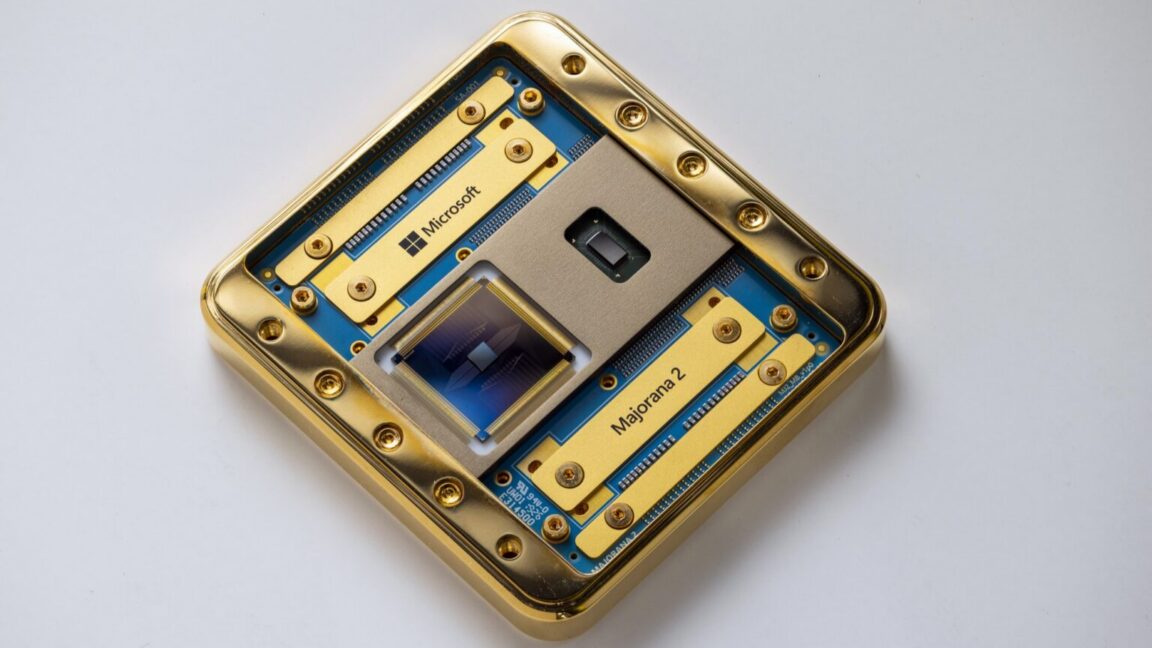
Quantum Computing Advances: Key Updates from Microsoft, Atom, and EeroQ
Microsoft, Atom Computing, and EeroQ share key updates in their quantum computing efforts, marking steady progress toward practical applications.

Star City Explores the Human Cost Behind the Soviet Space Program
Forget Mars colonies. Star City, the new spin-off from For All Mankind, dives deep into the gritty, dangerous, and often ethically complex world of the Soviet space program in the late 1960s.
A Gritty, High-Stakes Drama: Exploring the Soviet Space Program in Star City
Explore the untold story of the Soviet space program in Star City, a new Apple TV+ series that swaps the familiar American perspective for a gritty, high-stakes drama centered on its visionary, yet constrained, leadership.
The Byte-Pulse Newsroom is the editorial system that produces Byte-Pulse's daily tech news coverage. Each story is cross-referenced across 3+ independent outlets, drafted with AI assistance by the newsroom system (Drafter → Editor → Fact-Checker → Polisher), and reviewed by Serhat Er, Editor-in-Chief, before publication. We disclose AI augmentation openly. Editorial accountability stays with the named editor on every article. Tips: editorial@byte-pulse.net.
Don’t miss these
Honor Magic 8 Pro vs Samsung Galaxy S26 Ultra: Which Future Flagship Fits Your Wallet and Workflow?
Deciding between the anticipated Honor Magic 8 Pro and Samsung Galaxy S26 Ultra? Our deep dive into expected specs and features provides the fair comparison you need.
Proton VPN vs NordVPN: Which One Earns Your Subscription?
A deep dive into Proton VPN and NordVPN, comparing their privacy, performance, features, and value, helping you make an informed decision.
Perplexity Pro vs ChatGPT Plus: Which AI Assistant Fits Your Workflow?
This guide lays out the strengths and approaches of Perplexity Pro and ChatGPT Plus, helping you identify which AI assistant aligns with your specific needs.

Pokémon TCG Movie Signals Strategic Media Pivot for The Pokémon Company
A new Pokémon movie focused on the TCG is coming in 2027, marking a strategic pivot for the franchise as it navigates massive global fan engagement and logistical challenges.

Apple's AI Pivot: Vision Pro Content Cut, Siri Rebuilt Amid Layoffs
Apple's latest layoffs signal a strategic pivot, dialing back high-cost Vision Pro content while re-tooling Siri for the AI era. What's next for Apple?
Xiaomi 16 Pro vs iPhone 18 Pro: Which Flagship Fits Your World?
Deciding between the Xiaomi 16 Pro and iPhone 18 Pro? We break down every spec and trade-off, so you can make the choice that's right for you.