Google's 'Take a Message' Voicemail Feature Expanding to More Android Devices
Android devices worldwide, including in Germany, might soon get Google's voicemail transcription.

Google's 'Take a Message' Voicemail Feature Expanding to More Android Devices
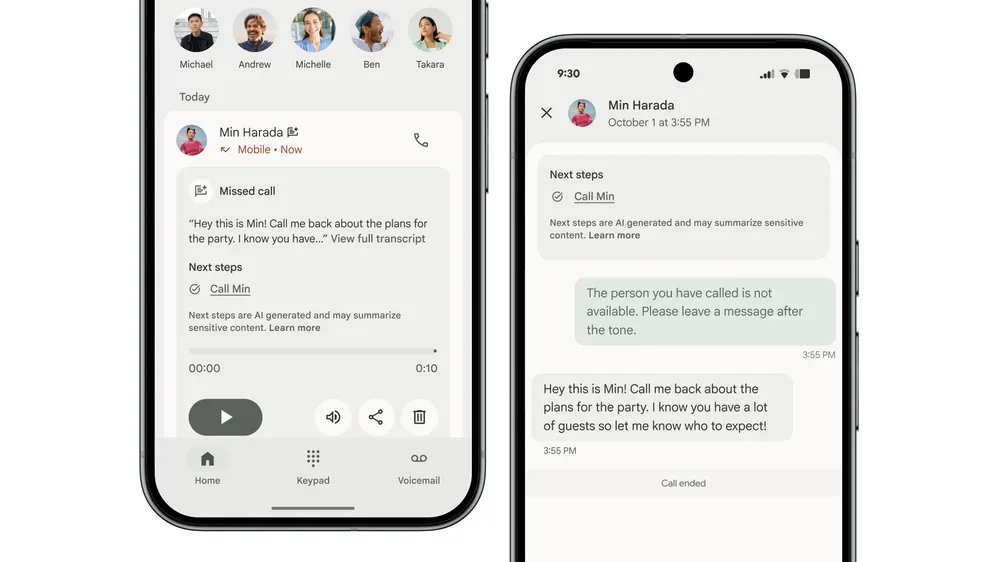
Google's 'Take a Message' feature, initially exclusive to the Pixel lineup of smartphones, is set to broaden its reach to a wider array of Android devices. This voicemail tool transforms spoken messages into text, offering a modern solution to the often tedious process of listening to voicemails. As this feature prepares for a wider release, it may enhance how users interact with missed calls.
The Evolution of Voicemail: Enter 'Take a Message'
Traditionally, voicemail required users to dial in to listen to messages—a method that hasn’t evolved much over the years. With 'Take a Message', Google enables users to read their voicemails instead. This transcription service operates locally on the device, a significant advantage for privacy-conscious users. By processing data on the phone, it avoids sending potentially sensitive information to the cloud, ensuring privacy is maintained. In a landscape marked by increasing concerns over data security, this local processing can serve as a key differentiator for Android devices in Europe, where data privacy regulations are strict.
Another compelling feature of 'Take a Message' is its ability to filter out spam calls. In an era where robocalls and spam have become pervasive, this feature automatically detects and blocks spam, allowing users to focus on the messages that matter.
Currently, 'Take a Message' is available only in English and is limited to users in the United States, Australia, and Canada. However, Google plans to expand its language support to include French, Spanish, Italian, Japanese, and German. This expansion may align with Android’s global reach and adaptability, potentially making it more inclusive for non-English speaking users.
Context: Google's Strategy and the Wider Industry Impact
The decision to expand 'Take a Message' beyond Pixel devices aligns with Google’s broader strategy of enhancing the Android ecosystem. Over the years, Google has often used Pixel phones as a testing ground for new features before rolling them out on other devices. This approach allows Google to gather feedback and refine features, ensuring they meet users’ needs effectively.
The move also reflects the competitive landscape of the mobile industry, where companies focus on providing value-added services to distinguish their platforms. For Google, making advanced features like 'Take a Message' available on more devices solidifies Android’s position as a versatile and user-friendly operating system. This is particularly important in regions where Android devices dominate the market. According to Statista, as of Q1 2023, Android holds over 70% of the smartphone market share in Europe.
In Europe, where the General Data Protection Regulation (GDPR) emphasizes user privacy, features like 'Take a Message' that prioritize local data handling are likely to be well-received. Users in regions with stringent privacy norms may gravitate toward devices that emphasize such features, potentially boosting sales for manufacturers that adopt Google's technology.
Compared to: Current Competitors
When examining Google’s 'Take a Message' feature, it’s pivotal to consider how it stacks up against established voicemail solutions. For example:
- Apple's Visual Voicemail: Available on iPhones since the iPhone 3G, Apple’s solution allows users to view a list of voicemail messages and select which to listen to without dialing in. While it doesn't offer transcription, it enhances user experience. iPhones start at around €799 ($999) for the base model, with pricing increasing for higher configurations.
- Samsung's Voicemail Transcription: Available on some Samsung Galaxy devices, this feature transcribes voicemails similarly to 'Take a Message'. However, it is not universally available across all models. Samsung Galaxy S23, starting at €999 ($1,199), offers advanced features but still requires users to rely on carrier-specific voicemail systems.
This comparison illustrates that while Google is not the first to offer voicemail transcription, its approach of integrating the feature directly into Android devices could provide a smoother, more cohesive user experience, particularly if it maintains high levels of accuracy and privacy.
What This Means for You
For the average Android user, the expansion of 'Take a Message' could significantly streamline handling missed calls. Instead of listening to voicemail after voicemail, users can quickly scan through transcribed messages, saving time and effort. This is particularly relevant for IT admins and developers who need to manage communications efficiently. The feature's ability to block spam reduces interruptions from unwanted calls, allowing professionals to focus on what truly matters.
For those in multilingual households or who frequently travel, the addition of new languages will enhance the feature's usability. Being able to receive and understand voicemails in one’s native language or the local language when abroad is a meaningful advancement, especially for global teams. This could improve communication and collaboration in a diverse work environment, making Android devices more appealing to a broader audience.
What's Still Unclear
While the expansion of 'Take a Message' is promising, several questions remain unanswered. For instance:
- Timeline for Global Rollout: Google has not specified a precise timeline for the global rollout, leaving users wondering when they might see this feature on their non-Pixel devices.
- Compatibility Issues: Will all Android devices support 'Take a Message', or will there be limitations based on hardware or software versions? Given the wide variety of Android devices on the market, compatibility concerns are crucial for widespread adoption.
- Integration with Existing Voicemail Apps: How 'Take a Message' will integrate with existing voicemail apps on other devices is not yet clear. Many Android phones come with pre-installed voicemail solutions from carriers or manufacturers. Understanding how Google plans to navigate these existing partnerships remains to be seen.
Operator's View: Why This Matters
Google's push to bring 'Take a Message' to more Android devices is a strategic move aimed at making advanced features accessible to a wider audience. This effort not only strengthens the Android ecosystem but also places pressure on competitors like Apple and Samsung to enhance their own offerings. Google’s focus on local processing aligns with increasing user demand for privacy and security, particularly within the European market, where GDPR compliance is paramount.
However, the success of 'Take a Message' will ultimately depend on how effectively Google can address the unanswered questions surrounding rollout timelines and device compatibility. If these technical hurdles are not managed well, the feature may fail to gain traction. Furthermore, unless Google can ensure the quality of transcriptions remains high and consistent across various languages, the long-term impact of this feature may be limited.
In closing, Google's 'Take a Message' feature has the potential to reshape how users interact with voicemail, prioritizing efficiency and privacy. As the rollout progresses, it will be interesting to observe user feedback and the subsequent iterations that Google may introduce in response. If executed well, 'Take a Message' could redefine the voicemail experience on Android, providing a competitive edge in an increasingly crowded market.
Update — 2026-06-06
Since the announcement of the 'Take a Message' feature's expansion, Google has rolled out updates to enhance its functionality. Users have reported improvements in the accuracy of transcriptions, particularly for non-English languages, which is crucial as the feature gains support for German. Additionally, feedback from early adopters indicates that the integration with Google Assistant has become smoother, making it easier for users to access and manage their voicemails. As Google continues to refine this tool, it highlights the tech giant's commitment to improving user experience across its Android ecosystem.
Cases, chargers and AirPods alternatives the editors actually use.
Shop mobile gear →Discuss this story
Got a take, a correction, or a follow-up tip? Reply where you read — we read everything.
Found an error? File a correction at /corrections. Substantive corrections are logged publicly.
One short email. The most important Mobile news, fact-checked, no fluff. Free, unsubscribe anytime.
More from Mobile
OnePlus 14 vs Samsung Galaxy S26: Which Flagship Earns Your Hard-Earned Cash?
Deciding between the OnePlus 14 and Samsung Galaxy S26? This guide cuts through the noise, laying out the facts so you can pick the perfect phone for your priorities.
Nothing Phone 4 vs Google Pixel 11: Looking Ahead to the Next Generation
A speculative deep dive into what the Nothing Phone 4 and Google Pixel 11 might bring, offering a balanced look at their likely strengths and trade-offs for future buyers.
Google Pixel 11 Pro vs Samsung Galaxy S26 Ultra: Which Apex Flagship Fits Your World?
Deciding between Google's AI-powered Pixel 11 Pro and Samsung's feature-packed Galaxy S26 Ultra demands a clear-eyed look at what truly matters to you.
iPhone 18 Pro vs Samsung Galaxy S26: Which High-End Phone Really Earns Your Dollar?
Navigating the choice between the iPhone 18 Pro and Samsung Galaxy S26? We cut through the noise, laying out the facts so you can make an informed decision.
The Byte-Pulse Newsroom is the editorial system that produces Byte-Pulse's daily tech news coverage. Each story is cross-referenced across 3+ independent outlets, drafted with AI assistance by the newsroom system (Drafter → Editor → Fact-Checker → Polisher), and reviewed by Serhat Er, Editor-in-Chief, before publication. We disclose AI augmentation openly. Editorial accountability stays with the named editor on every article. Tips: editorial@byte-pulse.net.
Don’t miss these
Proton VPN vs NordVPN: Which One Earns Your Subscription?
A deep dive into Proton VPN and NordVPN, comparing their privacy, performance, features, and value, helping you make an informed decision.
Perplexity Pro vs ChatGPT Plus: Which AI Assistant Fits Your Workflow?
This guide lays out the strengths and approaches of Perplexity Pro and ChatGPT Plus, helping you identify which AI assistant aligns with your specific needs.

Pokémon TCG Movie Signals Strategic Media Pivot for The Pokémon Company
A new Pokémon movie focused on the TCG is coming in 2027, marking a strategic pivot for the franchise as it navigates massive global fan engagement and logistical challenges.

Apple's AI Pivot: Vision Pro Content Cut, Siri Rebuilt Amid Layoffs
Apple's latest layoffs signal a strategic pivot, dialing back high-cost Vision Pro content while re-tooling Siri for the AI era. What's next for Apple?

D23 2026: Disney's Content Deluge Sparks Questions About Strategy
Byte-Pulse cuts through D23 hype: We dissect Disney's ambitious content slate, from Simpsons: Hit & Run to Ahsoka season 2, and question the real-world implications and European market strategy.
Notion vs Obsidian: Which Knowledge Hub Fits Your Workflow?
Deciding between Notion and Obsidian? We break down the core differences in philosophy, data ownership, collaboration, and extensibility to help you choose.