Russia Joins GEO Spy Satellite Race
US, China, and now Russia are crowding geosynchronous orbit with new spy satellites. Tensions rising.


Space superiority just got a lot more crowded, and significantly more expensive for everyone involved. For years, the geosynchronous orbit (GEO) surveillance game has largely been a strategic theatre dominated by the United States and China, their respective capabilities quietly expanding through sophisticated satellite constellations. Now, Russia is making a much more overt play, joining this high-stakes contest with its own suspected inspector satellite: Kosmos 2589. This isn't merely a new player; it's a clear signal of intent, a hardening of positions in the ultimate high ground.
Russia's New Player: Kosmos 2589's Visible Emergence
The satellite in question, Kosmos 2589, was reportedly launched in June 2025 – a detail that immediately raises questions about its current operational status and the timeline of its deployment, suggesting a forward-looking perspective on this development. It has since maneuvered into geosynchronous orbit, a critical altitude approximately 35,786 kilometres (or about 22,236 miles) above the equator. The strategic advantage of GEO is profound: satellites positioned here orbit at the same rate as the Earth's rotation, allowing them to effectively 'hang' over a single geographic location. This makes them perfect platforms for continuous communications, persistent intelligence gathering, and, increasingly, for close-proximity operations.
The implications of this visible deployment are not lost on the established players. The United States Space Force, which operates a vast network of orbital monitoring systems, is certainly watching, and not from a distance. Their own Geosynchronous Space Situational Awareness Program (GSSAP) satellites are already known to be maneuvering in close proximity to Kosmos 2589, gathering intelligence on its capabilities and operational patterns. This immediate, hands-on response underscores the palpable tension and the highly sensitive nature of GEO operations. From an operator's perspective, anyone who has ever managed a complex logistics chain knows that such close-quarters maneuvering is not a casual undertaking; it demands precise orbital mechanics, significant fuel reserves, and a constant, vigilant assessment of potential collision risks.
US and China Maneuvers: A Decades-Long Orbital Dance
Of course, the US and China are hardly newcomers to this intricate orbital dance; they have been actively developing and deploying capabilities in GEO for years. The US, through its GSSAP program, maintains a dedicated constellation designed to conduct close-up observations of other satellites, collecting vital data on their function, design, and intent. These GSSAP satellites are not merely passive observers; they are highly maneuverable assets capable of intricate orbital adjustments to approach, track, and scrutinize objects of interest. The development and deployment of such a system represents an investment of billions of dollars over decades, reflecting a long-term strategic commitment to space domain awareness.
China, too, has been steadily building out its own sophisticated space capabilities, often blurring the lines between civilian and military applications. Satellites like TJS-10, part of China's 'Tongxin Jishu Shiyan' (Communication Technology Test) series, are known to perform complex orbital maneuvers and operate in close proximity to key US military satellites, indicating a clear intent to gather intelligence and potentially demonstrate counter-space capabilities. The operational philosophy here often diverges: while US assets are typically designed for overt surveillance within established norms (albeit contested ones), Chinese assets sometimes operate with a less transparent profile, making their ultimate purpose harder to discern. *I'm skeptical that Kosmos 2589 represents a truly new capability for Russia; rather, it appears to be a public demonstration of existing, albeit less visible, assets, designed to assert a presence rather than unveil a technological leap.* This is a calculated strategic statement, mirroring the long-term, incremental build-up seen from Beijing.
Comparing Operational Philosophies and Costs
When we talk about 'inspector satellites' in GEO, we're not just discussing a single piece of hardware; we're talking about an entire ecosystem of launch capabilities, ground control networks, sensor technologies, and highly skilled personnel. A typical GEO satellite mission, from design and manufacturing to launch and a 10-15 year operational lifespan, can easily cost upwards of €500 million to €1 billion. The GSSAP program, for instance, involves multiple satellites, each with advanced optical and electronic intelligence sensors, requiring constant station-keeping maneuvers. Their operational profiles are characterized by sustained close-proximity operations, demanding robust propulsion systems and sophisticated autonomous navigation capabilities. In contrast, while the specific technical details of Kosmos 2589 remain under wraps, its solitary public emergence suggests a different phase of capability demonstration, perhaps less about sustained, multi-point surveillance and more about a specific, targeted assertion.
The Strategic Importance of GEO: A Contested Frontier
GEO is not just a convenient parking spot for satellites; it is a critical, irreplaceable frontier for both military and commercial communications, navigation, and intelligence. The ability to watch—and potentially intercept—signals from this orbit confers an enormous strategic advantage. Military commands rely on GEO satellites for secure, high-bandwidth communications across vast distances, enabling real-time command and control of forces globally. Commercial operators use GEO for everything from broadcast television to internet connectivity in remote regions, forming the backbone of modern global infrastructure.
Historically, Russia has certainly engaged in GEO intelligence, often through passive eavesdropping (Signals Intelligence, or SIGINT) from a distance. However, Kosmos 2589's reported close-proximity maneuvering capability suggests a significant shift towards something far more active, more reconnaissance-focused, and potentially more aggressive. This transition from passive listening to active inspection and surveillance is a qualitative leap, one that escalates the potential for miscalculation and direct confrontation. The core tenets remain:
- Constant coverage over specific Earth regions: Uninterrupted observation provides invaluable intelligence, particularly for monitoring areas of geopolitical interest or military activity.
- Secure military comms: The integrity and resilience of these links are absolutely vital for national security, making any threat to GEO assets a direct threat to a nation's defense posture.
- GEO surveillance can totally reshape global military strategies: By providing persistent, high-fidelity intelligence on adversary movements and capabilities, these assets fundamentally alter the calculus of power projection and deterrence.
Context: European Space Strategies and the Rising Tide
Europe, with its own burgeoning space industry and critical reliance on satellite services, is watching these developments with understandable apprehension. The European Space Agency (ESA) operates its own fleet of GEO satellites, supporting crucial services like EUMETSAT for weather forecasting and vital communication links. However, ESA's stated focus leans heavily toward scientific collaboration, environmental monitoring, and civilian applications, such as the Galileo navigation constellation. While Europe certainly possesses advanced space technology, its military-focused space capabilities are generally more distributed among individual member states and are not typically geared towards aggressive, close-proximity inspector missions on the scale now being demonstrated by the major powers.
Still, with global powers militarizing space at an accelerating pace, it is bound to affect future European policy. How could it not? The increased risk of orbital debris from potential collisions, the congestion of valuable orbital slots, and the ambiguity of intent surrounding such 'inspector' satellites all present formidable challenges. European commercial operators, often operating on tighter margins and under stringent EU regulatory frameworks, face an increasingly complex and hazardous environment. This escalating competition in GEO inevitably pushes European defense and space policymakers to reconsider their investment priorities, potentially diverting funds from scientific research to 'resilience' and 'domain awareness' capabilities, a costly shift for an industry often driven by international cooperation rather than confrontation.
What This Means for You: Navigating a More Perilous Orbit
For anyone operating within the European satellite communications sector, or indeed the broader space tech industry, these developments are not abstract geopolitical machinations; they have tangible, bottom-line implications. The risk of orbital conflict, whether accidental or intentional, is demonstrably rising. This means:
1. Increased Regulatory Scrutiny: Expect European regulators, already attentive to space debris and spectrum allocation, to impose even stricter guidelines for satellite design, maneuverability, and end-of-life deorbiting. This could lead to higher compliance costs and longer lead times for new satellite deployments. 2. Delays and Complications for Commercial Satellites: As military and intelligence assets proliferate and conduct more aggressive maneuvers, the optimal orbital slots become more contested. Securing launch windows and maintaining safe operational corridors will become increasingly difficult, potentially leading to delays and increased operational costs for commercial ventures. 3. Higher Insurance Premiums: The greater the risk of collision or interference, the higher the premiums for insuring multi-million or multi-billion euro satellite assets. This directly impacts the financial viability of new projects and the operational costs of existing constellations. 4. Demand for Resilient Systems: There will be an accelerated push for satellites equipped with enhanced maneuverability, anti-jamming capabilities, and robust cyber-physical security measures to withstand potential interference or attack. This translates to higher R&D costs and more complex engineering challenges for manufacturers.
Honestly, if you're in satellite comms, especially in Europe, you'd better be keeping up with these developments. Ignoring the hardening of space as a military domain is no longer an option.
What's Still Unclear: The Fog of Orbital War
Despite the clear signals, many critical aspects surrounding Kosmos 2589 and Russia's broader intent remain shrouded in the fog of orbital strategy:
- Exact Capabilities: What are the specific sensor payloads of Kosmos 2589? Is it primarily optical, electronic intelligence (ELINT), communications intelligence (COMINT), or even some form of active electronic warfare (EW) payload? Without knowing its precise capabilities, assessing its true threat profile remains speculative.
- Russia's Long-Term Goal: Is this a standalone demonstration, or the vanguard of a larger, more comprehensive Russian GEO surveillance constellation? The deployment of a single asset often precedes a more ambitious, multi-satellite program, but resource constraints could limit broader expansion.
- US and China's Specific Reactions: Beyond general observation, what specific countermeasures or diplomatic initiatives will the US Space Command and China's PLA Strategic Support Force (PLASSF) undertake in response to Russia's increased GEO footprint? Will this accelerate their own counter-space programs or lead to new arms control proposals, however unlikely?
- Impact on International Norms: How will this specific deployment influence the already fragile discussions around norms of behavior in space and potential arms control treaties for orbital assets? The lack of clear international consensus on what constitutes 'aggressive' or 'peaceful' close-proximity operations is a gaping hole in space governance.
Why This Matters: An Operator's View of a Dangerous Escalation
Space isn't just some far-off place anymore; it has become a critical frontier for national security, for economic prosperity, and for who dominates technologically. Russia joining the GEO surveillance club with Kosmos 2589 isn't a 'game-changer' in the sense of introducing radically new technology; it's a profound political and strategic statement that underscores the dangerous escalation of military competition in orbit. I see this as a clear move by Moscow to assert its presence in a critical domain, less about a sudden technological leap and more about a calculated strategic statement in an increasingly contested theatre.
From the perspective of anyone who's had to manage the logistics of real hardware delivery and deployment, this kind of strategic posturing comes with a very real, very high price tag. It will inevitably lead to increased operational complexity, higher insurance costs, and greater regulatory burdens for all space actors, especially those in the commercial sector who rely on a stable and predictable orbital environment. These dynamics are changing everything – military strategies, international space law, even how nations cooperate (or fail to cooperate) in space. It's all on the table, and the table is becoming increasingly unstable. This isn't just a race; it's a costly, high-stakes game of orbital chicken, with the entire global space economy potentially caught in the crossfire.
Discuss this story
Got a take, a correction, or a follow-up tip? Reply where you read — we read everything.
Found an error? File a correction at /corrections. Substantive corrections are logged publicly.
One short email. The most important Science news, fact-checked, no fluff. Free, unsubscribe anytime.
More from Science
Quantum Computing Explained for Developers: A 2026 Update
Explore quantum computing fundamentals, hardware, and how it impacts software development in this comprehensive guide for developers.
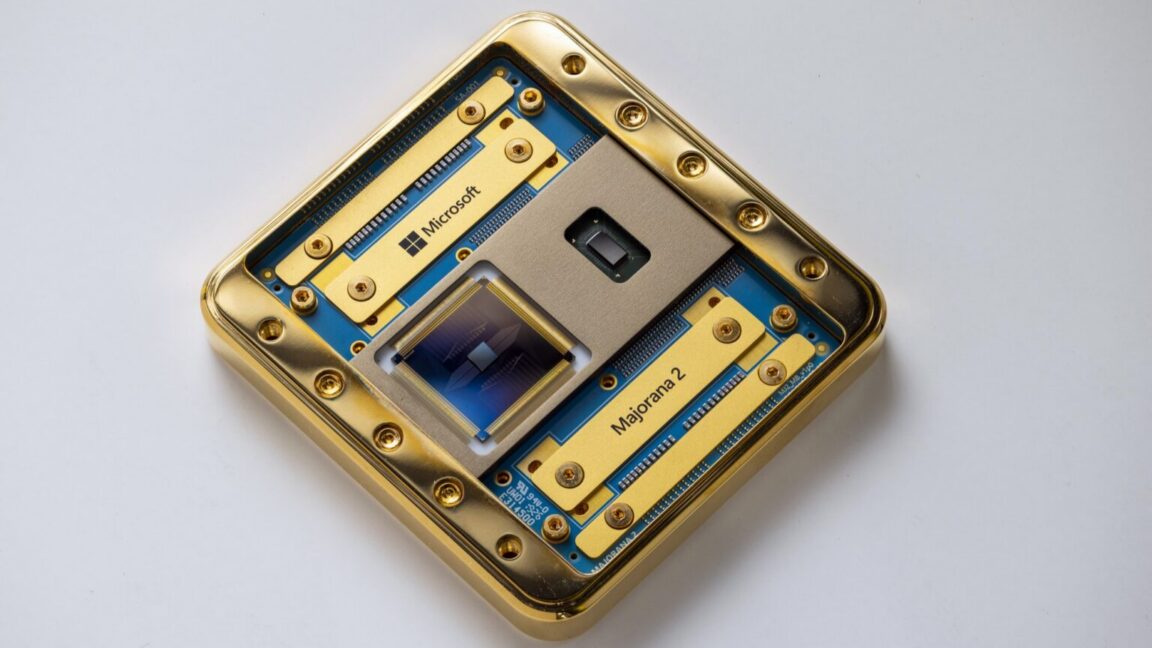
Quantum Computing Advances: Key Updates from Microsoft, Atom, and EeroQ
Microsoft, Atom Computing, and EeroQ share key updates in their quantum computing efforts, marking steady progress toward practical applications.

Star City Explores the Human Cost Behind the Soviet Space Program
Forget Mars colonies. Star City, the new spin-off from For All Mankind, dives deep into the gritty, dangerous, and often ethically complex world of the Soviet space program in the late 1960s.
A Gritty, High-Stakes Drama: Exploring the Soviet Space Program in Star City
Explore the untold story of the Soviet space program in Star City, a new Apple TV+ series that swaps the familiar American perspective for a gritty, high-stakes drama centered on its visionary, yet constrained, leadership.
The Byte-Pulse Newsroom is the editorial system that produces Byte-Pulse's daily tech news coverage. Each story is cross-referenced across 3+ independent outlets, drafted with AI assistance by the newsroom system (Drafter → Editor → Fact-Checker → Polisher), and reviewed by Serhat Er, Editor-in-Chief, before publication. We disclose AI augmentation openly. Editorial accountability stays with the named editor on every article. Tips: editorial@byte-pulse.net.
Don’t miss these
Xiaomi 16 Pro vs iPhone 18 Pro: Which Flagship Fits Your World?
Deciding between the Xiaomi 16 Pro and iPhone 18 Pro? We break down every spec and trade-off, so you can make the choice that's right for you.
Proton VPN vs NordVPN: Which One Earns Your Subscription?
A deep dive into Proton VPN and NordVPN, comparing their privacy, performance, features, and value, helping you make an informed decision.
Perplexity Pro vs ChatGPT Plus: Which AI Assistant Fits Your Workflow?
This guide lays out the strengths and approaches of Perplexity Pro and ChatGPT Plus, helping you identify which AI assistant aligns with your specific needs.

Pokémon TCG Movie Signals Strategic Media Pivot for The Pokémon Company
A new Pokémon movie focused on the TCG is coming in 2027, marking a strategic pivot for the franchise as it navigates massive global fan engagement and logistical challenges.

Apple's AI Pivot: Vision Pro Content Cut, Siri Rebuilt Amid Layoffs
Apple's latest layoffs signal a strategic pivot, dialing back high-cost Vision Pro content while re-tooling Siri for the AI era. What's next for Apple?
Motorola Edge 60 Ultra vs OnePlus 13: Which Android Flagship Fits Your Priorities?
Motorola Edge 60 Ultra and OnePlus 13 both aim for top-tier Android. We cut through the marketing to reveal the true differences, helping you choose.