Sam Raimi Takes the Reins on 'Magic' Remake, Taps 'Send Help' Writers
Lionsgate confirms Raimi will direct a modern take on the 1978 horror film.


The announcement that Sam Raimi will step into the director's chair for Lionsgate's remake of the 1978 horror flick 'Magic' is, on the surface, a compelling headline for genre aficionados. Raimi, a filmmaker whose name has become synonymous with both visceral horror, as seen in the 'Evil Dead' franchise, and blockbuster superheroics with the original 'Spider-Man' trilogy, is certainly a proven quantity. Lionsgate has confirmed he will direct, not just produce, working alongside Mark Swift and Damian Shannon, the writing duo who recently delivered 'Send Help'. This move, while generating immediate buzz, reveals more about the current state of Hollywood's strategic calculus than it does about a sudden surge of artistic daring.
Adam Fogelson, chair of Lionsgate Motion Picture Group, expressed the studio's enthusiasm with a quote that bordered on the effusive, stating, "Sam is the dream director for this project... we are absolutely thrilled he has chosen to direct the film." Such public declarations are, of course, standard operating procedure in the film industry's marketing machine, designed to generate early momentum. However, from an operator's perspective, this isn't about dreams; it's about de-risking. Securing a director with Raimi's track record in a genre where he excels — particularly with a project based on pre-existing, recognized intellectual property — is a financially prudent decision in a landscape increasingly wary of original, untested concepts. The original 'Magic', directed by Richard Attenborough and penned by William Goldman, starred Anthony Hopkins as a ventriloquist whose dummy takes on a life of its own, a premise that was, by many accounts, genuinely terrifying and a unique blend of psychological drama and horror.
The Allure of Established IP in a Volatile Market
This 'Magic' remake isn't an isolated incident; it's a clear symptom of a broader trend dominating the entertainment industry: the relentless dusting off of classic horror films for a new generation. We've seen similar efforts across the Atlantic, too, where iconic European genre films occasionally receive a modern polish, though often with a more nuanced approach to preserving their original bite. For Lionsgate, bringing in a horror legend like Raimi for a known property is a textbook play, designed to hook both nostalgic fans and fresh faces who might be unfamiliar with the original.
I am skeptical that this trend of constant remakes truly benefits cinematic innovation in the long run. While it offers a seemingly safe bet for studios, it often prioritizes commercial viability over genuine artistic exploration. The sheer volume of reboots, sequels, and shared universes suggests an industry more focused on leveraging existing brand equity than on fostering the next wave of groundbreaking storytelling. It's akin to a hardware manufacturer continually updating the same chipset with marginal gains, rather than investing in truly novel architectures. It works, but it's not revolutionary.
A Production Line Assembled for Familiar Success
The remake brings back some familiar names and introduces new blood, too, indicating a carefully assembled team. Producers Roy Lee, Chris Hammond, and Tim Sullivan are all involved, bringing collective experience in genre filmmaking. Notably, Zainab Azizi from Raimi Productions, who also worked on 'Send Help' with Swift and Shannon, is part of this project. This continuity across teams, especially with the writing duo and a producer from a recent successful project, suggests a well-oiled machine, minimizing friction and maximizing efficiency in the production process. It’s the kind of team assembly you see in sophisticated logistics operations, where proven partners are re-engaged for new projects to ensure smooth execution and predictable outcomes.
Compared to Recent Horror Revivals
To understand the strategic positioning of the 'Magic' remake, it's useful to look at its contemporaries in the horror revival landscape. The industry has seen a mixed bag of critical and commercial success with recent reboots and legacy sequels:
- *David Gordon Green's Halloween Trilogy (2018-2022): The 2018 Halloween was a critical and commercial darling, grossing over $255 million worldwide on a $10 million budget, largely due to its direct sequel approach, ignoring previous installments and bringing back Jamie Lee Curtis. However, its sequels, Halloween Kills and Halloween Ends*, were met with diminishing returns and more divisive critical reception, illustrating the challenge of sustaining a revival's momentum.
- **It (2017) and It Chapter Two (2019):** Andy Muschietti's two-part adaptation of Stephen King's epic novel was a monster hit, with the first film pulling in over $700 million globally on a $35 million budget. It successfully blended nostalgic period settings with modern horror sensibilities and strong character development, proving that a well-executed, ambitious adaptation can yield massive returns.
- **Scream (2022) and Scream VI (2023):** These films, directed by Matt Bettinelli-Olpin and Tyler Gillett, successfully revitalized the meta-slasher franchise, bringing back original cast members while introducing a new generation of protagonists. The 2022 film grossed $140 million on a $24 million budget, demonstrating that a smart, self-aware approach to legacy sequels can resonate with both old and new audiences.
Where 'Magic' differs from these examples is its original premise: a psychological thriller rather than a slasher or supernatural epic. Its success will hinge less on jump scares and more on the nuanced character work and unsettling atmosphere that defined the 1978 original. Raimi's involvement suggests a return to his roots in psychological tension, rather than the more overt gore of Evil Dead or the spectacle of Spider-Man.
What This Means for You, the Horror Enthusiast
For you, the dedicated horror buff, this remake presents a fascinating opportunity. Firstly, it could seriously spark new interest in those older, classic films. A high-profile remake often leads to renewed availability of the original on streaming platforms, or even special theatrical screenings, making it easier to discover or revisit the source material. This is crucial for preserving cinematic history, especially for films that might not have the brand recognition of a Halloween or Friday the 13th.
Secondly, if you're a Raimi loyalist, or you just loved the original 'Magic', this one's definitely worth keeping an eye on. Raimi has a distinct directorial voice, and his take on a unique blend of horror and psychological thrills could offer a fresh perspective while honoring the original's unsettling core. It’s a chance to see a seasoned craftsman apply his skills to a narrative space he understands intimately, potentially delivering a film that is both a tribute and a compelling new experience.
What's Still Unclear: The Unmanifested Product Details
While the announcement has generated excitement, many crucial details remain locked down by Lionsgate, leaving significant questions for anyone assessing this project with a critical, operator's eye. We know the 'what' and the 'who' behind the camera, but the 'how' and 'when' are still largely speculative:
- How much will the plot change from the original? The 1978 film is a product of its time. While its core premise is timeless, a modern adaptation would likely need to update certain narrative elements or character motivations to resonate with contemporary audiences without losing the original's psychological bite. Will it be a faithful re-telling or a radical re-imagining?
- Who's in the cast? Any original actors returning? Casting is paramount for a character-driven psychological thriller. Anthony Hopkins' performance was central to the original's impact. Securing talent that can carry such a demanding role, alongside a strong supporting cast, will be critical. There's been no word on whether any original actors might make cameo appearances, which is a common fan-service tactic in remakes.
- When's it actually hitting theaters? What's the distribution strategy? A firm release date, particularly for the European market, is still unannounced. In today's fragmented media landscape, understanding the intended distribution – a full theatrical run, a simultaneous streaming release, or a limited theatrical window followed by VOD – is essential for gauging its commercial ambition and accessibility. Will it be primarily an American release, or will Lionsgate commit to a robust international rollout, navigating the complexities of European exhibition and censorship boards?
- What is the estimated budget, and what age rating are they targeting? These practical considerations directly impact the film's scope and its potential audience. A higher budget might allow for more ambitious set pieces or a more extensive marketing campaign, while the age rating dictates its commercial reach.
The Broader Trend: Re-shipping Classic IP in a Crowded Market
"Sam Raimi directing 'Magic' could redefine classic horror by blending nostalgia with modern sensibilities." This kind of statement, often found in marketing materials, needs to be critically examined. While bringing these classic films to new generations does more than just preserve cinematic history – it lets filmmakers offer fresh takes and stories that can resonate with today's world – it also represents a fundamentally conservative play. In a global entertainment market where competition for audience attention is fiercer than ever, and where the financial stakes for original content are incredibly high, studios are increasingly defaulting to known quantities.
This isn't about artistic vision as much as it is about mitigating risk and guaranteeing a baseline level of interest. Lionsgate is deploying a known, respected director on a known, respected property. It’s the equivalent of a major automotive manufacturer launching a new electric version of a classic, beloved model – safe, predictable, and almost certainly profitable. While it promises to grab both the die-hards and anyone just looking for a good scare, I believe this move, while commercially sound, highlights a broader reluctance within Hollywood to truly innovate at the foundational level, opting instead for iterative improvements on proven concepts. It's a strategy that ensures product shipment, but perhaps at the cost of truly pushing the boundaries of the medium. We'll be watching to see if Raimi can truly elevate this remake beyond a mere re-tread, or if it will simply be another well-executed, yet ultimately unadventurous, product on the entertainment assembly line.
Editor-tracked discounts on the gadgets and gear worth buying right now.
See the deals →Discuss this story
Got a take, a correction, or a follow-up tip? Reply where you read — we read everything.
Found an error? File a correction at /corrections. Substantive corrections are logged publicly.
One short email. The most important Web & Apps news, fact-checked, no fluff. Free, unsubscribe anytime.
More from Web & Apps

D23 2026: Disney's Content Deluge Sparks Questions About Strategy
Byte-Pulse cuts through D23 hype: We dissect Disney's ambitious content slate, from Simpsons: Hit & Run to Ahsoka season 2, and question the real-world implications and European market strategy.

Spotify Relaunches AI Running Mode for iOS Premium Users
Spotify's new Running Mode for iOS uses AI to sync music with your stride, but its success hinges on AI quality and user input
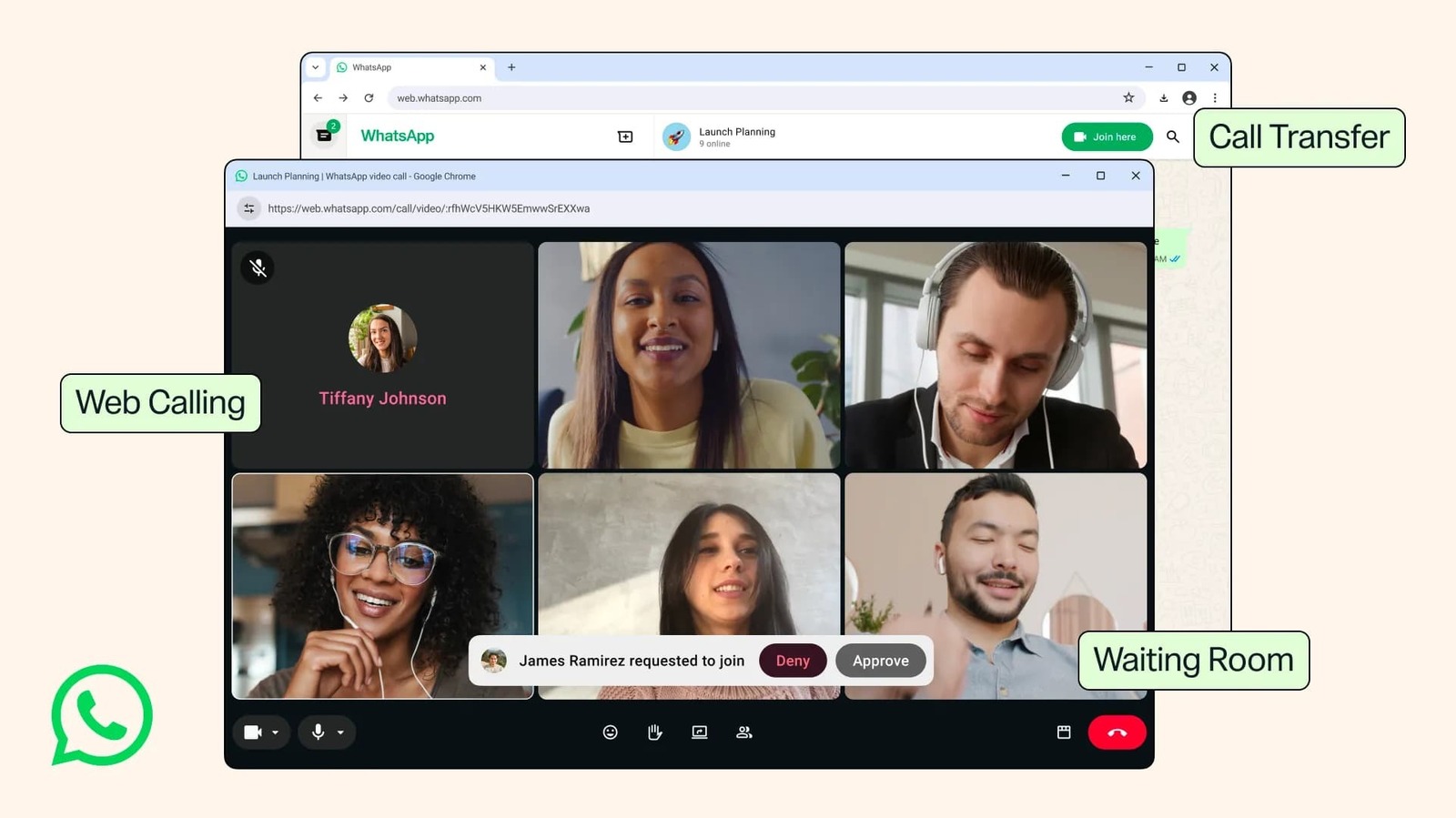
WhatsApp Web Gets Calls: Meta's Cross-Platform Play Begins
WhatsApp Web now supports encrypted calls, screen sharing, and call transfers. We dissect Meta's strategic shift and its implications for users and enterprise adoption in Europe.

Fox's $22 Billion Acquisition of Roku: A New Era in Streaming
Fox's acquisition of Roku for $22 billion marks a pivotal shift in streaming, merging content strength with platform reach.
The Byte-Pulse Newsroom is the editorial system that produces Byte-Pulse's daily tech news coverage. Each story is cross-referenced across 3+ independent outlets, drafted with AI assistance by the newsroom system (Drafter → Editor → Fact-Checker → Polisher), and reviewed by Serhat Er, Editor-in-Chief, before publication. We disclose AI augmentation openly. Editorial accountability stays with the named editor on every article. Tips: editorial@byte-pulse.net.
Don’t miss these
Xiaomi 16 Pro vs iPhone 18 Pro: Which Flagship Fits Your World?
Deciding between the Xiaomi 16 Pro and iPhone 18 Pro? We break down every spec and trade-off, so you can make the choice that's right for you.
Proton VPN vs NordVPN: Which One Earns Your Subscription?
A deep dive into Proton VPN and NordVPN, comparing their privacy, performance, features, and value, helping you make an informed decision.
Perplexity Pro vs ChatGPT Plus: Which AI Assistant Fits Your Workflow?
This guide lays out the strengths and approaches of Perplexity Pro and ChatGPT Plus, helping you identify which AI assistant aligns with your specific needs.

Pokémon TCG Movie Signals Strategic Media Pivot for The Pokémon Company
A new Pokémon movie focused on the TCG is coming in 2027, marking a strategic pivot for the franchise as it navigates massive global fan engagement and logistical challenges.

Apple's AI Pivot: Vision Pro Content Cut, Siri Rebuilt Amid Layoffs
Apple's latest layoffs signal a strategic pivot, dialing back high-cost Vision Pro content while re-tooling Siri for the AI era. What's next for Apple?
Motorola Edge 60 Ultra vs OnePlus 13: Which Android Flagship Fits Your Priorities?
Motorola Edge 60 Ultra and OnePlus 13 both aim for top-tier Android. We cut through the marketing to reveal the true differences, helping you choose.