SwitchBot Lock Vision Series: Facial Recognition Smart Locks Arrive with Matter Support
The Lock Vision and Pro models bring Matter over Wi-Fi, meaning direct integration with Apple Home.


SwitchBot Lock Vision Series: Advanced Biometrics Meet Matter, Aiming for Seamless Smart Home Integration
SwitchBot has unveiled its latest smart lock offerings, the Lock Vision and the Lock Vision Pro, marking a significant step forward in the smart home security landscape. These new devices are poised to make a considerable impact, particularly for users invested in Apple's HomeKit ecosystem, due to their integrated support for Matter over Wi-Fi. This feature eliminates the need for additional bridges or hubs, allowing for direct communication with existing Apple TV or HomePod devices, simplifying setup and enhancing interoperability.
Advanced Biometrics: Beyond Simple Recognition
The headline feature of the Lock Vision series is its sophisticated 3D facial recognition system. Employing an infrared projector that casts over 20,000 points, the system constructs a precise 3D depth map of a user's face. SwitchBot claims this technology ensures reliable identification, even when users are wearing glasses, hats, or makeup, with unlock times reported to be under one second. Crucially, all biometric data is encrypted and stored locally on the device, addressing common privacy concerns associated with facial recognition technology.
For users seeking even more advanced security options, the Lock Vision Pro model elevates the biometric capabilities. It incorporates semiconductor fingerprint recognition, a technology known for its accuracy and speed in reading unique fingerprint patterns. In addition, the Pro version introduces contactless palm scanning, which utilizes near-infrared technology to identify individuals by their distinct vascular patterns. This multi-layered approach to biometrics offers users a choice of highly secure and convenient access methods.
Power, Longevity, and Resilience
Both the Lock Vision and Lock Vision Pro are engineered with robust power solutions designed for extended operation. Each lock features a dual battery system comprising a main 10,000mAh rechargeable battery, which SwitchBot states can last up to a year on a single charge. Complementing this is a secondary CR123A battery, serving as a crucial backup in case the primary battery depletes unexpectedly. The inclusion of an external USB-C port further enhances the system's resilience, providing an emergency power source that can be connected to a power bank or adapter.
Energy efficiency is also a key consideration. The locks integrate mmWave radar technology, which intelligently detects the presence of a person approaching the door. This allows the biometric scanner to remain inactive until it confirms proximity, thereby conserving battery life and ensuring the system is ready when needed without unnecessary power drain. This smart activation mechanism contributes to the overall longevity of the device's battery.
Matter Over Wi-Fi: Bridging Ecosystems
The integration of Matter over Wi-Fi is arguably the most significant technical advancement in these new locks, especially for users within the Apple Home ecosystem. Matter is an industry standard designed to unify smart home devices, and its support over Wi-Fi means that the SwitchBot locks can connect directly to a home network and communicate with Matter-compatible controllers, such as Apple TV (4th gen or later) or HomePod, without requiring a dedicated bridge. This removes a common barrier to entry for HomeKit users, offering a more streamlined and potentially less expensive setup. Beyond biometrics, the locks also support traditional access methods including NFC cards, passcodes, geo-fencing for automatic locking/unlocking based on location, and of course, a physical key override.
Choosing the Right Lock for Your Needs
When deciding between the two models, users will find that both share core functionalities, including the substantial dual battery system and the advanced 3D facial recognition. The primary differentiator lies in the additional biometric options offered by the Pro model. The SwitchBot Lock Vision is priced at $169.99 and includes 3D facial recognition, passcodes, NFC cards, and support for Apple HomeKit via Matter. For those desiring enhanced security and convenience, the SwitchBot Lock Vision Pro is available for $229.99 and adds semiconductor fingerprint recognition and contactless palm scanning to the existing feature set.
Context for the European Market
The European smart home market is experiencing rapid growth, with consumers increasingly prioritizing devices that offer seamless integration across different platforms, particularly with established ecosystems like Apple Home. The adoption of standards like Matter is seen as crucial for simplifying interoperability and reducing fragmentation. SwitchBot's new locks, with their direct Matter over Wi-Fi support, are well-positioned to appeal to European consumers seeking greater flexibility and a more cohesive smart home experience, regardless of their preferred device manufacturers. This move aligns with the broader trend towards open standards and user-centric connectivity across the continent.
What This Means for You
For Apple Home enthusiasts, these locks represent a significant simplification. The ability to connect directly via Matter over Wi-Fi means a potentially faster, less complicated setup process, and avoids the cost and complexity of purchasing and configuring additional hubs. If you've been holding off on upgrading your smart lock because of compatibility issues or the need for extra hardware to work with Apple Home, the SwitchBot Lock Vision series might finally offer the solution you've been looking for. It promises a more integrated and intuitive experience, allowing you to manage your home security alongside your other smart devices with greater ease.
What's Still Unclear
While the initial specifications are impressive, several questions remain regarding the long-term performance and support for the SwitchBot Lock Vision series. The true test of any smart home device lies in its reliability and durability over time. It's unclear how frequently SwitchBot plans to issue firmware updates, not just for security patches but also for potential feature enhancements or performance optimizations. Furthermore, the real-world effectiveness and user experience of the advanced biometric systems, particularly under varied environmental conditions and over extended periods, will be critical to their success. Detailed long-term reliability data and a clear commitment to ongoing software support are key pieces of information that are still missing.
SwitchBot's latest smart locks, by integrating advanced biometrics with the universally appealing Matter standard, are making a bold statement. They aim to simplify smart home security for a wide range of users, particularly those within the Apple ecosystem, by removing hardware hurdles and enhancing convenience. This release could indeed set a new benchmark for what consumers expect from high-end smart locks in terms of both security features and seamless integration.
Editor-tracked discounts on the gadgets and gear worth buying right now.
See the deals →Discuss this story
Got a take, a correction, or a follow-up tip? Reply where you read — we read everything.
Found an error? File a correction at /corrections. Substantive corrections are logged publicly.
One short email. The most important Web & Apps news, fact-checked, no fluff. Free, unsubscribe anytime.
More from Web & Apps

D23 2026: Disney's Content Deluge Sparks Questions About Strategy
Byte-Pulse cuts through D23 hype: We dissect Disney's ambitious content slate, from Simpsons: Hit & Run to Ahsoka season 2, and question the real-world implications and European market strategy.

Spotify Relaunches AI Running Mode for iOS Premium Users
Spotify's new Running Mode for iOS uses AI to sync music with your stride, but its success hinges on AI quality and user input
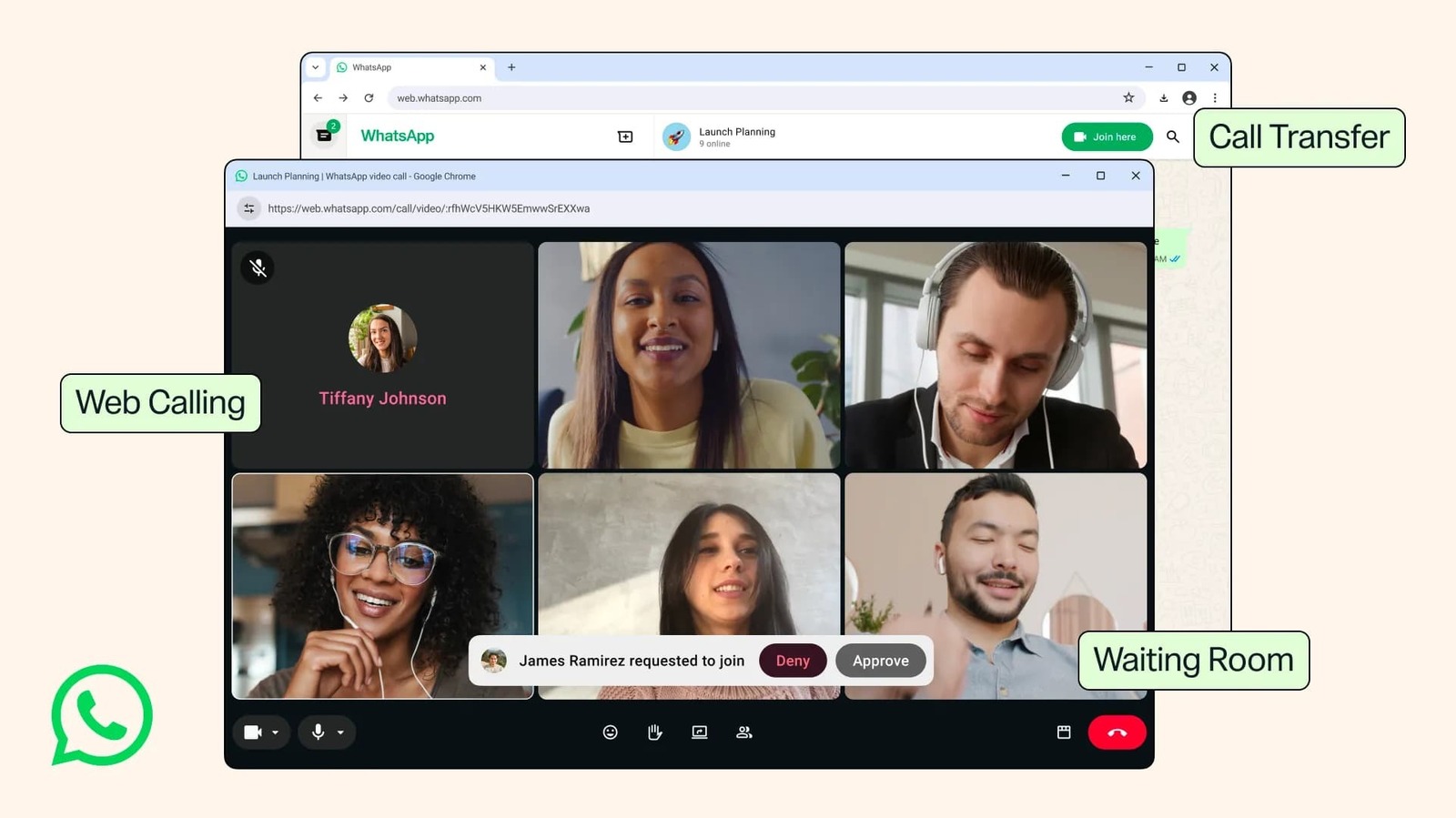
WhatsApp Web Gets Calls: Meta's Cross-Platform Play Begins
WhatsApp Web now supports encrypted calls, screen sharing, and call transfers. We dissect Meta's strategic shift and its implications for users and enterprise adoption in Europe.

Fox's $22 Billion Acquisition of Roku: A New Era in Streaming
Fox's acquisition of Roku for $22 billion marks a pivotal shift in streaming, merging content strength with platform reach.
The Byte-Pulse Newsroom is the editorial system that produces Byte-Pulse's daily tech news coverage. Each story is cross-referenced across 3+ independent outlets, drafted with AI assistance by the newsroom system (Drafter → Editor → Fact-Checker → Polisher), and reviewed by Serhat Er, Editor-in-Chief, before publication. We disclose AI augmentation openly. Editorial accountability stays with the named editor on every article. Tips: editorial@byte-pulse.net.
Don’t miss these
Xiaomi 16 Pro vs iPhone 18 Pro: Which Flagship Fits Your World?
Deciding between the Xiaomi 16 Pro and iPhone 18 Pro? We break down every spec and trade-off, so you can make the choice that's right for you.
Proton VPN vs NordVPN: Which One Earns Your Subscription?
A deep dive into Proton VPN and NordVPN, comparing their privacy, performance, features, and value, helping you make an informed decision.
Perplexity Pro vs ChatGPT Plus: Which AI Assistant Fits Your Workflow?
This guide lays out the strengths and approaches of Perplexity Pro and ChatGPT Plus, helping you identify which AI assistant aligns with your specific needs.

Pokémon TCG Movie Signals Strategic Media Pivot for The Pokémon Company
A new Pokémon movie focused on the TCG is coming in 2027, marking a strategic pivot for the franchise as it navigates massive global fan engagement and logistical challenges.

Apple's AI Pivot: Vision Pro Content Cut, Siri Rebuilt Amid Layoffs
Apple's latest layoffs signal a strategic pivot, dialing back high-cost Vision Pro content while re-tooling Siri for the AI era. What's next for Apple?
Motorola Edge 60 Ultra vs OnePlus 13: Which Android Flagship Fits Your Priorities?
Motorola Edge 60 Ultra and OnePlus 13 both aim for top-tier Android. We cut through the marketing to reveal the true differences, helping you choose.