AI Can Now Translate Brain Scans into Words
New method uses AI to interpret brain activity, getting closer to understanding thoughts. It's not mind-reading, researchers say.

Mind reading. It's always been pure science fiction. Until now? Well, not quite telepathy, but scientists have figured out a new way to reconstruct what people are imagining. They're using AI to turn brain activity into words.
Interpreting, Not Reading Minds
Tomoyasu Horikawa, the lead researcher, is quick to point out: this isn't about reading private thoughts. It's about interpreting the meaning behind brain signals. That's a key difference. It’s not about knowing your exact thoughts, but grasping the general ideas or images in your head. Professor Oliver Bendel, a business informatics and ethics expert in Switzerland, called the approach "methodologically convincing." He noted that thoughts aren't usually simple sentences. They're more like "meanings, relationships, and visual concepts" in the brain. And that's exactly what Horikawa aimed to decode.
Decoding Brain Activity with AI
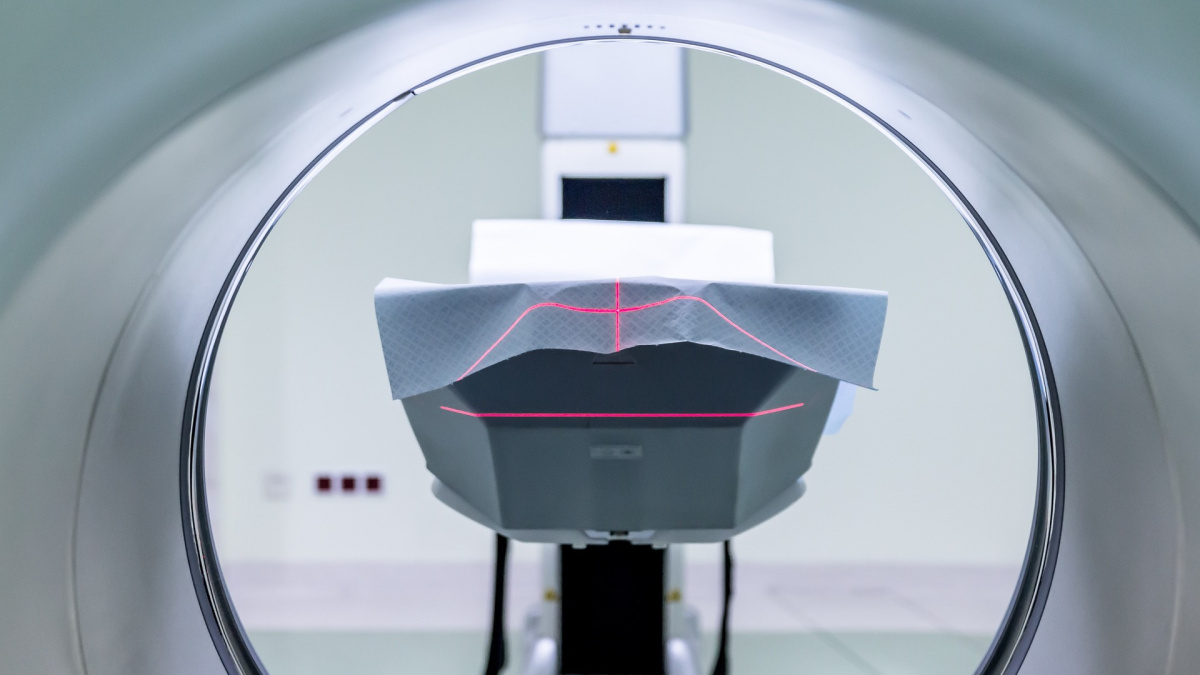
How does it work? Horikawa used functional magnetic resonance imaging (fMRI) to measure brain activity. Specifically, he looked at the Blood-Oxygen-Level-Dependent (BOLD) signal. This tells you how much oxygen blood is carrying to different brain areas. More oxygen, more activity. But the BOLD signal is tricky. It's influenced by lots of biological stuff and can take up to 10 seconds to show. It doesn't really capture subjective experience.
So, Horikawa had participants watch about 2,180 short videos while in the fMRI scanner. Think everyday scenes, animations, animal clips. That's roughly 17 hours of brain data per person. While watching, the volunteers also wrote down 20 descriptions for each video. The next step? Using the DeBERTa language model. This AI converted the descriptions into points in a high-dimensional space. This space represents meaning. Videos with similar content, like "a dog running on the beach" and "a dog playing by the sea," ended up close together in this space.
The real challenge was encoding the brain activity into that same meaning space. Here's the surprising part: a simple linear decoder worked better than a deep learning model. Horikawa called this finding "surprising and convincing." It suggests the decoded signal really reflects information from the brain's electrical activity. By translating brain activity into the same space as the video descriptions, the decoder linked it to what participants were seeing. Horikawa actually excluded the brain's language regions from the analysis. This makes it less likely the text was just picking up linguistic info already in the brain.
What This Means for You:
This tech is still early days. It can't read minds in real-time. But it's a major step in understanding how our brains process information. For consumers? It could mean more intuitive brain-computer interfaces down the line. Imagine new ways to communicate or control things for people with severe motor disabilities. Of course, it also brings up big ethical questions. Privacy. Potential misuse. Even in this limited form.
What's Still Unclear:
- Can it decode abstract or emotional thoughts? We don't know yet.
- Does it work across different languages or cultures?
- What's the long-term impact on how we understand consciousness?
- Will that linear decoder's success hold up with more people and situations?
Context: Neurotechnology is moving fast. There's serious money going into brain-computer interfaces (BCIs). European researchers, in places like Germany and Switzerland, are pushing this field forward. They often focus heavily on ethics and data privacy, which fits with rules like GDPR. This research builds on decades of work in neuroscience and AI, trying to connect neural signals with real meaning.
Why This Matters:
This study offers a fresh way to interpret brain activity. It could open doors to understanding cognition better. And develop advanced human-computer interactions. It shows AI can help decode complex neural patterns. We're getting closer to understanding the human mind.
Discuss this story
Got a take, a correction, or a follow-up tip? Reply where you read — we read everything.
Found an error? File a correction at /corrections. Substantive corrections are logged publicly.
One short email. The most important AI news, fact-checked, no fluff. Free, unsubscribe anytime.
More from AI
Perplexity Pro vs ChatGPT Plus: Which AI Assistant Fits Your Workflow?
This guide lays out the strengths and approaches of Perplexity Pro and ChatGPT Plus, helping you identify which AI assistant aligns with your specific needs.
Claude Pro vs Google Gemini Advanced: Which AI Assistant Deserves Your Subscription?
This definitive guide cuts through the marketing to give you a fair, balanced breakdown of Claude Pro and Gemini Advanced, letting you decide which AI best fits your workflow.
Claude Pro vs Google Gemini Advanced: Which AI Actually Earns Your Subscription?
Byte-Pulse lays out the real trade-offs between Claude Pro and Google Gemini Advanced, helping you pick the AI that fits your workflow, without picking for you.
ChatGPT Plus vs Google Gemini Advanced: Which AI Assistant Fits Your Workflow?
Deciding between ChatGPT Plus and Google Gemini Advanced? We break down the models, features, integrations, and pricing to help you align your choice with your specific priorities.
The Byte-Pulse Newsroom is the editorial system that produces Byte-Pulse's daily tech news coverage. Each story is cross-referenced across 3+ independent outlets, drafted with AI assistance by the newsroom system (Drafter → Editor → Fact-Checker → Polisher), and reviewed by Serhat Er, Editor-in-Chief, before publication. We disclose AI augmentation openly. Editorial accountability stays with the named editor on every article. Tips: editorial@byte-pulse.net.
Don’t miss these
Lenovo Legion Pro 7i 2026 vs Razer Blade 16 2026: Which Flagship Gaming Laptop Fits Your Future?
Deciding between the next-gen Lenovo Legion Pro 7i and Razer Blade 16 means weighing peak performance against premium design and a more compact footprint. We break down the trade-offs.
Asus ROG Phone 9 vs Sony Xperia 1 VII: Which Niche Flagship Earns Your Money?
Deciding between the gaming-focused ROG Phone 9 and the creator-centric Xperia 1 VII? This guide breaks down every spec to help you choose.
Proton VPN vs NordVPN: Which One Earns Your Subscription?
A deep dive into Proton VPN and NordVPN, comparing their privacy, performance, features, and value, helping you make an informed decision.

Pokémon TCG Movie Signals Strategic Media Pivot for The Pokémon Company
A new Pokémon movie focused on the TCG is coming in 2027, marking a strategic pivot for the franchise as it navigates massive global fan engagement and logistical challenges.
Razer Blade 16 (2026) vs ASUS ROG Zephyrus G16 (2026): Which Next-Gen Powerhouse Fits Your Workflow?
Deciding between Razer's premium Blade 16 2026 and ASUS's versatile ROG Zephyrus G16? We cut through the hype to lay out the real trade-offs.
Honor Magic 8 Pro vs Samsung Galaxy S26 Ultra: Which Future Flagship Fits Your Wallet and Workflow?
Deciding between the anticipated Honor Magic 8 Pro and Samsung Galaxy S26 Ultra? Our deep dive into expected specs and features provides the fair comparison you need.