Apple's Price Hike: Memory Costs Reshape Product Strategy
As Apple raises prices across its product lineup, the memory shortage reveals deeper industry issues.

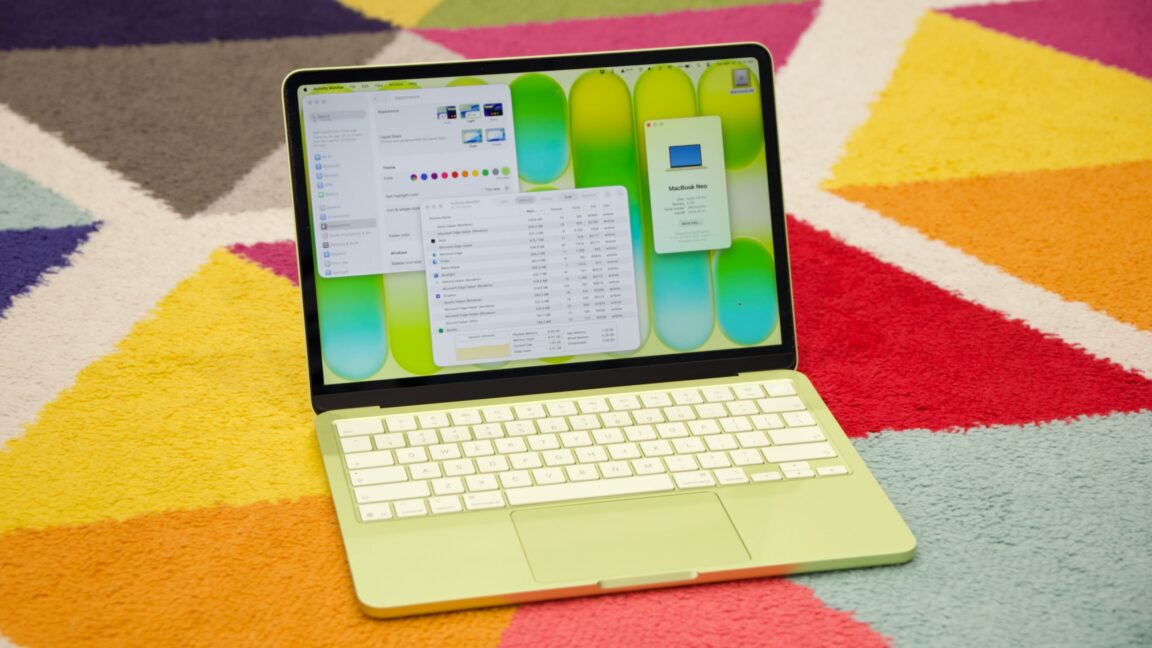
Apple’s Price Hike: Memory Costs Are Reshaping Its Products
Apple has recently announced price increases across a significant portion of its product lineup, sparking discussion among consumers and industry analysts alike. The entry-level MacBook Neo now starts at $699, a jump from its previous $599 price point. Similarly, the iMac has seen its cost rise from $1,299 to $1,499. The M5 MacBook Pro, which was previously priced at $1,699, now costs $1,999. Arguably, one of the most striking increases is the M3 Ultra Mac Studio, equipped with 96GB of memory, which now commands $5,299—up by $1,300. While iPads have also seen a price hike ranging from $100 to $200, iPhone prices have remained steady for the time being.
The Driving Force Behind Price Increases
Apple CEO Tim Cook has pointed to the escalating costs of memory as the primary reason behind these price hikes. In a conversation with The Wall Street Journal, Cook stated, “Unfortunately, price increases are unavoidable. We’re doing our best to mitigate the huge increases that are being passed to us, but the situation has become unsustainable.” This statement underscores a broader crisis facing the tech industry: a significant shortage of memory chips, exacerbated by a shift towards more profitable applications in data centers.
Having worked in hardware logistics for over a decade, I can attest that supply chain issues often indicate deeper industry movements. The current tech landscape is increasingly influenced by investments in artificial intelligence, causing chip manufacturers to prioritize memory for data centers over consumer electronics. This prioritization is creating supply shortages and driving up costs, which in turn, are reflected in higher prices for a range of consumer electronics. Apple, along with other companies, is now navigating a complex balancing act between maintaining competitive pricing and absorbing increased costs.
Consumer Electronics Crisis: A Broader Perspective
The memory crisis is not an isolated problem for Apple; it is a widespread issue affecting the entire tech industry. Rising memory prices have led to increased costs for consumer electronics and, in some cases, have even resulted in the discontinuation of certain products. For instance, Apple quietly removed a memory-intensive version of its M3 Ultra Mac, which boasted 512GB of memory, from its store in March—likely due to unsustainable procurement costs.
For consumers, these developments pose a critical question: are they willing to absorb these price increases, or will they gravitate towards brands that manage to keep prices competitive, potentially at the expense of performance? In a tech market where innovation is frequently linked to affordability, Apple’s pricing strategy risks alienating long-time customers who recall more accessible pricing and upgrade paths.
Historical Context: A Trip Down Memory Lane
For veteran Apple users, the current price increases may evoke memories of the PowerPC era, when the company was notorious for high prices on RAM and memory upgrades. The pricing dynamics of technology often follow a cycle, with manufacturers raising prices as they innovate and enhance performance. However, there are times when this cycle encounters a barrier. During the PowerPC days, consumers frequently faced the difficult decision of paying a premium for upgrades or settling for less capable machines—a dilemma that is resurfacing today.
The Competitive Landscape: Where Do Other Brands Stand?
As this pricing conundrum unfolds, it’s vital to consider how Apple’s competitors are managing. Companies like Dell, HP, and Lenovo are also experiencing rising component costs, but their responses have varied. Dell’s XPS lineup has seen modest price adjustments, while HP has focused on keeping entry-level models affordable, even if this entails cutting some features. This strategy enables them to retain a strong position in a market where price sensitivity is growing.
Compared to: Previous Models and Competitors
To put Apple’s current pricing strategy in perspective, it is helpful to compare these products with their predecessors and competitors. The MacBook Neo, now priced at $699, can be compared with Dell’s Inspiron series, which offers similar specifications for approximately $649. Meanwhile, HP’s Pavilion series offers aggressive pricing in the entry-level segment, maintaining a sub-$600 price point for comparable models.
For the iMac, which has increased to $1,499, competitors like Lenovo’s all-in-one desktops offer similar performance starting around $1,200, depending on configurations. The competitive pressure is particularly evident in the high-performance laptop segment. The M5 MacBook Pro at $1,999 faces competition from Dell’s XPS 15, which starts at around $1,749, and offers similar specifications but with potentially more customization options.
A Real Daily-Use Scenario
To better understand the implications of these price changes, consider a professional photographer who relies on Apple products for editing and managing large volumes of high-resolution images. With the recent price increase, upgrading to the latest iMac would require an additional $200 compared to last year. For a professional who needs to invest in multiple devices, these added costs can quickly accumulate. The photographer might consider whether the new features and performance improvements justify the higher cost or if it is worth exploring alternatives that offer similar performance at a lower price.
What This Means for You
For consumers, Apple's price increases highlight the importance of assessing value versus cost. While Apple products are renowned for their design, build quality, and ecosystem integration, these benefits come at a higher price. If you are considering purchasing a new Apple product, it is crucial to weigh whether the incremental improvements and brand prestige justify the increased cost. Alternatively, exploring options from other brands that offer competitive performance at a lower price point might be a prudent decision, especially if budget constraints are a consideration.
What's Still Unclear
While Apple attributes its price hikes to memory costs, several questions remain unanswered. Are these increases a temporary measure, or will they become the new standard? How will consumers respond over time? Will there be a shift in brand loyalty as customers explore more affordable alternatives? These uncertainties add an element of unpredictability to the consumer electronics market.
Closing Take
The memory crisis and Apple's price adjustments raise important questions about the future of consumer electronics. As a leader in innovation, Apple's move could be perceived as focusing more on maintaining margins than on providing consumer value. In a fiercely competitive industry, staying attuned to consumer sentiment and market trends is crucial. If prices continue to rise, we might witness a significant shift in consumer behavior, with affordability and accessibility becoming increasingly important considerations. As we navigate these changes, the impact of memory costs on the tech industry will likely be felt for years to come.
Discuss this story
Got a take, a correction, or a follow-up tip? Reply where you read — we read everything.
Found an error? File a correction at /corrections. Substantive corrections are logged publicly.
One short email. The most important Hardware news, fact-checked, no fluff. Free, unsubscribe anytime.
More from Hardware

Apple's AI Pivot: Vision Pro Content Cut, Siri Rebuilt Amid Layoffs
Apple's latest layoffs signal a strategic pivot, dialing back high-cost Vision Pro content while re-tooling Siri for the AI era. What's next for Apple?

Povasee A30 Jump Starter: A 50-Euro Deal With 5,000A Claims Under Scrutiny
The Povasee A30 jump-start power bank, on offer at Amazon for under 50 Euros, claims 5,000A peak current. We scrutinize this deal against real-world expectations.

Ugreen's 200W Charger: Powerhouse or Marketing Hype?
We analyze the Ugreen 200W charger's technical prowess, real-world utility, and the Amazon deal, highlighting its strengths and limitations

Victorinox Amazon Deals: Tactics or True Value?
Byte-Pulse examines Amazon's Victorinox deals, dissecting the true value of the Swiss Card Lite and Synergy X Alox against market trends.
The Byte-Pulse Newsroom is the editorial system that produces Byte-Pulse's daily tech news coverage. Each story is cross-referenced across 3+ independent outlets, drafted with AI assistance by the newsroom system (Drafter → Editor → Fact-Checker → Polisher), and reviewed by Serhat Er, Editor-in-Chief, before publication. We disclose AI augmentation openly. Editorial accountability stays with the named editor on every article. Tips: editorial@byte-pulse.net.
Don’t miss these
OnePlus 14 vs Samsung Galaxy S26: Which Flagship Earns Your Hard-Earned Cash?
Deciding between the OnePlus 14 and Samsung Galaxy S26? This guide cuts through the noise, laying out the facts so you can pick the perfect phone for your priorities.
Proton VPN vs NordVPN: Which One Earns Your Subscription?
A deep dive into Proton VPN and NordVPN, comparing their privacy, performance, features, and value, helping you make an informed decision.
Perplexity Pro vs ChatGPT Plus: Which AI Assistant Fits Your Workflow?
This guide lays out the strengths and approaches of Perplexity Pro and ChatGPT Plus, helping you identify which AI assistant aligns with your specific needs.

Pokémon TCG Movie Signals Strategic Media Pivot for The Pokémon Company
A new Pokémon movie focused on the TCG is coming in 2027, marking a strategic pivot for the franchise as it navigates massive global fan engagement and logistical challenges.

D23 2026: Disney's Content Deluge Sparks Questions About Strategy
Byte-Pulse cuts through D23 hype: We dissect Disney's ambitious content slate, from Simpsons: Hit & Run to Ahsoka season 2, and question the real-world implications and European market strategy.
Nothing Phone 4 vs Google Pixel 11: Looking Ahead to the Next Generation
A speculative deep dive into what the Nothing Phone 4 and Google Pixel 11 might bring, offering a balanced look at their likely strengths and trade-offs for future buyers.