Cisco Cloud Control: Streamlining IT Management with a Unified Interface
Bridging Network, Security, and Compute for Streamlined Operations

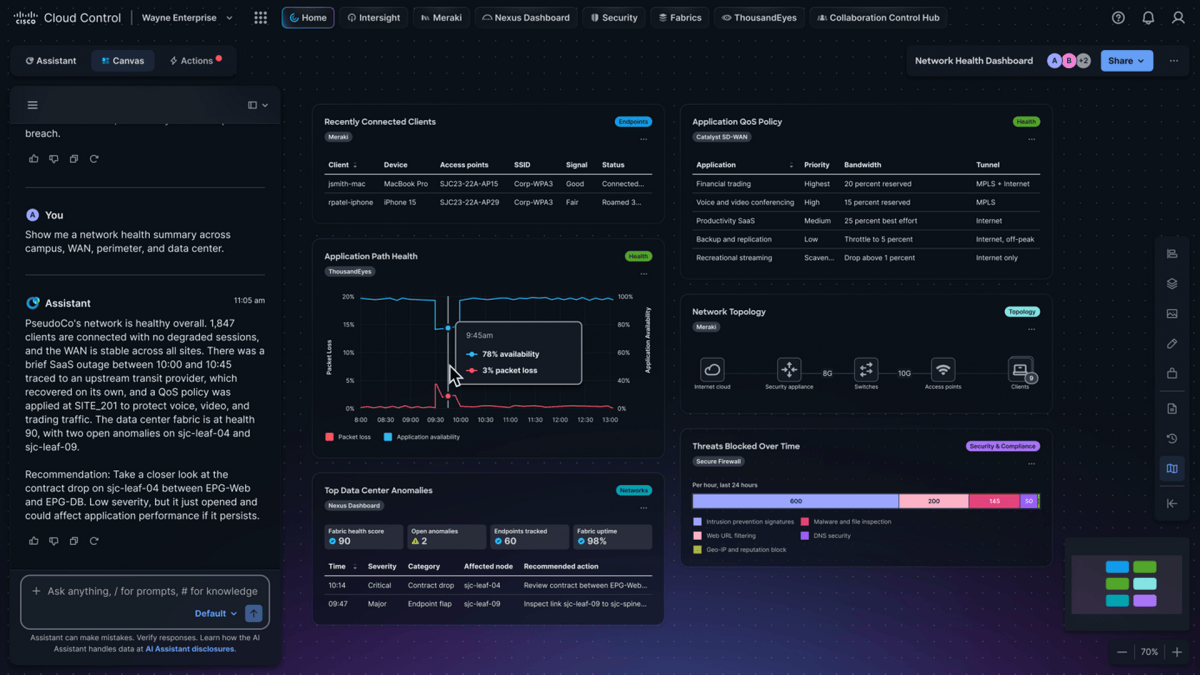
Cisco Cloud Control: Unifying IT Management Under One Interface
Cisco's new platform, Cisco Cloud Control, aims to simplify IT management by bringing together networks, security, compute, observability, and collaboration into a single interface. This could change how IT infrastructures are monitored and managed. But there are challenges that come with such a broad vision.
The Concept of AgenticOps
Cisco markets Cloud Control as an AgenticOps platform. It suggests a more autonomous management layer that oversees multiple IT environments at once. This centralized interface allows users to access real systems, ensuring changes don’t jeopardize critical operations. Cisco has introduced guardrails to help reduce risks tied to configurations and updates.
Anyone who's worked in IT knows that protecting systems is easier said than done, especially in complex environments. A one-size-fits-all strategy might not cut it. The guardrails are intended to act as a safety net, but the effectiveness of these safety measures will heavily depend on their adaptability and responsiveness to the unique configurations of each IT environment.
Real-world Application
Imagine a multinational corporation with offices spread across Europe. Each location has its own IT setup tailored to local needs. With Cisco Cloud Control, IT managers could theoretically oversee all these systems from a single dashboard, reducing the need for localized IT interventions. However, the challenge lies in the platform's ability to adapt to the diverse needs of each branch without compromising the overall system integrity.
Digital Twins and the Promise of Data Fabric
Looking ahead, Cisco plans to add a digital twin feature. This would simulate changes before applying them to live systems. It's a good move for reducing operational risks, but it raises questions about the data's reliability. The backbone for this initiative is the Cisco Data Fabric, built on Splunk. While Splunk is known for its data handling, we don't know yet how well the Data Fabric will support real-time operations.
Daily Use Case
Consider an IT manager responsible for rolling out new security protocols. With the digital twin feature, they could simulate the impact of these changes across various departments before actual implementation, identifying potential conflicts or disruptions beforehand. This could save countless hours in troubleshooting and provide a smoother transition.
Third-Party Integrations and Ecosystem Development
Cisco’s commitment to third-party integrations is notable. The marketplace offers over 50 integrations, including big names like AWS, Google, and Microsoft. This is crucial for organizations using various vendors.
But how well will these integrations work? Vendors often promise smooth compatibility, but reality can be different. Anyone familiar with hardware logistics knows the challenges of connecting diverse systems. If Cisco can solve these issues, it could gain a significant edge.
Compared To: VMware and Microsoft
When comparing Cisco Cloud Control to offerings from competitors like VMware's vRealize Operations and Microsoft's Azure Monitor, differences emerge. VMware focuses on virtualization management, while Microsoft integrates closely with Azure services. Cisco aims for a broader solution that covers multiple domains. Pricing details are still unclear, but if Cisco can compete effectively, it might carve out a solid niche.
VMware's platform excels in environments heavily reliant on virtualization, offering deep insights and automated operations tailored to virtual networks. On the other hand, Azure Monitor seamlessly integrates with Microsoft's ecosystem, providing extensive monitoring capabilities but primarily within the Azure cloud services. Cisco's broader approach could appeal to organizations seeking a more comprehensive solution that doesn’t lock them into a specific vendor's ecosystem.
AI-Powered Tools for Enhanced Operations
Cisco has rolled out AI-driven features aimed at improving user experience. One of these is the Agent Builder, which lets customers create their own agents using natural language. This is a neat feature, but there are concerns about the learning curve and the quality of AI outputs. The platform also includes an App Builder, adding more complexity. Customization sounds great, but less experienced users might struggle with both the AI and the underlying tech.
AI in Practical Scenarios
Consider an IT department tasked with developing a custom application to monitor employee network usage for security purposes. The Agent Builder could potentially allow them to create a bespoke solution without extensive coding knowledge, speeding up the deployment process. However, the success of such an endeavor would largely depend on the intuitiveness of the AI and the clarity of its outputs.
The Promise of Cisco IQ Services
Among the suite of tools is Cisco IQ Services, designed to inventory deployed components. This feature offers insights into end-of-life situations, helping IT admins manage hardware lifecycles better. The AI assistant that generates reports on device replacements shows Cisco's push for operational efficiency.
Automating inventory and lifecycle management isn’t new; past attempts from various vendors have often resulted in incomplete solutions. If Cisco can deliver a reliable tool, it would mark a significant advancement in IT asset management. For instance, a company using Cisco IQ Services could proactively replace hardware approaching its end-of-life, minimizing downtime and ensuring continuous operational efficiency.
Security Advisory Assistant: Time-Saving Potential
Another interesting feature is the Security Advisory Assistant. It sifts through numerous security advisories and provides actionable insights. In larger setups, this could save time and resources. But will it be effective? That depends on how well it adapts to the specific configurations of different systems.
What This Means for You
For IT professionals and decision-makers, Cisco Cloud Control offers an interesting proposition for a unified management platform. Its success depends on effective deployment and real-world performance, which we’ll need to see validated through case studies and user feedback.
The potential to streamline operations, reduce redundancies, and enhance security protocols is appealing. However, the initial rollout might demand significant adjustments and learning, especially for teams unfamiliar with Cisco's ecosystem. Organizations would benefit from pilot testing the platform in controlled environments to gauge its efficacy before a full-scale implementation.
What's Still Unclear
Despite the buzz around this launch, some key questions linger. How will Cisco tackle the integration challenges with third-party tools? Will the AI features be user-friendly without being overwhelming? Most importantly, can Cisco ensure its security measures are robust enough against advanced threats? Until these issues are addressed, it's fair to remain skeptical.
What Needs Clarity
- Integration Efficiency: While the promise of seamless third-party integrations is appealing, real-world efficiency remains to be seen. Will Cisco provide dedicated support to iron out potential issues?
- AI User Experience: The user-friendliness of AI-driven tools is critical. Will the AI adapt to varying user expertise levels, or will it alienate less tech-savvy users?
- Security Robustness: In an age of evolving cyber threats, the robustness of Cisco's security measures will be under scrutiny. How comprehensive are the threat detection and response capabilities?
Why This Matters
Cisco Cloud Control could change how organizations handle IT management. Offering a single interface that integrates various functions addresses a real pain point. But success will hinge on how well it deals with the complexities of real-world implementation. Moving forward, it’s crucial to monitor the platform’s performance and how it adapts to the changing needs of IT operations.
Ultimately, the introduction of Cisco Cloud Control marks a significant step towards more integrated and efficient IT management solutions. The journey from concept to widespread adoption will depend on Cisco's ability to address existing uncertainties and deliver on its promises of innovation and reliability. Organizations looking to modernize their IT management practices would do well to keep a close watch on how this platform evolves and performs in real-world settings.
Discuss this story
Got a take, a correction, or a follow-up tip? Reply where you read — we read everything.
Found an error? File a correction at /corrections. Substantive corrections are logged publicly.
One short email. The most important Software news, fact-checked, no fluff. Free, unsubscribe anytime.
More from Software
Proton VPN vs NordVPN: Which One Earns Your Subscription?
A deep dive into Proton VPN and NordVPN, comparing their privacy, performance, features, and value, helping you make an informed decision.
Notion vs Obsidian: Which Knowledge Hub Fits Your Workflow?
Deciding between Notion and Obsidian? We break down the core differences in philosophy, data ownership, collaboration, and extensibility to help you choose.
Proton Mail vs Gmail: Which Email Service Fits Your Digital Life?
Unsure about Proton Mail vs Gmail? We break down security, features, pricing, and daily use so you can confidently pick the email service that aligns with your priorities.

Apple's Beta Updates: Enhancements, Challenges, and Future Outlook
Exploring the latest beta updates from Apple for tvOS, macOS, and visionOS, including key features and performance issues.
The Byte-Pulse Newsroom is the editorial system that produces Byte-Pulse's daily tech news coverage. Each story is cross-referenced across 3+ independent outlets, drafted with AI assistance by the newsroom system (Drafter → Editor → Fact-Checker → Polisher), and reviewed by Serhat Er, Editor-in-Chief, before publication. We disclose AI augmentation openly. Editorial accountability stays with the named editor on every article. Tips: editorial@byte-pulse.net.
Don’t miss these
NVIDIA RTX 4070 Ti Super vs. RTX 5070 (Rumored): The 'Buy Now or Wait' Dilemma
Deciding between a powerful current-gen GPU and the promise of next-gen performance requires a clear-eyed look at immediate needs versus future potential. This guide lays out the trade-offs.
Asus ROG Phone 9 vs Sony Xperia 1 VII: Which Niche Flagship Earns Your Money?
Deciding between the gaming-focused ROG Phone 9 and the creator-centric Xperia 1 VII? This guide breaks down every spec to help you choose.
Perplexity Pro vs ChatGPT Plus: Which AI Assistant Fits Your Workflow?
This guide lays out the strengths and approaches of Perplexity Pro and ChatGPT Plus, helping you identify which AI assistant aligns with your specific needs.

Pokémon TCG Movie Signals Strategic Media Pivot for The Pokémon Company
A new Pokémon movie focused on the TCG is coming in 2027, marking a strategic pivot for the franchise as it navigates massive global fan engagement and logistical challenges.
RTX 5060 Ti vs RX 9060 XT: Which Mid-Range Powerhouse Fits Your Rig?
Deciding between the rumored RTX 5060 Ti and RX 9060 XT? This guide cuts through the noise to highlight the real-world trade-offs for gamers and creators.
Honor Magic 8 Pro vs Samsung Galaxy S26 Ultra: Which Future Flagship Fits Your Wallet and Workflow?
Deciding between the anticipated Honor Magic 8 Pro and Samsung Galaxy S26 Ultra? Our deep dive into expected specs and features provides the fair comparison you need.