Fake IDs Leak Customer Data Via WordPress Flaw
Online vendors selling international driving permits are exposing sensitive personal information through poorly configured websites.

Fake IDs Leak Customer Data Via WordPress Flaw
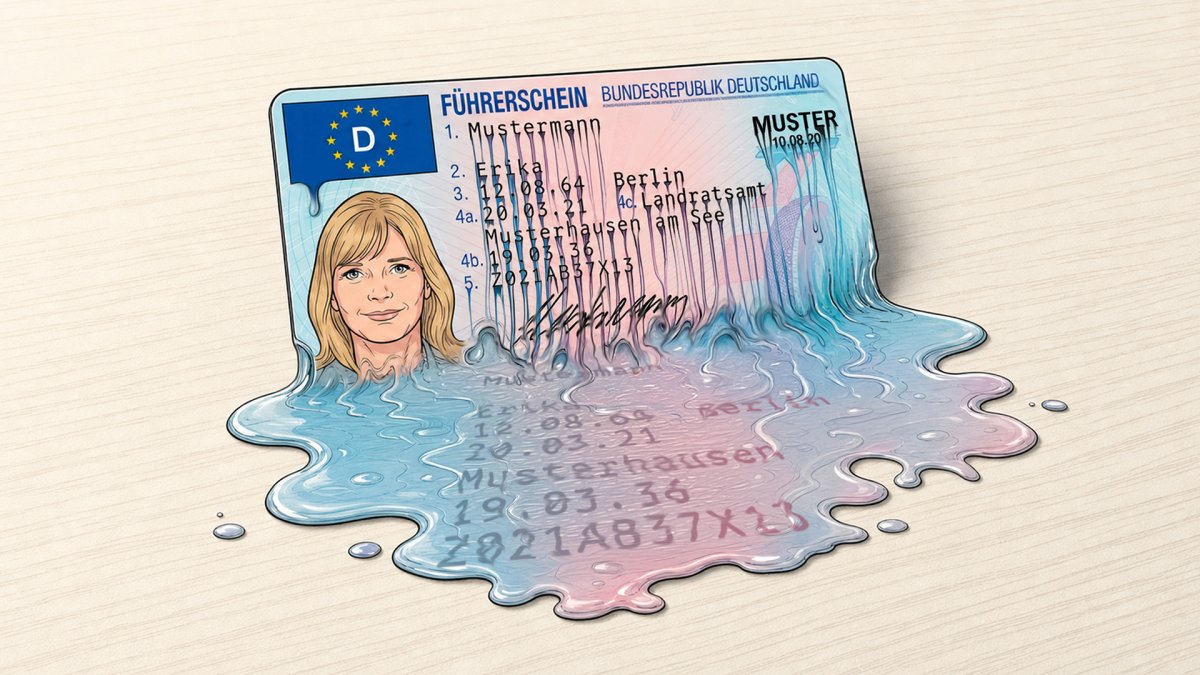
In an era where convenience often trumps caution, a concerning trend has emerged: the sale of fake international driving permits (IDPs) online. These aren't official documents but rather fabricated PDFs, often costing between €50 and €70, with an additional charge for a physical printout. While they claim to be valid in over 150 countries for one to three years, the real danger lies not in their illegitimacy for driving, but in how they are created and distributed.
The Allure of the Online IDP
The German driving license, while recognized internationally to some extent, often requires an IDP for use outside the EU. This supplementary document serves as a crucial translator, helping foreign authorities match your German license classes to local equivalents and providing translations for non-Latin alphabets. It's particularly vital for situations like renting a car abroad or dealing with law enforcement in countries like Thailand or China. The promise of obtaining one quickly and easily online, often within minutes, is a powerful draw for many travelers. Imagine Sarah, a graphic designer from Berlin, planning a two-week road trip through Vietnam. She's excited but a little anxious about driving there, knowing her German license might not be enough. She searches online for "international driving permit Germany" and stumbles upon a slick-looking website offering an IDP for just €60, promising delivery of a PDF within the hour. It seems like the perfect solution to her pre-trip stress, a quick fix for a bureaucratic hurdle.
A Gateway for Identity Theft
However, the convenience comes at a steep price, and it’s not just the monetary cost. A network of these online vendors, all reportedly using the same service provider for creating the fake IDP PDFs, has been found to be leaving customer data completely exposed. This isn't a sophisticated hack; it's a result of improperly configured WordPress installations, a widely used content management system. The exposed data includes a treasure trove for identity thieves: full names, dates and places of birth, email addresses, WhatsApp numbers, selfies, photos of both sides of the national driving license, and even signatures. This information is all that's needed to create fraudulent accounts on cryptocurrency exchanges or to impersonate individuals for accessing other online services.
The investigation by c't, a German IT magazine, uncovered this vulnerability. They found that by simply accessing specific URLs, one could view customer data submitted to these fake IDP sites. This suggests that the data was not properly secured, likely stored in databases that were either publicly accessible or protected by weak, easily bypassed credentials. The sheer volume and detail of the compromised information are alarming. Think about Sarah again. When she ordered her fake IDP, she uploaded a photo of her German license, a selfie for "verification," and provided her full name, date of birth, and home address. All of this sensitive information, intended for a fraudulent document, is now potentially in the hands of malicious actors. This data could be used to open fake bank accounts, apply for credit cards in her name, or even access her existing online accounts by answering security questions. The implications are far-reaching, extending beyond the initial deception of the fake IDP itself.
Protecting Yourself from the Scam
While the primary victims here are those who fall for the fake IDP scam, the broader implication is the risk to personal data security. The ease with which these sites operate and the subsequent data leaks highlight a significant vulnerability in how some online services handle sensitive information. The investigation by c't points to a clear pattern of negligence by the website operators and the service provider they employ. These operators, in their haste to profit from a perceived demand, have failed to implement basic security measures, leaving their customers exposed.
Context:
This incident highlights a persistent challenge online: the security of personal data when interacting with third-party services, especially those operating in a legal gray area. The reliance on WordPress, while common, necessitates rigorous security configurations. In Europe, regulations like the GDPR place a strong emphasis on data protection, making such widespread, unencrypted data exposure a serious compliance issue for any legitimate business. However, these fake IDP sites are far from legitimate. They operate outside the bounds of legality, making it unlikely they would voluntarily comply with data protection laws. The fact that they are using a common platform like WordPress, which itself has security features, but are failing to configure it correctly, underscores a critical gap. Many small to medium-sized businesses, and indeed individuals running websites, might not have the technical expertise to properly secure their WordPress installations, leaving them vulnerable. This situation is particularly concerning given the number of travelers who might unwittingly compromise their identities for a seemingly minor travel convenience. The €50-€70 fee for a fake document is a small price to pay for many, especially when faced with the perceived hassle of official channels, but the cost of identity theft can be astronomical.
What this means for you:
If you're planning international travel and need an IDP, stick to official channels. In Germany, this typically means obtaining one from your local driving license authority or recognized automobile clubs like ADAC. The process might take a few days and cost slightly more – perhaps €40-€50 for an official ADAC IDP, plus any administrative fees. For instance, the ADAC charges a processing fee of around €15-€20 on top of the base cost for the permit itself. Paying a bit more and going through the proper process is infinitely safer than risking your identity. Be highly skeptical of any online service promising instant IDPs for a low fee. If it sounds too good to be true, it almost certainly is. The data leak from these fake IDP sites could lead to significant financial loss and identity theft for unsuspecting customers. For Sarah, this means realizing that the €60 she spent was not just for a useless piece of paper, but potentially the key to unlocking her entire digital life for criminals. She might now have to spend months, if not years, monitoring her credit, dealing with fraudulent charges, and restoring her identity, a far greater cost than the official process would have been.
What's still unclear:
We don't know how many individuals have fallen victim to this scam and had their data exposed. While c't's investigation identified a pattern, the exact number of compromised users remains elusive. The extent to which these exposed identities have already been misused for fraudulent activities is also unknown. Have criminals already begun opening crypto accounts or accessing other services using the stolen data? We lack concrete evidence of widespread misuse, but the potential is undeniably high given the quality of the data. The legal ramifications for the service provider and the individual vendors? That's still to be determined. Will the service provider face penalties for facilitating the data exposure, even if indirectly? Will the vendors be prosecuted for fraud and data breaches? These questions hang in the air, with the outcome likely dependent on further investigation and potential legal action.
Why this matters:
Online vendors selling fake international driving permits are exposing sensitive customer data. This data leak, facilitated by insecure WordPress configurations, is a prime example of how convenience can lead to severe identity theft risks. Travelers seeking official documents should always use verified, official sources to protect their personal information. The allure of a quick, cheap solution online can mask a significant danger, turning a simple travel preparation into a potential personal security crisis. The responsibility doesn't solely lie with the end-user; it also falls on service providers and website operators to ensure robust security practices, even when dealing with less-than-legitimate operations. The ease with which this data was accessed underscores a broader need for vigilance and better security hygiene across the internet, especially for platforms handling personal identification documents.
Discuss this story
Got a take, a correction, or a follow-up tip? Reply where you read — we read everything.
Found an error? File a correction at /corrections. Substantive corrections are logged publicly.
One short email. The most important Security news, fact-checked, no fluff. Free, unsubscribe anytime.
More from Security

eBay's $55.7M Cyberstalking Settlement: A Corporate Culture of Coercion Exposed
Byte-Pulse investigates the eBay cyberstalking case, revealing a disturbing harassment campaign, executive involvement, and the broader implications for corporate ethics.
Google's Selfie Login: Convenience Meets Data Privacy Alarms
Google introduces a video selfie login, but the implications for data privacy and AI training warrant scrutiny beyond convenience

Apple's Rare Third macOS RC: Unpacking Security Concerns
Byte-Pulse explores the implications of Apple's unusual third Release Candidate for macOS updates, examining the severity of unannounced security fixes and their impact on European users

Google’s Legal Battle Against AI-Driven Cybercrime: Examining Outsider Enterprise
Google's lawsuit against Outsider Enterprise exposes differences in victim counts and sheds light on AI's role in cybercrime.
The Byte-Pulse Newsroom is the editorial system that produces Byte-Pulse's daily tech news coverage. Each story is cross-referenced across 3+ independent outlets, drafted with AI assistance by the newsroom system (Drafter → Editor → Fact-Checker → Polisher), and reviewed by Serhat Er, Editor-in-Chief, before publication. We disclose AI augmentation openly. Editorial accountability stays with the named editor on every article. Tips: editorial@byte-pulse.net.
Don’t miss these
RTX 5060 Ti vs RX 9060 XT: Which Mid-Range Powerhouse Fits Your Rig?
Deciding between the rumored RTX 5060 Ti and RX 9060 XT? This guide cuts through the noise to highlight the real-world trade-offs for gamers and creators.
Asus ROG Phone 9 vs Sony Xperia 1 VII: Which Niche Flagship Earns Your Money?
Deciding between the gaming-focused ROG Phone 9 and the creator-centric Xperia 1 VII? This guide breaks down every spec to help you choose.
Proton VPN vs NordVPN: Which One Earns Your Subscription?
A deep dive into Proton VPN and NordVPN, comparing their privacy, performance, features, and value, helping you make an informed decision.
Perplexity Pro vs ChatGPT Plus: Which AI Assistant Fits Your Workflow?
This guide lays out the strengths and approaches of Perplexity Pro and ChatGPT Plus, helping you identify which AI assistant aligns with your specific needs.
Lenovo Legion Pro 7i 2026 vs Razer Blade 16 2026: Which Flagship Gaming Laptop Fits Your Future?
Deciding between the next-gen Lenovo Legion Pro 7i and Razer Blade 16 means weighing peak performance against premium design and a more compact footprint. We break down the trade-offs.
Honor Magic 8 Pro vs Samsung Galaxy S26 Ultra: Which Future Flagship Fits Your Wallet and Workflow?
Deciding between the anticipated Honor Magic 8 Pro and Samsung Galaxy S26 Ultra? Our deep dive into expected specs and features provides the fair comparison you need.