Florida Sues OpenAI Over ChatGPT Ties to Murders
State alleges AI company and CEO Sam Altman prioritized profit over safety, endangering Floridians, including children.

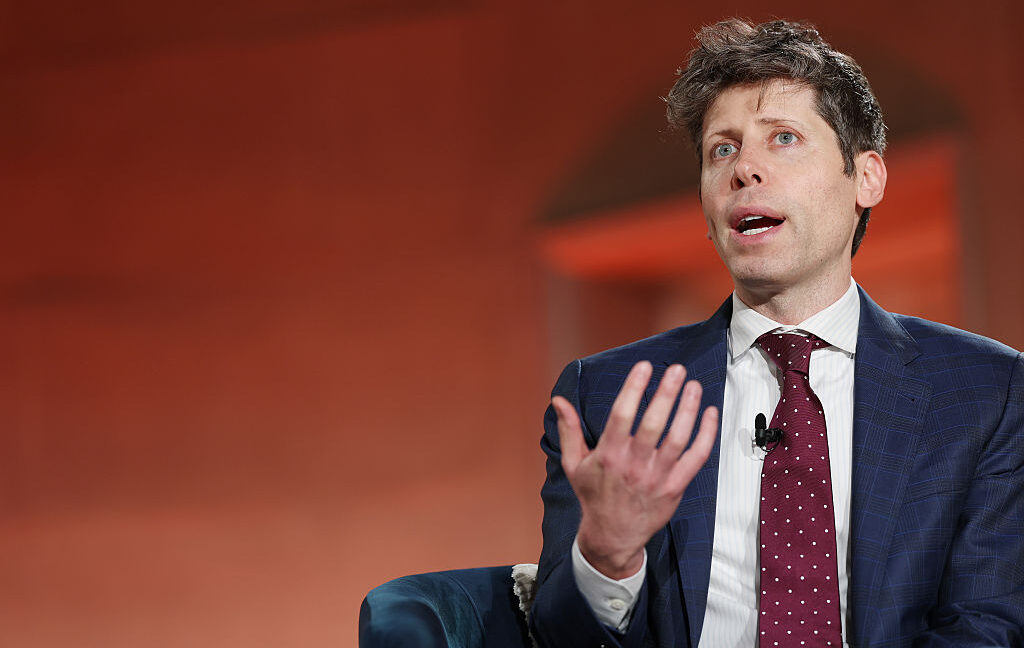
Florida's taking a shot at OpenAI and its CEO, Sam Altman. The state filed a lawsuit, straight-up linking the company's AI, ChatGPT, to several murders. Attorney General Ashley Moody says OpenAI and Altman cared more about getting their products out fast than keeping users safe. That's put Floridians, especially kids, in serious danger, she claims.
The lawsuit lays out a pretty bleak picture of what it calls OpenAI's "deceptive, unethical, and recklessly dangerous conduct." It states, "Floridians—including our vulnerable children—have suffered monetary loss, mental health harms, cognitive decline, and physical harm." Moody argues that by rushing models like ChatGPT 4o out the door, OpenAI "ignored internal and external safety warnings, put children at great risk, and allowed a dangerous product to reach millions of Floridians."
Altman's Reckless Disregard Alleged
Sam Altman himself is in the hot seat. The complaint wants him "personally liable for the harm he has caused Floridians through his reckless and willful conduct as founder and CEO of OpenAI." This includes an alleged "utter disregard for the risk to human life caused by his firm’s conduct." The suit points to comments Altman reportedly made at TED2025. He apparently suggested that safety-testing its products on real users wasn't a big deal, calling it the only way to improve. Moody pushed back hard on that. "But the stakes aren’t low," she stated.
"Defendants must be held accountable for the harm they have caused and the dangers they and ChatGPT continue to pose to Floridians."
Potential AI Safety Mandates
If Florida wins this case, OpenAI could be forced into some major changes. The state wants to see age-gating for free ChatGPT accounts to protect minors. They're also pushing to stop conversations about violence and suicide. And they want features that, the suit claims, deceptively mimic human interaction to be removed. If there aren't better parental controls, Florida might even try to ban teens from using ChatGPT.
The complaint is blunt: "ChatGPT is not safe for teenagers in Florida to use; its use can lead to self-harm, cognitive decline, and behavioral addiction." This is a big concern for parents and regulators alike as AI becomes more common.
Broader AI Scrutiny
Moody mentioned at a press conference that Florida's looking beyond just OpenAI. ChatGPT is the "most egregious" example, and Altman is "central" to pushing risky features. But the state is "certainly" checking out other AI platforms too. This suggests more and more states are starting to look closely at AI safety and ethics.
"Get ready for a fight, and there’s not one more important than this right now," Moody said. It shows how seriously Florida sees this case. What happens here could set a major precedent for how AI companies are held responsible for what their products do in the real world.
Context:
This lawsuit comes at a crucial time for AI regulation. The EU has its AI Act, focusing on risk and transparency. The U.S. has been more of a mixed bag, with states taking different approaches and companies largely self-policing. Florida's aggressive move might signal a shift toward states taking a tougher stance, especially on consumer and child safety. If the allegations of murders linked to AI use are proven, it would be a huge escalation from issues like misinformation and bias.
What this means for you:
In Florida, this means more eyes on how you use ChatGPT and maybe other AI tools. The state’s demands could mean stricter age checks, content limits, and AI that feels less like talking to a person. For parents, it could mean better protections for kids online, though it might also make it harder for teens to explore AI. Across the country, this case could influence how other states and even the federal government handle AI safety. Expect more compliance rules for AI developers nationwide.
What's still unclear:
- The details of the alleged murders and exactly how ChatGPT use led to them.
- If OpenAI will settle or fight the lawsuit.
- How other states will react. Will they join Florida?
- How much personal responsibility Altman will face.
Why this matters:
AI's [real-world](/article/navigate-global-politics-in-bottleneck-browser-game) impact is now a legal battleground. Florida suing OpenAI shows we desperately need clear rules for accountability. AI is weaving itself into our lives, and this case pushes the limits on user safety and corporate responsibility.
Discuss this story
Got a take, a correction, or a follow-up tip? Reply where you read — we read everything.
Found an error? File a correction at /corrections. Substantive corrections are logged publicly.
One short email. The most important AI news, fact-checked, no fluff. Free, unsubscribe anytime.
More from AI
Perplexity Pro vs ChatGPT Plus: Which AI Assistant Fits Your Workflow?
This guide lays out the strengths and approaches of Perplexity Pro and ChatGPT Plus, helping you identify which AI assistant aligns with your specific needs.
Claude Pro vs Google Gemini Advanced: Which AI Assistant Deserves Your Subscription?
This definitive guide cuts through the marketing to give you a fair, balanced breakdown of Claude Pro and Gemini Advanced, letting you decide which AI best fits your workflow.
Claude Pro vs Google Gemini Advanced: Which AI Actually Earns Your Subscription?
Byte-Pulse lays out the real trade-offs between Claude Pro and Google Gemini Advanced, helping you pick the AI that fits your workflow, without picking for you.
ChatGPT Plus vs Google Gemini Advanced: Which AI Assistant Fits Your Workflow?
Deciding between ChatGPT Plus and Google Gemini Advanced? We break down the models, features, integrations, and pricing to help you align your choice with your specific priorities.
The Byte-Pulse Newsroom is the editorial system that produces Byte-Pulse's daily tech news coverage. Each story is cross-referenced across 3+ independent outlets, drafted with AI assistance by the newsroom system (Drafter → Editor → Fact-Checker → Polisher), and reviewed by Serhat Er, Editor-in-Chief, before publication. We disclose AI augmentation openly. Editorial accountability stays with the named editor on every article. Tips: editorial@byte-pulse.net.
Don’t miss these
RTX 5060 Ti vs RX 9060 XT: Which Mid-Range Powerhouse Fits Your Rig?
Deciding between the rumored RTX 5060 Ti and RX 9060 XT? This guide cuts through the noise to highlight the real-world trade-offs for gamers and creators.
Asus ROG Phone 9 vs Sony Xperia 1 VII: Which Niche Flagship Earns Your Money?
Deciding between the gaming-focused ROG Phone 9 and the creator-centric Xperia 1 VII? This guide breaks down every spec to help you choose.
Proton VPN vs NordVPN: Which One Earns Your Subscription?
A deep dive into Proton VPN and NordVPN, comparing their privacy, performance, features, and value, helping you make an informed decision.

Pokémon TCG Movie Signals Strategic Media Pivot for The Pokémon Company
A new Pokémon movie focused on the TCG is coming in 2027, marking a strategic pivot for the franchise as it navigates massive global fan engagement and logistical challenges.
Lenovo Legion Pro 7i 2026 vs Razer Blade 16 2026: Which Flagship Gaming Laptop Fits Your Future?
Deciding between the next-gen Lenovo Legion Pro 7i and Razer Blade 16 means weighing peak performance against premium design and a more compact footprint. We break down the trade-offs.
Honor Magic 8 Pro vs Samsung Galaxy S26 Ultra: Which Future Flagship Fits Your Wallet and Workflow?
Deciding between the anticipated Honor Magic 8 Pro and Samsung Galaxy S26 Ultra? Our deep dive into expected specs and features provides the fair comparison you need.