Google's Gemini AI Pushes Voice Features, Changing How We Think
Google I/O 2026 unveils AI-driven tools like Rambler and Docs Live, transforming voice interactions.

Google's Gemini AI Pushes Voice Features, Changing How We Think
Google's 2026 I/O event showcased a significant shift in how we interact with artificial intelligence, particularly with the introduction of Gemini's voice-driven tools. Over the years, voice dictation has gained traction, but Google's new features take this to a new level by allowing users to communicate more naturally with AI without the need for precise wording.
Rambler and Docs Live: A New Era of Voice Interaction
At the heart of this change is Rambler, an updated speech-to-text feature demonstrated during The Android Show: Google I/O 2026 Edition. Unlike previous iterations, Rambler allows users to speak naturally, capturing the essence of their message while discarding filler words like 'um' and 'ah'. This feature is particularly beneficial for bilingual users, as it supports language switching mid-conversation. Imagine being able to seamlessly shift from English to Spanish within the same sentence, with the AI accurately capturing the intent and nuance of each language.
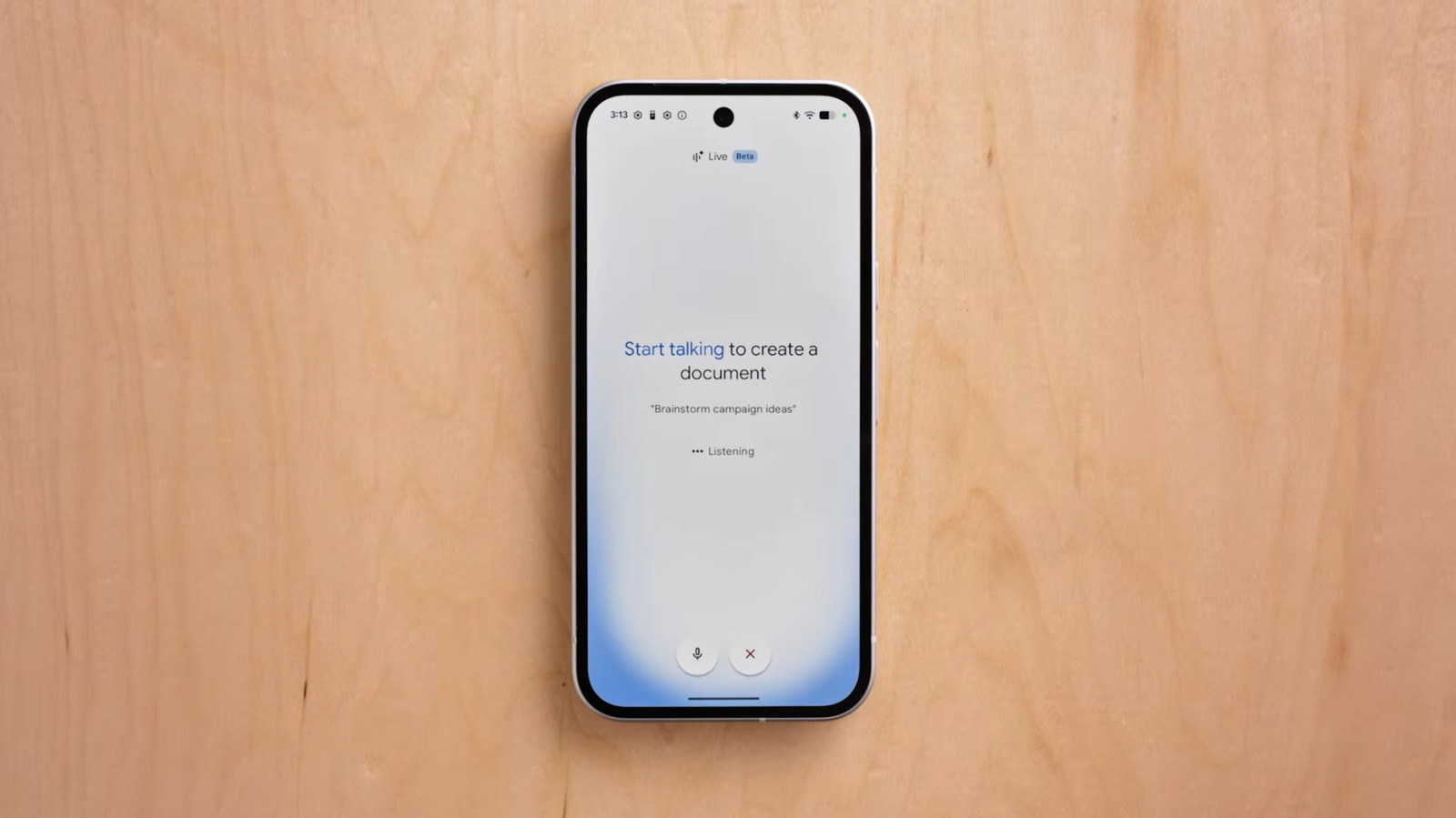
Another innovation is Docs Live, which integrates Gemini's capabilities into Google Docs. This tool enables users to dictate their thoughts, which the AI then organizes into a structured document. With Docs Live, tasks like writing speeches or drafting documents can be offloaded to AI, potentially changing how we approach written communication. This can be particularly transformative in professional settings where time is often of the essence, allowing individuals to focus on strategic thinking while the AI handles the transcription and organization of their ideas.
The Broader Adoption of Voice AI
Other companies and industries have explored similar concepts. The task-tracking app Todoist has a feature called Ramble, and in corporate settings, apps like Wispr Flow convert speech into text while editing for tone and style. The healthcare industry has also embraced AI transcription tools for note-taking during appointments, enhancing the efficiency of patient care by reducing administrative burdens. Google's offerings, however, stand out by integrating these capabilities directly into Android 17 devices, eliminating the need for additional apps or subscriptions. This integration could lead to widespread adoption, as users benefit from streamlined access to advanced voice processing features.
Context: The European Perspective
In Europe, the adoption of voice AI technology has been somewhat cautious, with concerns about privacy and data protection under regulations like GDPR. However, the potential for increased efficiency and accessibility could accelerate its uptake, especially in multilingual regions where language flexibility is crucial. For instance, in countries such as Switzerland or Belgium, where multiple languages are spoken, the ability to fluidly switch languages in a single communication tool can significantly enhance productivity and inclusivity.
Google's voice AI tools, by demanding less actual thought, may end up altogether changing how people think.
What This Means for You
For users, these new features can significantly enhance productivity and convenience. If you're frequently on the move or multitasking, tools like Rambler can help you compose messages or notes hands-free. Imagine dictating notes during your commute, leaving your hands free to navigate or engage with other tasks. However, it also means relying more on AI to make decisions about your communication, which could impact how you formulate and express your thoughts. There’s a subtle shift from conscious, deliberate communication to a more instinctive interaction style, which may affect cognitive processes over time.
What's Still Unclear
While the technology is promising, several questions remain. How will Google address privacy concerns associated with voice data? Will these tools be available in all languages and dialects, and how accurately can they handle diverse linguistic nuances? For instance, will Rambler be able to distinguish between regional accents or dialects within a language? Additionally, the impact of these tools on traditional communication skills is yet to be fully understood. As AI begins to take on more cognitive tasks, there’s a risk that users might become less adept at organizing thoughts independently.
Why This Matters
Google's Gemini AI is reshaping the landscape of voice interaction, making it easier and more intuitive. As these tools become more prevalent, they could redefine how we think about and engage with technology, potentially altering our cognitive processes and communication habits. The convenience of voice AI may lead to a reduction in traditional typing and writing skills, prompting a broader discussion on the balance between technological reliance and human cognitive development. As AI continues to evolve, understanding its implications will be crucial for both users and developers in navigating this new digital frontier.
In a world where technology increasingly mediates our interactions, these advancements prompt us to question how we define effective communication and whether our increasing reliance on AI might alter the very fabric of our thought processes. While the benefits are clear, the road ahead will require careful consideration of the ethical, cognitive, and societal impacts of integrating AI into our daily lives.
Discuss this story
Got a take, a correction, or a follow-up tip? Reply where you read — we read everything.
Found an error? File a correction at /corrections. Substantive corrections are logged publicly.
One short email. The most important AI news, fact-checked, no fluff. Free, unsubscribe anytime.
More from AI
Perplexity Pro vs ChatGPT Plus: Which AI Assistant Fits Your Workflow?
This guide lays out the strengths and approaches of Perplexity Pro and ChatGPT Plus, helping you identify which AI assistant aligns with your specific needs.
Claude Pro vs Google Gemini Advanced: Which AI Assistant Deserves Your Subscription?
This definitive guide cuts through the marketing to give you a fair, balanced breakdown of Claude Pro and Gemini Advanced, letting you decide which AI best fits your workflow.
Claude Pro vs Google Gemini Advanced: Which AI Actually Earns Your Subscription?
Byte-Pulse lays out the real trade-offs between Claude Pro and Google Gemini Advanced, helping you pick the AI that fits your workflow, without picking for you.
ChatGPT Plus vs Google Gemini Advanced: Which AI Assistant Fits Your Workflow?
Deciding between ChatGPT Plus and Google Gemini Advanced? We break down the models, features, integrations, and pricing to help you align your choice with your specific priorities.
The Byte-Pulse Newsroom is the editorial system that produces Byte-Pulse's daily tech news coverage. Each story is cross-referenced across 3+ independent outlets, drafted with AI assistance by the newsroom system (Drafter → Editor → Fact-Checker → Polisher), and reviewed by Serhat Er, Editor-in-Chief, before publication. We disclose AI augmentation openly. Editorial accountability stays with the named editor on every article. Tips: editorial@byte-pulse.net.
Don’t miss these
Asus ROG Phone 9 vs Sony Xperia 1 VII: Which Niche Flagship Earns Your Money?
Deciding between the gaming-focused ROG Phone 9 and the creator-centric Xperia 1 VII? This guide breaks down every spec to help you choose.
Proton VPN vs NordVPN: Which One Earns Your Subscription?
A deep dive into Proton VPN and NordVPN, comparing their privacy, performance, features, and value, helping you make an informed decision.

Pokémon TCG Movie Signals Strategic Media Pivot for The Pokémon Company
A new Pokémon movie focused on the TCG is coming in 2027, marking a strategic pivot for the franchise as it navigates massive global fan engagement and logistical challenges.

Apple's AI Pivot: Vision Pro Content Cut, Siri Rebuilt Amid Layoffs
Apple's latest layoffs signal a strategic pivot, dialing back high-cost Vision Pro content while re-tooling Siri for the AI era. What's next for Apple?

D23 2026: Disney's Content Deluge Sparks Questions About Strategy
Byte-Pulse cuts through D23 hype: We dissect Disney's ambitious content slate, from Simpsons: Hit & Run to Ahsoka season 2, and question the real-world implications and European market strategy.
Honor Magic 8 Pro vs Samsung Galaxy S26 Ultra: Which Future Flagship Fits Your Wallet and Workflow?
Deciding between the anticipated Honor Magic 8 Pro and Samsung Galaxy S26 Ultra? Our deep dive into expected specs and features provides the fair comparison you need.