NASA's Psyche Gets a Gravity Kick from Mars
Mars' gravity just gave the Psyche spacecraft a critical boost, pushing it closer to its metallic asteroid target.


NASA's Psyche spacecraft just got a serious kick. It successfully used Mars' gravity for a speed boost, pushing it closer to the asteroid 16 Psyche. Smart move, really. Saves fuel, keeps it on course.
How close? Closer than Mars' own moon, Phobos. Psyche zipped within 2,800 miles of the Martian surface. We're talking 12,300 mph. That wasn't just about speed; it sharpened the spacecraft's aim at that metallic asteroid. Scientists think 16 Psyche could actually tell us a lot about how planet cores — like Earth's — first formed.
The Journey to 16 Psyche
The mission started late last year. Six years, 2.2 billion miles. The goal: hit 16 Psyche by July 2029. This asteroid? It's believed to be the leftover core of a protoplanet, a baby planet. A rare chance to see how planets are built, right? Once it gets there, Psyche's gonna hang around for two years. Orbiting, snapping pictures, mapping the surface, collecting data on what it's made of.
"We can't bore a path to Earth's metal core, so visiting Psyche provides a unique opportunity," NASA said. Pretty much sums it up. They're hoping this mission cracks open some secrets about how planets actually form.
The Role of Mars
Mars was key here. It gave Psyche that gravity assist. It's a standard trick in space, sure, but it saves tons of fuel and boosts speed. Mars' gravity just slingshotted Psyche, giving it the push it needed.
And hey, Psyche even took some photos of Mars on the way in. Those'll be beamed back to Earth over the next few weeks. Look for 'em on the mission's official page.
Context
What's this all mean? It's part of NASA's bigger push to really understand our solar system. How did it all get here? European agencies, like ESA, are in on this too, funding their own missions. They want more data on asteroids, on planetary bodies.
What this means for you
For anyone into space, or for researchers, this mission shows just how complex — and how clever — space exploration really is. It could bring huge breakthroughs in how we understand planetary cores. That'll impact future science, even what we teach kids.
What's still unclear
So, what don't we know yet? Plenty. What's 16 Psyche actually made of? What specific insights will it give us about planet formation? And the big one: what's the long-term impact of this mission on our understanding of the solar system's history? We'll see.
Why this matters
"NASA's Psyche mission offers a unique glimpse into planetary formation." That's the quote, and it's true. This could lead to some seriously big discoveries. By checking out 16 Psyche, we might finally get a real look at the iron-rich cores of planets. That means understanding the wild, violent history of our solar system's birth.
Discuss this story
Got a take, a correction, or a follow-up tip? Reply where you read — we read everything.
Found an error? File a correction at /corrections. Substantive corrections are logged publicly.
One short email. The most important Science news, fact-checked, no fluff. Free, unsubscribe anytime.
More from Science
Quantum Computing Explained for Developers: A 2026 Update
Explore quantum computing fundamentals, hardware, and how it impacts software development in this comprehensive guide for developers.
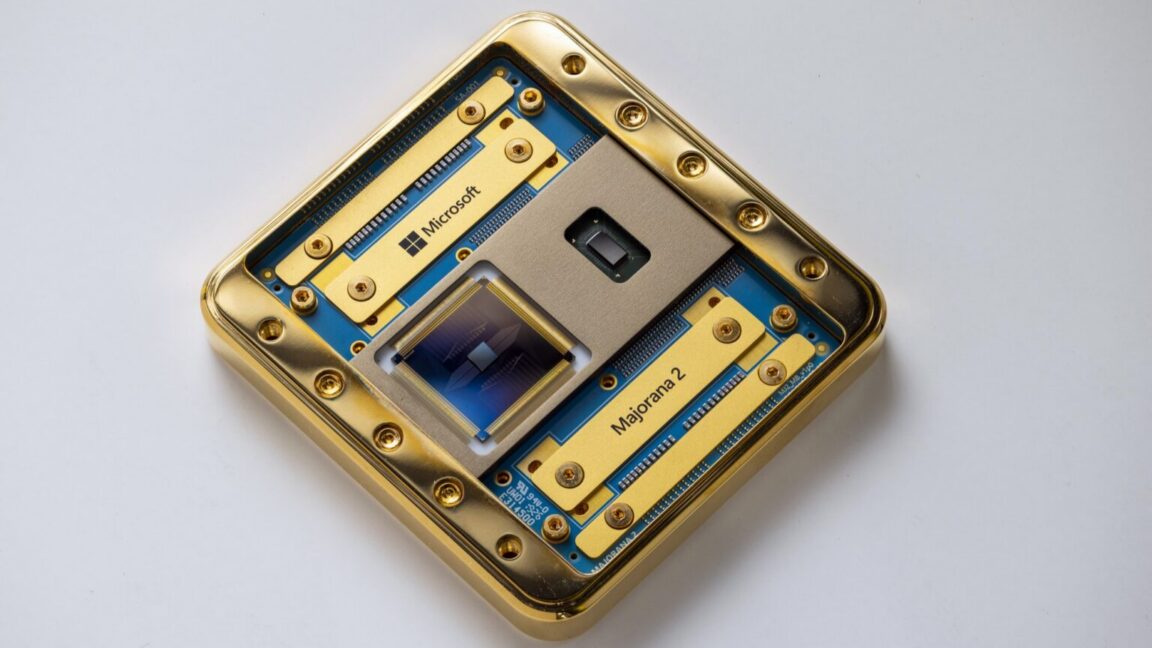
Quantum Computing Advances: Key Updates from Microsoft, Atom, and EeroQ
Microsoft, Atom Computing, and EeroQ share key updates in their quantum computing efforts, marking steady progress toward practical applications.

Star City Explores the Human Cost Behind the Soviet Space Program
Forget Mars colonies. Star City, the new spin-off from For All Mankind, dives deep into the gritty, dangerous, and often ethically complex world of the Soviet space program in the late 1960s.
A Gritty, High-Stakes Drama: Exploring the Soviet Space Program in Star City
Explore the untold story of the Soviet space program in Star City, a new Apple TV+ series that swaps the familiar American perspective for a gritty, high-stakes drama centered on its visionary, yet constrained, leadership.
The Byte-Pulse Newsroom is the editorial system that produces Byte-Pulse's daily tech news coverage. Each story is cross-referenced across 3+ independent outlets, drafted with AI assistance by the newsroom system (Drafter → Editor → Fact-Checker → Polisher), and reviewed by Serhat Er, Editor-in-Chief, before publication. We disclose AI augmentation openly. Editorial accountability stays with the named editor on every article. Tips: editorial@byte-pulse.net.
Don’t miss these
Honor Magic 8 Pro vs Samsung Galaxy S26 Ultra: Which Future Flagship Fits Your Wallet and Workflow?
Deciding between the anticipated Honor Magic 8 Pro and Samsung Galaxy S26 Ultra? Our deep dive into expected specs and features provides the fair comparison you need.
Proton VPN vs NordVPN: Which One Earns Your Subscription?
A deep dive into Proton VPN and NordVPN, comparing their privacy, performance, features, and value, helping you make an informed decision.
Perplexity Pro vs ChatGPT Plus: Which AI Assistant Fits Your Workflow?
This guide lays out the strengths and approaches of Perplexity Pro and ChatGPT Plus, helping you identify which AI assistant aligns with your specific needs.

Pokémon TCG Movie Signals Strategic Media Pivot for The Pokémon Company
A new Pokémon movie focused on the TCG is coming in 2027, marking a strategic pivot for the franchise as it navigates massive global fan engagement and logistical challenges.

Apple's AI Pivot: Vision Pro Content Cut, Siri Rebuilt Amid Layoffs
Apple's latest layoffs signal a strategic pivot, dialing back high-cost Vision Pro content while re-tooling Siri for the AI era. What's next for Apple?
Xiaomi 16 Pro vs iPhone 18 Pro: Which Flagship Fits Your World?
Deciding between the Xiaomi 16 Pro and iPhone 18 Pro? We break down every spec and trade-off, so you can make the choice that's right for you.