SpaceX Starship V3 Launch: Booster Lost, Satellites Deployed
SpaceX's Starship V3: A successful satellite deployment, but a booster lost at sea. Mixed results for the company's latest test flight.


SpaceX Loses Starship V3 Booster After First Launch
SpaceX recently marked another significant milestone in its ambitious journey toward space exploration with the launch of the Starship V3. This upgraded version of their spacecraft took off for the first time from the company's Starbase facility in Texas. While the mission achieved some notable successes, it also highlighted the challenges inherent in the cutting-edge field of aerospace technology.
Booster Loss Adds Complexity
The launch commenced successfully, capturing the attention of space enthusiasts and industry experts worldwide. However, the mission encountered a significant hurdle shortly afterward: the loss of the Super Heavy booster. This stage of the rocket, crucial for the initial lift-off, failed to re-ignite its engines for the return journey and eventually plunged into the Gulf of Mexico. This incident underscores the inherent risks and challenges associated with pushing aerospace technology to new limits.
SpaceX aims to perfect the art of reusability in rocketry, a goal that the loss of the booster complicates. Reusable rockets are pivotal for reducing costs and increasing the frequency of space missions. The setback serves as a reminder of the complexities involved in achieving such ambitious goals. Yet, even with this loss, SpaceX can glean invaluable data from the incident, data that will inform future designs and operational strategies.
Starship Achieves Key Objectives
Despite the setback with the booster, the Starship itself continued its mission successfully. It managed to deploy 20 Starlink satellite simulators, along with two modified satellites that recorded footage of the entire process. This achievement underscores the vehicle's capability to fulfill its primary mission objectives, even in the face of adversity. The Starship's journey concluded with a simulated landing in the Indian Ocean, where it met with an expected explosion, a planned part of the mission to test the limits of the spacecraft.
The deployment of the Starlink satellites is particularly noteworthy. Starlink represents a cornerstone of SpaceX's business model, aiming to provide global high-speed internet coverage. By successfully deploying these satellite simulators, SpaceX demonstrated its continued progress toward populating its satellite constellation, a key revenue stream for the company.
Context: SpaceX's Ambitious Roadmap
This launch comes at a pivotal moment for SpaceX, aligning closely with the company's recent initial public offering (IPO) filing. Through the IPO, SpaceX aims to raise approximately $75 billion, a substantial sum intended to fuel its development plans and ambitious ventures into artificial intelligence. The Starship project is a critical component of SpaceX's long-term strategy, which includes aspirations for lunar and Martian exploration, as well as the expansion of its commercial Starlink satellite operations.
The timing of the launch in relation to the IPO filing is significant. Successful launches and technological advancements can positively impact investor confidence, potentially driving up stock values. Conversely, setbacks like the booster loss can introduce volatility, underscoring the high-stakes nature of space exploration both technologically and financially.
What This Means for You
For those following SpaceX, this launch serves as a vivid illustration of the company's relentless drive to advance space technology, despite encountering setbacks. The loss of the booster might pose challenges for future launch timelines, but the successful deployment of the satellites illustrates SpaceX's ability to accomplish its core mission objectives even under challenging circumstances.
For investors and market watchers, the upcoming IPO presents an opportunity to engage with a company at the forefront of the space industry. However, the market often reacts sharply to the outcomes of test launches, which means SpaceX's stock could experience significant fluctuations post-IPO. As SpaceX continues to push boundaries, the balance between risk and reward becomes an essential consideration for potential investors.
What's Still Unclear
Despite the wealth of data gained from the launch, several questions remain unanswered. Chief among them: what precisely caused the booster to fail in re-igniting its engines? Understanding this issue is crucial for preventing similar setbacks in future missions. Additionally, how SpaceX plans to address this challenge and improve the reliability of its boosters remains to be seen.
The timeline for future Starship flights is another area of uncertainty, particularly in light of the upcoming IPO. While the company is renowned for its ambitious timelines, the complexities of space travel and unforeseen challenges can often lead to delays. Stakeholders will be keenly watching how SpaceX manages these timelines and adapts to the evolving landscape of space exploration.
Why This Matters
The test launch of the Starship V3 offers a glimpse into the future of space travel. Although the mission faced challenges, SpaceX's persistence in pushing technological boundaries is vital for the advancement of human space exploration. This launch's outcomes will undoubtedly influence SpaceX's strategic direction moving forward and impact the broader space industry.
As other companies and nations intensify their efforts in satellite deployment and space travel, SpaceX's successes and setbacks will play a crucial role in shaping the competitive landscape. The drive for innovation and exploration continues to be a defining feature of space endeavors, with SpaceX at the forefront of this exciting frontier.
In summary, while the loss of the Super Heavy booster is a setback, the insights gained and the successful deployment of satellite simulators highlight SpaceX's resilience and capability. As the company navigates the challenges ahead, its commitment to innovation and exploration remains unwavering, promising an exciting future for space travel and technology.
Discuss this story
Got a take, a correction, or a follow-up tip? Reply where you read — we read everything.
Found an error? File a correction at /corrections. Substantive corrections are logged publicly.
One short email. The most important Science news, fact-checked, no fluff. Free, unsubscribe anytime.
More from Science
Quantum Computing Explained for Developers: A 2026 Update
Explore quantum computing fundamentals, hardware, and how it impacts software development in this comprehensive guide for developers.
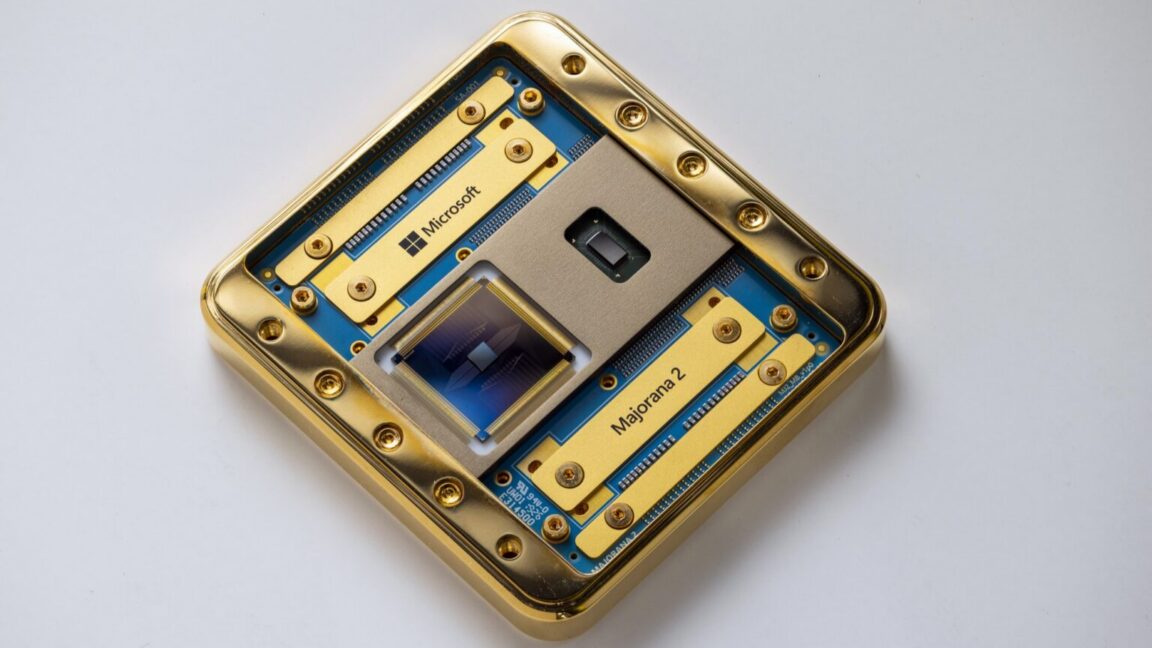
Quantum Computing Advances: Key Updates from Microsoft, Atom, and EeroQ
Microsoft, Atom Computing, and EeroQ share key updates in their quantum computing efforts, marking steady progress toward practical applications.

Star City Explores the Human Cost Behind the Soviet Space Program
Forget Mars colonies. Star City, the new spin-off from For All Mankind, dives deep into the gritty, dangerous, and often ethically complex world of the Soviet space program in the late 1960s.
A Gritty, High-Stakes Drama: Exploring the Soviet Space Program in Star City
Explore the untold story of the Soviet space program in Star City, a new Apple TV+ series that swaps the familiar American perspective for a gritty, high-stakes drama centered on its visionary, yet constrained, leadership.
The Byte-Pulse Newsroom is the editorial system that produces Byte-Pulse's daily tech news coverage. Each story is cross-referenced across 3+ independent outlets, drafted with AI assistance by the newsroom system (Drafter → Editor → Fact-Checker → Polisher), and reviewed by Serhat Er, Editor-in-Chief, before publication. We disclose AI augmentation openly. Editorial accountability stays with the named editor on every article. Tips: editorial@byte-pulse.net.
Don’t miss these
Asus ROG Phone 9 vs Sony Xperia 1 VII: Which Niche Flagship Earns Your Money?
Deciding between the gaming-focused ROG Phone 9 and the creator-centric Xperia 1 VII? This guide breaks down every spec to help you choose.
Proton VPN vs NordVPN: Which One Earns Your Subscription?
A deep dive into Proton VPN and NordVPN, comparing their privacy, performance, features, and value, helping you make an informed decision.
Perplexity Pro vs ChatGPT Plus: Which AI Assistant Fits Your Workflow?
This guide lays out the strengths and approaches of Perplexity Pro and ChatGPT Plus, helping you identify which AI assistant aligns with your specific needs.

Pokémon TCG Movie Signals Strategic Media Pivot for The Pokémon Company
A new Pokémon movie focused on the TCG is coming in 2027, marking a strategic pivot for the franchise as it navigates massive global fan engagement and logistical challenges.

Apple's AI Pivot: Vision Pro Content Cut, Siri Rebuilt Amid Layoffs
Apple's latest layoffs signal a strategic pivot, dialing back high-cost Vision Pro content while re-tooling Siri for the AI era. What's next for Apple?
Honor Magic 8 Pro vs Samsung Galaxy S26 Ultra: Which Future Flagship Fits Your Wallet and Workflow?
Deciding between the anticipated Honor Magic 8 Pro and Samsung Galaxy S26 Ultra? Our deep dive into expected specs and features provides the fair comparison you need.