Ugreen USB Charger Review: Features, Performance, and Competitive Analysis
Examining Ugreen's versatile USB charger and its competitive edge

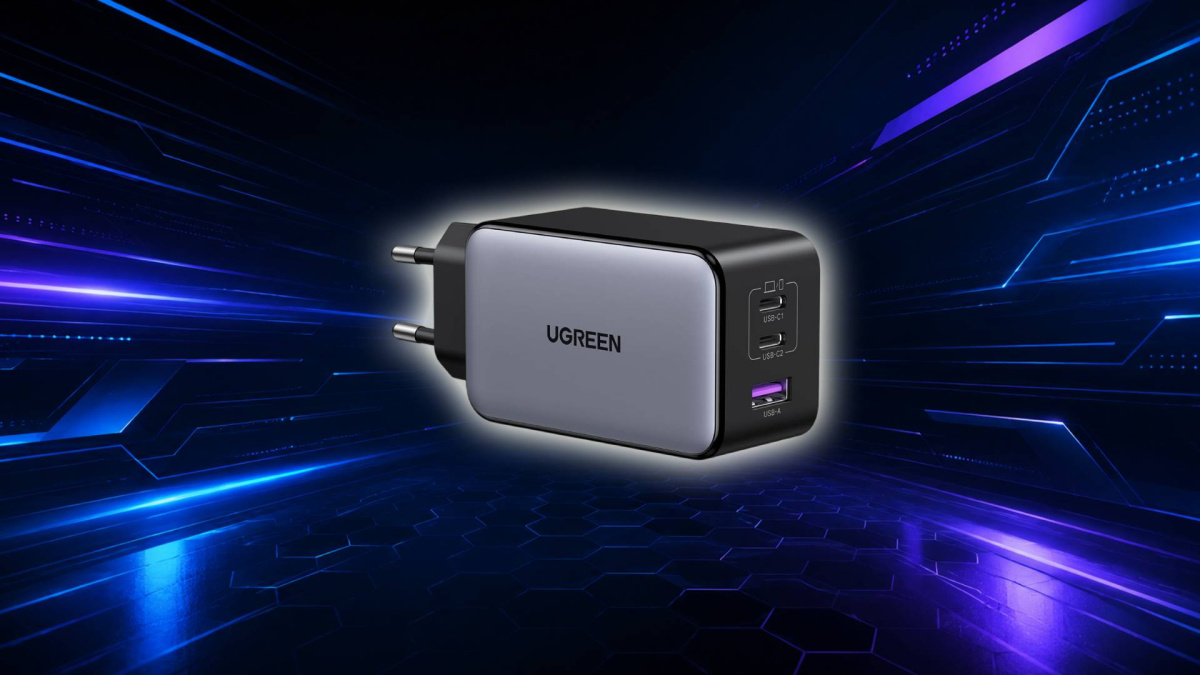
Three charging ports to power all your devices
Ugreen’s USB charger stands out with its three-port configuration, consisting of one USB-A and two USB-C ports. This design is increasingly necessary as more devices require power simultaneously. The charger boasts a peak power output of 100 watts, a significant figure in the world of power accessories. The primary USB-C port is the powerhouse, delivering the full 100 watts, which is sufficient to charge most modern laptops efficiently. The secondary USB-C port offers up to 30 watts, ideal for mid-range power needs like tablets or smartphones. Meanwhile, the USB-A port provides up to 22.5 watts, catering to older devices or less demanding gadgets.
This configuration makes the Ugreen charger versatile, suitable for a wide range of devices—from power-hungry laptops to smaller gadgets like wireless earbuds. In a world where the average household has multiple devices per person, the ability to charge them all at once is more than convenient; it's essential. According to a report by Statista, the average number of connected devices per household in Europe was expected to rise from 10.1 in 2020 to over 13 by 2023. This trend underscores the growing need for multi-port chargers like Ugreen's.
Compared to the Competition
Ugreen’s closest competitor, in terms of specs and target market, is likely Iniu. Iniu also offers a 100-watt charger with a similar port setup. However, Ugreen’s ability to charge multiple devices simultaneously with varying power requirements might give it an edge. The Iniu charger is priced slightly lower at €28.63 (around $31.50), which is appealing for budget-conscious consumers. However, Ugreen justifies its higher price point of €32.99 (approximately $36) with potentially superior charging capabilities and build quality, although this remains to be confirmed by independent reviews.
Competitors such as Anker and Aukey also offer multi-port fast chargers. Anker’s PowerPort Atom PD 4, for example, supports a total output of 100 watts with two USB-C and two USB-A ports, priced at around $109.99. Though more expensive, Anker’s product targets users looking for more ports and brand reliability, indicating that Ugreen’s offering is competitively priced for its feature set.
How Ugreen's fast charging technology stands out
Fast charging is a major selling point for Ugreen's USB charger. It supports widely used protocols like Power Delivery (PD) and Quick Charge (QC). These protocols are crucial because they ensure compatibility with a broad range of devices, from laptops to smartphones. According to reports from Golem, this charger can take a MacBook Pro 14-inch from 0 to 50% in just 27 minutes, and a Samsung Galaxy S24 can reach 50% in a mere 19 minutes. These are impressive figures that align with the fast-paced lifestyle of today’s consumers.
However, anyone who's shipped hardware knows that real-world performance can vary significantly from manufacturer claims. Factors such as the condition of the device battery, the environment, and even the cable used can influence charging times. This is where independent benchmarks become vital. Competitors like Anker and Aukey also promise fast charging, but consumers often rely on user reviews and third-party tests to determine if these claims hold up.
Compact design: Why size matters for tech accessories
One of Ugreen’s notable features is its compact design. Measuring just 70 x 43 x 32 mm, it’s significantly smaller than many of its competitors. According to Golem, it's about 45% smaller than typical 96-watt chargers. Size matters a lot in technology accessories, particularly for those who travel frequently or need to manage limited space. A bulky charger can be cumbersome, taking up valuable space in a bag that could be used for other essentials.
The compact size doesn't mean it sacrifices performance. It still manages to deliver robust charging capabilities while being portable enough to fit into a jacket pocket or the smallest compartment of a backpack. This makes it especially appealing to digital nomads or professionals who are constantly on the move.
Competitive pricing: What makes this charger a great deal
Pricing plays a crucial role in purchasing decisions, and Ugreen has positioned its USB charger competitively at €32.99 (about $36). This price represents a significant discount of up to 42% off the suggested retail price, which Golem highlights as a major selling point. While Iniu offers a similar product for slightly less, Ugreen’s price could be seen as justifiable due to its charging capabilities and overall product quality.
In the saturated USB charger market, initial cost isn't the only consideration. Value for money encompasses performance, reliability, and longevity. If Ugreen’s charger can consistently deliver on its promises of fast charging, safety, and durability, the slightly higher price could be a worthwhile investment. This aligns with the consumer trend towards purchasing fewer, higher-quality products rather than cheaper, disposable ones.
Safety features that protect your devices during charging
Safety is paramount when it comes to chargers, and Ugreen addresses this with its ThermalGuard 2.0 technology. This system offers protection against overvoltage, overcurrent, overheating, and short circuits. Such features are critical, especially with high-power chargers, where the risk of damage to your devices—and potentially your home—is a genuine concern.
Golem points out that these robust safety protocols are central to Ugreen’s proposition. For consumers who have experienced issues with overheating chargers or short-circuiting, these assurances can be very persuasive. However, as with fast charging claims, the effectiveness of these safety features can vary. Brands like Anker and Aukey also advertise similar protections. Therefore, prospective buyers should look for user reviews and independent evaluations to verify the effectiveness of Ugreen’s safety measures.
Real-world use scenario
Imagine a day in the life of someone using the Ugreen charger. You start your morning by plugging in your MacBook Pro, which you use for work, into the 100-watt USB-C port. As you sip your coffee, your laptop quickly charges to 50% in under half an hour—just enough juice to get through an important meeting. Meanwhile, your smartphone, connected to the second USB-C port, is ready for the day in just 19 minutes.
Later, at a café, you use the USB-A port to top up your wireless earbuds while your laptop continues charging. Despite the compact size of the charger, it's powerful enough to handle these tasks simultaneously without overheating. This kind of real-world utility is why a multi-port, high-wattage charger is invaluable.
What's still unclear
Despite the promising features, some questions remain unanswered. How does the charger perform over extended periods of use? Can it maintain its performance without overheating during long sessions? Such factors are crucial for consumers who need reliability. Additionally, details about warranty and customer service are noticeably absent from reports. These aspects are vital for consumer confidence, particularly for products we rely on daily. A strong warranty and responsive customer service can make a big difference in the perceived value of a product.
Why this matters
Ugreen’s USB charger presents itself as a solid contender in the crowded market of power accessories. Its combination of fast charging, multiple ports, compact design, competitive pricing, and safety features meets many of the needs of today’s tech-savvy consumers. However, the real test will be how it stacks up against established rivals like Anker, Aukey, and Iniu in everyday use.
For those seeking a reliable charging solution, Ugreen’s offering looks promising. But as with any tech purchase, independent evaluations and user feedback will be key to understanding its real-world capabilities. In a market where the average consumer is savvy and well-informed, the true value of Ugreen’s charger will be measured by how well it performs in the hands of everyday users.
Sources cross-referenced
This story was synthesised from reporting by 3 outlets:
Discuss this story
Got a take, a correction, or a follow-up tip? Reply where you read — we read everything.
Found an error? File a correction at /corrections. Substantive corrections are logged publicly.
One short email. The most important Hardware news, fact-checked, no fluff. Free, unsubscribe anytime.
More from Hardware

Apple's AI Pivot: Vision Pro Content Cut, Siri Rebuilt Amid Layoffs
Apple's latest layoffs signal a strategic pivot, dialing back high-cost Vision Pro content while re-tooling Siri for the AI era. What's next for Apple?

Povasee A30 Jump Starter: A 50-Euro Deal With 5,000A Claims Under Scrutiny
The Povasee A30 jump-start power bank, on offer at Amazon for under 50 Euros, claims 5,000A peak current. We scrutinize this deal against real-world expectations.

Ugreen's 200W Charger: Powerhouse or Marketing Hype?
We analyze the Ugreen 200W charger's technical prowess, real-world utility, and the Amazon deal, highlighting its strengths and limitations

Victorinox Amazon Deals: Tactics or True Value?
Byte-Pulse examines Amazon's Victorinox deals, dissecting the true value of the Swiss Card Lite and Synergy X Alox against market trends.
The Byte-Pulse Newsroom is the editorial system that produces Byte-Pulse's daily tech news coverage. Each story is cross-referenced across 3+ independent outlets, drafted with AI assistance by the newsroom system (Drafter → Editor → Fact-Checker → Polisher), and reviewed by Serhat Er, Editor-in-Chief, before publication. We disclose AI augmentation openly. Editorial accountability stays with the named editor on every article. Tips: editorial@byte-pulse.net.
Don’t miss these
Perplexity Pro vs ChatGPT Plus: Which AI Assistant Fits Your Workflow?
This guide lays out the strengths and approaches of Perplexity Pro and ChatGPT Plus, helping you identify which AI assistant aligns with your specific needs.

Pokémon TCG Movie Signals Strategic Media Pivot for The Pokémon Company
A new Pokémon movie focused on the TCG is coming in 2027, marking a strategic pivot for the franchise as it navigates massive global fan engagement and logistical challenges.

Apple's 'Deep Discounts': US Inventory Flush, Not European Bargains
Byte-Pulse examines Apple's recent US sales, revealing that 'deep discounts' on popular devices like the iPhone 17 Pro and M3 iPad Air are less about consumer savings and more about clearing stock ahead of new launches. We critically assess whether these offers translate to real value for European buyers.

D23 2026: Disney's Content Deluge Sparks Questions About Strategy
Byte-Pulse cuts through D23 hype: We dissect Disney's ambitious content slate, from Simpsons: Hit & Run to Ahsoka season 2, and question the real-world implications and European market strategy.
Claude Pro vs Google Gemini Advanced: Which AI Assistant Deserves Your Subscription?
This definitive guide cuts through the marketing to give you a fair, balanced breakdown of Claude Pro and Gemini Advanced, letting you decide which AI best fits your workflow.

GTA 6's Realism Gamble: Will Player Patience Pay Off?
Byte-Pulse examines GTA 6's shift to ultra-realism, from complex Wanted systems to car refueling, and questions if 'ambition' justifies potential player friction.