Acer's Swift Air 14 Takes on Apple's MacBook Neo with a New Approach
The lightweight laptop targets the premium mid-range with an aluminum build, 120Hz display, and a unique workaround for a patent dispute.

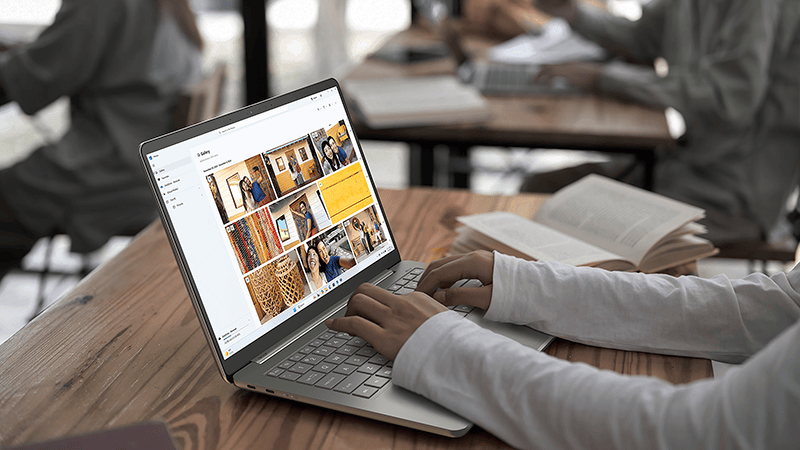
The compact and premium mid-range laptop market is heating up, and Acer is jumping in with its Swift Air 14. This new offering is positioned as a direct response to Apple's recent MacBook Neo, aiming to capture users looking for a lightweight yet capable machine.
A Lighter Build with Color Options
While Acer's previous Swift Air model was a 16-inch device with a magnesium alloy chassis weighing just 1kg, the new 14-inch Swift Air 14 opts for an aluminum build. This makes it slightly heavier at 1.2kg, but still a very manageable weight for everyday carry. Acer is offering the Swift Air 14 in four distinct colors: green, pink, purple, and blue. However, not all markets will receive every color option, so availability may vary.
The matte IPS display boasts a sharp 1920x1200 resolution with a smooth 120Hz [refresh rate](/article/msi-s-triple-mode-oled-monitor-offers-unprecedented-versatility-for-gamers), covering the sRGB color space. Acer rates its peak brightness at 350 cd/m2. Connectivity includes an analog audio jack, a standard USB-A port, and two USB-C ports, both supporting the speedy Thunderbolt 4 standard. For wireless, it features Wi-Fi 6E, and Acer claims up to 16 hours of battery life for internet surfing. Users can also log in securely using the Windows Hello-compatible webcam.
Pricing and a Clever Workaround
In the US, the Acer Swift Air 14 starts at $700, featuring an Intel Core 5 processor, 8GB of LPDDR5 RAM, and a 512GB SSD. This configuration translates to €800 in Europe. While technically capable of supporting 16GB of RAM, Acer states this configuration won't be available in Europe. To hit these competitive price points, Acer is focusing on high production volumes, with the motherboard designed for this specific configuration.
To circumvent a sales ban in Germany stemming from a patent infringement related to the H.265 video codec, Acer will disable the hardware decoder in the integrated graphics unit. This means users will rely on software decoding via the CPU for certain video playback, which consumes more power but avoids legal issues. This workaround is crucial for Acer to meet its planned July launch in Germany.
Context:
The trend towards ultra-lightweight, premium-feeling laptops is clearly being driven by Apple's success in this segment. Acer's move with the Swift Air 14 directly challenges that by offering a compelling alternative at a lower price point, especially in the mid-range segment where value is key. The European market, in particular, is sensitive to price, and Acer's strategy of offering a slightly pared-down spec (like the 8GB RAM limit) while navigating complex regional regulations (like the H.265 patent issue in Germany) is a common tactic for manufacturers looking to gain market share.
What this means for you:
If you're in the market for a new laptop that's easy to carry around and looks good, the Swift Air 14 is definitely worth considering. The $700 starting price in the US and €800 in Europe makes it an attractive option, especially with its 120Hz display and Thunderbolt 4 ports. However, be aware that the base model comes with 8GB of RAM, which might be a limitation for power users. The workaround for video playback in Germany means you might experience slightly slower performance when playing certain video files, but for most everyday tasks, this shouldn't be a significant issue.
What's still unclear:
- Which specific markets outside of the US and Germany will receive which color options?
- Will Acer eventually offer a 16GB RAM configuration in Europe, or is this a permanent limitation?
- What is the exact performance impact of relying on software decoding for H.265 videos compared to hardware decoding?
- Will Acer's other lines, like the TravelMate P6, also adopt similar patent circumvention strategies if needed?
Why this matters:
Acer's Swift Air 14 shows that the competition in the premium mid-range laptop space is intensifying, offering consumers more choice. The company's proactive approach to overcoming regional legal hurdles demonstrates a commitment to market access, even if it requires technical compromises. This move could set a precedent for how manufacturers handle similar patent disputes in the future.
Discuss this story
Got a take, a correction, or a follow-up tip? Reply where you read — we read everything.
Found an error? File a correction at /corrections. Substantive corrections are logged publicly.
One short email. The most important Hardware news, fact-checked, no fluff. Free, unsubscribe anytime.
More from Hardware
Lenovo Legion Pro 7i 2026 vs Razer Blade 16 2026: Which Flagship Gaming Laptop Fits Your Future?
Deciding between the next-gen Lenovo Legion Pro 7i and Razer Blade 16 means weighing peak performance against premium design and a more compact footprint. We break down the trade-offs.
Razer Blade 16 (2026) vs ASUS ROG Zephyrus G16 (2026): Which Next-Gen Powerhouse Fits Your Workflow?
Deciding between Razer's premium Blade 16 2026 and ASUS's versatile ROG Zephyrus G16? We cut through the hype to lay out the real trade-offs.
HP Spectre x360 2026 vs MacBook Air M5: Which Flagship Laptop Fits Your Future?
Deciding between the versatile HP Spectre x360 2026 and the efficient MacBook Air M5 means weighing form factor, operating system, and core priorities.
Framework Laptop 16 vs Lenovo ThinkPad X1 Carbon Gen 13: The Future-Proofed Powerhouse vs. The Enduring Executive
This guide cuts through the marketing to compare the modular Framework 16 and the svelte ThinkPad X1 Carbon Gen 13, helping you choose without bias.
The Byte-Pulse Newsroom is the editorial system that produces Byte-Pulse's daily tech news coverage. Each story is cross-referenced across 3+ independent outlets, drafted with AI assistance by the newsroom system (Drafter → Editor → Fact-Checker → Polisher), and reviewed by Serhat Er, Editor-in-Chief, before publication. We disclose AI augmentation openly. Editorial accountability stays with the named editor on every article. Tips: editorial@byte-pulse.net.
Don’t miss these
Asus ROG Phone 9 vs Sony Xperia 1 VII: Which Niche Flagship Earns Your Money?
Deciding between the gaming-focused ROG Phone 9 and the creator-centric Xperia 1 VII? This guide breaks down every spec to help you choose.
Proton VPN vs NordVPN: Which One Earns Your Subscription?
A deep dive into Proton VPN and NordVPN, comparing their privacy, performance, features, and value, helping you make an informed decision.
Perplexity Pro vs ChatGPT Plus: Which AI Assistant Fits Your Workflow?
This guide lays out the strengths and approaches of Perplexity Pro and ChatGPT Plus, helping you identify which AI assistant aligns with your specific needs.

Pokémon TCG Movie Signals Strategic Media Pivot for The Pokémon Company
A new Pokémon movie focused on the TCG is coming in 2027, marking a strategic pivot for the franchise as it navigates massive global fan engagement and logistical challenges.
Honor Magic 8 Pro vs Samsung Galaxy S26 Ultra: Which Future Flagship Fits Your Wallet and Workflow?
Deciding between the anticipated Honor Magic 8 Pro and Samsung Galaxy S26 Ultra? Our deep dive into expected specs and features provides the fair comparison you need.
Notion vs Obsidian: Which Knowledge Hub Fits Your Workflow?
Deciding between Notion and Obsidian? We break down the core differences in philosophy, data ownership, collaboration, and extensibility to help you choose.