Microsoft Solara: AI Agents Redefine Device Interaction in Enterprise
Project Solara envisions a future where cloud-based AI agents, not traditional apps, are the primary interface on specialized devices.

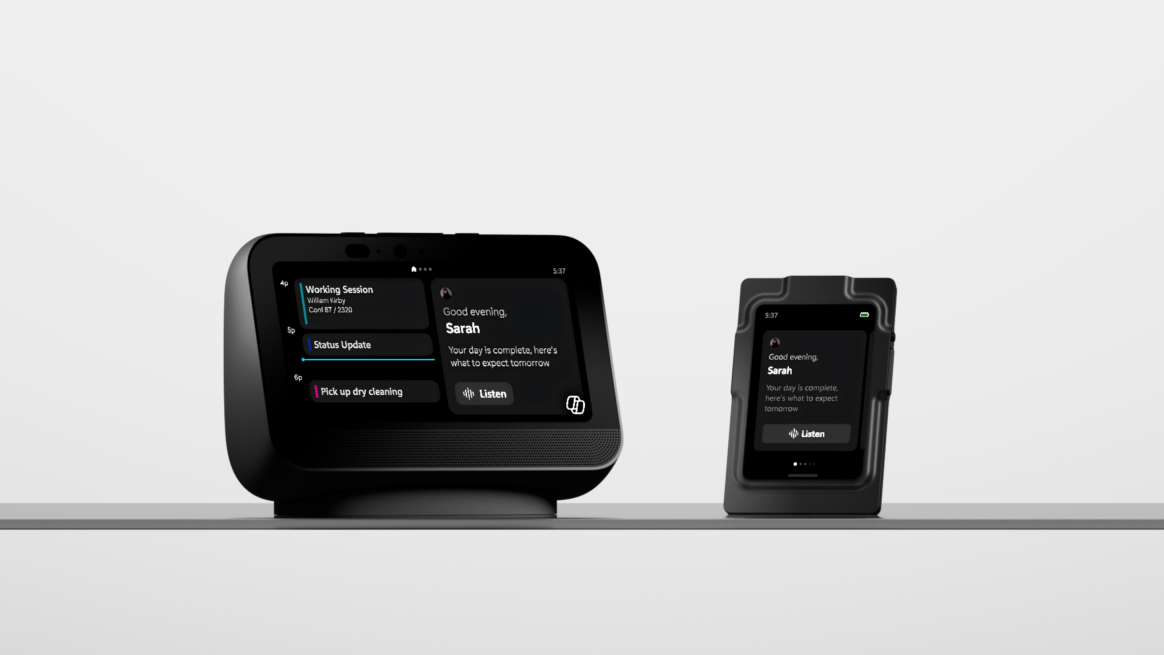
Microsoft is charting a new course for how we interact with technology with its "Project Solara," unveiled at the recent Build 2026 developer conference. This isn't just another software update; it's a bold vision for a new category of devices where AI agents, rather than conventional applications, become the central point of interaction. Think of it as a fundamental shift from tapping icons to conversing with intelligent assistants that dynamically adapt to your needs.
Agent-Centric Hardware: A New Paradigm
Steven Bathiche, CVP & Technical Fellow of Microsoft's Applied Sciences Group, explained that a key tenet of Project Solara is the separation of the end device from its intelligence. Unlike devices designed for significant local AI processing, Solara devices are envisioned as lean terminals. They act as windows into a powerful, cloud-based agent infrastructure running on Azure. This approach ensures that the intelligence resides in the cloud, allowing for more efficient and adaptable user experiences.
The underlying operating system for these devices won't be Windows, but rather a platform based on the Android Open Source Project (AOSP), dubbed MDEP (Microsoft Device Ecosystem Platform). Microsoft already uses MDEP for its Teams Room devices, and Android's power-efficient and resource-light nature makes it a pragmatic choice for the streamlined hardware Solara demands. Management will be handled by Microsoft Intune, with authentication secured through Entra ID and Windows Hello for Business, incorporating biometric features like fingerprint and facial recognition. Physical privacy controls, such as a hardware microphone mute switch, are also planned.
Just-in-Time UI and Open Agent Ecosystem
Project Solara introduces a concept called "Just-in-Time UI." Instead of static app interfaces, these devices will feature an adaptive UI layer that dynamically adjusts to the device, screen size, and interaction method – whether visual, voice, or multimodal. Microsoft describes this as a spectrum between traditional responsive design and fully generative UI, with the latter still being a future aspiration.
Crucially, Project Solara is designed as an open, multi-agent system. This means businesses can integrate their own specialized agents through tools like Copilot Studio, the Microsoft 365 Agents SDK, or the Azure Agent Framework. The goal is explicitly to avoid vendor lock-in and foster a diverse ecosystem of AI assistants tailored to specific workflows.
Hardware Partners and Reference Designs
Microsoft has enlisted hardware heavyweights Qualcomm and MediaTek as partners for Project Solara. Their readily available chips are key to enabling new form factors quickly and affordably. Two reference designs showcase the platform's potential:
- The Portable Badge Device: Built around a Qualcomm chip, this device adopts the form factor of an access card, something millions of employees use daily. It's planned to feature a touchscreen, a side-mounted fingerprint sensor, a camera, a microphone array with a speaker, and comprehensive connectivity (5G, Wi-Fi, Bluetooth, GNSS). It’s larger than a traditional smartcard, akin to a CI module.
- The Stationary Device: Resembling Amazon's Echo Show devices, this stationary unit uses a MediaTek chip. Designed as a desktop companion, it offers a touchscreen, facial recognition, a UWB presence sensor, a dual-microphone array, and two USB-C ports. It can even function as a Windows 365 client via USB-C and an external monitor, and can pair with a Windows PC via Bluetooth for task handoff.
Healthcare and Enterprise Focus
Microsoft sees significant potential in the healthcare sector. Current hospital staff badges are typically passive RFID or magnetic cards for access and medication dispensing. The Solara badge aims to enhance this by adding an active agent layer. With patient consent, it could record, transcribe, and diarize conversations, automatically segmenting speakers. An agent, potentially using solutions like Dragon Copilot, would then log structured data into patient records. The cloud architecture is essential here, accommodating large clinical language models, ensuring centralized and auditable storage of patient data, and simplifying model updates.
Internally, hundreds of Microsoft employees are already testing concept devices. An external pilot program with enterprise partners like AccuWeather, Best Buy, CVS Health, Levi's, and Target is slated for the coming months. Ultimately, OEMs are expected to develop their own solutions based on these reference designs for industries ranging from healthcare and retail to finance and manufacturing.
A Different Approach Than Failed Consumer Attempts
The idea of replacing apps with agents isn't entirely new; devices like the Rabbit R1 and Humane AI Pin have attempted similar paradigm shifts. However, those efforts, aimed at the consumer market with nascent technology, largely failed. Project Solara differentiates itself by targeting the business-to-business (B2B) sector, focusing on specialized workflows, and integrating with existing enterprise infrastructure rather than proprietary ecosystems. Whether agent technology has matured enough to reliably deliver context-aware assistance in the workplace remains to be seen.
Context: The push towards agent-centric computing echoes broader industry trends in AI integration. While consumer devices have seen limited success with this model so far, enterprise applications often provide a more controlled environment for adoption. Microsoft's focus on B2B, leveraging Azure and existing enterprise management tools like Intune and Entra ID, positions Solara for a potentially more receptive market than its consumer-focused predecessors.
What this means for you: If you work in a large enterprise, especially in sectors like healthcare or retail, you might soon find yourself interacting with a new type of device that uses AI agents. This could streamline tasks like note-taking during meetings or accessing information, but it also means a shift in how you manage your digital interactions. Keep an eye on how these pilot programs roll out and what specific productivity gains (or new challenges) emerge.
What's still unclear: The exact timeline for general availability of Project Solara devices is not yet specified. Details on the specific capabilities and limitations of the "Just-in-Time UI" and generative UI features are also scarce. Furthermore, the long-term cost implications for businesses adopting this new platform remain to be seen.
Why this matters: Project Solara represents Microsoft's significant bet on AI agents as the future interface for computing, distinguishing itself from past consumer failures by focusing on enterprise needs and leveraging its cloud infrastructure. This strategic pivot could redefine productivity and interaction models across various industries if the technology proves reliable and scalable.
Discuss this story
Got a take, a correction, or a follow-up tip? Reply where you read — we read everything.
Found an error? File a correction at /corrections. Substantive corrections are logged publicly.
One short email. The most important Hardware news, fact-checked, no fluff. Free, unsubscribe anytime.
More from Hardware
RTX 5060 Ti vs RX 9060 XT: Which Mid-Range Powerhouse Fits Your Rig?
Deciding between the rumored RTX 5060 Ti and RX 9060 XT? This guide cuts through the noise to highlight the real-world trade-offs for gamers and creators.
Lenovo Legion Pro 7i 2026 vs Razer Blade 16 2026: Which Flagship Gaming Laptop Fits Your Future?
Deciding between the next-gen Lenovo Legion Pro 7i and Razer Blade 16 means weighing peak performance against premium design and a more compact footprint. We break down the trade-offs.
Razer Blade 16 (2026) vs ASUS ROG Zephyrus G16 (2026): Which Next-Gen Powerhouse Fits Your Workflow?
Deciding between Razer's premium Blade 16 2026 and ASUS's versatile ROG Zephyrus G16? We cut through the hype to lay out the real trade-offs.
HP Spectre x360 2026 vs MacBook Air M5: Which Flagship Laptop Fits Your Future?
Deciding between the versatile HP Spectre x360 2026 and the efficient MacBook Air M5 means weighing form factor, operating system, and core priorities.
The Byte-Pulse Newsroom is the editorial system that produces Byte-Pulse's daily tech news coverage. Each story is cross-referenced across 3+ independent outlets, drafted with AI assistance by the newsroom system (Drafter → Editor → Fact-Checker → Polisher), and reviewed by Serhat Er, Editor-in-Chief, before publication. We disclose AI augmentation openly. Editorial accountability stays with the named editor on every article. Tips: editorial@byte-pulse.net.
Don’t miss these
Asus ROG Phone 9 vs Sony Xperia 1 VII: Which Niche Flagship Earns Your Money?
Deciding between the gaming-focused ROG Phone 9 and the creator-centric Xperia 1 VII? This guide breaks down every spec to help you choose.
Proton VPN vs NordVPN: Which One Earns Your Subscription?
A deep dive into Proton VPN and NordVPN, comparing their privacy, performance, features, and value, helping you make an informed decision.
Perplexity Pro vs ChatGPT Plus: Which AI Assistant Fits Your Workflow?
This guide lays out the strengths and approaches of Perplexity Pro and ChatGPT Plus, helping you identify which AI assistant aligns with your specific needs.

Pokémon TCG Movie Signals Strategic Media Pivot for The Pokémon Company
A new Pokémon movie focused on the TCG is coming in 2027, marking a strategic pivot for the franchise as it navigates massive global fan engagement and logistical challenges.
Honor Magic 8 Pro vs Samsung Galaxy S26 Ultra: Which Future Flagship Fits Your Wallet and Workflow?
Deciding between the anticipated Honor Magic 8 Pro and Samsung Galaxy S26 Ultra? Our deep dive into expected specs and features provides the fair comparison you need.
Notion vs Obsidian: Which Knowledge Hub Fits Your Workflow?
Deciding between Notion and Obsidian? We break down the core differences in philosophy, data ownership, collaboration, and extensibility to help you choose.