Wear OS 7 Arrives with Gemini AI, Enhanced Battery Life
Google's latest Wear OS update brings Gemini Intelligence, real-time tracking, and a 10% jump in battery life.

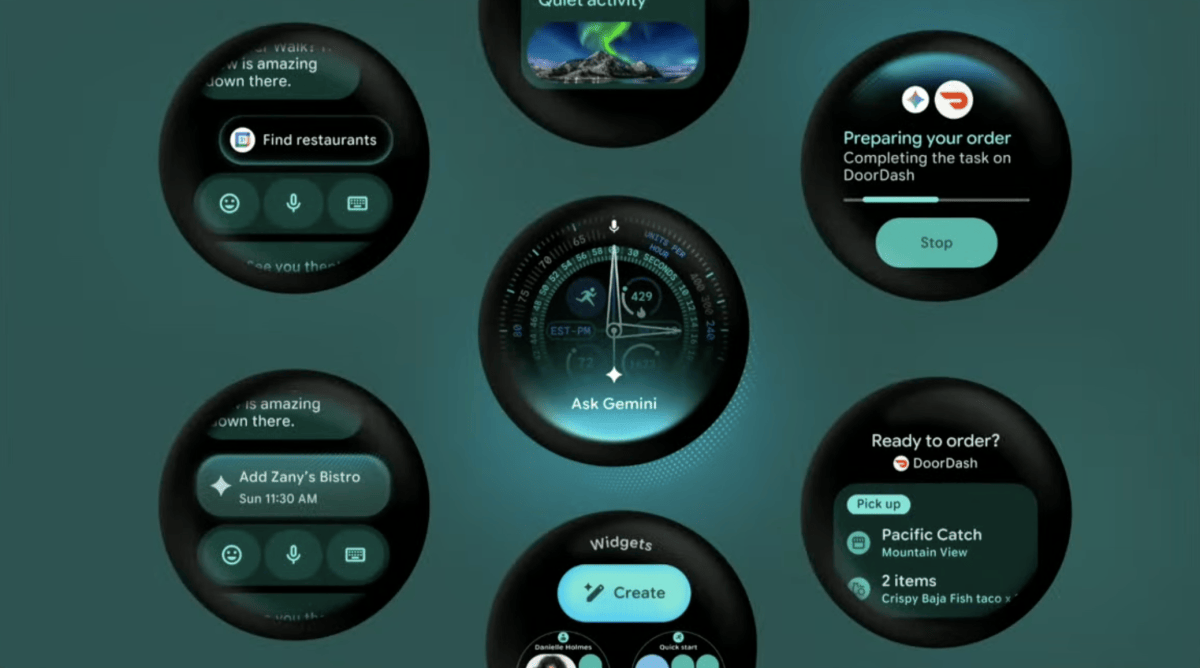
Google just unveiled a suite of enhancements for its smartwatch platform: Wear OS 7. Announced in an Android Developers Blog post, these updates promise to enhance the user and developer experience, offering a more integrated and efficient ecosystem for wearable tech.
Gemini Intelligence and Live Updates
A flagship feature of Wear OS 7 is Gemini Intelligence, an AI-driven tool designed to provide users with personalized, proactive assistance. While the full capabilities of Gemini Intelligence are not yet fully detailed, its introduction is anticipated to revolutionize how wearers interact with their smartwatches by offering context-aware suggestions and notifications. However, this feature will roll out selectively to specific smartwatch models later in the year, leaving some users waiting in anticipation.
Another exciting feature is Live Updates, a concept Android 16 users are already familiar with. This functionality enables real-time information to be displayed directly on your wrist. Imagine having your food delivery, ride service status, or even live sports scores constantly updated without needing to pull out your phone. This seamless integration could significantly enhance daily convenience and efficiency.
Enhanced App Automations
Wear OS 7 is also enhancing app automation capabilities. Picture yourself ordering your next meal via DoorDash using just your voice, right from your wrist. This new level of interaction is made possible by the updated AppFunctions API, which empowers developers to integrate smart assistants like Gemini directly into their apps. This means users can expect a smoother, more intuitive interaction with various applications, further bridging the gap between smartphones and smartwatches.
Improved Battery Life and Media Controls
Battery life remains a critical factor in the usability of smartwatches, and Google addresses this with Wear OS 7. Thanks to several platform optimizations, users can expect up to a 10% improvement in battery performance over Wear OS 6. For users who rely on their smartwatches throughout the day, this enhancement could mean the difference between reaching for a charger at 3 PM or comfortably making it through the day.
Media controls have also received a polish. Users can now manage their phone's music or podcasts directly from their watch with greater ease. The ability to switch audio outputs without needing to fumble with your phone is a small but impactful tweak that enhances the overall user experience.
Fitness Tracking and Widgets
For fitness enthusiasts, Wear OS 7 introduces the 'Wear Workout Tracker,' a native feature that could reduce the dependency on third-party fitness apps. It comes equipped with heart rate monitoring and media controls, offering a comprehensive workout tracking solution. Google is partnering with established names like Asics Runkeeper to enhance these capabilities further.
In addition, new 'Wear Widgets' promise to elevate the customization of watch faces. These widgets, akin to Android's home screen widgets, offer various sizes and formats, allowing users to personalize their smartwatch interface to better reflect their personal style and needs.
Context: European Impact
The introduction of Gemini Intelligence could significantly impact the European market by enabling the development of more localized AI applications. European developers stand to benefit from new tools that allow for the creation of apps tailored to regional preferences, potentially boosting user engagement in a culturally diverse market.
What This Means for You
For smartwatch users, Wear OS 7 brings tangible benefits. The promise of longer battery life and smarter, more personalized interactions means a more seamless integration of the smartwatch into daily routines. Developers will find new opportunities to innovate with AI-powered applications, potentially leading to a richer Wear OS app ecosystem.
What's Still Unclear
Despite the promising features, some aspects remain ambiguous. Google has yet to specify which smartwatch models will initially support Gemini Intelligence or provide a precise timeline for when these updates will be available in various regions. This uncertainty may temper some of the initial excitement as users and developers await further announcements.
Why This Matters
The advancements in Wear OS 7 underscore Google's commitment to enhancing the utility and appeal of smartwatches. By integrating AI seamlessly into everyday tasks, Google positions its platform as a leader in wearable technology. The potential for AI-driven personalization and efficiency could redefine user expectations and usage patterns. As these features roll out, they promise to not just improve smartwatches but to transform them into indispensable tools that cater to our increasingly digital lives. With these enhancements, Wear OS 7 isn't just a step forward; it represents a significant leap in what smartwatches can offer.
Cases, chargers and AirPods alternatives the editors actually use.
Shop mobile gear →Discuss this story
Got a take, a correction, or a follow-up tip? Reply where you read — we read everything.
Found an error? File a correction at /corrections. Substantive corrections are logged publicly.
One short email. The most important Mobile news, fact-checked, no fluff. Free, unsubscribe anytime.
More from Mobile
Asus ROG Phone 9 vs Sony Xperia 1 VII: Which Niche Flagship Earns Your Money?
Deciding between the gaming-focused ROG Phone 9 and the creator-centric Xperia 1 VII? This guide breaks down every spec to help you choose.
Honor Magic 8 Pro vs Samsung Galaxy S26 Ultra: Which Future Flagship Fits Your Wallet and Workflow?
Deciding between the anticipated Honor Magic 8 Pro and Samsung Galaxy S26 Ultra? Our deep dive into expected specs and features provides the fair comparison you need.
Xiaomi 16 Pro vs iPhone 18 Pro: Which Flagship Fits Your World?
Deciding between the Xiaomi 16 Pro and iPhone 18 Pro? We break down every spec and trade-off, so you can make the choice that's right for you.
Motorola Edge 60 Ultra vs OnePlus 13: Which Android Flagship Fits Your Priorities?
Motorola Edge 60 Ultra and OnePlus 13 both aim for top-tier Android. We cut through the marketing to reveal the true differences, helping you choose.
The Byte-Pulse Newsroom is the editorial system that produces Byte-Pulse's daily tech news coverage. Each story is cross-referenced across 3+ independent outlets, drafted with AI assistance by the newsroom system (Drafter → Editor → Fact-Checker → Polisher), and reviewed by Serhat Er, Editor-in-Chief, before publication. We disclose AI augmentation openly. Editorial accountability stays with the named editor on every article. Tips: editorial@byte-pulse.net.
Don’t miss these
Proton VPN vs NordVPN: Which One Earns Your Subscription?
A deep dive into Proton VPN and NordVPN, comparing their privacy, performance, features, and value, helping you make an informed decision.
Perplexity Pro vs ChatGPT Plus: Which AI Assistant Fits Your Workflow?
This guide lays out the strengths and approaches of Perplexity Pro and ChatGPT Plus, helping you identify which AI assistant aligns with your specific needs.

Pokémon TCG Movie Signals Strategic Media Pivot for The Pokémon Company
A new Pokémon movie focused on the TCG is coming in 2027, marking a strategic pivot for the franchise as it navigates massive global fan engagement and logistical challenges.

Apple's AI Pivot: Vision Pro Content Cut, Siri Rebuilt Amid Layoffs
Apple's latest layoffs signal a strategic pivot, dialing back high-cost Vision Pro content while re-tooling Siri for the AI era. What's next for Apple?

D23 2026: Disney's Content Deluge Sparks Questions About Strategy
Byte-Pulse cuts through D23 hype: We dissect Disney's ambitious content slate, from Simpsons: Hit & Run to Ahsoka season 2, and question the real-world implications and European market strategy.
Notion vs Obsidian: Which Knowledge Hub Fits Your Workflow?
Deciding between Notion and Obsidian? We break down the core differences in philosophy, data ownership, collaboration, and extensibility to help you choose.