AMD RX 9070 GRE GPU: A Budget-Friendly 1440p Gaming Option
The 'Golden Rabbit Edition' offers a more budget-friendly entry into high-fidelity gaming, but is it enough?

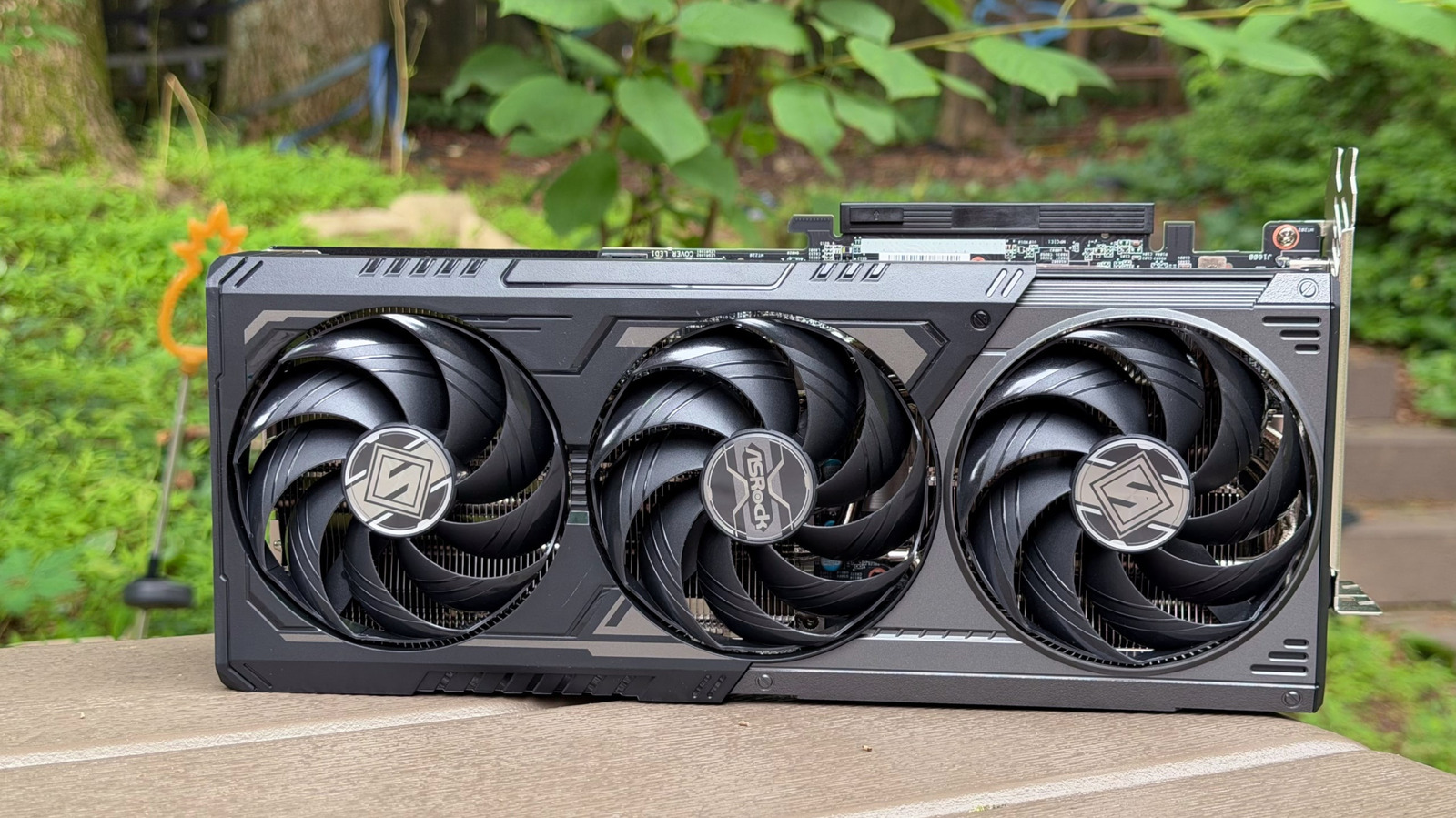
It's a tough time to be a PC gamer looking for new hardware. With AI companies gobbling up graphics memory, prices for GPUs and other components have soared. AMD's latest move might offer a glimmer of hope: bringing the Radeon RX 9070 GRE (Golden Rabbit Edition) globally after its initial launch in China. Priced at a suggested $549, this card aims to be a more accessible option for those eyeing solid 1440p gaming with a touch of ray tracing.
A Cheaper, But Slower, RX 9070
The RX 9070 GRE is essentially a slightly cut-down version of last year's RX 9070. While the original RX 9070 launched at $549, it now often sells for over $600. The GRE version aims to stick closer to that original MSRP, making it one of the few semi-affordable cards available for decent 1440p performance. However, it's important to note the compromises. The GRE features 12GB of VRAM compared to the RX 9070's 16GB and has fewer compute units and ray tracing accelerators. AMD attempts to compensate for this by increasing the GRE's boost clock speed to 2.79GHz, versus the 9070's 2.52GHz.
Performance Benchmarks: Mixed Results
When it comes to benchmarks, the RX 9070 GRE shows its limitations. In demanding tests like 3DMark's Speedway, the GRE scored 4,334, significantly behind the standard RX 9070's 5,799. It performs more competitively in older benchmarks, like Steel Nomad and Time Spy Extreme, where the performance gap narrows considerably. This suggests that while it can handle modern titles, older games will likely run more smoothly.
Despite the benchmark dips, the GRE still offers a capable gaming experience. In Forza Horizon 6 at 1440p with ray tracing enabled and AMD's FSR 3 frame generation, the card averaged a respectable 180 fps. Even at 4K, it managed around 80 fps in the same title, delivering a visually impressive experience without noticeable stuttering, though the game did warn about low video memory.
Cooling and Noise
One notable advantage of the RX 9070 GRE is its thermal performance. During testing, the GPU's core temperature peaked at a cool 58°C under load. The triple-fan cooler kept noise levels to a minimum, and the card quickly cooled down to 30°C after intensive use. This makes it a potentially good option for smaller PC builds where thermal management is crucial.
Context:
This move by AMD is a clear response to the inflated hardware market, exacerbated by AI chip demand. While NVIDIA has also released tiered versions of its GPUs, AMD's strategy of re-releasing slightly older, more affordable 'Golden Rabbit Edition' cards taps into a segment of the market often overlooked by high-end releases. The European market, in particular, has seen significant price increases for PC components, making any sub-$600 GPU a welcome sight.
What this means for you:
If you're looking to build or upgrade a gaming PC for 1440p resolution without breaking the bank, the RX 9070 GRE is one of the few options that might fit the bill. However, you'll need to be realistic about its performance – it's not going to match the raw power of its higher-tier siblings, especially in the latest, most demanding titles. If the price stays close to $549, it's a solid mid-range choice. If prices creep up, you might be better off waiting for the market to stabilize or exploring used hardware options.
What's still unclear:
- Long-term pricing stability: Will retailers maintain the $549 MSRP, or will it fluctuate closer to the RX 9070's current market price?
- Driver optimizations: How will future driver updates affect the GRE's performance, particularly in newer titles?
- Availability: Beyond initial launches, what will global stock levels look like?
Why this matters:
AMD's RX 9070 GRE offers a much-needed budget option in a pricey GPU market, but its performance compromises mean gamers must weigh cost against capability carefully. It's a solid, if not spectacular, choice for 1440p gaming in challenging economic times.
Discuss this story
Got a take, a correction, or a follow-up tip? Reply where you read — we read everything.
Found an error? File a correction at /corrections. Substantive corrections are logged publicly.
One short email. The most important Hardware news, fact-checked, no fluff. Free, unsubscribe anytime.
More from Hardware
RTX 5060 Ti vs RX 9060 XT: Which Mid-Range Powerhouse Fits Your Rig?
Deciding between the rumored RTX 5060 Ti and RX 9060 XT? This guide cuts through the noise to highlight the real-world trade-offs for gamers and creators.
Lenovo Legion Pro 7i 2026 vs Razer Blade 16 2026: Which Flagship Gaming Laptop Fits Your Future?
Deciding between the next-gen Lenovo Legion Pro 7i and Razer Blade 16 means weighing peak performance against premium design and a more compact footprint. We break down the trade-offs.
Razer Blade 16 (2026) vs ASUS ROG Zephyrus G16 (2026): Which Next-Gen Powerhouse Fits Your Workflow?
Deciding between Razer's premium Blade 16 2026 and ASUS's versatile ROG Zephyrus G16? We cut through the hype to lay out the real trade-offs.
HP Spectre x360 2026 vs MacBook Air M5: Which Flagship Laptop Fits Your Future?
Deciding between the versatile HP Spectre x360 2026 and the efficient MacBook Air M5 means weighing form factor, operating system, and core priorities.
The Byte-Pulse Newsroom is the editorial system that produces Byte-Pulse's daily tech news coverage. Each story is cross-referenced across 3+ independent outlets, drafted with AI assistance by the newsroom system (Drafter → Editor → Fact-Checker → Polisher), and reviewed by Serhat Er, Editor-in-Chief, before publication. We disclose AI augmentation openly. Editorial accountability stays with the named editor on every article. Tips: editorial@byte-pulse.net.
Don’t miss these
Asus ROG Phone 9 vs Sony Xperia 1 VII: Which Niche Flagship Earns Your Money?
Deciding between the gaming-focused ROG Phone 9 and the creator-centric Xperia 1 VII? This guide breaks down every spec to help you choose.
Proton VPN vs NordVPN: Which One Earns Your Subscription?
A deep dive into Proton VPN and NordVPN, comparing their privacy, performance, features, and value, helping you make an informed decision.
Perplexity Pro vs ChatGPT Plus: Which AI Assistant Fits Your Workflow?
This guide lays out the strengths and approaches of Perplexity Pro and ChatGPT Plus, helping you identify which AI assistant aligns with your specific needs.

Pokémon TCG Movie Signals Strategic Media Pivot for The Pokémon Company
A new Pokémon movie focused on the TCG is coming in 2027, marking a strategic pivot for the franchise as it navigates massive global fan engagement and logistical challenges.
Honor Magic 8 Pro vs Samsung Galaxy S26 Ultra: Which Future Flagship Fits Your Wallet and Workflow?
Deciding between the anticipated Honor Magic 8 Pro and Samsung Galaxy S26 Ultra? Our deep dive into expected specs and features provides the fair comparison you need.
Notion vs Obsidian: Which Knowledge Hub Fits Your Workflow?
Deciding between Notion and Obsidian? We break down the core differences in philosophy, data ownership, collaboration, and extensibility to help you choose.