GoPro Warns of Insolvency as AI Boom Doubles Memory Chip Prices
Action camera maker cites soaring RAM costs, driven by AI data center demand, as a critical threat to its survival.

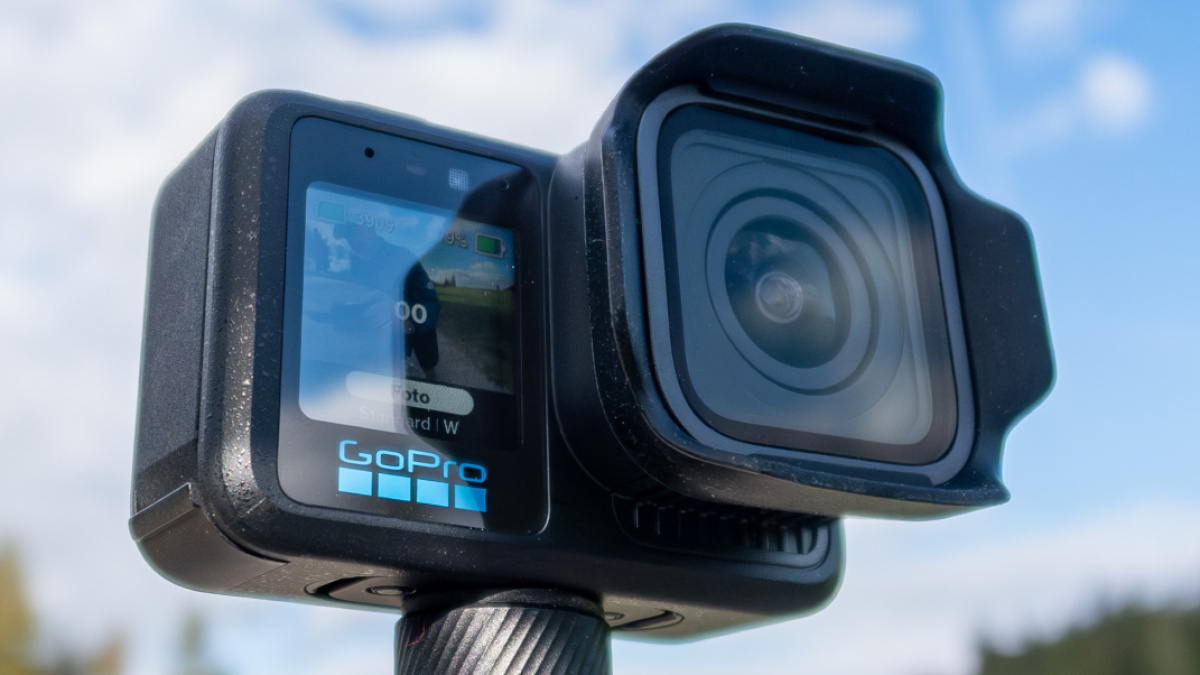
GoPro Warns of Insolvency as AI Boom Doubles Memory Chip Prices
The action camera market has always been a tough battlefield, a place where innovation and brand loyalty are constantly tested. But GoPro, the company that arguably defined and popularized the category, is now facing a threat that's way beyond the usual competition: its own survival.
AI's Unforeseen Impact on Memory Prices: A Double Whammy
In a stark announcement that sent ripples through the financial markets, the US-based company has officially alerted its investors to a looming insolvency risk. This isn't a light disclosure; under US law, such a notification is mandatory when a company's financial distress becomes significant enough to question its ability to continue operating. The primary culprit behind this existential threat? A staggering surge in the prices of essential memory chips. GoPro's internal assessments reveal that these crucial components have increased in cost by a dramatic 80 to 115 percent – effectively doubling in price over a short period. This dramatic price hike is not just a minor inconvenience; it's significantly impacting the company's revenue expectations and, more alarmingly, casting "serious doubts on the company's continuity," as stated in their official filings.
The root cause of this memory crunch isn't a simple supply chain hiccup. Instead, it's directly linked to the insatiable demand generated by the artificial intelligence boom. Chip manufacturers, keen to capitalize on the lucrative AI market, are prioritizing the production of high-bandwidth memory (HBM) – a specialized type of RAM essential for training and running complex AI models. The profit margins on HBM for AI data centers are simply far higher than those for the consumer-grade memory chips used in devices like action cameras. This strategic shift by chipmakers has led to a drastically tightened supply of other memory types and, consequently, much higher prices for the components that GoPro and similar consumer electronics companies rely on for their products.
The Unlucky Recipient: Why GoPro Can't Pass the Buck
In the intricate ecosystem of the tech industry, some companies possess the scale and market power to weather such storms. Tech giants like Apple or Samsung, with their diversified product portfolios spanning smartphones, laptops, wearables, and home appliances, can often absorb increased component costs or pass them on to consumers without significant pushback. Their vast customer bases and brand loyalty provide a buffer. GoPro, however, doesn't seem to have that luxury. Its business model is far more concentrated on its core action camera products. The company has already taken steps to shore up its finances, notably securing a deferral on certain loan repayments. Nevertheless, it anticipates defaulting on numerous other credit agreements. The fundamental issue is a lack of sufficient liquidity to meet its financial obligations. This dire situation is forcing GoPro to explore drastic, potentially transformative measures. These could include the sale of the company, a merger with another entity, or even a pivot into entirely new business avenues, with the company reportedly investigating opportunities in sectors as diverse as aviation and defense.
"Serious doubts on the company's continuity"
This financial precariousness arrives at a particularly challenging time for GoPro, as it comes on top of intensifying competition in the action camera space. Competitors like DJI, known for its innovative drones and gimbals, and Insta360, which has gained traction with its 360-degree cameras and unique form factors, have steadily chipped away at GoPro's market share in recent years. This increased competition puts additional pressure on GoPro's sales and profit margins, making it even harder to absorb the escalating costs of essential components.
A Day in the Life: How Chip Prices Hit Home
Imagine a GoPro product manager, Sarah, working on the BOM (Bill of Materials) for the next generation of the Hero camera. Just a few months ago, the estimated cost for the NAND flash memory and DRAM modules was X dollars. Now, due to the AI-driven price surge, that same cost has ballooned to nearly 2X dollars. This isn't a small percentage of the overall manufacturing cost. For a product where margins are already tight due to competition, this increase forces difficult decisions. Does Sarah push for a price increase on the new camera, potentially alienating price-sensitive customers and ceding more ground to DJI and Insta360? Or does she try to absorb the cost, significantly squeezing GoPro's already strained profitability and potentially jeopardizing future R&D investment? This internal struggle is playing out across the company, directly impacting product roadmaps and financial forecasts.
Context: The Sensitive Memory Market and the AI Ripple Effect
The current memory chip market is notoriously sensitive to demand shifts. Historically, cycles of boom and bust have been common, driven by factors like smartphone sales or cryptocurrency mining. However, the current situation is unique due to the sheer scale and transformative nature of the AI revolution. The immense processing power required for advanced AI applications, particularly in large language models and computer vision, demands cutting-edge, high-performance memory like HBM. While this creates a windfall for chipmakers strategically positioned to serve the data center and AI markets, it creates significant challenges for consumer electronics companies. These companies have historically relied on stable, predictable pricing for components like RAM and NAND flash, which are critical for the performance and affordability of their devices. This situation highlights the profound ripple effects of major technological trends, demonstrating how advancements in one area can inadvertently destabilize established industries elsewhere.
What This Means for You: Consumers and Investors
If GoPro were to falter or significantly reduce its product line, it could mean fewer choices for consumers seeking high-quality, rugged action cameras. This reduction in competition could, in turn, lead to higher prices for the remaining products on the market, regardless of the manufacturer. For consumers actively looking to purchase an action camera, this news serves as a signal to perhaps accelerate their decision-making process or at least broaden their research. Considering alternatives like DJI or Insta360 might be prudent. Alternatively, waiting to see how GoPro navigates this crisis and whether they can secure a lifeline could be a viable strategy, potentially leading to better deals if the company needs to liquidate inventory. For those who own GoPro stock, this announcement is undeniably a major red flag, signaling significant financial risk and the potential for substantial losses. It underscores the importance of diversifying investment portfolios and staying informed about the underlying business fundamentals of the companies you invest in.
What's Still Unclear: The Road Ahead
Despite the dire warning, several critical questions remain unanswered. Firstly, will GoPro be able to successfully secure a buyer or a merger partner that can provide the necessary capital and strategic direction to ensure its survival? The attractiveness of GoPro as an acquisition target, given its market position and current financial woes, is yet to be determined. Secondly, what specific new business sectors is GoPro exploring in aviation and defense? Are these opportunistic ventures, or do they represent a fundamental shift in the company's strategy? Understanding the scope and potential of these new avenues is crucial. Thirdly, how long is the current AI boom expected to continue driving up memory prices? The duration of this supply-demand imbalance will significantly impact not only GoPro but also other consumer electronics manufacturers. Finally, will other consumer electronics companies, particularly those with less diversified portfolios or tighter margins, face similar threats from the escalating cost of essential components? The vulnerability of the broader industry remains a significant unknown.
Why This Matters: A Stark Warning from the Supply Chain
GoPro's struggle is more than just the story of a single company facing adversity. It's a stark warning about the delicate balance of the global tech supply chain and the unforeseen consequences of rapid technological advancement. The AI revolution, while promising incredible progress, is creating intense pressure on the availability and cost of fundamental components. GoPro's potential insolvency underscores how a boom in one high-margin sector can have devastating, even existential, consequences for established players in seemingly unrelated industries. It's a potent reminder that the interconnectedness of the modern tech economy means that advancements, disruptions, and crises can ripple outwards with profound and often unexpected effects.
Discuss this story
Got a take, a correction, or a follow-up tip? Reply where you read — we read everything.
Found an error? File a correction at /corrections. Substantive corrections are logged publicly.
One short email. The most important Hardware news, fact-checked, no fluff. Free, unsubscribe anytime.
More from Hardware
RTX 5060 Ti vs RX 9060 XT: Which Mid-Range Powerhouse Fits Your Rig?
Deciding between the rumored RTX 5060 Ti and RX 9060 XT? This guide cuts through the noise to highlight the real-world trade-offs for gamers and creators.
Lenovo Legion Pro 7i 2026 vs Razer Blade 16 2026: Which Flagship Gaming Laptop Fits Your Future?
Deciding between the next-gen Lenovo Legion Pro 7i and Razer Blade 16 means weighing peak performance against premium design and a more compact footprint. We break down the trade-offs.
Razer Blade 16 (2026) vs ASUS ROG Zephyrus G16 (2026): Which Next-Gen Powerhouse Fits Your Workflow?
Deciding between Razer's premium Blade 16 2026 and ASUS's versatile ROG Zephyrus G16? We cut through the hype to lay out the real trade-offs.
HP Spectre x360 2026 vs MacBook Air M5: Which Flagship Laptop Fits Your Future?
Deciding between the versatile HP Spectre x360 2026 and the efficient MacBook Air M5 means weighing form factor, operating system, and core priorities.
The Byte-Pulse Newsroom is the editorial system that produces Byte-Pulse's daily tech news coverage. Each story is cross-referenced across 3+ independent outlets, drafted with AI assistance by the newsroom system (Drafter → Editor → Fact-Checker → Polisher), and reviewed by Serhat Er, Editor-in-Chief, before publication. We disclose AI augmentation openly. Editorial accountability stays with the named editor on every article. Tips: editorial@byte-pulse.net.
Don’t miss these
Asus ROG Phone 9 vs Sony Xperia 1 VII: Which Niche Flagship Earns Your Money?
Deciding between the gaming-focused ROG Phone 9 and the creator-centric Xperia 1 VII? This guide breaks down every spec to help you choose.
Proton VPN vs NordVPN: Which One Earns Your Subscription?
A deep dive into Proton VPN and NordVPN, comparing their privacy, performance, features, and value, helping you make an informed decision.
Perplexity Pro vs ChatGPT Plus: Which AI Assistant Fits Your Workflow?
This guide lays out the strengths and approaches of Perplexity Pro and ChatGPT Plus, helping you identify which AI assistant aligns with your specific needs.

Pokémon TCG Movie Signals Strategic Media Pivot for The Pokémon Company
A new Pokémon movie focused on the TCG is coming in 2027, marking a strategic pivot for the franchise as it navigates massive global fan engagement and logistical challenges.
Honor Magic 8 Pro vs Samsung Galaxy S26 Ultra: Which Future Flagship Fits Your Wallet and Workflow?
Deciding between the anticipated Honor Magic 8 Pro and Samsung Galaxy S26 Ultra? Our deep dive into expected specs and features provides the fair comparison you need.
Notion vs Obsidian: Which Knowledge Hub Fits Your Workflow?
Deciding between Notion and Obsidian? We break down the core differences in philosophy, data ownership, collaboration, and extensibility to help you choose.