Nvidia Enters Arm PC Market with RTX Spark Chip
The GPU giant enters the Arm PC market with a Grace CPU and Blackwell GPU, aiming to boost performance and gaming on Windows.

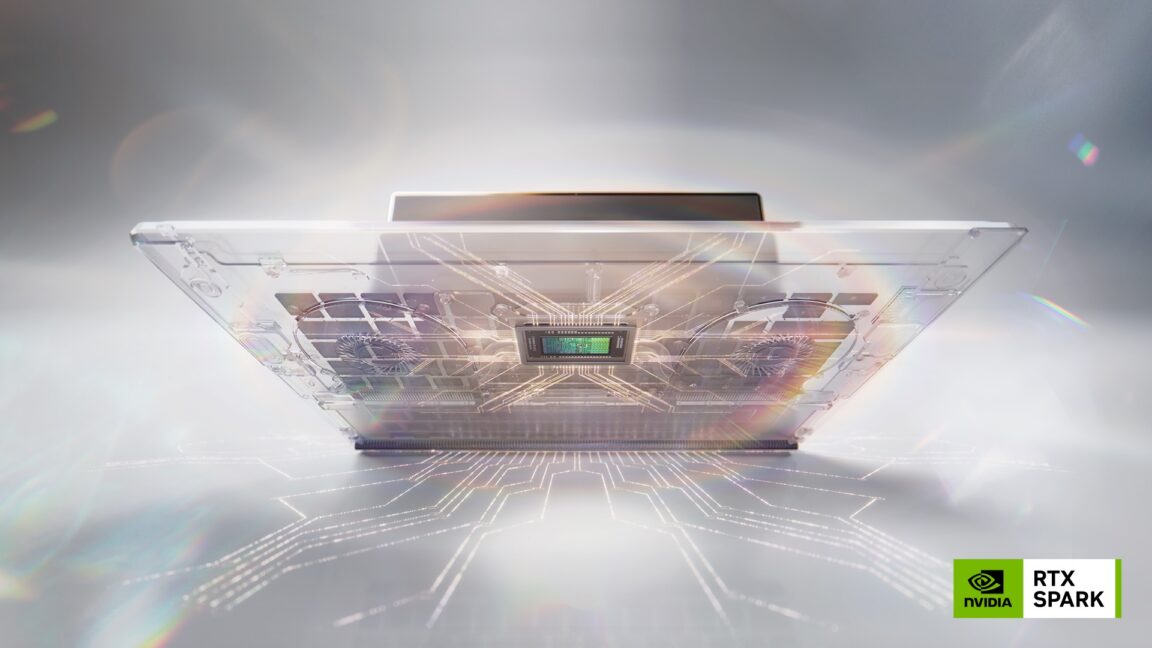
Nvidia, a company now largely synonymous with AI data center hardware, is dipping its toes back into the consumer PC market with a significant announcement: the RTX Spark chip. After years of rumors, Nvidia has unveiled its own Arm-based processor designed specifically to power Windows PCs, marking a potential new era for the company’s involvement in the personal computing space beyond its traditional GPU dominance.
Grace CPU Meets Blackwell GPU
The RTX Spark is an ambitious piece of silicon, integrating a 20-core Nvidia Grace CPU, co-developed with MediaTek, alongside up to 6,144 Blackwell-based GPU cores. This GPU architecture is the same one found in Nvidia's high-end RTX 50-series graphics cards. To complement this powerful combination, the chip supports up to a hefty 128GB of unified LPDDR5x memory. This unified memory approach means both the CPU and GPU can access the same data pool, potentially leading to significant performance gains in memory-intensive tasks.
A New Contender in the Arm PC Space
While Nvidia has dabbled in Arm-based Windows devices before with its Tegra chips powering the ill-fated Windows RT tablets, those efforts were largely confined to a niche. Modern Arm PCs running Windows 10 and Windows 11 have been dominated by Qualcomm's Snapdragon processors. Nvidia's entry, however, leverages the considerable progress Microsoft has made with its x86-to-Arm code translation layer, codenamed Prism. Many major applications now offer native Arm versions, mitigating the performance and responsiveness issues that plagued earlier translated apps.
"Modern Arm-based PCs in the Windows 10 and Windows 11 eras have all used processors from Qualcomm."
This means that, for many everyday computing tasks, users might find an RTX Spark-powered PC indistinguishable from its Intel or AMD counterparts. The potential for improved battery life and performance in a thin and light form factor is a key selling point for Arm-based laptops.
Boosting Gaming on Arm Windows
One area where Arm-based Windows PCs have historically fallen short is gaming. While many games can run, they often suffer from lag, responsiveness issues, or outright refusal to launch, particularly those requiring kernel-level anti-cheat software. Nvidia and Microsoft are acutely aware of this and are actively collaborating with major game developers and anti-cheat providers.
"Nvidia and Microsoft told The Verge that they were actively working with Riot Games to support League of Legends and Valorant on Arm PCs; with Krafton to support PUBG; and with the developers of Easy Anti-Cheat, BattlEye, and Denuvo."
This proactive approach suggests a serious commitment to making Arm PCs a viable platform for gamers, not just productivity machines. The inclusion of Blackwell GPU cores, the same architecture as Nvidia's enthusiast-grade desktop GPUs, certainly points towards strong graphical capabilities.
Availability and Partners
Nvidia and its partners, including industry giants like Asus, Dell, HP, Lenovo, Microsoft, MSI, Acer, and Gigabyte, are targeting an "available this fall" launch window for devices featuring the RTX Spark. While pricing details remain undisclosed, the target devices range from "slim Windows laptops with all-day battery life and premium displays" to "compact desktop PCs." This broad range suggests Nvidia aims to capture a significant share of the premium Arm PC market.
Context:
Nvidia’s move into the Arm PC processor market could be seen as a strategic play to counter the increasing encroachment of custom silicon in various computing sectors. Apple’s M-series chips have demonstrated the potential of Arm architecture in high-performance laptops, prompting competitors to seek their own solutions. For Europe, this could mean more diverse hardware options beyond traditional x86 dominance, potentially leading to more energy-efficient and powerful devices, although the primary manufacturing and design hubs remain outside the EU. The success of RTX Spark could also influence the ongoing debate about chip sovereignty within the EU, as it introduces another significant player into the PC component ecosystem.
What this means for you:
If you're in the market for a new Windows laptop or desktop this fall, you might soon have a compelling new option. PCs powered by Nvidia's RTX Spark could offer a blend of strong performance for productivity and potentially much-improved gaming experiences on an Arm architecture. Keep an eye out for devices from major manufacturers like Dell, HP, and Lenovo, as they are expected to be among the first to adopt this new chip. Expect these devices to potentially offer longer battery life compared to some x86 alternatives, though pricing is still an unknown factor.
What's still unclear:
- The exact pricing for RTX Spark-powered laptops and desktops.
- Specific performance benchmarks comparing RTX Spark to current Snapdragon chips and high-end x86 processors.
- The extent of Arm-native application support beyond the initial gaming partnerships.
- The availability of different RTX Spark configurations (e.g., varying GPU core counts or unified memory amounts).
Why this matters:
Nvidia enters the Arm PC race with potent hardware and a gaming focus. This move could significantly shake up the Arm PC landscape, offering consumers more choice and potentially driving innovation in performance and efficiency for Windows on Arm devices.
Discuss this story
Got a take, a correction, or a follow-up tip? Reply where you read — we read everything.
Found an error? File a correction at /corrections. Substantive corrections are logged publicly.
One short email. The most important Hardware news, fact-checked, no fluff. Free, unsubscribe anytime.
More from Hardware
RTX 5060 Ti vs RX 9060 XT: Which Mid-Range Powerhouse Fits Your Rig?
Deciding between the rumored RTX 5060 Ti and RX 9060 XT? This guide cuts through the noise to highlight the real-world trade-offs for gamers and creators.
Lenovo Legion Pro 7i 2026 vs Razer Blade 16 2026: Which Flagship Gaming Laptop Fits Your Future?
Deciding between the next-gen Lenovo Legion Pro 7i and Razer Blade 16 means weighing peak performance against premium design and a more compact footprint. We break down the trade-offs.
Razer Blade 16 (2026) vs ASUS ROG Zephyrus G16 (2026): Which Next-Gen Powerhouse Fits Your Workflow?
Deciding between Razer's premium Blade 16 2026 and ASUS's versatile ROG Zephyrus G16? We cut through the hype to lay out the real trade-offs.
HP Spectre x360 2026 vs MacBook Air M5: Which Flagship Laptop Fits Your Future?
Deciding between the versatile HP Spectre x360 2026 and the efficient MacBook Air M5 means weighing form factor, operating system, and core priorities.
The Byte-Pulse Newsroom is the editorial system that produces Byte-Pulse's daily tech news coverage. Each story is cross-referenced across 3+ independent outlets, drafted with AI assistance by the newsroom system (Drafter → Editor → Fact-Checker → Polisher), and reviewed by Serhat Er, Editor-in-Chief, before publication. We disclose AI augmentation openly. Editorial accountability stays with the named editor on every article. Tips: editorial@byte-pulse.net.
Don’t miss these
Asus ROG Phone 9 vs Sony Xperia 1 VII: Which Niche Flagship Earns Your Money?
Deciding between the gaming-focused ROG Phone 9 and the creator-centric Xperia 1 VII? This guide breaks down every spec to help you choose.
Proton VPN vs NordVPN: Which One Earns Your Subscription?
A deep dive into Proton VPN and NordVPN, comparing their privacy, performance, features, and value, helping you make an informed decision.
Perplexity Pro vs ChatGPT Plus: Which AI Assistant Fits Your Workflow?
This guide lays out the strengths and approaches of Perplexity Pro and ChatGPT Plus, helping you identify which AI assistant aligns with your specific needs.

Pokémon TCG Movie Signals Strategic Media Pivot for The Pokémon Company
A new Pokémon movie focused on the TCG is coming in 2027, marking a strategic pivot for the franchise as it navigates massive global fan engagement and logistical challenges.
Honor Magic 8 Pro vs Samsung Galaxy S26 Ultra: Which Future Flagship Fits Your Wallet and Workflow?
Deciding between the anticipated Honor Magic 8 Pro and Samsung Galaxy S26 Ultra? Our deep dive into expected specs and features provides the fair comparison you need.
Notion vs Obsidian: Which Knowledge Hub Fits Your Workflow?
Deciding between Notion and Obsidian? We break down the core differences in philosophy, data ownership, collaboration, and extensibility to help you choose.