RGB Mini LED TVs Struggle With Color Accuracy, Study Finds
Manufacturers overstate color gamut claims for RGB Mini LED displays, with real-world performance falling short of advertised specs.

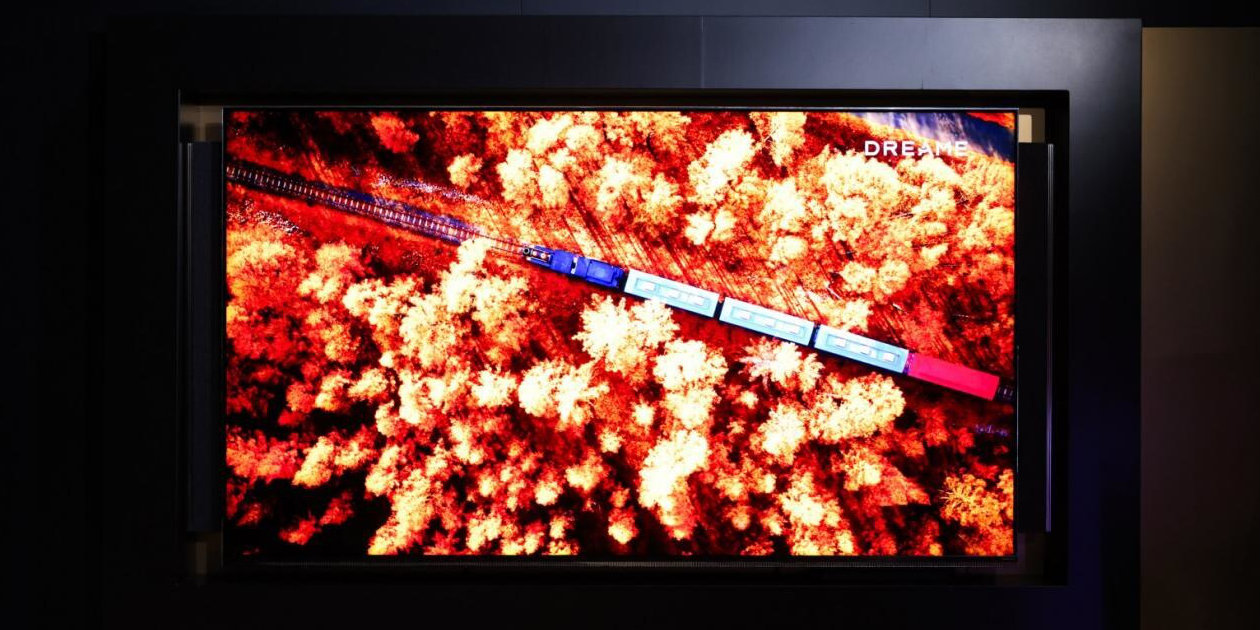
You might have seen the buzzwords: "RGB Mini LED" plastered across the latest high-end TVs from brands like Hisense, Samsung, and Sony. They're touting this technology as a major leap forward, promising vastly improved color reproduction over standard LCDs. But hold on to your remote, because it turns out the reality might not be as colorful as the marketing suggests.
While manufacturers are quick to flash impressive color gamut figures – figures that, on paper, even outshine advanced QD-OLEDs – a closer look reveals a significant caveat. Nanosys, a key supplier in this space, is now highlighting the technology's limitations, echoing concerns previously raised by LG Display.
The Colorful Deception of RGB Mini LED
The core issue lies in how RGB Mini LED achieves its purported color brilliance. Unlike traditional Mini LEDs that use single-color backlights divided into many dimming zones, RGB Mini LED employs individual red, green, and blue LEDs. The idea is to offer finer control and a wider color spectrum. However, this multi-color approach introduces a problem when different colors are placed next to each other on the screen.
According to Nanosys and LG Display, the high color gamut figures are primarily achieved under ideal, single-color test conditions. In real-world scenarios, especially in movies and TV shows where colors frequently blend and interact, the performance dips dramatically. The issue stems from the diffusion layers, which aren't perfect at separating the light from adjacent multi-colored LEDs. This can lead to color bleeding and inaccuracies.
"When multiple colors are directly next to each other, the actual coverage collapses massively. Colors sometimes bleed into each other, causing mixing or inaccuracies."
Imagine a scene where a person's face is shown against a vibrant red background. With RGB Mini LED, that red hue might slightly 'spill' onto the face, giving it an unwanted color cast. Because large, solid blocks of single colors are rare in typical video content, you're unlikely to ever witness the dazzling color accuracy that manufacturers advertise.
A Problem No Calibration Can Fix
Here's the kicker: this isn't a problem that professional calibration can solve. Because the flaw is inherent to the technology – specifically, the way multi-colored LEDs and diffusion layers interact – no amount of tweaking picture settings will fundamentally correct it. Manufacturers would need to either develop significantly improved diffusion layers or, perhaps more radically, revert to single-color Mini LED backlights.
Nanosys, naturally, has its own proposed solution. They're pushing their "Super Quantum Dots" technology, which, when combined with Mini LED, can apparently achieve similar color gamut results to RGB Mini LED without its inherent weaknesses.
"In practice, the truth looks a bit different."
What This Means for You
If you're in the market for a new TV and have been swayed by the promises of RGB Mini LED, it's worth tempering your expectations. While these TVs will still offer improvements over older LCDs, the advertised color performance might be significantly overstated for everyday viewing. For the absolute best picture quality, especially if color accuracy is paramount, you might be better off sticking with established OLED technologies, particularly those featuring RGB OLED panels or QD-OLED technology.
What's Still Unclear:
- What specific percentage of real-world viewing scenarios are affected by this color bleed issue?
- Will manufacturers invest in developing better diffusion layers for RGB Mini LED, or will they move to alternative solutions like Nanosys's Super Quantum Dots?
- How does the actual performance of RGB Mini LED compare to high-end traditional Mini LED TVs without the multi-color backlight?
Why This Matters:
Manufacturers' color claims for RGB Mini LED TVs are misleading. While the technology shows promise in controlled tests, its real-world color accuracy suffers due to inherent limitations, meaning consumers may not get the vibrant, accurate picture they're paying for.
Discuss this story
Got a take, a correction, or a follow-up tip? Reply where you read — we read everything.
Found an error? File a correction at /corrections. Substantive corrections are logged publicly.
One short email. The most important Hardware news, fact-checked, no fluff. Free, unsubscribe anytime.
More from Hardware
RTX 5060 Ti vs RX 9060 XT: Which Mid-Range Powerhouse Fits Your Rig?
Deciding between the rumored RTX 5060 Ti and RX 9060 XT? This guide cuts through the noise to highlight the real-world trade-offs for gamers and creators.
Lenovo Legion Pro 7i 2026 vs Razer Blade 16 2026: Which Flagship Gaming Laptop Fits Your Future?
Deciding between the next-gen Lenovo Legion Pro 7i and Razer Blade 16 means weighing peak performance against premium design and a more compact footprint. We break down the trade-offs.
Razer Blade 16 (2026) vs ASUS ROG Zephyrus G16 (2026): Which Next-Gen Powerhouse Fits Your Workflow?
Deciding between Razer's premium Blade 16 2026 and ASUS's versatile ROG Zephyrus G16? We cut through the hype to lay out the real trade-offs.
HP Spectre x360 2026 vs MacBook Air M5: Which Flagship Laptop Fits Your Future?
Deciding between the versatile HP Spectre x360 2026 and the efficient MacBook Air M5 means weighing form factor, operating system, and core priorities.
The Byte-Pulse Newsroom is the editorial system that produces Byte-Pulse's daily tech news coverage. Each story is cross-referenced across 3+ independent outlets, drafted with AI assistance by the newsroom system (Drafter → Editor → Fact-Checker → Polisher), and reviewed by Serhat Er, Editor-in-Chief, before publication. We disclose AI augmentation openly. Editorial accountability stays with the named editor on every article. Tips: editorial@byte-pulse.net.
Don’t miss these
Asus ROG Phone 9 vs Sony Xperia 1 VII: Which Niche Flagship Earns Your Money?
Deciding between the gaming-focused ROG Phone 9 and the creator-centric Xperia 1 VII? This guide breaks down every spec to help you choose.
Proton VPN vs NordVPN: Which One Earns Your Subscription?
A deep dive into Proton VPN and NordVPN, comparing their privacy, performance, features, and value, helping you make an informed decision.
Perplexity Pro vs ChatGPT Plus: Which AI Assistant Fits Your Workflow?
This guide lays out the strengths and approaches of Perplexity Pro and ChatGPT Plus, helping you identify which AI assistant aligns with your specific needs.

Pokémon TCG Movie Signals Strategic Media Pivot for The Pokémon Company
A new Pokémon movie focused on the TCG is coming in 2027, marking a strategic pivot for the franchise as it navigates massive global fan engagement and logistical challenges.
Honor Magic 8 Pro vs Samsung Galaxy S26 Ultra: Which Future Flagship Fits Your Wallet and Workflow?
Deciding between the anticipated Honor Magic 8 Pro and Samsung Galaxy S26 Ultra? Our deep dive into expected specs and features provides the fair comparison you need.
Notion vs Obsidian: Which Knowledge Hub Fits Your Workflow?
Deciding between Notion and Obsidian? We break down the core differences in philosophy, data ownership, collaboration, and extensibility to help you choose.